From Vintage to Vanguard: Discover Bakelite Sheets
2026-04-28 17:12:55
When engineering managers look for solid electrical insulation materials that won't break down under heat stress, Bakelite sheet stands out as an option that has been used for a hundred years and still works well today. This phenolic laminate is a good balance between traditional resilience and modern industrial needs. It has a dielectric strength of more than 12 kV/mm and stays the same size even when the temperature changes, which isn't possible with newer polymer options.
Understanding Bakelite Sheets – Properties, History & Manufacturing
The Birth of Synthetic Plastics
The world's first fully manufactured plastic, made by Leo Baekeland in Yonkers in 1907, changed the field of material science forever. In chemistry words, this phenol-formaldehyde glue is called polyoxybenzylmethyleneglycolanhydride. It was made widely available after its patent was approved in 1909. Later, the American Chemical Society made it a National Historic Chemical Landmark to honour the important part it played in starting the modern plastics business. This thermosetting material was revolutionary because it could fix permanently under heat and pressure. This was different from earlier natural resins, which became soft when heated again.
Core Material Properties
There are some unique qualities about phenolic paper laminates that make them useful in corporate buying requirements. The material can bear constant heat of up to 300°F and still keep its shape. The dielectric breakdown voltage is always higher than the minimums set by the industry. This makes these sheets essential for high-voltage uses. Moisture absorption stays below 0.5% even after long-term contact, so it doesn't swell in size like polyamide options do. Chemical protection includes most acids, bases, and petroleum products. However, strong oxidising agents can damage the surface.
Cellulose paper strips are first soaked in liquid phenolic glue in a controlled environment to start the production process. Before going into hydraulic presses, where temperatures can hit 340°F and pressures can go over 1,200 psi, the layers are stacked on top of each other. The resin-paper combination turns into a hard thermoset laminate during this drying cycle, which starts polymerisation. Standard grades usually have thickness limits of ±5%, which meets the MIL-I-24768 standards that many equipment makers need.
Material Variants and Grades
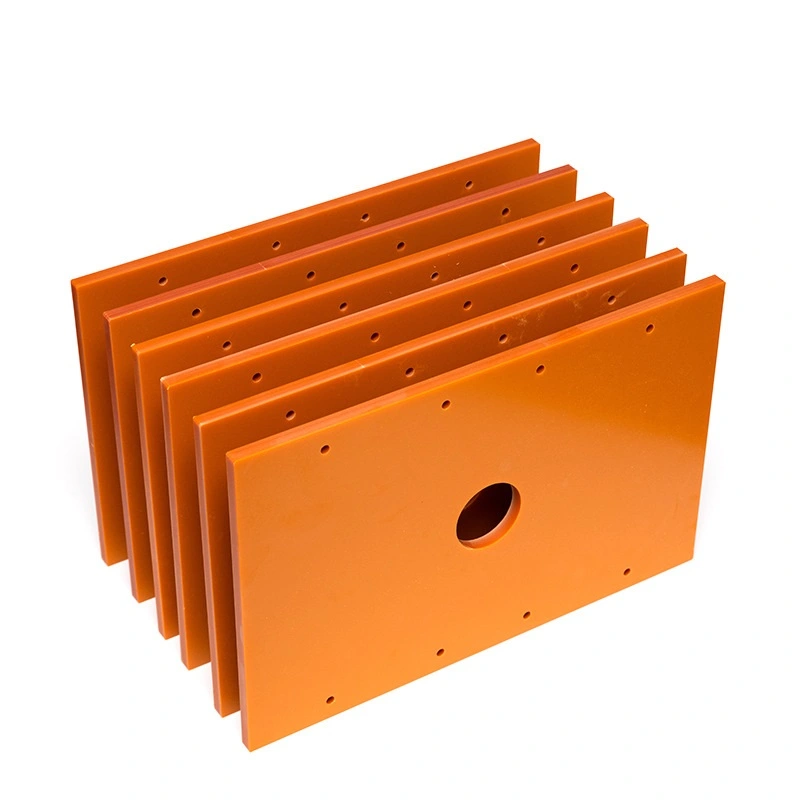
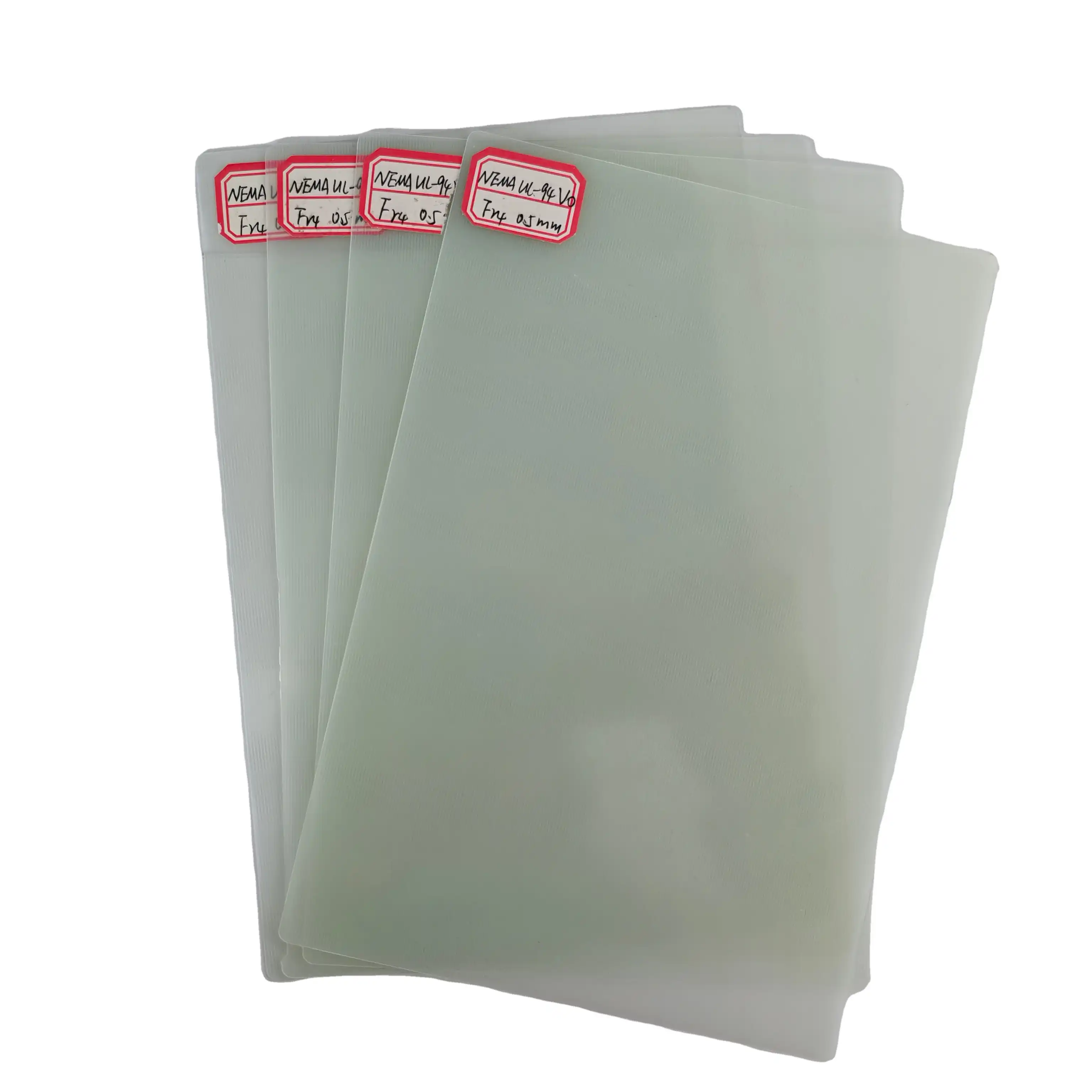
Based on the base material and resin mixture, the business has a number of grade classes. Paper-based phenolic laminates, which are also known as SRBP (Synthetic Resin Bonded Paper), put cost-effectiveness and electricity shielding first. Fabric-based versions, called SRBF (Synthetic Resin Bonded Fabric), are used instead of paper to make gear boxes and structure parts that are stronger than paper-based versions made from cotton or linen cloth. Micarta is a named version that is made with cloth support and is especially useful for making knife handles and other mechanical parts that need to be resistant to impact.
Different additions change the qualities of the base to do specific jobs. To get V-0 scores in UL94 tests for flammability, flame-retardant grades use bromine chemicals. To make formulas that don't wear down, lubricants like molybdenum disulphide or graphite are added to the bearing surfaces. Different types that are resistant to heat use higher hardening temperatures and different resins to go beyond normal grades in terms of ongoing service limits. It's important for procurement teams to be clear about grade labels because a Grade X paper laminate is very different in price and performance from a Grade C fabric-based material.
Practical Procurement Guide for Bakelite Sheets
Identifying Qualified Suppliers
Choosing the right vendor for Bakelite sheet has a direct effect on the regularity of production and compliance with regulations. ISO 9001 approval means that quality management is organised, but it doesn't mean that the company has experience in a certain area. If you're looking for things for cars, look for sources that have ISO 14001 environmental certifications and IATF 16949 automobile standards. Every transfer to a facility in Europe or North America should come with proof that it follows RoHS and REACH rules. This will show that no restricted substances were used.
Assessing a supplier's image is more than just looking at their certificates. Ask the seller for client reference lists from related industries. For example, a company that is great at making thin-gauge sheets for consumer electronics might not know much about making thick structural grades for power distribution equipment. Production capacity checks show possible partners if they can increase output when demand goes up without lowering the quality of the surface finish or thickness limits. Being close to your manufacturing facilities cuts down on wait times and freight costs. However, foreign providers can sometimes offer better prices that make up for the extra cost of operations.
Pricing Structures and Volume Considerations
The price of materials varies a lot depending on the grade, width, and amount ordered. Standard paper-based sheets in common sizes are priced at the base level, while speciality types with flame retardants or cloth support are priced higher. Tiered savings are often available through bulk purchasing deals. For example, yearly contracts that require minimum quarterly offtakes could significantly lower per-sheet costs compared to spot purchases.
Custom size choices change the total cost of purchase. Standard sheet sizes keep waste to a minimum during cutting. Custom-slit widths or pre-cut pieces cost more to process but require less work to be done in-house. Engineering teams should work with buying to find the best order forms that balance the cost of handling with the amount of material used. A custom-cut part might cost more per piece, but it cuts down on waste and extra steps of cutting that slow down production.
Certification and Compliance Verification
Material test results that come with every package are the first step in following the rules. For example, ASTM D229 for electrical breakdown, ASTM D570 for water absorption, and UL94 for flammability should all be mentioned in Certificates of Conformance. In addition to the manufacturer's own approval, proof by a third-party lab adds legitimacy. This is especially true for aircraft or medical device uses that need independent verification for material tracking.
Sometimes fake materials get into supply lines, especially when buying from sellers you don't know. As part of the incoming review process, the dielectric strength and measurement accuracy should be tested on-site and the results should be compared to the numbers on the certificate. Significant differences point to possible replacement problems that need to be looked into by the provider. Setting up seller approval methods that include testing materials before accepting new sources protects the standard of production and lowers the risk of harm.
Advantages and Limitations of Using Bakelite Sheets in Industrial Environments
Key Performance Strengths
Many businesses continue to use phenolic laminates because they have a strong set of qualities that make them desirable. Heat resistance lets parts work directly with each other at temperatures that would melt or distort regular plastics. This means that small systems don't need as much cooling or space between parts. The function of electrical shielding stops current leaks in high-voltage areas, keeping people and equipment safe from arc flash dangers. Mechanical stiffness keeps structures stable under loads without deforming over time, so gear trains and bearing housings stay in perfect line for years to come.
Another useful benefit that is often overlooked when choosing a Bakelite sheet material is its ability to be machined. When the right tools and speeds are used, CNC routers, laser cutters, and regular milling machines can all quickly cut these sheets, leaving clean lines that don't delaminate. The ease of manufacturing speeds up the development of prototypes and makes short-run production more cost-effective than with materials that need special processing methods.
Material Limitations and Mitigation Strategies
The main technical drawback is that it is brittle when loaded with impact. When shock loads are greater than their tensile strength, phenolic laminates break instead of deforming, unlike flexible metals or tough industrial thermoplastics. When designing parts, they should have large curves at stress points and avoid having thin cross-sections in places where there is mechanical shock. Adding metal plates or corner supports can spread impact forces over bigger areas, lowering peak loads below the point where they can break.
Problems with environmental removal need to be planned for ahead of time. Companies that make a lot of phenolic waste should look into waste-to-energy partnerships where the return of burning heat can offset the use of natural gas. Some companies that make moulding compounds will use phenolic waste from old factories as filling in non-critical uses. This creates circular economy paths that decrease reliance on landfills. Procurement teams can give more weight to suppliers that show they are working to reduce waste. This helps meet green goals and could lead to better prices for suppliers that take part in takeback programs.
Industry Application Examples
When making distribution transformers with a rating of 500 kVA or less, makers usually tell customers to use phenolic paper sheets for the coil shielding and arc shields. The material's thermal stability can handle hotspot temperatures when it's overloaded, and its dielectric strength keeps the core from flashing over to the windings. One utility company in the Midwest said that phenolic-insulated transformers in country substations had a 25-year service life, showing that they are reliable even in harsh weather conditions.
More and more, phenolic insulation walls are used to separate cell sections in automotive battery pack production. The flame resistance of the material stops thermal runaway events that would cause failures in cells next to each other. A major provider reported that during misuse testing, phenolic shields stopped the fire from spreading to more than one module, but polymer foam options let more than one module be affected. The difference in performance had an effect on crash safety scores and the requirements for buying major car systems.
Future Outlook and Strategic Recommendations for Bakelite in B2B Procurement
Emerging Material Innovations
Using bio-derived phenolic compounds for Bakelite sheet research purposes could help the environment while keeping performance levels the same. Lignin taken from farm waste can be used instead of some phenol made from petroleum in resin mixtures. This lowers the carbon footprint without changing the electrical or thermal qualities. Pilot production tests show that these bio-phenolic sheets meet the requirements for current materials. This means that they can be used as a drop-in replacement once commercial production reaches a level of cost parity with standard grades.
Another step forward is the creation of hybrid laminates that use phenolic glue and improved reinforcing fibres. When you join carbon fibre or aramid cloth surfaces with phenolic matrices, you get strength-to-weight ratios that are similar to aircraft composites. They also keep their ability to resist flames and conduct electricity. These higher types are used in specific ways in the powertrains of electric vehicles. Reducing mass directly increases the driving range, which justifies the higher material costs by improving system performance.
Strategic Supplier Partnership Development
Building partnerships with makers who are dedicated to ongoing growth and professional help is key to long-term buying success. Suppliers who offer application engineering help find the best material grades and sizes for each design, which could lead to less material being used or longer service life. Collaborative development deals can make sure that priority sharing is maintained during supply breakdowns, which can keep production going even when the market is in favour of buyers.
Quality consistency tracking should go beyond just inspecting new products when they come in. It should also include working with providers to do statistical process control. Sharing data on measurements and electrical test results creates feedback loops that find process drift before material that doesn't meet specifications is shipped. This proactive quality checking cuts down on scrap and makes suppliers more responsible, which builds trust that leads to more business relationships.
Aligning Procurement with Sustainability Goals
More and more, corporate environmental requirements affect the choice of materials in ways other than the usual cost-performance decisions. Strategies for buying things should list the benefits of long-lasting phenolic parts over shorter-lasting ones over the course of their life, including how many resources are used and how many times they need to be replaced. This way of looking at things meets the standards for sustainability reports while still allowing the use of materials that are hard to recycle at the end of their useful life.
Sustainability checks of suppliers go hand in hand with environmental efforts inside the company. Supply chain harmony with corporate responsibility pledges is made possible by looking at how energy efficient, trash reduction programs, and chemical management practices are used by production partners. Preferential buying from providers that can show real environmental gains provides market benefits for sustainability acceptance across the entire industry, moving progress forward beyond the borders of any one company.
Conclusion
Bakelite sheet phenolic laminates are still used in many important industrial processes because they have a special mix of thermal stability, electrical insulation, and mechanical reliability that is hard for newer materials to match on a cost-effective level. Recycling limits and brittleness are real problems, but they are less of a problem when proper application engineering and handling standards guide the design of the part. When choosing materials, procurement workers should look at how well they work over their whole lifetime instead of just comparing properties. This is because technology that is hundreds of years old often works best in harsh industrial settings. These materials will still be useful as industrial goals shift toward sustainability without sacrificing their functionality thanks to strategic partnerships with suppliers, strict quality control, and new bio-based formulas.
FAQ
In what temperature range can phenolic laminates be used all the time?
Standard paper-based grades keep their shape and electrical properties even after being exposed to temperatures up to 300°F for a long time. They can also handle short trips to 350°F without breaking right away. Specialised ingredients that are resistant to heat make this range go up by 50 degrees. Going over these limits breaks down the plastic and causes it to lose its properties over time.
In terms of electrical use, how do phenolic sheets compare to FR4 epoxy laminates?
FR4 is better for layered printed circuit boards because it has better insulating strength and resistance to moisture. For single-layer circuits and structural insulation, phenolic laminates work well enough electrically and cost less to make. When mechanical manufacturing, not chemical etching, determines the shape of a part, machinability favours phenolic sheets.
Which licenses are the most important when looking for suppliers?
Getting ISO 9001 approval for quality management sets a standard for process control. When a material is recognised by UL, it means it meets certain standards for electricity safety and flammability. RoHS and REACH compliance paperwork shows that there are no banned chemicals, which is needed for markets in Europe and North America. IATF 16949 and other industry-specific approvals show that the car supply chain can do what it needs to do.
Partner With J&Q for Reliable Phenolic Laminate Supply
J&Q has been making insulated sheets for more than 20 years and has been doing business internationally for ten years, helping companies that make electrical equipment and industrial machinery. As a well-known provider of Bakelite sheets, we keep a large stock of both standard grades and custom formulas so that we can support both large production runs and small sample amounts. Our streamlined operations make sure that deliveries happen on time, which keeps your production going. Additionally, our ISO-certified quality systems make sure that all of our materials are consistent and meet UL and RoHS standards. Our expert team can be reached at info@jhd-material.com by engineering managers and sourcing specialists who want to talk about unique thickness needs, CNC-machined parts, or material certifications that are right for your application. Our application support helps you choose the best materials for performance and cost, whether you're making switchgear insulation, motor parts, or battery pack barriers.
References
Baekeland, L.H. (1909). "The Synthesis, Constitution, and Uses of Bakelite." Journal of Industrial and Engineering Chemistry, Vol. 1, No. 3, pp. 149-161.
Bijker, W.E. (1995). Of Bicycles, Bakelites, and Bulbs: Toward a Theory of Sociotechnical Change. Cambridge: MIT Press.
American Chemical Society. (1993). "Bakelite: The World's First Synthetic Plastic." National Historic Chemical Landmarks Program, Washington, DC.
DuBois, J.H. (1972). Plastics History U.S.A. Boston: Cahners Books.
Friedel, R. (1983). Pioneer Plastic: The Making and Selling of Celluloid. Madison: University of Wisconsin Press.
Mossman, S.T. (2008). Early Plastics: Perspectives, 1850-1950. London: Leicester University Press.
_1753952475136.jpg)