G10 vs. Carbon Fiber Sheet: Which is Better for Structural Components?
2026-07-16 17:18:34
When choosing between G10 sheet and carbon fiber for structural components, the decision hinges on your specific application requirements. G10 sheet excels in electrical insulation, high-voltage environments, and chemical resistance, making it ideal for switchgear and motor components. Carbon fiber offers superior strength-to-weight ratios for aerospace and automotive applications where weight reduction drives performance. Both materials deliver exceptional mechanical properties, yet their optimal uses diverge significantly based on thermal stability needs, electrical properties, and budget considerations for industrial-scale procurement.
Understanding G10 and Carbon Fiber Sheets: Key Features and Benefits
G10 Sheet Composition and Core Advantages
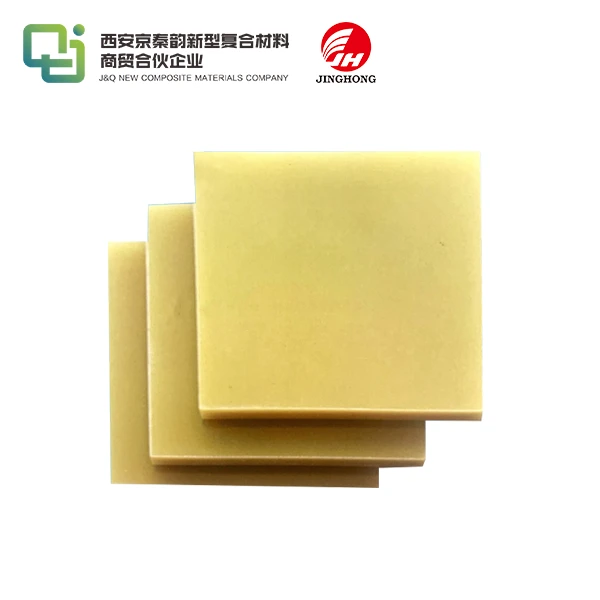
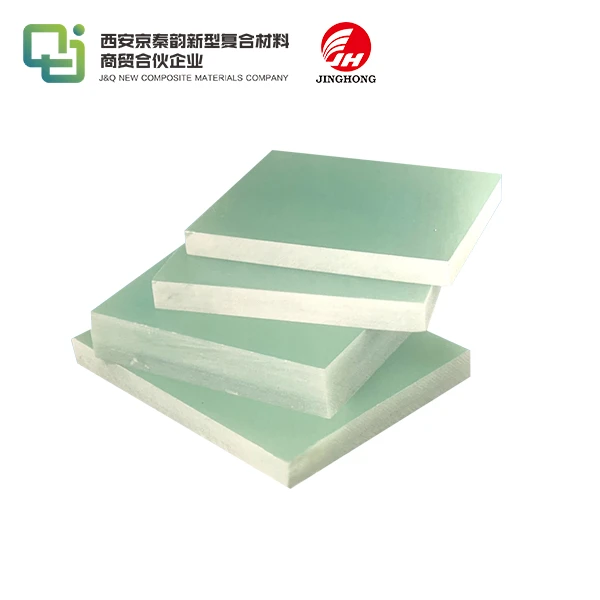
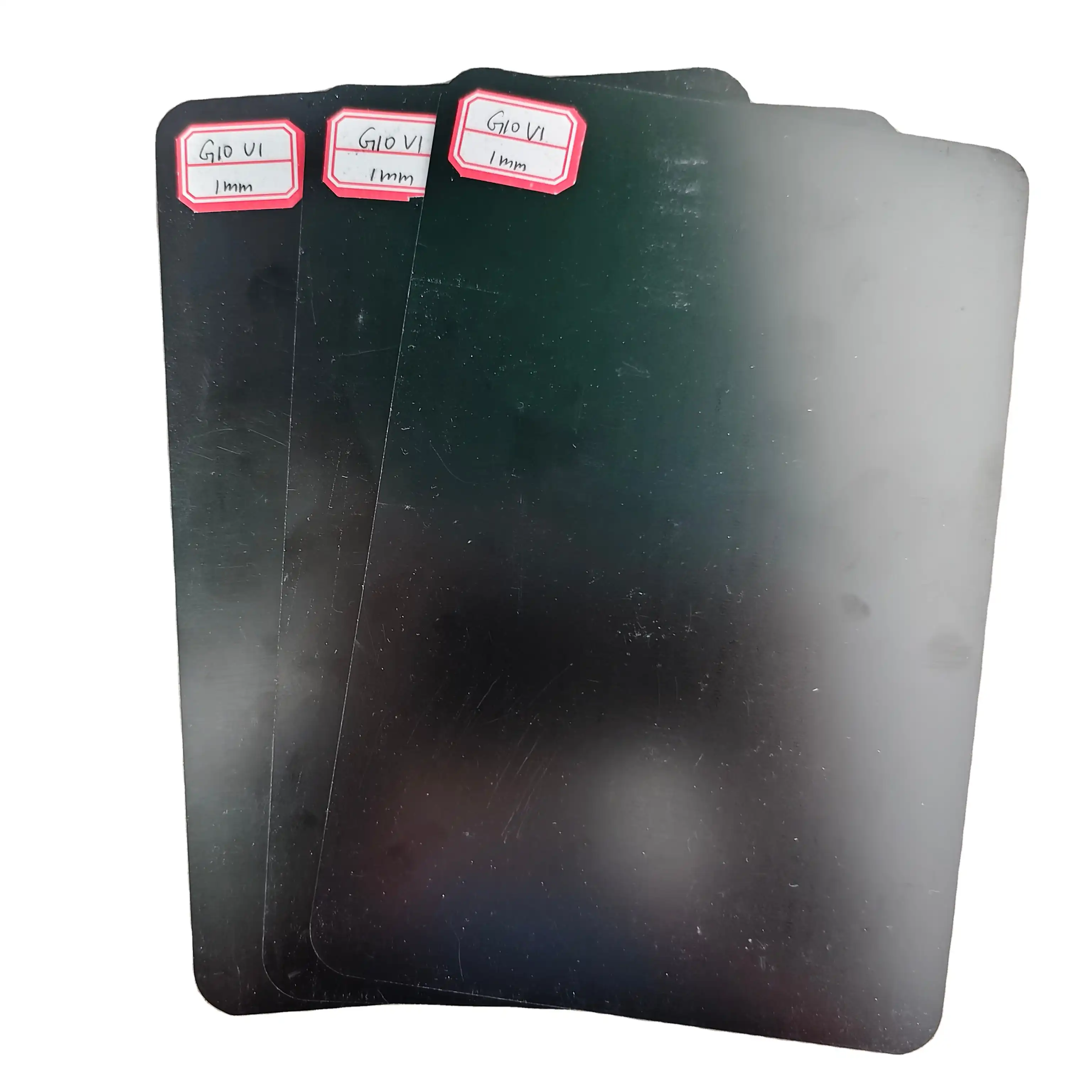
G10 sheet is made up of continuous fiber glass cloth that has been soaked with epoxy resin under high heat and pressure. This makes a thermosetting laminate that is very stable in terms of its shape. Based on NEMA standards, this material solves important problems in the industry, like mechanical instability in damp places and dielectric breakdown at high voltage. The woven glass cloth reinforcement has a great tensile strength of up to 40,000 psi, and the epoxy matrix has almost no water absorption rates (below 0.1%), so the insulation qualities stay the same even when the material is wet.
G10 is popular in manufacturing plants because it can be cut precisely to make unique structural forms without delamination when the right tools are used. The material can work constantly at temperatures of up to 130°C and is good for making motor housings and generator parts. Electrical engineers really like how strong it is as a dielectric—more than 400 volts per mil perpendicular to laminations. This makes it an essential material for phase barriers in switches where stopping arc tracking is very important. Unlike flame-retardant FR-4, G10 doesn't have any bromine added to it, so it has slightly better mechanical performance for uses that don't need to be flame-proof.
Carbon Fiber Sheet Characteristics and Performance Benefits
Carbon fiber sheets are made up of carbon strands that are usually 5 to 10 microns wide and are inserted in polymer matrices like epoxy or vinyl ester. The strength-to-weight ratio of this composite structure is higher than that of aluminum and steel. In unidirectional layups, the tensile strengths reach 500,000 psi. Because it is very stiff for its weight, the material is the best choice for aircraft structural frames and car battery enclosures, where every gram counts.
Different types of fibers and resin systems have different thermal properties, but in general, carbon composites can handle higher ongoing working temperatures than glass-based laminates. The material doesn't expand or contract much when the temperature changes, so it stays within tight limits. However, carbon fiber is very good at conducting electricity while G10 is very good at blocking. This means that G10 can't be used in high-voltage areas but can be used for EMI protection. The manufacturing method lets engineers customize the orientation of the fibers, which lets them get the best directional strength right where the structure loads are greatest.
Comparative Analysis: G10 vs. Carbon Fiber Sheet for Structural Components
Mechanical Strength and Structural Performance
When you compare mechanical qualities, carbon fiber has better tensile strength in fiber-aligned directions, which means it can often do twice as much as G10. But G10 sheet has more even strength distribution because it is made of knitted cloth, so it works the same way no matter which way the load is applied. This quality is useful in motor mounts and structure spacers where loads change while they're in use.
Testing for flexural strength shows that carbon fiber is stiffer than G10 and doesn't bend under the same loads. Industrial machinery makers who need gears or parts that won't wear down quickly often choose G10 over carbon composites because it is more resistant to impact and tougher. Carbon composites can break easily when hit suddenly. The glass support in G10 makes it better at absorbing shock, which lowers the risk of catastrophic failure in places where vibrations are common, like the frames of industrial equipment.
Weight Considerations and Application Suitability
The average density of carbon fiber is 1.6 g/cm³, while the average density of G10 is 1.8 g/cm³. However, when making parts with the same strength, the weight advantage becomes very large. A carbon fiber structural panel with the same stiffness as G10 usually weighs 30–40% less. This directly cuts down on energy use in transportation uses and lets bigger parts be designed without going over weight limits.
For automotive engineers who are making barriers for battery packs, lowering the weight is a top priority because every kilogram saved increases the range of the car. On the other hand, companies that make electrical devices like G10 because it is strong enough without costing as much as carbon fiber. Manufacturers of home appliances don't mind that G10 is heavy; they use it for motor insulation frames where being light doesn't help with performance.
Electrical and Thermal Properties
With a volume resistance greater than 10^14 ohm-cm, G10 is a great electrical insulator and is needed to protect generator coils and arcs in power distribution equipment. Because carbon fiber conducts electricity, it can't be used for these purposes because it could cause short circuits or electromagnetic interference in electronics that are sensitive.
Different materials have very different levels of thermal stability. G10 keeps its mechanical traits up to 130°C all the time, which is good enough for most industrial settings. Specialized high-temperature carbon fiber materials can withstand long-term exposure to temperatures above 200°C, which makes them useful for use in aircraft and as exhaust heat shields in cars. Both materials don't let heat pass through them when you look at them perpendicular to their reinforcing layers. This makes them good thermal shields for making appliances.
Durability, Chemical Resistance, and Environmental Factors
Most industrial chemicals, like oils, solvents, and weak acids, can't damage G10. This means it can stay structurally sound in transformer oil tubs and chemical processing equipment. The material doesn't absorb much water, so it doesn't change size or lose strength in wet places like power plants or the ocean. Chemicals can't break down carbon fiber composites either, but the level of resistance depends on the quality of the glue.
When epoxy resins are involved, UV light can be bad for both materials. Long-term contact to sunshine damages the surface, turns it yellow, and exposes the fibers if protective coatings are not used. For outdoor structural use, G10 usually needs to be painted, while carbon fiber usually gets UV-resistant clear coats to keep its good looks and protect it. Neither material rusts or oxidizes like metals do, so there are no upkeep issues with long-term installs.
Cost Analysis and Total Ownership Considerations
When it comes to the cost of raw materials, G10 is much cheaper than carbon fiber. In fact, sheets of the same width often cost 40 to 60 percent less than sheets of carbon composite. This cost benefit is more noticeable when buying in bulk for making appliances or parts for industrial machinery where the material requirements don't need carbon fiber to work at its best.
But when you figure out the total cost of ownership, you have to include the cost of cutting, since both materials are rough and need carbide or diamond tools. Using carbon fiber for cutting creates conductive dust that needs special cleaning systems to keep tools clean, which raises the cost of doing business. When the weight of a part directly affects how well it works, like in transportation, the extra cost of carbon fiber may be recouped by the saves in fuel over the life of the product. When making buying plans, procurement managers should weigh these factors against the amount of work that needs to be done and how important the application is.
Best Practices and Troubleshooting When Using G10 and Carbon Fiber Sheets
Machining Techniques for G10 Laminates
To keep the G10 sheet from delaminating and keep the tolerances tight, you have to be careful when choosing the tools and cutting settings for cutting the material. We suggest router bits that are covered in carbide or diamond and run at high spindle speeds of 15,000 to 20,000 RPM with modest feed rates of 100 to 150 inches per minute. When compared to regular milling, climb milling cuts down on exit-side fiber tearout, making sides that are cleaner, which is important for electrical insulation uses.
When drilling, backing boards are needed to keep the laminate from blowing out as the bits come out of the material. The risk of delamination is lower when you use progressive step drills or special brad-point bits. The rough glass fiber content speeds up tool wear a lot, so bits need to be replaced more often than when working with metals. Using water-based coolants or compressed air can help control the buildup of heat during long cuts, which keeps the resin from charring and losing its mechanical properties. To protect workers' health from dangerous glass particles, dust extraction devices are required. Even with good air, workers still need to wear masks and respirators.
Carbon Fiber Composite Handling and Processing
Similar methods of molding are needed for carbon fiber, but electrical conductivity needs to be taken into account as well. Conductive dust made by cutting can damage sensitive electronics, so it's important to have separate work places or special control systems. Waterjet cutting is good for complicated shapes because it gets rid of heat-affected areas and lowers the amount of dust in the air, but the quality of the edges may need to be improved later.
When working with carbon fiber sheets, you need to be careful not to damage the surface, which can cause cracks to spread. Technicians should not drop panels or make contact points that damage fiber integrity. To keep resin from breaking down before it is used, storage areas should keep the temperature and humidity stable. Surface preparation by abrasion or peel ply removal is necessary for proper adhesion when joining carbon components, which is important for the stability of the structure assembly.
Safety Protocols and Quality Assurance
When working with either material, you need to wear a mask that is approved by NIOSH and is rated for fiberglass or carbon dust. When glass threads touch your skin, they irritate it, so you need to wear protective clothes and use barrier creams. Regular tracking of the air quality should be done by manufacturing sites to make sure that particulate levels stay within the OSHA-approved exposure limits.
Ultrasonic C-scans are used for quality control to find internal delamination. This is especially important for G10 used in high-voltage applications where secret holes allow electricity to flow. Precision micrometers are needed to check thickness tolerances because differences affect the electrical gaps in switchgear systems. As required by ASTM D570, water absorption tests show that the resin has properly cured in G10 samples. At the same time, carbon fiber parts are non-destructively inspected for fiber distortion or resin gaps that could affect the structure's performance.
Procurement Guide: Choosing, Buying, and Sourcing G10 and Carbon Fiber Sheets
Assessing Your Structural Requirements
To start the purchase evaluation process, you should list the mechanical loads, electricity needs, and environmental conditions that your parts will be exposed to. Managers of engineering firms need to figure out what the minimum flexural strength is, what the working temperature ranges are, and if electrical insulation is needed. G10 is good for uses that need a dielectric strength of more than 400 V/mil and good mechanical qualities at a modest cost. Carbon fiber is used when lowering weight justifies paying more for materials or when very high strength-to-weight ratios are necessary.
When choosing a material, think about how much it will be used. The cost-effectiveness and ease of cutting of G10 sheet make it a good material for making a lot of appliances quickly. Carbon fiber's higher cost may be worth it for low-volume, specialized tools when performance benefits set it apart from competitors. Along with technical requirements, chemical exposure, humidity levels, and temperature changes should affect the choice of material.
Supplier Evaluation and Quality Verification
When making decisions about where to get things, you should give more weight to sellers who can show that they are ISO 9001 certified along with material-specific qualifications like UL recognition for G10 electrical uses. Ask for test results on the materials that show they meet NEMA LI-1 for G10 or aircraft standards like AMS 3865 for carbon fiber composites. Reliable wholesalers provide tracking paperwork that connects materials to specific production lots. This is necessary for regulated industries that need to be able to look into failures.
If you're looking for finished parts instead of raw sheets, check out the cutting skills of the suppliers. Precision CNC machines and programmers with experience working with composite materials make it easier for you to make things yourself while still making sure that the standards are very tight. Before agreeing to large orders, sample parts let you check the quality of the edges, the accuracy of the measurements, and the finish on the surface. Suppliers who offer technical support help make ideas more practical for production, which could cut down on trash and production costs.
Logistics, Lead Times, and Supply Chain Reliability
Standard G10 sheet stock usually ships within days from well-known suppliers, but custom layers or carbon fiber layups may need a few weeks to prepare. When planning production plans, especially for new product launches or yearly demand spikes, procurement workers should keep these dates in mind. Keeping a safety stock protects against problems with the supply chain and keeps the costs of keeping goods in check.
When you source internationally, you have to deal with things like customs clearance and shipping times that aren't a problem when you source domestically. Longer wait times may be okay for non-critical uses, though, if they save money. Suppliers with a lot of experience and well-established transportation networks make tracking easier and can speed up urgent orders when production conditions change. Talking about minimum order numbers when choosing a source keeps things from coming as a surprise when production volumes are increased.
Case Studies and Industry Applications Showcasing G10 and Carbon Fiber Sheets
Electrical Switchgear Success with G10 Laminates
A regional power distribution business had to deal with repeated arc flash events in old switchgear that used phenolic barriers made of paper. An engineering study showed that the dielectric strength had been lowered below acceptable values because of moisture absorption. By adding G10 sheet barriers to their substation network, they were able to stop arc tracking failures, and the installations haven't broken down after five years in hot coastal settings.
The procurement team said that the machinability of G10 let their repair staff use portable routers to make custom barriers on-site, which cut down on downtime compared to getting pre-cut phenolic parts. Even though material costs went up a little, emergency repair costs went away and worker safety improved in a measurable way. Testing with electricity showed that the dielectric strength was consistently higher than 450 V/mil across all sites, giving a lot of extra safety above the 400 V/mil requirement.
Automotive Battery Barrier Implementation
An car part seller that was making battery packs for electric vehicles needed light barriers that would protect the cell units mechanically and electrically. Even though it was lighter, carbon fiber couldn't be used because it conducts electricity. G10 was strong enough at 40% of the cost of carbon fiber and still had the right insulating qualities.
Component tests showed that G10 barriers could withstand pressure profiles equivalent to 100,000 miles without cracking. They also didn't change size when heated or cooled from -40°C to 85°C. The procurement manager for the seller said that the fact that G10 could be gotten from several sources made the supply chain more stable, unlike specialized carbon fiber types that only had a few vendor choices. Production hit 50,000 units per year, and steady quality and low prices helped the company make a profit.
Aerospace Structural Applications with Carbon Fiber
To make the flights last longer, an aircraft company that was building frames for unmanned aerial vehicles needed them to be as strong as possible while also being as light as possible. Using carbon fiber sheets instead of metal sheets cut the weight by 35% while making the structure more rigid. The better strength-to-weight ratio increased the operating range by 20%, giving the company a big edge over its competitors.
Engineers liked how flexible carbon fiber was and oriented the fibers along the main load lines to get the most strength out of them. Even though the cost of the material was 300% higher than aluminum, the efficiency gains made the higher price worth it in niche aircraft markets. Putting in place dust containment systems and teaching workers in how to handle composites were some of the challenges that came up during the manufacturing process. These were upfront investments that paid off by making the product stand out.
Conclusion
When used in the right construction situations, both G10 sheet and carbon fiber offer great value. Electrical insulation, chemical protection, and cost-effective mechanical strength are all things that G10 does very well. This makes it the obvious choice for switchgear, motor parts, and industrial machines where electrical qualities are important. Carbon fiber is most commonly used in places that need the highest strength-to-weight ratios, like aircraft and automobiles, where reducing weight has a direct effect on performance. To choose the right material, you need to look at more than just the features of the materials. You also need to think about the environmental conditions, electricity needs, motor loads, and the total cost of ownership. By making sure that these factors are in line with your personal technical needs, you can get the best performance from your parts and save money on your purchases.
FAQ
Which material costs less for bulk structural component orders?
G10 sheet is usually 40–60% cheaper than carbon fiber sheets of the same size, which makes it a better choice for mass production that doesn't need to lose a lot of weight. But don't just look at the price of the materials; look at the total cost, which should include machining work, tool wear, and performance over the whole duration.
Can G10 replace carbon fiber in automotive applications?
As long as the weight isn't too heavy, G10 is a good material for electrical insulation barriers in cars, battery separators, and heat-resistant fixings. Carbon fiber is still better for structural body panels or parts that need to be lighter because that directly improves the efficiency and speed of the car.
What lead times should I expect when ordering these materials?
Standard G10 widths can be shipped from reputable sources in 3–7 business days, but special sizes may take up to 2–3 weeks. Depending on the specs and the supplier's stock levels, carbon fiber sheets, especially specialized layups, can take anywhere from three to six weeks.
Do these things need to be shipped in a certain way?
Both products are shipped safely in standard boxes that have edge guards to keep them from chipping. Extra care needs to be taken with carbon fiber to keep the surface from getting damaged, which can cause cracks. Neither material needs to be shipped at a certain temperature, but keeping the surface from being exposed to UV light for long periods of time during storage is recommended.
Partner with J&Q for Your Structural Material Needs
J&Q has been making G10 sheets and composite laminates for more than twenty years and has also been dealing internationally for more than ten years, serving the automobile, industrial machinery, and electrical industries. We know a lot about UL/ROHS compliance, accurate thickness standards, and CNC machinability requirements, so you can be sure that the materials you get will meet all of your engineering needs. We keep a large stock of standard G10 thicknesses and can also cut to your specifications. Our combined transportation company helps us provide seamless one-stop service from placing an order to delivering it.
Engineering managers and procurement experts know they can trust J&Q as a provider of G10 because we check each production lot's dielectric strength, water absorption, and mechanical qualities and provide full paperwork for tracking. Our expert team can help you choose the right material and figure out how to use it, whether you need phase barriers for switches, structural insulation for machinery, or battery pack components. Email us at info@jhd-material.com right now to talk about your needs for structural components, get material approvals, or get cheap bulk pricing that fits your production numbers and delivery plans.
References
National Electrical Manufacturers Association. (2019). Industrial Laminating Thermosetting Products (NEMA LI 1-2019). Rosslyn: NEMA Standards Publication.
American Society for Testing and Materials. (2018). ASTM D709-18: Standard Specification for Laminated Thermosetting Materials. West Conshohocken: ASTM International.
Campbell, F.C. (2010). Structural Composite Materials. Materials Park: ASM International.
Peters, S.T. (2011). Composite Filament Winding. Materials Park: ASM International.
Chawla, K.K. (2012). Composite Materials: Science and Engineering (3rd ed.). New York: Springer Science+Business Media.
Mazumdar, S.K. (2002). Composites Manufacturing: Materials, Product, and Process Engineering. Boca Raton: CRC Press.