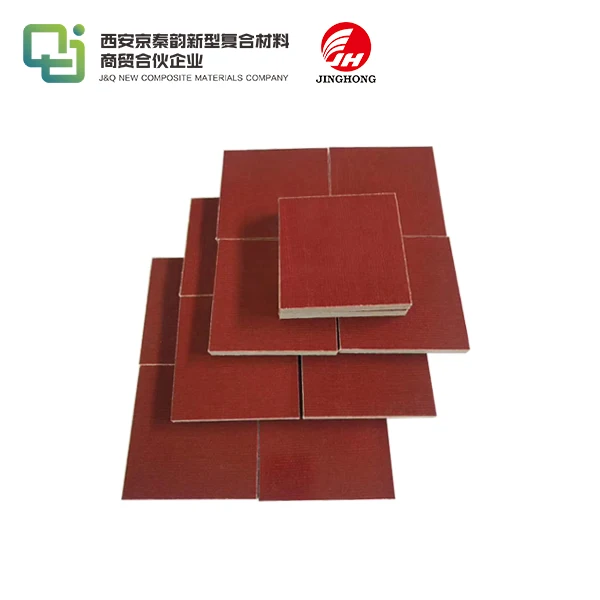
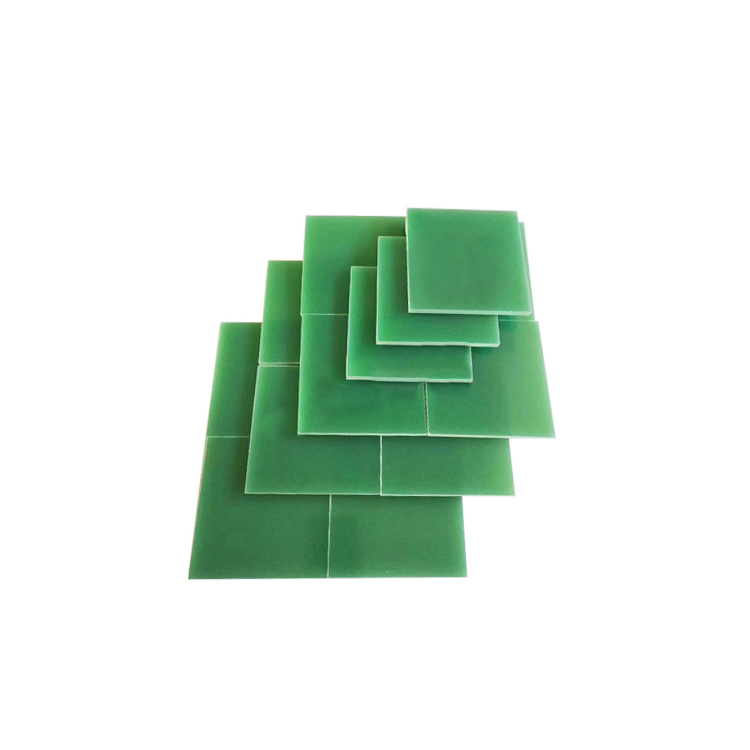
G11 Sheet for Generator Components, Motor Supports, and Industrial Insulation
2026-11-18 17:19:00
G11 Sheet is an epoxy laminate made of glass fibers that can be used to make factory insulation, generator parts, and motor supports. At 155°C (Class F), it retains at least half of its mechanical properties and stops the flow of electricity. Engineers use it to make things like spacers, barriers, coil supports, and brackets that need to hold weight and keep live parts separate. What is the material, where does it work best, how does it compare to FR4, and how can you be sure it's good before you buy it? In that case, your team can write a clear brief. I also talk about the JingHong G11 Sheet that J&Q offers.
What Is G11 Sheet?
Glass-Fiber Epoxy Construction
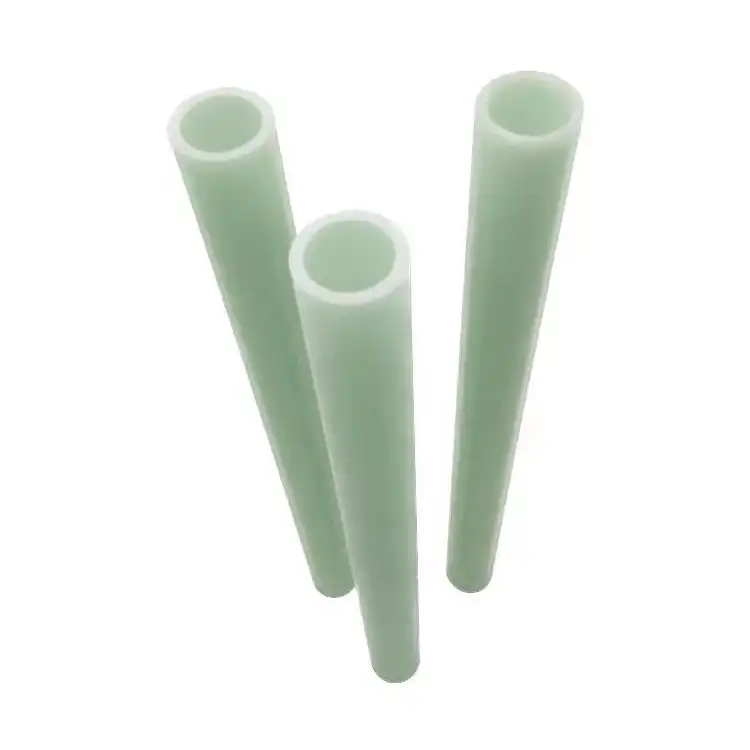
G11 Sheet is a high-pressure thermosetting laminate. Professionals who make it soak a long piece of woven glass fabric in a hot epoxy resin. After that, the layers are stacked, heated, and pressed together to harden. The epoxy stops electricity from moving and keeps water out. The glass makes the board stiff and stable in its shape. For this grade, NEMA LI 1 is used, and MIL-I-24768/3 Type GEB covers the work. The board is dense and stiff because it is glued together, so a G11 epoxy laminate can hold weight and keep the wires separate. Most of the time, one piece of plain plastic can't do two things. When someone buys something, I tell them that the datasheet is more important than the label because two sheets with the same name can have different resin mixes and cure times.
Core Electrical, Thermal, and Mechanical Properties
For a start, the standard sizes for a G11 insulation sheet can be useful. It has a density of about 1.85 g/cm³ and doesn't soak up much water (less than 0.15%), so it stays the same size in damp places. It is usually between 155°C and 180°C before something turns into glass. In a straight line, it can withstand more than 65,000 psi of force, and across the laminations, it usually breaks down at more than 50 kV. The sheet stays tough even at very low temperatures, and it doesn't react with a lot of different chemicals. You should check these numbers against the supplier's test report for that batch to be sure they are correct.
G11 vs FR4 and Other Insulation Materials
The main thing people want to know is what makes the G11 and the FR4 different. At 155°C (Class F), the strength of G11 stays high. But for FR4 (G10), the strength drops above 130°C (Class B). It takes longer for G11 to break down in hot weather, but it is stronger. For parts that don't get too hot, phenolic laminates work well, but they're not as stable structurally. More heat can be applied to ceramics and mica, but they are often fragile and tough to work with. It's possible for high-temperature polymers to bend, but they're not as stiff as glass-epoxy. That's why I believe you should use the whole app to rate each piece of writing, not just one. You should ask for FR-5, which is G11 that doesn't catch fire, if a part needs both flame retardancy and G11 heat performance.
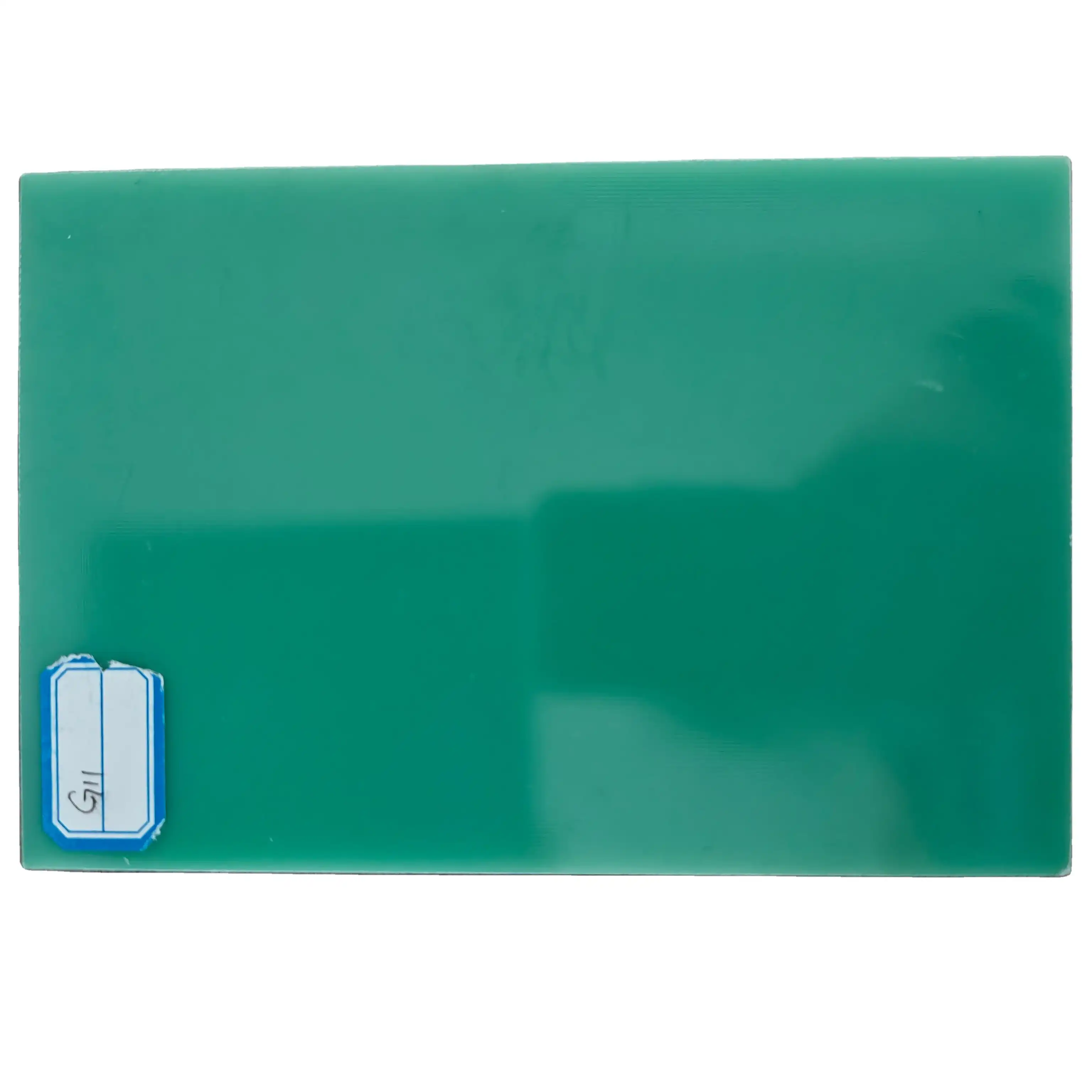
G11 Sheet for Generator Components and Motor Supports
Electrical Insulation in Generators and Motors
In generators and motors, there are a lot of charged copper, steel, and bearings crammed into small spaces. You can use G11 Sheet to keep these parts separate as coil supports, slot separators, phase barriers, terminal boards, bushings, and washers. In power generation, it's used in arc chutes, rotor insulation, and stator slot wedges because it can handle arcs and heavy loads. That's because thickness doesn't tell me how far the insulation will go by itself. The first things I look at on a drawing are the creepage and clearance. In the next step, I check the voltage class against the dielectric data on the datasheet. Before any insulation is cut, these are the stages where most problems are found.
Mechanical Support Under Vibration and Load
There's more to a motor support than just keeping you warm. When an electromagnetic force and vibration hit a mounting plate, a bracket, or a bearing housing, they get stuck there. G11 Sheet is stiff enough for the job thanks to the glass reinforcement, and it won't bend because it has a flexural strength of more than 65,000 psi. The shape, the direction of the fiber, and the direction of the load still affect how well it works. When you put bolts or nuts in the piece, make sure there is enough space between the edges and around the holes for them. Also, don't tighten the fasteners too much. Making things too tight can lead to cracks near holes. Before you start making a lot of heavy-duty assemblies, you should test a prototype or the first one.
Thermal and Environmental Factors
Class F insulation, which can handle temperatures of up to 155°C, works well for many motors and generators. However, you need to keep temp drops and spikes that last a long time separate. Heating and cooling the sheet and nearby metal parts at different speeds is also important. Make sure there is enough room for the assembly. Make sure that oil, dust, humidity, solvents, or varnish have not touched it. Many solvents can't break down G11, so it can be used near lubricants. It doesn't soak up much water, which is good for damp areas. Still, check to see if it works with your oil or coating before you finish the design. Every important choice should be based on technical information that is specific to the grade.
Industrial Insulation Uses Across Key Sectors
Switchgear, Transformers, and Power Distribution
People who want to buy power and energy look for systems that are approved as working well and don't catch fire. Electricity cabinets, arc barriers, switchgear barriers, busbar supports, and transformer coil insulation can all be made from G11 Sheet. It keeps the conductors apart and keeps heat out. It works well in heavy-duty transformers' arc chutes and phase barriers because it doesn't arc and stays stiff even when it's hot. When there is pressure to clamp, rigid insulation also helps keep the space between the wires. For long-term utility needs, the same grade is often needed. Ask the supplier how it makes sure that each batch is the same, and ask for test reports with your first order.
Machinery, Automotive, Appliance, and Electronics Uses
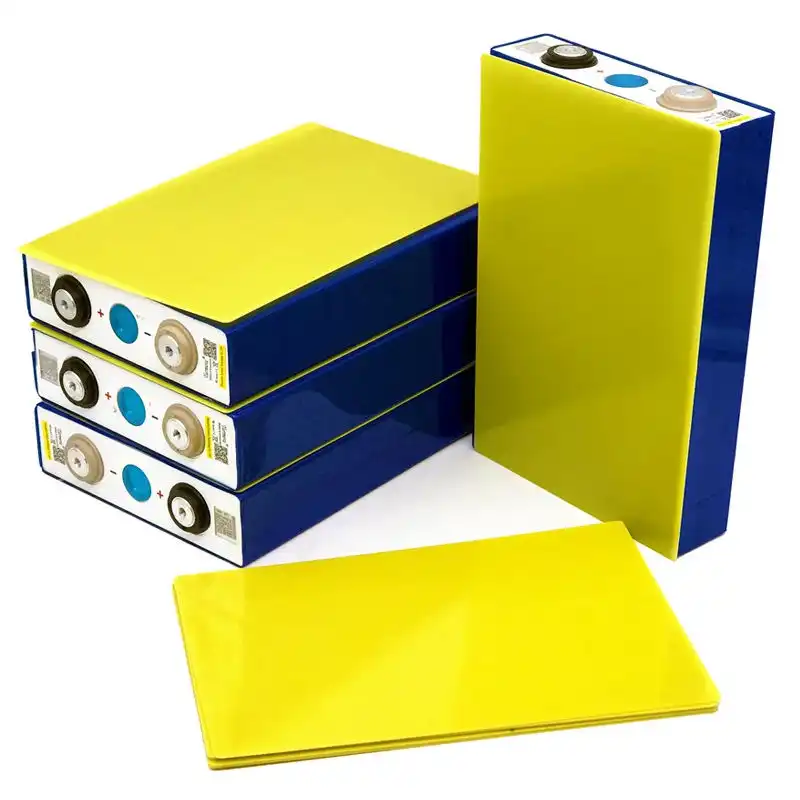
In other fields, the laminate is used in different ways. Machine builders use it to make wear parts, structural insulation, and mechanical spacers that need to stay the same thickness even when they are loaded. The people who make parts for cars think it could be used as heat-resistant fixtures, battery pack barriers, and insulation pads. Frames for insulation, motor brackets, and parts that keep heat away from the motor are all made from sheet. It is used to make soldering pallets, carrier plates, and test fixtures out of G11 Sheet so that they can be wave-sold many times without warping or delaminating. When you get a quote, be sure to say how much you want and if there are any tolerances you need. In its own way, each sector looks at cost, batch stability, and delivery time.
Custom-Machined G11 Components
A lot of people who buy the sheet cut it into rings, plates, brackets, and spacers. Machine shops use high-speed CNC routers, diamond-coated or tungsten carbide cutters, and dust extraction to keep their tools in good shape. Hold the piece still while you drill so that it doesn't come apart. If the inside corners are too sharp, stay away from them, and make sure the fasteners don't press too hard on the laminate. Also, look for cracks and burrs in the holes and along the edges. Tolerances should be set based on what they are used for, as too-tight tolerances will slow down the machining process without making it better. Send the supplier either 2D or 3D CAD files with your request. This will help them help you choose the best thickness and sheet size to save the most material.
How to Select and Verify G11 Sheet?
Define Electrical and Thermal Requirements
You need to know the dielectric stress, the rated and peak voltages, and the distances you need for creepage and clearance before you start with a G11 Sheet. Check the datasheet to see how those numbers match up with the values for insulation resistance and dielectric strength. Next, draw a picture of the temperature profile. The profile should show the steady operating temperature, any short-term peaks, and thermal cycling. As long as the part stays below 130°C, it might work with FR4. G11 is made for Class F service at 155°C. If you want to protect a part that gets hotter, you should use G11 or another high-temperature laminate. To find out which standard applies, like NEMA LI 1 or IEC 60893-3-2, or to find out what your customer wants, check. Check to see if the test method used to get the thermal rating given by the supplier is the same.
Match Mechanical and Environmental Conditions
Next, make a list of what you need to be able to do: bend, pull, compress, impact, vibrate, shock, and hold pressure. Bugs can become big when parts are stacked. Check the tolerances for how thick and flat something is. Go back and look at the dust, oil, solvents, and humidity one more time. They choose a G11 board based only on its temperature rating, don't check the machining, or buy from a source they haven't checked out. These are all mistakes that people keep making. Get a full datasheet, compare values from the same test standards, and make sure you're happy with a sample before making a lot of them. Only then should you use them. Ask people who have applied for jobs like yours for references.
Check Quality Control and Documentation
Getting things made sure to be correct by three checks. According to ASTM D790, thermal stress testing shows that the flexural strength stays the same at 150°C. This shows the difference between the real G11 and the less expensive G10. The ASTM D149 test for dielectric strength finds holes or other impurities that aren't pure and could cause an arc. Dimensional inspection checks the thickness to make sure it's within a certain range (usually ±0.05 mm for precision sheets), and the surface is smooth and free of any bulges, creases, or breaks. Request proof that the item meets the needs of MIL-I-24768/3 Type GEB or IEC 60893-3-2 Type EP GC 203. On top of that, you should ask for inspection reports and batch numbers. Before it goes into production, the sheet should be checked for cracks, delamination, and places where there is a lot of resin when it gets there.
Sourcing G11 Sheet from J&Q
JingHong G11 Sheet Specifications
This is what I tell new buyers about the item.
| Item | Detail |
|---|---|
| Brand | JingHong |
| Material | Epoxy resin |
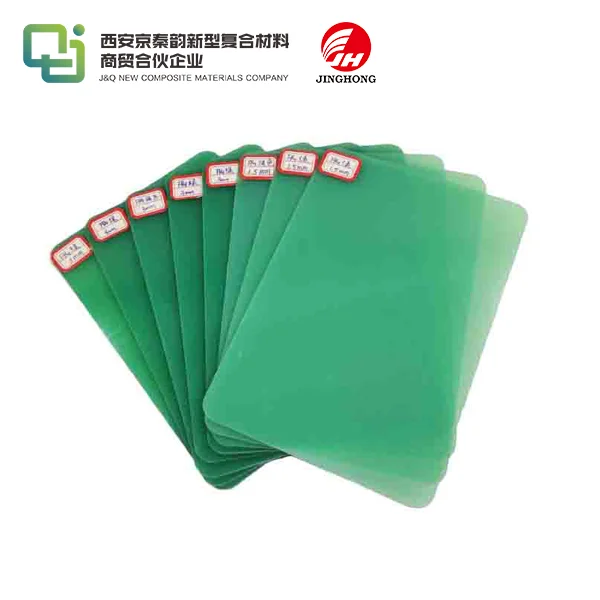
| Natural color | Light green |
| Thickness | 0.3 mm to 100 mm |
| Regular size | 1030 mm x 1230 mm |
| Custom sizes | 1030 x 2030, 1220 x 2440, 1030 x 1030, 1030 x 2070 mm |
| MOQ | 500 kg |
In terms of quality management, UL 94 V-0 is used, while ASTM D635 is used to measure how flammable something is. Each sheet is put through tests to see how well it can handle heat, flame, and electrical strength. It's easy to move and set up because the sheet is strong but still light.
OEM Service and Production Capacity
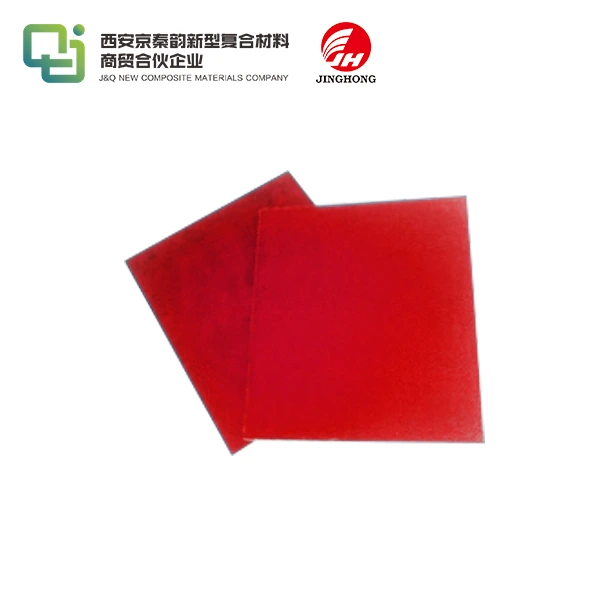
Insulating sheets have been made and sold by J&Q New Composite Material Group Co., Ltd. for more than 20 years. With test runs and repeat orders, we can handle up to 43,000 tons of goods every year. You can use our OEM service to get the size, thickness, and color you want. Our team will help you every step of the way to make sure the last sheet matches the drawing. You can get other colors through OEM service if you don't like the soft green color that comes standard. The people in charge of engineering and OEM sourcing can send us their needs, and we'll get back to them with a solution.
Packaging, Shipping, and Ordering
To protect the sheets while they're being shipped, we put them in regular boxes and put the boxes on pallets. We ship by sea, land, or air, and our own logistics company delivers the goods. From making it to getting it to you, you only have to deal with one team. Since we've been in business for more than 10 years, we've also worked with trading companies both at home and abroad for many years. You can pay by T/T. It will speed up the quote process if you list the sheet size, thickness, quantity, operating temperature, voltage, mechanical load, and standards that must be met. You can learn more about the product at jhd-material.com.
Conclusion
G11 Sheet is made by mixing high-temperature epoxy resin with glass fiber reinforcement. For generator parts, motor supports, and industrial insulation, this keeps electricity from getting through and makes it strong up to 155°C. As temperatures rise, it doesn't change as much as FR4, but it is harder to work with. Phenolic laminates, mica, ceramics, and polymers all lose some of their stiffness, heat resistance, or ability to be machined. You should start with voltage, temperature, load, and environment to make a good choice. Then check the values given in the datasheet, the ASTM D790 and D149 tests, the thickness tolerance, and the certifications to make sure they are correct. When you plan, drill, and attach things carefully, they won't crack or come apart. If you work in the power, machinery, automotive, appliance, or electronics industry, follow these steps to make sure you get the right laminate for the job and don't mess up the specs.
FAQ
What is the difference between G11 Sheet and FR4?
Once the temperature goes above 130°C (Class B), FR4 stops being strong. But G11 Sheet stays strong up to 155°C (Class F). Plus, G11 is tougher to work with, so make sure you have the right tools.
Is G11 Sheet flame retardant?
The version of NEMA G-11 that doesn't resist fire is called FR-5, while the version that does is number 11. UL 94 V-0 is written on the J&Q product list, but you should check your datasheet to be sure.
Can G11 Sheet work at cryogenic temperatures?
Yes. Pulling and bending strength stays the same down to the temperature of liquid helium, which makes it good for insulating superconducting magnets. It also stops heat from moving.
How long can I store G11 Sheet?
Keep fully cured G11 Sheet flat in a dry, room-temperature area for as long as you want. Like prepregs, it doesn't need to be chilled.
What is the minimum order quantity?
For JingHong G11 Sheet, you need to order at least 500 kg. You can get sizes, thicknesses, and colors that are just right for you through our OEM service. Send us your needs, and we'll make sure you get what you want.
Contact J&Q for G11 Sheet Supply and OEM Insulation Solutions
Just send an email to info@jhd-material.com with your drawings, voltage, temperature range, and how many you need, and our team will help you find a good G11 Sheet. There are 43,000 tons of G11 Sheets that we can make every year. We've been making them for more than 20 years. We can also customize products for OEMs, and we have our own logistics company, so we can handle both production and delivery. At jhd-material.com, you can know more about the item and get a price right away.
References
1. NEMA LI 1: Industrial Laminated Thermosetting Products, 1998
2. IEC 60893-3-2: Insulating Materials – Industrial Rigid Laminated Sheets Based on Thermosetting Resins for Electrical Purposes – Requirements for Rigid Laminated Sheets Based on Epoxy Resins, 2011
3. ASTM D149: Standard Test Method for Dielectric Breakdown Voltage and Dielectric Strength of Solid Electrical Insulating Materials at Commercial Power Frequencies, 2020
4. ASTM D790: Standard Test Methods for Flexural Properties of Unreinforced and Reinforced Plastics and Electrical Insulating Materials, 2017
5. UL 94: Standard for Tests for Flammability of Plastic Materials for Parts in Devices and Appliances, 2013
6. IEC 60085: Electrical Insulation – Thermal Evaluation and Designation, 2007