How to Select Black Phenolic Tube Sizes for Electrical Equipment Manufacturing?
2026-11-19 16:42:09
To pick the right Black Phenolic Tube size for your electronics, start with what the tube is for and work your way out to the part that fits. Set the inside diameter of the rod, shaft, or cable, plus the space around it. Choose an outside diameter that fits the area you have. Walls should be thick enough to keep heat in and the house strong. Next, add to the list the length, tolerances, material grade, best temperature range, and amount of time the item spent in oil or water. Lastly, put a sample into the real assembly to make sure you made the right choice. Since we've worked at J&Q for 20 years, we can help you with every step of this guide.
Start With the Application and Dimensions
Define the Job Before You Pick a Number
How it will be used is the first thing that guides every size choice. Tubes can keep the space between wires open, protect a shaft, hold a part in place, or direct an assembly step. Make a note of the voltage, frequency, temperature, humidity, contact with oil or chemicals, dust, vibration, and where the part is in the machine. Write down how it fits: with loose space, clamps, press fits, or bonds. On the inside, the press-fit sleeve's plan needs to be tighter than the loose spacer's. You can also pick whether you need standard lengths for prototypes and OEM production, parts that are cut to size, or machining. Teams that agree on this list from the start won't have to redo as many things in the end.
Match Inner Diameter, Outer Diameter, and Wall Thickness
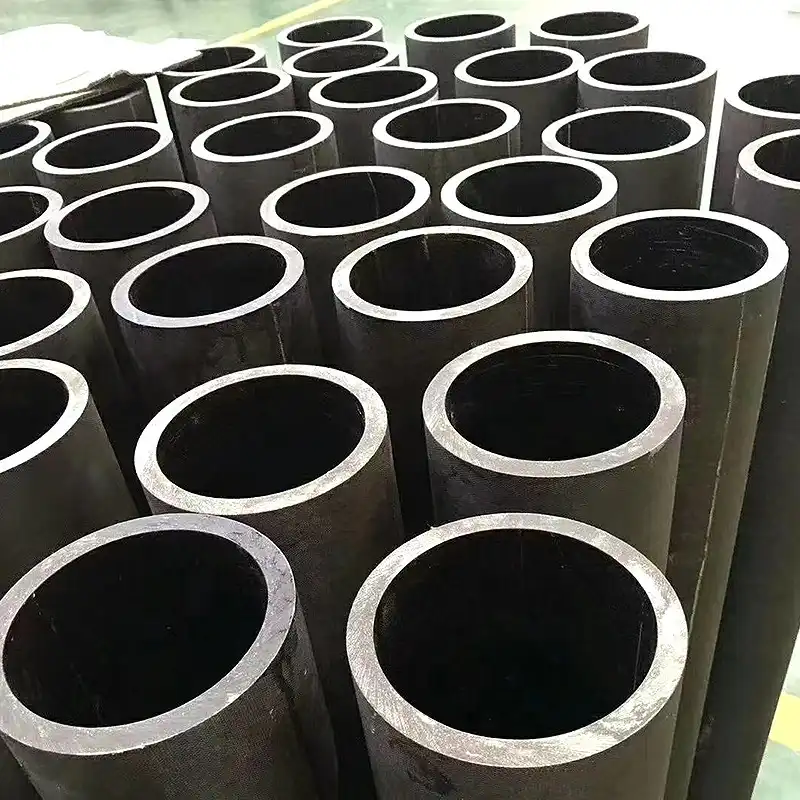
It's not always true that nominal size works by itself. It is important that the inner diameter is bigger than the rod, cable, terminal, or fastener that it fits onto. This is because of tolerances, coatings, thermal expansion, and how the part is put together. Making sure the outside diameter doesn't touch any wires, clamps, connectors, or airflow paths is very important. Wall thickness keeps insulation distance, strength, weight, and heat flow in check. When you order JingHong tubes, you can pick outside diameters between φ6 mm and φ2000 mm and inner diameters between φ5 mm and φ1500 mm. At least 2 mm of wall is included. If your drawings are in inches, use the rate of 25.4 mm per inch to change them to mm, and set the mm goal in your RFQ.
Specify Length, Tolerances, and End Treatment
Because our longest tube is 2 m long, any longer runs need to be split up. Choose a finished length that is the right length for the part. Cutting from stock that is too long or too short is a waste of time and materials. Then, define concentricity, ovality, and straightness only when they are needed to do their job. A spacer between two plates doesn't need to be perfectly centered, but a bushing that spins on a shaft does. It takes longer to machine and make something with too tight of tolerances, but it doesn't make it work better. If you want the ends to be square cut, chamfered, or machined steps, let them know. This way, the tube will fit correctly and not break when it's being put in.
Evaluate Electrical and Thermal Performance
Check Dielectric and Insulation Properties
How well a wall can stand up to the working voltage can be seen by its dielectric strength, insulation resistance, and voltage withstand. There are two standards that tell you how to test rigid tubes for electrical insulation. The first is ASTM D348, which tells you how to find the dielectric breakdown voltage in solid insulating materials. Good insulation isn't just based on how thick the wall is; grade, moisture, and geometry can also make a difference. Talk to each supplier and find out how they test their tubes and what information they have that is unique to that tube. When designing something that needs to be safe or has a high voltage, dielectric tests should be done on samples that are inside the actual assembly.
Match Heat and Mechanical Load
Up to 120 °C (250 °F) can be reached by our Black Phenolic Tube and cotton fabric. Check your equipment for any hot spots near coils or busbars to find the place where it gets the hottest. After that, talk about mechanical duty, which includes stress, vibration, bending, and insertion force. It can be used for supports, bushings, and spacers because the cotton fabric reinforcement makes the tube strong even when it's thick with weight on it. Walls that are stronger can hold more weight and heat, but they can also hold more weight. Look at both. Thermocycling is also important because pressing something over and over again can make it less tight after it looked good at room temperature.
Consider Moisture, Oil, and Chemical Exposure
Solvents, glues, coatings, transformer oil, and cleaning chemicals can all hurt a tube over time. It is chemically stable, and fabric-reinforced grades are often chosen over paper-based grades when humidity is a problem. Because phenolics still soak up some water, if the size is too small, don't worry. Stay away from places with strong acids that oxidize because they can hurt the resin. In the RFQ, you should list all the fluids that the tube will come into contact with. Then, you should ask the supplier to confirm that all of them are safe. You can be more sure of the answer if you soak a sample in the real fluid instead of using a general chart.
Choose the Material Grade and Compare Alternatives
Understand Reinforcement and Resin Systems
There are several items that are called "Black Phenolic Tube." Laminates made from paper and cotton fabric have different strengths, forms, electrical properties, and stability over time. It has grades for industrial laminated thermosetting products, such as XX, C, and CE. IEC 60893-1 also has rules for rigid laminated sheets that are used in electrical applications. Cotton cloth and phenolic resin are used to make the JingHong tubes. You can get them in either black or brown. As you go through steps like winding, curing, and sizing, the final tolerances change. Find out if important dimensions are held before or after machining. Ask for a datasheet, an inspection report, and the ability to keep track of each batch when you place an order more than once.
Compare With Fiberglass and Epoxy Tubes
Most of the time, epoxy tubes that are reinforced with fiberglass are stronger and work better at high temperatures. When you need to drill, tap, or thread a lot of parts, standard carbide tools work well with phenolic laminates because they wear down tools less quickly than fiberglass. A phenolic cotton tube can often be used as a spacer or bushing after being heated up. Strong epoxy is a better choice if you need to work with high voltages or heat that doesn't stop above 120 °C. You shouldn't pick based on color or habit, but on what you need. You should also compare your needs for electrical, thermal, mechanical, machining, and lifecycle needs side by side.
Compare With Nylon and PTFE Tubes
Even though nylon is strong and light, it absorbs more water. When equipment is wet, this can change its size and how well it works electrically. However, PTFE doesn't react with chemicals and doesn't stick to other things very well. Because of this, it's not commonly used as a structural sleeve. One difference between phenolic and thermoplastics is that after it cures, it doesn't melt or get soft. This makes it a good material for supports for motors and switchgear, as well as for insulating sleeves and guides. That being said, nylon or PTFE might still be better if you need something that slides, doesn't react with chemicals, or is bendable.
Build a Selection Method and Avoid Mistakes
Create a Dimensional Table
Buy and engineering can work together on a Black Phenolic Tube with the help of a structured table. Write down the ID, OD, wall thickness, length, tolerances, concentricity, straightness, ovality, end treatment, quantity, and expected demand for each part number. Mark the part's sizes next to them to see how much space there is between them. Make a list of the dimensions that help the function work and the dimensions that are just for reference. After that, suppliers can give correct quotes and place checkpoints in the right places. Send the same table to all of the suppliers you want to get quotes from, and keep track of any changes. Because of this habit, two shops can't quote different parts of the same drawing.
Calculate Clearances and Validate in the Assembly
Make the table and use it to find the gaps between the parts, the gaps between the insulation, the differences in manufacturing, and the thermal expansion. Not everything fits right when a tube that is at the top of its tolerance meets a shaft that is also at the top of its tolerance. Because of this, you should not use nominal values but the worst-case tolerance stack instead. Then, use the tools to test the tube in the whole assembly. Check the fit, the dielectric, the temperature, the vibration, and the exposure to water. ASTM D348 lays out standard ways to make rigid insulating tubes. Before making a lot of them, test and approve samples. Write down what you found so that later orders can use the same information.
Avoid Common Sizing and Procurement Mistakes
Most of the time, a few bad habits are what make things go wrong. When people buy homes, they often only look at the nominal size, believe that thicker walls always insulate better, or don't do chemical and thermal cycling checks. These things can lead to cracks, size changes, or insulation failure. Some people set tolerances that are too small for the job, which makes it cost more and take longer to make. Also, it's not true that all phenolic tubes are the same. The consistency of the reinforcement, the resin, the process, and the batch are all different. With a written inspection plan and a change-control agreement, you can be sure that a big or sudden change in the process will never reach your line. Usually, choose the smallest tube that can be used while still meeting the needs of performance, production, and lifecycle.
Prepare an RFQ and Choose Your Supplier
Write a Complete RFQ
A clear RFQ gets a better and faster answer. You need to include what it will be used for, what kind of equipment it will be used on, a drawing or sample, the material grade, the ID and OD, the wall thickness, the length, the tolerances, the end treatment, the operating voltage, the temperature, the chemical exposure, the mechanical load, and the standards that must be met. Get prices for a range of different amounts, like samples, a pilot order, and the OEM's yearly needs. You should ask about the lead time, the minimum order quantity, the need for tools, the terms of shipping, the export packaging, and how long the quote is good for. Here's what you should ask the supplier: What can they give you if your program needs compliance paperwork like RoHS statements? Keep in mind that not all materials have all certificates.
Choose Between a Direct Manufacturer and a Distributor
Direct manufacturers are the best choice for custom sizes, large OEM programs, engineering support, and making the same thing over and over again. When you need standard sizes, small amounts, or something quickly in your area, a distributor can help. But you should check the maker, the material certificates, and the consistency of each batch. It is important to know about the test data, tolerances, machining options, reinforcement, resin grade, and how the product can be tracked. For more than 20 years, J&Q has been in business. For more than 10 years, they have traded with other countries. We also have our own logistics company, which means that the same people work on both making things and shipping them by air, sea, or land. This lets people in the US know when their packages will arrive.
See What JingHong Black Phenolic Tube Offers
Cotton cloth and phenolic resin are used to make the JingHong Black Phenolic Tube. You can get it in black or brown. The walls are 2 mm thick, and the inside diameters are between 5 mm and 1500 mm. The outside diameters are between 6 mm and 2000 mm. One of the tubes is 2 m long. It can hold 100 tons per year, which are packed in standard industrial boxes. We check the raw materials, the curing temperature, the sizes, and the surfaces twice as part of our process. You can ask for good documentation if you need it. As part of our OEM service, we can make walls of any length, width, or thickness. Plus, we make prototypes to make sure an idea works before we make the real thing.
Conclusion
Before you choose a Black Phenolic Tube size, you should think about what it will be used for and how it works. That's it! You pick the length, inner diameter, outer diameter, wall thickness, and any other specs the job calls for. Electrical and heat tests, like the 120 °C limit for cotton fabric phenolic, as well as tests that put the fabric in water, oil, and chemicals, can show if a grade fits. You can tell that fiberglass, epoxy, nylon, and PTFE are all good for different things when you put them next to each other. One use for phenolic is making machined sleeves, spacers, and supports. By using a size table, figuring out the largest possible gap, and testing the assembly, you can lower the risks of fit and insulation. When the same order comes in again, it will always be the same thanks to a full RFQ and a written inspection plan. Most of the time, the smallest tube that meets the needs of performance, manufacturing, and length of life is the best choice.
FAQ
What size information should I send for a quote?
You can send a drawing or sample along with the order, tolerances, length, wall thickness, inner and outer diameters, and the number of pieces you need. Be sure to tell the supplier the operating voltage, temperature, and any chemical or oil contact. This will help them understand the grade.
What is the smallest wall thickness available?
The JingHong Black Phenolic Tube can be up to 2 m long and has walls as thin as 2 mm. We can't get to walls that are too thin.
What temperature can the tube handle?
Up to 120 °C; our phenolic resin tube and cotton fabric can handle it. Then get your highest temperature at full load and compare it to that limit. This should include any hot spots.
Can I order prototypes before volume production?
Yes. As part of our OEM service, we make prototypes that you can use to check how well they fit and work. We can handle orders of all sizes.
Contact J&Q for a Black Phenolic Tube Size Review
Our team will look over your Black Phenolic Tube size if you email info@jhd-material.com with your drawing, how it will be used, and how many you want. Our Black Phenolic Tube is shipped by sea, land, or air. We have been making insulating materials for more than 20 years. We can also help with OEM samples and parts that are cut to size, and we have our own logistics company. Visit jhd-material.com to find out more.
References
1. ASTM D348, Standard Test Methods for Rigid Tubes Used for Electrical Insulation, 2019
2. ASTM D149, Standard Test Method for Dielectric Breakdown Voltage and Dielectric Strength of Solid Electrical Insulating Materials, 2020
3. ASTM D229, Standard Test Methods for Rigid Sheet and Plate Materials Used for Electrical Insulation, 2019
4. ANSI/NEMA LI 1, Industrial Laminated Thermosetting Products, 1998
5. IEC 60893-1, Insulating Materials – Industrial Rigid Laminated Sheets Based on Thermosetting Resins for Electrical Purposes, 2004
6. Handbook of Plastics, Elastomers, and Composites, 2002

_1765441788610.jpg)