Glass Epoxy Sheet for Precision Electrical Insulation Components
2026-10-23 09:37:11
When engineers and procurement teams search for reliable electrical insulation materials, glass epoxy sheet consistently ranks at the top of the shortlist. This woven glass fiber composite, bonded with epoxy resin under high pressure and heat, delivers a balance of dielectric strength, mechanical durability, and thermal endurance that most single-material alternatives simply cannot match. Whether you are sourcing for PCB substrates, transformer barriers, motor components, or switchgear assemblies, understanding this material's capabilities will help your team make smarter, faster procurement decisions.
Understanding Glass Epoxy Sheets: Properties and Manufacturing
What Makes Up a Glass Epoxy Sheet?
Filament-woven glass cloth that is fully mixed with an epoxy resin binder is what makes up a glass epoxy laminate. Once that is done, high pressure and heat are used to harden the glass epoxy veneer. This makes a strong compound that doesn't melt. It is labeled as G-10, G-11, FR-4, or FR-5 and meets NEMA standards. There are different requirements for each grade. Most PCB substrates are made from FR-4. Electrical requirements for Class F and Class H are met by G-11 and FR-5 grades, which can keep their structure at temperatures between 155°C and 180°C.
Critical Performance Properties
The ASTM D709 and IEC 60893 standards have a lot of information about what a good epoxy glass laminate should have. A lot of the time, bending strength goes above 340 MPa in the long way. The breakdown voltage across the laminate is between 40 and 50 kV, and the dielectric strength is between 500 and 800 volts per mil. After 24 hours of soaking, it doesn't take in more than 0.1% of water, so it doesn't delaminate or leak electricity in wet factories. It lasts a long time since most acids and liquids don't break it down.
Manufacturing Standards and Quality Control
It is very important that production follows NEMA LI-1, MIL-I-24768, and IEC 60893 to the letter. UL94 V-0 is used to check the flame resistance of FR-4 grades. Electrical performance tests and checks for size errors are used to keep an eye on the curing cycles, multilayer assembly, and lamination. These checks let the teams that buy things know that each batch meets the standard for insulation and load-bearing that is needed in controlled industries.


Comparative Analysis: Glass Epoxy Sheet vs. Alternative Insulation Materials
How It Compares to Paper Epoxy and Phenolic Laminates?
It costs less to make paper epoxy and phenolic cotton laminates, but they soak up water more quickly. The size changes as more water is absorbed, and the dielectric performance decreases over time. On the other hand, epoxy fiberglass laminates keep their shielding value even in places with a lot of water. There is a big difference between these material groups when long-term electrical stability is important, like in power distribution panels and coil insulation.
Glass Epoxy Sheet vs. Ceramic and Mica-Based Insulators
Insulators made of ceramic and mica work well in hot places, but they are fragile, hard to shape, and expensive to make yourself. It is cheap and easy to use a CNC to make a Glass Epoxy Sheet that is strong when bent and has stable dielectric constants. Being machinable is helpful because it cuts down on the time and money needed to make parts like arc barriers, terminal boards, and busbar supports.
Thickness Selection and Its Impact on Performance
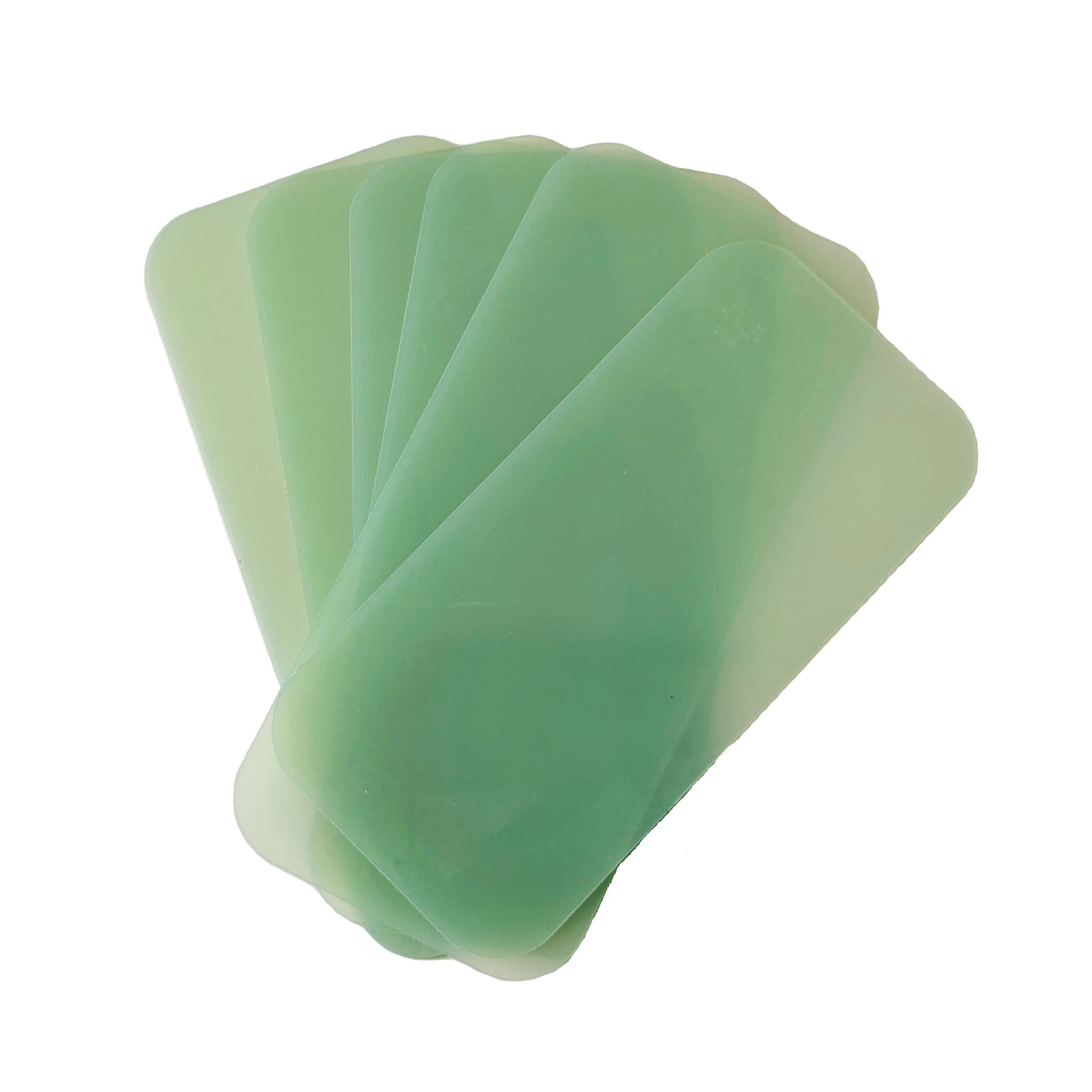
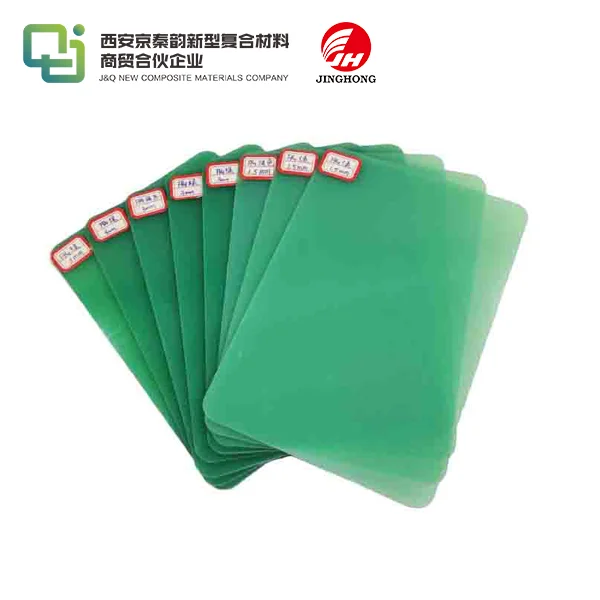
The electrical and mechanical results are both affected by the thickness of the sheet you choose. PCB boards and fine insulation pads work best with sheets that are 0.5 to 1.5 mm thick. But profiles that are 3–25 mm thick are needed for structural spacers, gear parts, and mechanical fittings. To keep things from breaking down too soon, you need to choose the right width for the voltage class and mechanical load. Most reputable Glass Epoxy Sheet suppliers offer a large selection of sizes with tight tolerances to meet a wide range of technical needs.
Application-Specific Use Cases: Where Glass Epoxy Sheets Excel
PCB Fabrication and Electronics Manufacturing
Bases for printed circuit boards are always made from FR-4 grade epoxy glass laminate in the electronics business around the world. As an engineering manager, you should choose this material for PCBs because it doesn't catch fire on its own, stays the same size during soldering heat cycles, and has a constant dielectric constant. Many different kinds of parts, from home electronics to industrial control systems, use FR-4 to keep signals safe and structures strong.
Transformers, Switchgear, and Power Distribution
People who work with power distribution often ask for epoxy fiberglass sheets to be put inside transformer and switchgear enclosures to act as coil insulation, phase barriers, and arc containment structures. The material must not track or arc when it is under long-term high-voltage stress. This is very important for grid safety. Once the insulation is thermally stable over a wide operating range, it stays that way even if the load changes and the temperature in the substation changes.
Automotive and Aerospace Structural Insulation
Epoxy glass laminates are used for structural supports, battery pack shields, and insulation pads by both companies that make parts for cars and companies that make parts for spacecraft. When used in aerospace, the material stays strong even at very low temperatures. This is important for supporting superconducting magnets and parts of fuel systems. Automotive R&D workers look for tight cutting tolerances and consistent batch quality when they need heat-resistant parts for batteries in electric vehicles.
How to Choose and Procure Glass Epoxy Sheets for Your Business Needs?
Defining Your Electrical and Thermal Requirements
Three things should be clear to your engineering team before they ask for a price on a Glass Epoxy Sheet: the constant service temperature, the working voltage class, and whether UL or RoHS compliance is needed. We can tell from these three things if normal FR-4 G-10 is enough or if we need G-11 or FR-5 high-temperature grades. This will keep you from having to make costly changes to the materials in the middle of production if you write down these parameters early on.
Buying teams should be sure of these things before placing an order:
- NEMA or IEC grade required (G-10, G-11, FR-4, FR-5) based on temperature and flame-retardancy requirements
- Sheet dimensions and thickness tolerances aligned to CNC machining or lamination assembly specifications
- Certifications needed such as UL94 V-0, RoHS compliance, or MIL-spec documentation for regulated supply chains
— Sheet sizes and thickness ranges that meet the needs of CNC cutting or lamination assembly. To have a controlled supply chain, you need paperwork like UL94 V-0, RoHS compliance, or MIL-spec.
Customization Options for Complex Applications
All of these things work together to speed up the seller approval process and cut down on mistakes in the specifications. When these points are agreed upon by the buying teams before a purchase order is sent out, they don't have to make as many models, which slows down production.
Bulk Ordering and Logistics Considerations
If you need to make a lot of things at once, talk to your supplier early on about freight options and lead times. For suppliers who handle their own logistics, combining packages and making sure they arrive at the right time for your production plan is easy. Making sure ahead of time of the minimum order amounts and packing needs avoids problems with stock.
Ensuring Quality and Reliability: Trusted Suppliers
What to Look for in a Qualified Supplier?
One good place to get glass epoxy laminate is from a company that has checks for NEMA LI-1, IEC 60893, and UL94 V-0 approvals. They should also be able to make OEM parts, keep size tolerances the same from batch to batch, and offer technical help with picking materials. It's more trustworthy when there are references from related fields, like the car, power, or electronics businesses. People who work in buying should always ask for test results for materials that come with every package.
The Value of Long-Term Supplier Partnerships
Trouble with sourcing will go away over time if you work with a seller who knows how to meet the needs of your business. When changes are made to the design, providers who offer application engineering help may suggest that the grade be raised or the thickness be changed. Working together this way cuts down on the time it takes to test new parts and keeps your supply chain stable even when you change how much you're making.
Conclusion
Glass Epoxy Sheet is still one of the most reliable types of insulation laminates that engineers and factory workers can get today. It can be used for many tough jobs, like making PCB boards, transformer barriers, and car insulation fixings, thanks to its high dielectric strength, low moisture absorption, mechanical strength, and ability to be made on a CNC machine. When it comes to quality-sensitive supply lines, the two most important things for procurement teams to do are to pick the right grade and work with a certified seller.
FAQ
What is the difference between FR-4 and G-10 glass epoxy sheet?
They are both made of glass and epoxy, and they work the same way electrically and mechanically. The main difference is whether it puts out fires or not. UL94 V-0 says that FR-4 doesn't catch fire, but G-10 does. When it comes to electronics and electricity, FR-4 is the best choice because it meets fire safety standards.
How do I select the correct sheet thickness for my application?
Thickness is chosen based on the working power, mechanical load, and form of the part. PCBs and insulation pads can be made from thin sheets (0.5–2 mm). Thick sheets (5–25 mm) work best for structural spacers, gears, and mechanical fittings. Based on the specifics of your plan, the team at your service can help you pick the right profile.
What certifications should I require from my supplier?
You can ask for proof that the product meets the standards of NEMA LI-1, IEC 60893, and UL94 V-0 if you need to. Electronics must have paperwork that shows they follow RoHS rules. For defense or space projects, MIL-I-24768 approval may also be needed.
What are typical lead times for bulk orders?
Lead times vary on the type of sale, the number of items, and how personalized they are. It takes between 7 and 15 business days to ship most standard sheet forms in common grades. It may take longer to make specialty grades or unique cuts. Before making plans for production, it's always smart to check lead times.
Source Your Glass Epoxy Sheet with J&Q
Our business has been operating for more than 10 years, and J&Q has been making insulation sheets for more than 20 years. We offer a full service from production to the door of your building because we make Glass Epoxy Sheet and also handle transportation in-house. For use in cars, factories, and electrical systems, our team can help with custom sizes, grade options, and paperwork that proves the quality. We can be reached at info@jhd-material.com or jhd-material.com if you want to get samples or a price right away.
References
1. NEMA Standards Publication LI 1 — Industrial Laminated Thermosetting Products, National Electrical Manufacturers Association, 2020.
2. IEC 60893-3 — Insulating Materials: Industrial Rigid Laminated Sheets Based on Thermosetting Resins, International Electrotechnical Commission, 2003.
3. ASTM D709 — Standard Specification for Laminated Thermosetting Materials, ASTM International, 2021.
4. Harper, C.A. — Handbook of Plastics Technologies, McGraw-Hill, 2006.
5. Tarlochan, F. et al. — "Mechanical Performance of Glass Fiber Reinforced Epoxy Composites Under Varying Temperature Conditions," Journal of Composite Materials, 2018.
6. UL 94 — Tests for Flammability of Plastic Materials for Parts in Devices and Appliances, Underwriters Laboratories, 2013.