
How Does 3021 Phenolic Paper Sheet Perform in Mechanical Applications?
2026-10-08 17:08:23
If you work in electrical manufacturing, industrial machinery, or power distribution, you've likely encountered phenolic laminated sheets. Among them, the 3021 phenolic paper sheet stands out as a go-to material for mechanical and electrical applications. But how does it actually perform under real industrial conditions? This guide breaks down everything procurement managers and engineers need to know — from mechanical properties to sourcing best practices.
Understanding 3021 Phenolic Paper Sheet: Composition and Key Properties
What Is It Made Of?
To make this stuff, phenolic resin is mixed with insulating kraft paper and then heated and pressed to harden it. The thermosetting material that is made is stiff and has a density of 1.30–1.45 g/cm³. It is easy to spot on plant floors in the machinery and electrical industries because of its orange or black surface.
Mechanical and Electrical Specifications
The sheet has a thermal grade of Class E (120°C), which means it can be used in places with mild temperatures. The flexural strength is more than 115 MPa when viewed perpendicular to the laminations, and the impact strength (notched Charpy, when viewed parallel to the laminations) is at least 12 kJ/m². At least 3,600 N is needed for sticky strength. Under normal circumstances, the dielectric strength in oil is more than 10–12 kV/mm, and the insulation resistance is more than 10⁷ Ω.
Standards and Compliance
NEMA Type X/XX, GB/T 1303.1, and IEC 60893-3-4 (type PFCP201) all agree with it. Standard sheet sizes are 1,220 mm x 2,200 mm and 1,030 mm x 2,070 mm, and they can be 3 mm thick or 100 mm thick. Engineers can use these size options to make a lot of different types of structural insulation and mechanical spacers.
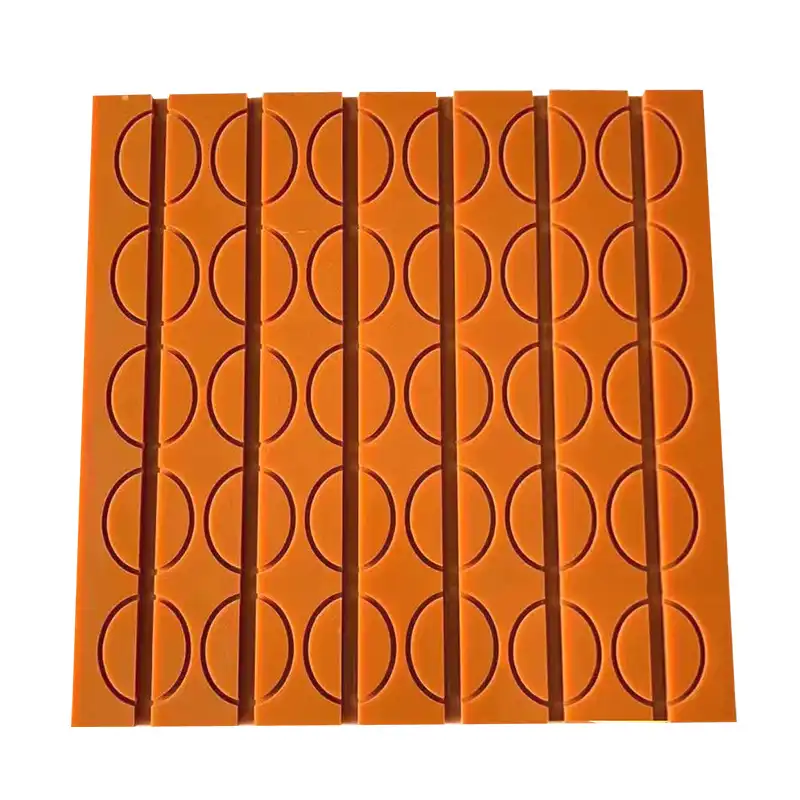
Performance Analysis in Mechanical Applications
Load-Bearing and Structural Rigidity
Phenolic paper laminate works well in motor brackets, insulation washers, and switchgear parts because it can handle both compressive and bending loads. Because it is structurally stiff, it doesn't creep when mechanical loads are applied over time. FR4 and fiberglass materials also have this quality, but they usually cost more. In low-voltage situations where cost-effectiveness is important, this material is often the best choice.
Abrasion Resistance and Cyclic Stress Durability
One quality that machinery engineers like about 3021 Phenolic Paper Sheet is that it doesn't wear down easily. Because it can handle repeated rubbing, phenolic paper laminate is a good choice for mechanical spacers, gear backing plates, and drill press backup boards. Several OEM clients in the switchgear industry have reported stable dimensional stability over long production cycles. This means that parts don't need to be replaced as often, which saves money on upkeep costs.
Where Does It Have Limits?
Make sure procurement decisions are clear. This grade puts electrical protection ahead of impact resistance, while the 3025 cotton phenolic version has better impact resistance. When engineers need to work in places with a lot of vibration or in situations where they need to absorb a lot of lateral shock, they should think about whether this grade is enough or if they need something stronger.
Comparative Overview: 3021 Phenolic Paper Sheet vs Alternatives for Mechanical Use
When picking between phenolic paper laminate and other insulating materials, you need to think about how well they work mechanically, how much they cost, where they will be used, and how they need to be processed. This is how the main choices stack up:
- 3021 Phenolic Paper Sheet vs FR4: FR4 (glass epoxy laminate) offers higher moisture resistance and better performance above 130°C, but costs significantly more. For applications within the Class E thermal range that require CNC machinability and a lower budget, phenolic paper laminate is a practical choice.
- 3021 vs Bakelite (Cotton Phenolic/3025): The 3025 cotton phenolic sheet offers better impact strength but lower dielectric precision. The 3021 grade is preferred where electrical insulation values take priority over toughness, such as in transformer oil environments.
- 3021 vs Epoxy Glass Laminates: Epoxy-based sheets (like 3240) resist moisture better and carry higher mechanical values, but they are more difficult to machine and carry a higher per-unit cost. For switchboards, panel boards, and insulating bushings in dry or oil-immersed conditions, the 3021 grade handles the task efficiently.
These trade-offs help procurement teams figure out which material will work best for their needs without spending too much. This material keeps its density and machine response stable for cuts that are thicker than 50 mm, which is useful for making unique parts.
Procurement Insights: How to Source Phenolic Paper Laminate for Mechanical Use?
Evaluating Supplier Capabilities
If you need phenolic paper insulation sheets, look for companies that can show they meet IEC 60893 or similar standards. Verified production skills, such as reliable hot-press curing methods and control of dimensional tolerances within ±15 mm, are a sign of industrial discipline. Before you place a mass order, make sure you get material test results (MTRs) that show the flexural strength, density, and dielectric values of the material.
Bulk Orders and Lead Times
For larger orders of 3021 Phenolic Paper Sheet, the working time per unit is usually faster, and shipping dates are more reliable. Suppliers who offer integrated services can make shipping easier. For example, J&Q has its own logistics business that handles orders from start to finish, from production to delivery. This is helpful for controlling the supply chain timelines for OEM projects.
Sample Testing Before Full Commitment
Before placing large orders, you should always ask for a sample of the material. Check the consistency of the dimensions, the finish on the surface, and how the machine responds. Before you buy more, you can do a small CNC test on the sample to make sure the sheet meets your accuracy needs.
Maximizing Mechanical Application Results
Machining and Finishing Best Practices
Phenolic paper laminate is known for being easy to work with. Standard carbide tools cut it cleanly, and it works well for drilling, milling, and punching. Use sharp tools and slow feed rates to keep the edge's purity. When cutting, don't let too much heat build up because phenolic resins can catch fire at high temperatures in one spot.
Handling and Storage
Lay the sheets out flat in a dry place, away from direct sources of wetness. This material doesn't soak up as much water as non-impregnated cellulose boards, but being in high humidity for a long time can change how well the surface dielectric works. When sheets are stored, surface pressure marks can be avoided by stacking them correctly and putting boards between them.
Long-Term Maintenance Considerations
This laminate stays chemically stable for long periods of time in transformer oil settings. For dry mechanical uses, checking insulation parts for surface cracks or changes in size on a regular basis can help find wear before it happens. Changing out worn parts on a regular basis keeps machinery running within its limits.
Conclusion
For Class E shielding uses, 3021 Phenolic Paper Sheet has a good mix of mechanical and electrical qualities. It is a reliable material for switchgear, motor parts, transformer oil applications, and structural insulation parts because it is strong in bending, doesn't wear down easily, and can be machined on a CNC machine. While it's not the most powerful phenolic material, it clearly fills a need for performance and cost-effectiveness that procurement teams in electrical manufacturing, industrial machinery, and power distribution often have to fill.
FAQ
Why is this grade preferred over cotton phenolic for electrical insulation?
For the 3021 grade, the base support is kraft paper instead of cotton cloth. This makes its insulating qualities better and its performance more stable in oily places. Cotton phenolic (3025) has a better impact strength but not as good an insulation accuracy. The paper-based grade is better for switchgear systems and generator parts where electrical performance is the most important thing.
How does it compare mechanically to FR4 laminates?
FR4 has a higher tensile strength (usually over 300 MPa) and is better at keeping water out. It is, however, much harder to make and costs more per sheet. When working with temperatures up to 120°C and not needing the higher mechanical strengths of glass epoxy, phenolic paper laminate is a cheap and easy-to-use choice.
What thickness should I select for mechanical spacer applications?
As a general rule, sheets that are 3 mm to 10 mm thick are used for light-duty gaps and insulation washers. Components of structures that are subject to higher compressive loads usually need 20 mm to 50 mm. You can get sheets up to 100 mm thick for heavy mechanical parts or custom tooling fixtures.
What certifications should a qualified supplier hold?
Check to see if the paperwork you need is in line with IEC 60893-3-4, NEMA Type X/XX, or GB/T 1303.1. Also, suppliers should give test results for each batch of materials that include important mechanical and electrical factors.
Request a Sample or Bulk Quote from J&Q — Your 3021 Phenolic Paper Sheet Supplier
J&Q has been making insulating sheets for more than 20 years and has been trading internationally for more than ten years. As a dedicated 3021 Phenolic Paper Sheet producer with our own logistics, we can guarantee stable product quality, certified material paperwork, and on-time deliveries. You can visit jhd-material.com or email us at info@jhd-material.com to ask for a sample, talk about custom sizes, or get a quote for your next order.
References
1. IEC 60893-3-4: Industrial Rigid Laminated Sheets Based on Thermosetting Resins for Electrical Purposes — Specification for Sheets Based on Phenolic Resin Paper (PFCP201/PFCP203). International Electrotechnical Commission, 2003.
2. NEMA LI 1: Industrial Laminating Thermosetting Products. National Electrical Manufacturers Association, 1998.
3. Harper, C.A. Handbook of Plastics Technologies. McGraw-Hill, 2006.
4. GB/T 1303.1: Laminated Sheets Based on Thermosetting Resins for Electrical Purposes — Part 1: Definitions, Designations, and General Requirements. Standardization Administration of China, 2008.
5. Brydson, J.A. Plastics Materials, 7th ed. Butterworth-Heinemann, 1999.
6. Crease, A. Electrical Insulation Materials: Properties and Applications. Peter Peregrinus Ltd., 1991.
