
Phenolic Paper Laminate Supports Mechanical Components in Industrial Equipment
2026-10-08 17:08:20
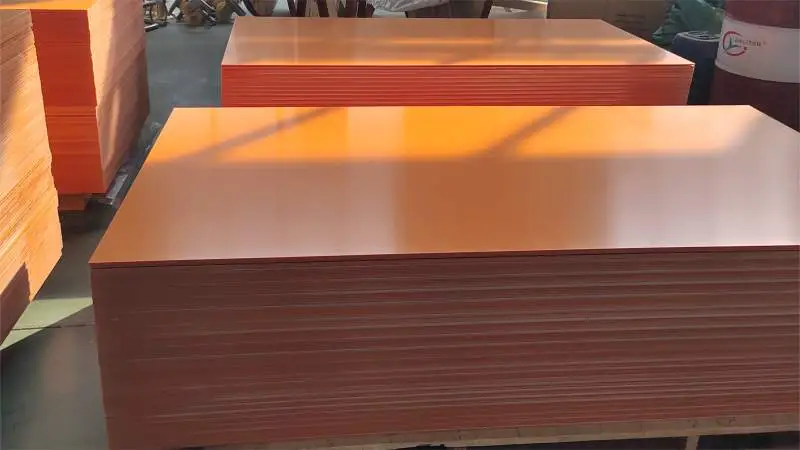
Phenolic paper laminate is a hard, thermosetting composite sheet made by coating multiple layers of cellulose kraft paper with phenolic resin and then fixing them under intense heat and pressure. The end result is a dense, dimensionally stable material with good resistance to mineral oils and weak acids and a measurable dielectric strength. When medium-voltage performance is needed instead of high-frequency accuracy, phenolic paper laminate is a tried-and-true, cost-effective alternative to glass-epoxy systems for industrial equipment builders looking for insulation and structural parts.
Understanding Phenolic Paper Laminate and Its Properties
Manufacturing Process
A liquid phenolic glue solution is put on top of layers of good kraft paper. After that, the paper is dried until the exact amount of resin is reached. The last step is to stack the paper and press it at high temperatures (usually between 150°C and 170°C) and pressures of over 1,000 psi. This joins the layers together to make a single, uniform sheet that stays flat at large sizes and weighs between 1.30 and 1.45 grams per cubic centimetre.
Technical Specifications and Standards
NEMA LI-1 (Grades X, XX, XXX, XP, XXP, and XXXP), IEC 60893 (Types PF CP 201–203), and ASTM D709 all use different scales to measure the material. The dielectric strength across the laminations is between 12 and 20 kV/mm (300 to 500 V/mil) when tested in oil. It is more than 100 MPa that high-grade sheets can bend. You can use it for a long time at either Class E (120°C) or Class B (130°C) constant working temperature. Water absorption ranges from less than 1% for Grade X to about 2.5% for Grade X. This directly affects the material choice for use in wet or oily places.
Why It Stands Apart from Alternatives?
It's easier to work with phenolic paper laminate, and it costs a lot less than FR4 epoxy glass. It can be cut, drilled, and manufactured faster, which makes tools last longer. When 50/60 Hz electrical insulation is enough and mechanical loads are moderate, specifying FR4 is just adding too much complexity to the problem. Paper-based grades are better than cotton fabric laminates for supporting transformer and switchgear coils because they are better at resisting electrical insulation and taking in less moisture.
Advantages of Phenolic Paper Laminate in Industrial Mechanical Applications
It is hard to find materials that are as good as Phenolic Paper Laminate in terms of both their mechanical and electrical qualities at the same price. Here are the main ways that engineering and buying teams can improve their performance:
- High flexural strength and load-bearing capacity: When the flexural strength is above 100 MPa, the sheets can be used as spacers, gears, and structural separators under continuous mechanical load without deforming. This directly cuts down on unplanned equipment downtime.
- Chemical stability in service fluids: Mineral transformer oils, chlorinated solvents, and weak acids can't damage the fully cured resin matrix. Because it is stable, the material is perfect for electrical equipment that is submerged in oil and machinery used in chemical processing, where metal brackets would rust quickly.
- The P grades can be cold-punched. The XP, XXP, and XXXP grades have plasticizers that let you punch clean edges at room temperature or with light heat (40°C–80°C). This lets high-volume pressing lines work without the scrap rates that come with brittle laminates.
The total cost of ownership of Phenolic Paper Laminate goes down because of these benefits. When purchasing managers look at things like less tool wear, longer service intervals, and fewer refused parts, they often find that paper phenolic laminate has better lifetime economics than what is first clear from the price of the sheet.
Comparing Phenolic Paper Laminate with Alternative Laminates
It's not always easy to decide between different types of plastic, so a clear performance comparison helps show where each material fits.
Standard polymer sheets, like ABS or PVC, are cheaper at first, but they don't stay stable at temperatures above 80°C and bend when they're under constant load, which means they can't be used for motor mounts or switches. The surface of melamine laminate is hard and looks good, but it is not as structurally stiff as phenolic grades when mechanical stress is applied in cycles. While epoxy glass (FR4) is better at resisting impacts and working as a high-frequency dielectric, it is not the best choice when standard-frequency insulation is all that is needed because it is more expensive and harder to cut. High-pressure laminate (HPL) and fibreglass versions work well in very hot or very cold places, but they are more expensive, which makes them hard to use for medium-duty mechanical spacers or arc-barrier tasks. Phenolic Paper Laminate is a good compromise because it is cheaper and easier to work with than FR4 and fibreglass, but it is better at resisting heat and chemicals than thermoplastic and melamine sheets.
How to Choose and Procure the Right Phenolic Paper Laminate for Industrial Equipment?
Define Your Application Parameters
First, write down the temperature range that the machine will be used in, the mechanical load that it will have to handle, any oils or chemicals that it will be exposed to, and whether the environment has high humidity. To support a transformer coil in oil, you need Grade XXX or XXXP because it doesn't soak up water easily. Grade XX may be able to do the job of a dry-environment mechanical spacer in a motor assembly, and it costs less per sheet.
Evaluate Vendor Certifications and Lead Times
Check to see if the seller has up-to-date proof that they follow NEMA LI-1, IEC 60893, and ASTM D709. Ask for batch test certificates that show the flexural, dielectric, and water absorption values. When sending parts to the U.S., make sure they are RoHS compliant in the places where they will be put together in household or car products. When planning production, lead time stability is just as important as price, so ask for details on past shipping performance.
Request Samples and Confirm Customization Capability
Before you place a bulk order, ask for cut samples in the thickness you want (stock typically ranges from 0.5 mm to 100 mm) and do your own punch, drill, or milling tests. With a good provider, you can get Phenolic Paper Laminate sheets that are already cut to the exact size of your drawings. This saves time and money on wasted materials and labour. Make sure the seller can handle mixed-grade orders so that different lines of tools that come from the same purchase order don't have to deal with different suppliers.
Real-World Applications and Case Studies
Power Distribution and Transformer Manufacturing
Manufacturers of transformers always use XXX-grade Phenolic Paper Laminate for arc barriers, coil-end gaps, and wound supports. The material doesn't change when it comes into contact with transformer oil and can handle temperatures up to Class B. This means that the coil geometry will stay the same after decades of thermal cycling. One local company that makes power equipment said that moving from cotton-fabric laminates to XXX-grade paper phenolic for its oil-immersed distribution units increased the time between servicing coil assemblies by 30%.
Automotive and Battery Pack Components
Paper phenolic sheets are used by tier-1 automotive suppliers as heat barriers and insulation pads between battery modules and structural frames. The material keeps its shape even after being heated and cooled many times, which meets the standards for CNC machines. The RoHS-compliant formula meets the needs of car supply chain audits, and R&D teams like that they can get sample cuts quickly without having to meet a minimum order quantity.
Heavy Machinery Wear and Structural Parts
Paper-based phenolic laminate is used in industrial machinery as wear strips on conveyor and pressing equipment, bearing pads, and gear plates for light-load drives. In wet, chemically active environments, mills that process paper and aluminium have found that phenolic composite bearings last longer than bronze ones. This is because the resin matrix prevents corrosion and the self-lubricating fibre structure lowers friction.
Conclusion
Phenolic Paper Laminate is still one of the most affordable structural insulation materials that industrial equipment makers can use in the automobile, heavy machinery, and power distribution industries. The dielectric strength, chemical resistance, and machinability of this material—as tested by NEMA, IEC, and ASTM—meet the real performance needs of medium-voltage and mechanical-load uses. Three steps are always needed to successfully qualify materials: choosing the right NEMA grade for the working area, making sure the seller has the right certifications, and trying samples before buying the whole thing. Paper phenolic laminate works reliably and for a long time if it comes from a manufacturer with a history of quality control systems that can be proven.
FAQ
What is the difference between Grade XX and Grade XXX?
Grade XX is a general-purpose electrical insulation grade with a moderate amount of resin. It can be used for switchgear and terminal boards that will be used in dry environments. Grade XXX has the most resin in the paper phenolic family. This makes it better at resisting insulation and absorbing less water than other grades. This makes it the best choice for uses that will be submerged in oil or have a lot of moisture, like generator spacers.
Is paper phenolic laminate fire retardant?
The UL 94 HB rating for Standard Grades X, XX, and XXX means that they burn slowly but do not put out themselves. FR-1 or FR-2 types, which contain fire-retardant chemicals in the resin system, should be used for applications that need a self-extinguishing rating.
Can paper phenolic sheet be cold punched?
To keep the edges from breaking, standard grades usually need to be heated to 40°C to 80°C before they can be punched. The XP, XXP, and XXXP P-grade versions have plasticizers that let clean cold or warm punching happen, which is good for production lines that do a lot of pressing.
What certifications should I request from a supplier?
Ask for batch test papers that are in line with ASTM D709, IEC 60893, and NEMA LI-1. RoHS compliance paperwork is also needed for parts that go into U.S. car or tech systems.
Request a Quote from J&Q — Trusted Phenolic Paper Laminate Supplier
J&Q has been making insulation sheets for more than 20 years and has been trading directly with other countries for more than 10 years. We have an in-house logistics department that helps us deliver on time and with all the necessary paperwork. Our technical team is ready to help you find the right Phenolic Paper Laminate sheets for your needs, whether you need standard grades or custom-cut formats for your equipment. Contact us at info@jhd-material.com or visit jhd-material.com to request samples or a bulk quote today.
References
1. National Electrical Manufacturers Association. NEMA LI-1: Industrial Laminated Thermosetting Products. NEMA, 2020.
2. International Electrotechnical Commission. IEC 60893-3: Specifications for Industrial Rigid Laminated Sheets Based on Thermosetting Resins for Electrical Purposes. IEC, 2003.
3. ASTM International. ASTM D709: Standard Specification for Laminated Thermosetting Materials. ASTM International, 2017.
4. Harper, Charles A. Handbook of Plastics Technologies. McGraw-Hill, 2006.
5. Brydson, J. A. Plastics Materials, 7th ed. Butterworth-Heinemann, 1999.
6. Underwriters Laboratories. UL 94: Standard for Tests for Flammability of Plastic Materials for Parts in Devices and Appliances. UL, 2018.
