How Does 3641 Epoxy Glass Fiber Cloth Laminated Tube Handle High Loads?
2026-09-07 17:21:12
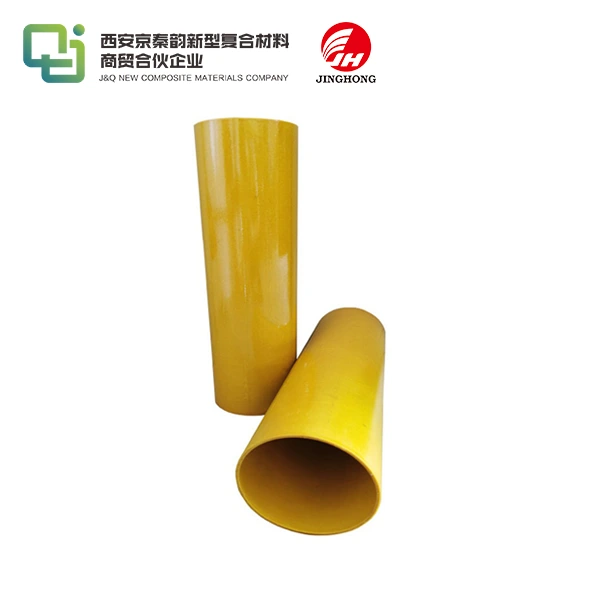
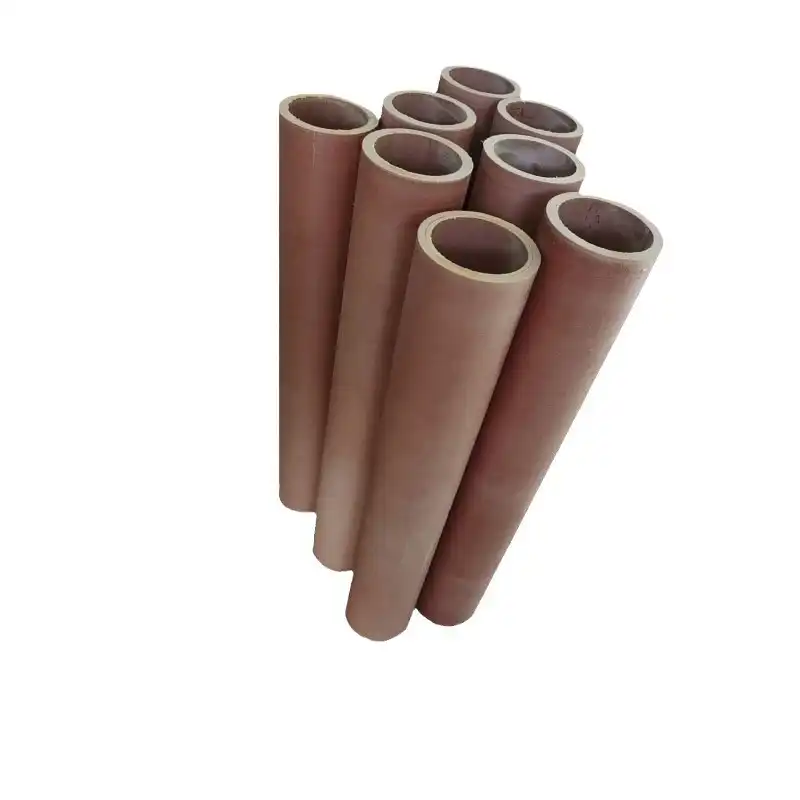
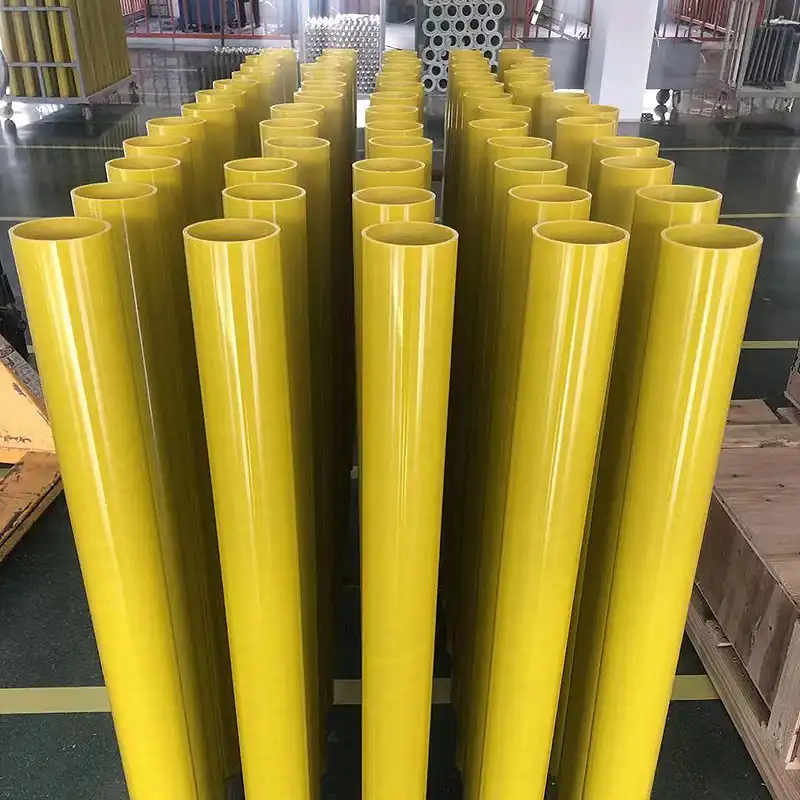
The 3641 Epoxy Glass Fiber Cloth Laminated Tube handles high loads through a laminated architecture of alkali-free glass fiber cloth bonded within a modified epoxy phenolic resin matrix, hot-rolled and heat-cured into a rigid tubular form. This construction yields exceptional tensile, compressive, and flexural strength simultaneously. Classified as Class F insulation (rated to 155°C), it resists mechanical deformation under high-torque and high-vibration conditions where standard phenolic paper tubes commonly fail. Its cross-laminated fiber layers redistribute applied stress laterally across the tube wall, preventing localized crack propagation and maintaining structural integrity even under sustained heavy industrial loads.
Understanding the Load-Bearing Properties of 3641 Epoxy Glass Fiber Cloth Laminated Tube
Material Composition That Drives Mechanical Strength
The tube's ability to hold weight comes straight from the way its raw materials are put together. The structure is held together with alkali-free glass fiber cloth, which has a high tensile stiffness and is stable in its dimensions. During curing, the epoxy phenolic resin system forms strong covalent cross-links between these layers, making a composite wall that is stronger and lighter than most thermoset alternatives. 3641 Epoxy Glass Fiber Cloth Laminated Tubes are different from lower-quality phenolic cotton or paper-based laminates because they bond at the molecular level.
How Lamination Orientation Multiplies Load Capacity
Before it is hot-rolled and baked in a far-infrared oven, the glass fiber cloth is wound at controlled angles during production. This method for orientation makes sure that radial compression, tensile forces, and bending pressures all act on fiber strands instead of just resin. This makes a tube that can withstand complex multidirectional mechanical stresses as well as loads acting in a single direction. This is very important for rotating machinery, high-voltage switchgear supports, and transformer winding cores.
Beyond mechanical performance, the layered wall structure has a dielectric strength of more than 10 kV/mm when it is dry, which also makes it useful for electrical insulation. Because it supports structures and keeps electricity from flowing, it is the first choice for engineering managers in the heavy machinery and power distribution industries.
Technical Analysis: How 3641 Epoxy Glass Fiber Cloth Laminated Tubes Manage High Loads?
Stress Distribution and Crack Resistance Explained
The layered glass fiber cloth stops cracks from forming when a load is put on the tube wall. Any tiny cracks that start in the resin matrix get to a fiber layer and are pushed along the fiber contact instead of going through the wall. Crack bridging is a term used in composite engineering for this process. It makes the material seem much tougher than resin chemistry alone could.
In real life, independent testing of similar epoxy glass cloth laminates regularly shows compressive strengths above 200 MPa and bending strengths above 300 MPa. Based on these numbers, the 3641 Epoxy Glass Fiber Cloth Laminated Tube has a lot better performance than general-purpose plastic tubes or phenolic paper tubes (3313 grade).
Compared to the 3313 phenolic paper tube and the 3734 phenolic glass cloth variant, the 3641 tube outperforms both in the following verified performance dimensions:
- Moisture resistance under load: The 3641 Epoxy Glass Fiber Cloth Laminated Tube keeps more than 90% of its dry mechanical strength after being submerged in water for 24 hours, while the 3313 paper-based tubes can lose 30–40% of their compressive strength in the same situation. This is very important for places where transformer oil is present and for electrical areas that are damp.
- Thermal stability at operating temperature: The 3641 Epoxy Glass Fiber Cloth Laminated Tube stays the same size at 155°C, which is higher than lower-grade laminates that start to creep or soften. This thermal cushion directly prevents maintenance shutdowns in electric furnace insulation and rolling mill uses.
- Dielectric reliability under mechanical stress: The epoxy glass cloth matrix doesn't let arc erosion and surface carbonization happen as phenolic materials do. This means that insulating pull rods and arc extinguishing chambers in high-voltage switchgear assemblies last longer.
These advantages translate into documented field reliability across oil-immersed transformer tap changers, winding support mandrels, and mechanical spacers in heavy mining equipment — applications where component failure carries significant safety and cost consequences.
Choosing the Right Epoxy Glass Fiber Laminated Tube for Your Application
Matching Tube Specifications to Operational Demands
The tube specification needs to be different for each high-load use. Three factors should be taken into account during the choosing process: the maximum mechanical load, the temperature range in the area, and the chemical exposure environment. For uses where transformer oil is present, the material must not react chemically with mineral oil at 90°C or higher. The surface resistivity and arc resistance ratings are the most important things for switchgear supports that are likely to be arcing.
When you compare epoxy glass cloth tubes to carbon fiber options, carbon fiber offers more stiffness per unit weight, but it costs a lot more and is harder to work with for CNC cutting and threading, while the 3641 Epoxy Glass Fiber Cloth Laminated Tube offers a more balanced profile. As a more balanced profile, the 3641 Epoxy Glass Fiber Cloth Laminated Tube is easy to machine with alloy turning tools, keeps tight dimensional tolerances across production batches, and costs a lot less than advanced fiber composites. This makes it the best choice for OEMs who need to buy a lot of it.
Procurement teams should prioritize sellers who can show that their materials are certified to meet certain standards, keep thickness tolerances uniform from batch to batch, and allow buyers to make changes to the tube's wall thickness, inner diameter, and length. These factors directly affect downstream assembly yield and reduce per-unit cost in mass production schedules.
Procurement Best Practices for 3641 Epoxy Glass Fiber Cloth Laminated Tubes
It takes more than just comparing prices to find a reliable source of 3641 Epoxy Glass Fiber Cloth Laminated Tubes. Verifying the supplier is a good place to start. Make sure that the manufacturer has documented quality management certifications, can provide material test reports for each production batch, and has records that can be used to find out if the resin and glass cloth used are compliant.
Bulk procurement planning also benefits from understanding lead time variables. Tube products with non-standard inner diameters or custom lengths carry longer production cycles. Aligning order volumes with realistic inventory buffers prevents production line interruptions. Suppliers with in-house logistics capabilities can further compress delivery timelines and reduce freight coordination complexity — particularly relevant for US-based buyers sourcing internationally.
After-sale technical support is an undervalued procurement criterion. If a manufacturer gives application engineering advice — such as recommending post-machining insulating paint treatment to restore moisture resistance on cut surfaces — the part will last longer and need to be replaced less often in the field.
Future Outlook and Innovations in Epoxy Glass Fiber Cloth Laminated Tubes
Changing the chemistry of epoxy resin keeps making glass fiber laminated tubes more resistant to chemicals and high temperatures. Some of the current research areas in R&D are halogen-free flame retardant formulations that meet changing RoHS and environmental compliance requirements in the US and European markets, and nano-silica filled resin matrices that improve inter-laminar shear strength without adding weight.
Growth sectors driving demand for higher-performance variants of this tube format include utility-scale energy storage systems (where battery pack structural insulation requires both mechanical robustness and thermal stability), EV drivetrain assemblies, and next-generation switchgear designed for higher grid voltages. The 3641 Epoxy Glass Fiber Cloth Laminated Tube format will continue to be useful in industry for the next ten years because it meets the needs for both lightweight structure and electrical insulation.
Conclusion
The 3641 Epoxy Glass Fiber Cloth Laminated Tube can handle heavy loads thanks to its cross-laminated glass fiber structure, strong epoxy phenolic resin bonding, and precise heat-cure manufacturing. It can spread stress, maintain its Class F thermal stability, and not break down when it gets wet, which makes it a reliable structural insulation option for power, industrial machinery, transformers, and cars. Selecting a verified supplier with batch-consistent quality, certification documentation, and responsive technical support is the final factor that determines whether this material delivers its full performance potential in your application.
FAQ
What temperature rating does the 3641 epoxy glass fiber cloth laminated tube carry?
The insulation grade for the tube is Class F, which means it can handle a constant temperature of 155°C. This means it can be used for electric furnaces, motor winding supports, and other places where high temperatures are normal.
Can the tube be used submerged in transformer oil?
When buried in oil at temperatures of 90°C or higher, the epoxy glass cloth matrix doesn't react chemically with mineral transformer oils. It also keeps its electrical insulation and mechanical qualities. It is actively recommended for winding support parts and tap switch shafts that are inside transformer housings that are filled with oil.
How does the 3641 tube compare to phenolic paper laminate tubes?
Phenolic paper tubes are cheaper, but they lose a lot of their mechanical strength when they get wet and have a lower temperature rating. The 3641 Epoxy Glass Fiber Cloth Laminated Tube keeps more than 90% of its dry compressive strength after being submerged in water, and it works at a higher thermal class, which makes it the better choice for harsh environments.
What post-machining treatment is recommended?
After CNC cutting, areas that have been cut are more likely to absorb water. Putting an insulating varnish or impregnating paint on all cut areas guards against wetness and improves dielectric performance over time. It is common for parts to be installed in oil or humid environments, so this step is necessary.
Get a Quote from J&Q — Trusted 3641 Epoxy Glass Fiber Cloth Laminated Tube Supplier
J&Q has been making insulation materials for more than 20 years and has worked with other countries to trade for more than 10 years. As an expert in making 3641 Epoxy Glass Fiber Cloth Laminated Tubes, we give quality that is uniform from batch to batch, full material certifications, custom sizes, and in-house operations for easy shipping in the US. Contact our technical team today at info@jhd-material.com or visit jhd-material.com to discuss your specifications and request a competitive quote.
References
1. IEC 60893-3: Specifications for Industrial Rigid Laminated Sheets Based on Thermosetting Resins — International Electrotechnical Commission, 2003.
2. Handbook of Composite Reinforcements — Stuart M. Lee, Wiley-VCH, 1992.
3. Electrical Insulation for Rotating Machines — Greg Stone et al., IEEE Press / Wiley, 2004.
4. Composites Manufacturing: Materials, Product, and Process Engineering — Sanjay K. Mazumdar, CRC Press, 2001.
5. Polymer Matrix Composites: Guidelines for Characterization of Structural and Environmental Durability — NASA Technical Memorandum, 1997.
6. Epoxy Resins: Chemistry and Technology — Clayton A. May, Marcel Dekker, 1988.