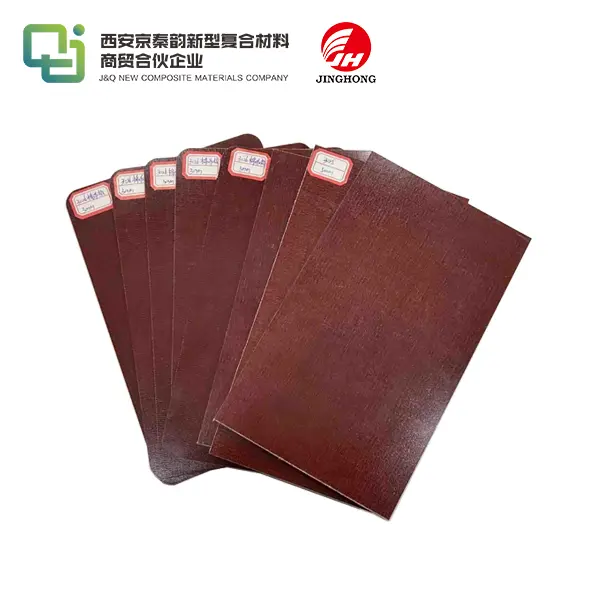
How Does Bakelite Sheet Perform in Machining and Component Production?
2026-09-03 17:26:01
Bakelite Sheet demonstrates exceptional machinability and manufacturing reliability, making it an optimal choice for precision component production across multiple industrial sectors. This phenolic laminated material responds predictably to CNC machining operations, maintains tight dimensional tolerances, and delivers consistent electrical insulation properties throughout fabrication processes. Engineering teams appreciate its stable behavior under cutting tools, minimal thermal expansion during machining, and capacity to meet stringent quality requirements demanded by electrical, automotive, and industrial machinery applications. Understanding its machining characteristics helps procurement professionals specify materials that enhance production efficiency while controlling manufacturing costs.
Understanding Bakelite Sheet: Properties and Applications
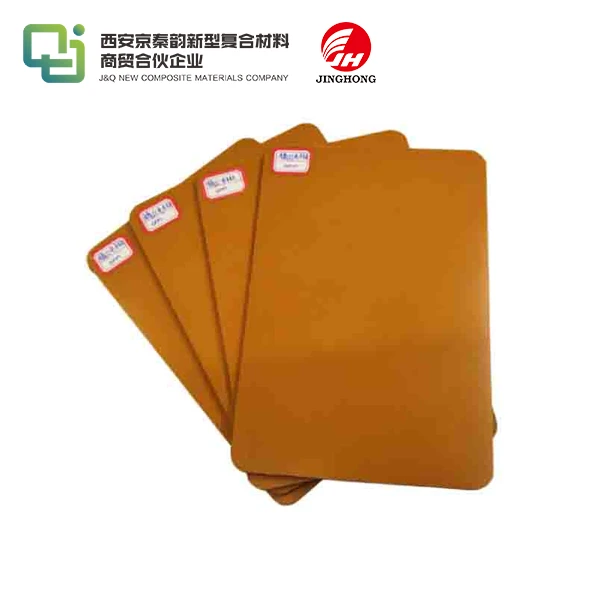
Bakelite Sheet is a thermoset material that was made by carefully mixing phenolic glue with cellulose fibers to make them stronger. In contrast to thermoplastics, which soften when heated, this material cures permanently during production, creating molecular cross-links that can't be broken. These cross-links give the material its chemical resistance and stability in shape.
Core Physical and Chemical Characteristics
In the manufacturing process, layers of paper or fabric are saturated with phenol-formaldehyde resin. This is followed by applying heat close to 150 to 170°C and hydraulic pressure above 1000 psi. This combining makes a thick laminate structure that is stronger than many common industrial plastics in terms of weight to strength ratio. The material doesn't absorb much water—usually less than 0.5% by weight—so its dimensions don't change in damp places, which is important for switchgear housings and transformer insulation parts.
Chemical protection is one of the things that makes it unique. Phenolic laminates don't break down when they come in contact with mineral oils, alcohols, and most industrial solvents. But buying teams should be aware that surfaces can be damaged by strong oxidizing acids and concentrated alkaline solutions if they come into touch with them for a long time.
Industrial Applications Across Sectors
We've seen the same trends of adoption across five main market groups. Electrical companies use these laminates in circuit breaker panels, terminal blocks, and PCB support structures where a dielectric strength of more than 15 kV/mm is needed to make sure the safety of the operation. Power distribution engineers use phenolic barriers to make arc-resistant switches, which is good because they don't catch fire and meet UL94 V-0 standards.
Suppliers of automotive parts cut phenolic sheets into battery pack separators and insulation pads for use in electric vehicles. These are used to protect sensitive electronics from temperatures up to 120°C for long periods of time. Builders of industrial machinery use the material to make wear-resistant gears, thrust washers, and guide rails. The material's self-lubricating properties and ability to keep its shape under mechanical loads are also benefits.
Material Comparison Framework
When looking at other options, fiberglass-reinforced epoxy (FR4) is more resistant to high temperatures (up to 180°C), but it costs more. Mica-based laminates have great insulating qualities, but they are hard to machine because they are rough. Cotton phenolic sheets offer balanced performance at reasonable prices, which makes them ideal for high-volume production situations where electrical needs allow slightly lower insulation values than with paper phenolic grades.
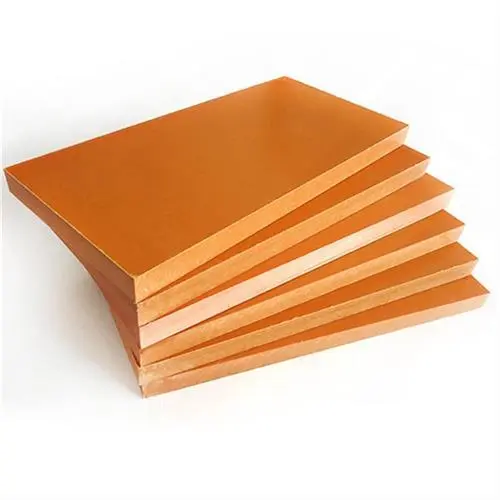
Machining Bakelite Sheets: Best Practices and Performance Insights
To make a good component from Bakelite Sheet, you need to know how the material is brittle and rough, because those properties affect the tools you use and the settings for the cutting.
Cutting Tool Selection and Operational Parameters
When working with phenolic laminates, carbide-tipped or polycrystalline diamond (PCD) tools give the best results. Standard high-speed steel cutters wear out quickly because the steel is made of fibers and is very hard. For drilling, we suggest keeping the spindle speed between 3000 and 6000 RPM and changing the feed rate from 0.05-0.15 mm/rev based on the diameter of the hole.
Two-flute spiral cutters are useful for routing and milling because they remove chips quickly and prevent heat buildup. When you use worn tooling, the material layers can separate, but sharp cutting edges stop this from happening. The depth of cut should stay low, about 2 to 3 mm per pass, so that chips can be cleared and mechanical stress that can cause micro-cracking is kept to a minimum.
Thickness Considerations and Tolerance Management
Standard thicknesses range from 0.5 mm to 100 mm, with 3 mm, 5 mm, 10 mm, and 25 mm being the most popular in industry. For thinner sheets (less than 2 mm), backing support is needed during cutting to keep them from bending and chattering. For thicker pieces than 50 mm, pre-heating to 50 to 60 °C may be needed. This lowers internal stress and improves the quality of the finish on the outside.
Getting the right dimensional error rests on how well the work is held and how well the tool runout is controlled. When CNC operations are done correctly, they can consistently hold critical dimensions within 0.05 mm, which meets the accuracy needs for motor mounting plates and electrical junction boxes. Accurate hole position to within ±0.1mm helps with assembly tasks where alignment pins and bolt locations need to match up with parts that fit together.
Comparative Machining Performance Analysis
Phenolic laminates can be machined more quickly than ceramic-filled composites, but they need to have their tools changed more often than acetal or nylon plastics. Under ideal conditions, material removal rates are about 80–120 cm³/min. This puts bakelite in the middle of soft thermoplastics and hard thermosets in terms of how efficiently it can be made. With sharp tools, the surface roughness is usually between 1.6 and 3.2 μm, which is good enough for most industrial uses without the need for extra finishing steps.
Active extraction devices are needed because cutting creates a lot of dust. Particulates containing phenols can irritate the lungs, so it's important to have enough ventilation and safety gear on hand. This factor affects how the shop floor is laid out and how well it meets environmental standards, especially in places that process a lot of material.
Evaluating Bakelite Sheets for Component Production: Advantages and Limitations
A full evaluation shows specific performance traits that decide whether an item is suitable for an application and will last for a long time.
Performance Advantages in Production Environments
Here are the main benefits that make people choose certain materials for industrial uses:
Electrical Insulation Integrity: Dielectric strength greater than 15 kV/mm thickness provides safety margins for places with high voltage. Values of volume resistance above 10³⁰ ohm-cm stop leakage currents in circuit safety devices and transformer systems. The electrical properties stay the same at temperatures ranging from -40°C to 120°C, so the device will always work properly even when the seasons change.
Thermal Stability Under Load: It can handle continuous temperatures of up to 120°C without breaking down, making it suitable for fitting motor housings and power circuits. The material only expands about 20 to 30 × 10°C per °C when heated or cooled, so its shape stays the same during thermal cycle. This quality is very important for parts that need to fit closely next to heat-generating equipment.
Mechanical Reliability: Its compressive strength of more than 150 MPa makes it suitable for load-bearing uses like gear flats and structural spacers. Flexural strength is usually between 90 and 120 MPa, which allows for cantilever mounting and bracket designs. The material doesn't creep when it's loaded continuously, so it keeps its shape over long periods of service.
Together, these benefits of Bakelite Sheet solve problems that engineering teams run into when they have to choose insulation materials for harsh industrial settings. Because they are cheaper than clay options, they can be used in more price-sensitive product lines while still meeting performance standards.
Material Limitations and Mitigation Strategies
Brittleness is the main problem that makes design methods difficult. Impact resistance is much lower than that of engineering thermoplastics, so protective design features are needed in places where mechanical shocks are likely to happen. By chamfering sharp edges and avoiding sections with walls less than 3 mm thick, the risk of breaking during handling and assembly is lower.
UV light breaks down surfaces and fades colors, so they can't be used outside unless protection coats are added. The dark brown or black color of the material limits its uses in esthetic ways compared to colorful or clear plastics. Brittleness rises at temperatures below -20°C, so it's important to choose the right material grade for the harsh conditions of the operating environment.
Using the right procedures for getting, storing, and making things reduces the chance of damage. Keeping the relative humidity between 40 and 70% stops sheets from twisting, and storing them horizontally on flat surfaces stops the buildup of static electricity that draws dust.
Procurement Guide: Buying Bakelite Sheets for Industrial Use
To make sure the supply chain is reliable and the quality stays the same, strategic buying looks at more than just unit price.
Supplier Evaluation Criteria
Verification of certification is the basis of evaluating a seller. UL recognition makes sure that electrical performance meets safety standards, and ISO 9001:2015 quality management certification shows that processes are controlled in a planned way. RoHS compliance paperwork proves that no restricted chemicals are present, which is especially important for technology companies that sell to customers in Europe and North America.
A production capacity assessment checks to see if suppliers can meet volume needs during times of high demand. We look at how consistent lead times are, how long it usually takes to fill an order, and how many rush orders can be filled when project deadlines are tight. Being close to the places where the goods will be used cuts down on freight costs and makes just-in-time delivery strategies possible, which lower the costs of keeping inventory.
The ability to provide technical support sets capable partners apart from commodity suppliers. Having access to applications engineering help makes choosing the right material grade easier, and getting help with machining parameters speeds up the process of making new parts. When suppliers offer custom sizing services, they get rid of waste and extra steps in the working process, which lowers total costs.
Pricing Structures and Volume Considerations
When you buy in bulk instead of in small amounts, you can usually save 15 to 25 percent on the price. Standard sheet sizes, such as 1000mm x 2000mm and 1220mm x 2440mm, make the best use of material for common part shapes. Custom thickness standards may mean paying more for tools, but they can save time and money by eliminating the need for cutting when the required dimensions are met by the press.
The grade of the material has a big effect on the price. Grade X phenolic cotton laminates are inexpensive options for mechanical uses, while Grade XXX paper phenolic variants are more expensive because they have better electrical properties and can handle moisture better. Understanding the specific needs of the product stops over-specification, which drives up the cost of parts needlessly.
Comparative Material Analysis
Epoxy glass laminates (G10/FR4) can handle higher temperatures better than phenolic grades like Bakelite Sheet, but they cost 30 to 50 percent more. Phenolic cotton sheets have similar mechanical properties but are cheaper and can be used for structural purposes that don't involve electricity. This cost-performance trade-off study helps with material substitution choices when design freedom lets you choose different specs.
Long-term supply agreements often get better prices and first picks when materials are in short supply. Using strategic sourcing to build relationships with multiple approved providers lowers the risk of disruptions in the supply chain while keeping prices low.
Future Trends and Innovations in Bakelite Sheet Applications
As material science progresses and market needs change, phenolic laminate technology keeps getting better and more uses are found for it.
Manufacturing Process Enhancements
Recent changes to the recipe make it easier for the resin to move during pressing, which makes the layers stick together better and lowers the amount of empty space. Advanced curing profiles improve the density of cross-links, which leads to better mechanical properties without making the production process take longer. These changes to the process make the quality more consistent from batch to batch, which lowers the need for incoming inspections and lowers the variability in manufacturing further down the line.
Lights-out machining is possible with automated cutting and guiding devices that are connected to databases of material properties. CNC programming software has formulas that predict how tools will wear so that they can be changed automatically. This keeps scrap from worn-out cutting edges to a minimum. These digital manufacturing features cut down on the amount of work that needs to be done and make sure that the dimensions are always the same across production runs.
Emerging Market Applications
As the number of electric vehicles on the road grows, so does the need for battery pack insulation parts that can resist flames, keep electricity from flowing, and control temperature. These needs can be met by phenolic laminates, which are cheaper than engineered ceramics and specialty polymers. Power conversion electronics and distribution assemblies in renewable energy systems, like solar inverters and wind turbine generators, use phenolic insulation parts.
Phenolic structure parts are used in robot end-effector mounting plates, sensor housings, and wire management systems for industrial automation equipment. Precision assembly needs in automated manufacturing cells are met by the material's ability to stay the same size and shape and to be machined easily.
Sustainability and Environmental Considerations
Bio-based phenolic resin development cuts down on reliance on oil while keeping performance levels the same. Recycled cellulose fiber reinforcement keeps trash out of landfills, which is better for the earth without affecting the strength of the material. These sustainability projects are in response to business responsibility goals and regulatory standards that are having a bigger impact on material choice decisions.
Closed-loop manufacturing processes collect and reuse process emissions, which is better for the environment and the air quality in the workplace. Procurement teams can meet sustainability reporting requirements and support corporate ESG goals when suppliers are open about how they treat the environment.
Conclusion
Bakelite Sheet is a reliable material that can be used in the electrical, automobile, industrial machinery, power distribution, and appliance making industries because it is easy to work with and produces well. The way it resists electricity, stays stable at high temperatures, and can be machined in a reliable way meets important technical needs while keeping costs low. Engineering teams can make better part designs and manufacturing processes when they know how to choose the right tools, set the right operating settings, and know the limits of the materials they use. Strategic methods to buying things that focus on supplier certification, technical support skills, and volume price systems make sure that quality is always the same and that the supply chain is reliable enough to meet long-term production needs.
FAQ
How can I machine Bakelite Sheet without surface chipping?
To cut fibers cleanly instead of tearing them, use cutting tools with sharp carbide or diamond tips and the right amount of space between them. Keep the feed rates moderate, around 0.10 mm/rev, and make sure there is enough chip evacuation to stop cutting again. Edge flaws caused by vibration can be reduced by supporting thin parts with backing material. Active dust collection gets rid of rough particles that can damage finished surfaces.
What distinguishes Grade XXX from Grade X phenolic laminates?
Grade XXX uses formulations with a higher resin content that are better at resisting moisture (less than 0.3% absorption) and improving electrical insulation (above 18 kV/mm). Grade X uses lower resin ratios that are best for applications that need high mechanical strength but not as strict electrical requirements. Grade XXX is good for high-voltage and wet areas, while Grade X is better for structure parts because it is less expensive.
Can phenolic sheets operate continuously above 120°C?
When exposed to 120°C for a long time, standard grades slowly lose their properties, such as losing their color and power. Specialized high-temperature formulations raise the temperature range where they can be used to 150°C, but they cost more. Thermal cycling speeds up decline more than steady-state exposure, so uses that will be exposed to temperature changes need extra design space.
Connect with J&Q for Expert Bakelite Sheet Solutions
J&Q can help you buy phenolic laminate because they have been in the business for over 20 years and have been involved in international trade for ten years. Our wide range of products includes many grades and thicknesses that can be used for electrical, mechanical, and thermal insulation. Working directly with a reliable Bakelite Sheet manufacturer guaranties stable quality, approved material compliance, and low bulk prices.
Our integrated logistics services make it easier to coordinate deliveries, cut down on wait times, and handle the supply chain. Technical support teams help choose the right materials, make sure that the cutting parameters are optimized, and come up with custom size specs that cut down on waste and overall production costs. You can email us at info@jhd-material.com or go to jhd-material.com to talk about your specific needs and get quotes that are tailored to your project's specs and number needs.
References
1. Mantell, C.L. (1958). Phenolic Resins: Chemistry, Applications, and Performance. Industrial Press.
2. Harper, C.A. (2002). Handbook of Plastics, Elastomers, and Composites (4th ed.). McGraw-Hill Professional.
3. Richardson, T. (2003). Composites: A Design Guide. Industrial Press Technical Reference.
4. Biron, M. (2013). Thermoplastics and Thermoplastic Composites (2nd ed.). Elsevier Science.
5. Mazumdar, S.K. (2001). Composites Manufacturing: Materials, Product, and Process Engineering. CRC Press.
6. Goodman, S.H. (1998). Handbook of Thermoset Plastics (2nd ed.). William Andrew Publishing.