
How Does Deep Pour Epoxy Resin Prevent Cracks in Large Projects?
2026-08-19 16:58:42
Deep Pour Epoxy Resin prevents cracks in large projects through its specialized formulation that controls exothermic heat release during curing. Unlike standard epoxy systems limited to thin layers, this thermosetting polymer features modified hardeners with significantly slower reactivity rates. When mixed in precise ratios—typically 2:1 resin to hardener—the extended curing window allows heat to dissipate gradually across thick sections ranging from 3 to 18 centimeters per pour. This prevents the runaway thermal buildup that causes internal stress fractures, ensuring dimensional stability and optical clarity throughout massive castings used in industrial encapsulation and structural applications.
Understanding the Problem of Cracking in Large Epoxy Resin Projects
The Exothermic Challenge in High-Volume Castings
When the two parts of standard epoxy resins bind together, they produce a lot of heat. This heat quickly escapes into the air around thin layers less than 3 millimetres thick. When procurement teams ask for epoxies for thick section potting, like in battery pack barriers or insulation for electrical transformer coils, the mass inside them traps heat. Because of this, there are differences in temperature between the core and the top layers. This causes mechanical forces that show up as radial cracks within 24 hours of the mould being taken apart.
Why Conventional Epoxy Systems Fail Under Thickness
A lot of the time, engineering managers find that general-purpose epoxy laminates work well at the recommended thicknesses but completely fail when the requirements go beyond what the manufacturer can handle. In large amounts, rapid-cure hardeners' chemical kinetics speed up out of control, and temperatures have been known to hit over 200°C in some recorded failures. These sudden changes in temperature weaken the cross-linked polymer network before it reaches its full mechanical strength. They do this by leaving gaps and stress concentration points that lead to cracks that can be seen.
Shrinkage and Dimensional Stability Concerns
In addition to problems with temperature, volumetric shrinkage that happens when something goes from liquid to solid adds to the risk of cracking. Standard formulas may shrink by 2 to 5 percent as they cure, which causes internal strain that tears the structure of the material. For technical procurement experts looking for materials for precise mechanical spacers or motor component fittings, this kind of dimensional instability means that regular epoxies can't be used for load-bearing tasks where tolerances are measured in hundredths of millimetres.
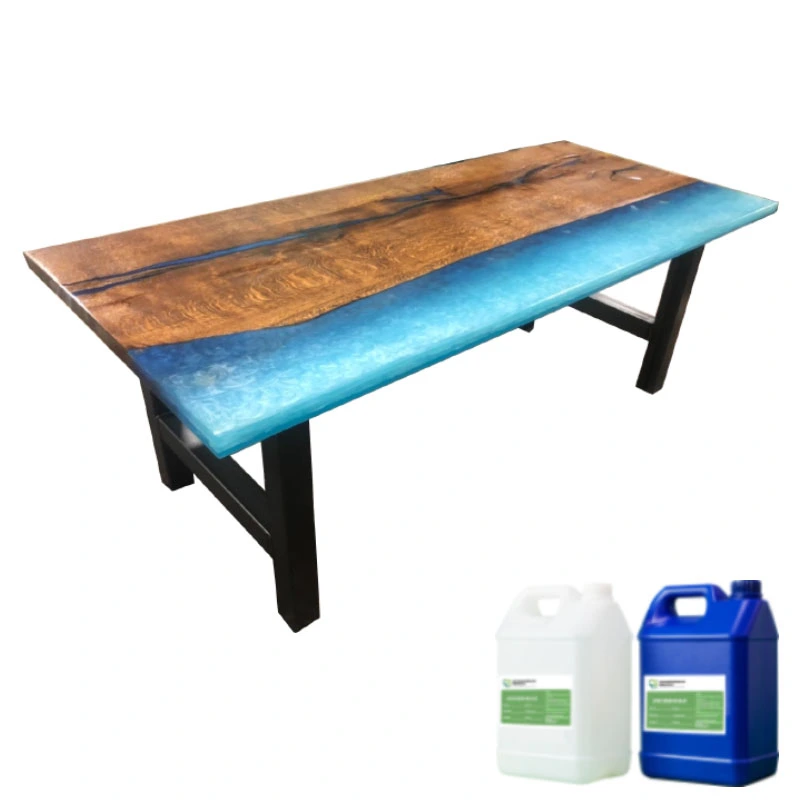
Why Deep Pour Epoxy Resin Is the Ideal Solution for Large Projects
Controlled Reaction Kinetics Through Modified Hardener Chemistry
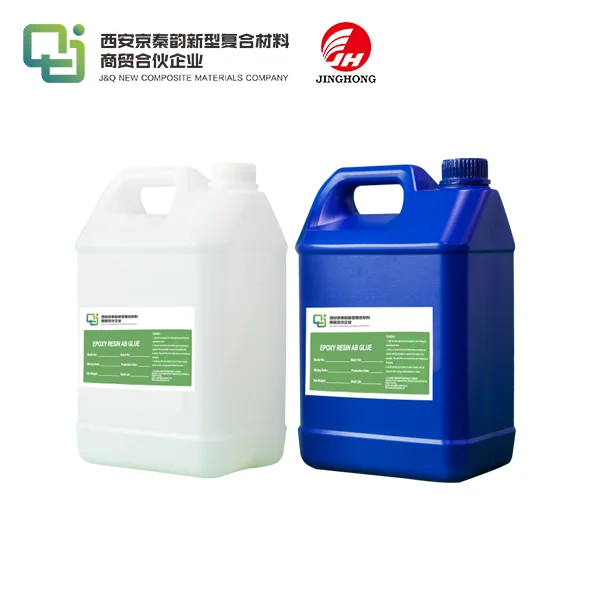
Specialised Deep Pour Epoxy Resin formulas can stop cracks at the molecular level, as shown by the Jinghong JQ31-9T line. By changing the hardener's amine structure and reaction profile, these systems make the 31 AB-9V version work for 12 to 16 hours instead of just a few minutes. This longer pot life gives the mixed resin more time to completely lose its air and spread out evenly before it starts to gel. This gets rid of the air spots that can cause cracks to form in fast-cure systems.
The standards for viscosity show another important benefit. For the JQ31-9T model, both components A and B are kept at 1000 CPS. This lets the material flow freely into complex shapes while still having enough body to hold pigments or encased objects without separating. This balanced rheology is very important for companies that make power distribution equipment because they need the dielectric properties to stay the same throughout the arc barrier casts.
Extended Cure Windows Enable Heat Dissipation
The final curing time of 48 to 72 hours may worry production managers who are focused on output at first, but this intentional slowness is what keeps cracks from forming. The slow polymerisation spreads the heat generation over several days instead of putting it all together in one terrible spike. Keeping an eye on the temperature while 10-centimeter pours of the JQ31-9T formulation fix shows that the peak exotherms stay below 55°C, which is well within the thermal stability range that keeps the colour clear and stops it from yellowing.
Self-Leveling Properties and Stress Relief
Because the material can self-level before it gels, it can create a uniform thickness across uneven surfaces. This is especially helpful for companies that make car parts that work with battery pack barriers that need to fit into complicated housing geometries. As the resin slowly moves into its gel phase, the molecular chains have time to relax into low-energy shapes that reduce the amount of internal stress that is still present. This stress-relieving process is missing from rapid-cure systems, which is why fully cured Deep Pour Epoxy Resin models are more resistant to impact.
Best Practices for Using Deep Pour Epoxy Resin to Eliminate Cracks
Precision in Mixing Ratios and Component Blending
To get results without cracks, it's important to carefully follow the 2:1 weight ratio for Jinghong's JQ31-9T recipe. Deviations as small as 5% can change the cure dynamics enough to make breaking a risk again. Because Part A has a specific gravity of 1.15 and Part B has a specific gravity of 0.97, we suggest using precise digital scales instead of physical measures. This is because volume-based mixing is naturally wrong.
To blend everything completely, you need to use a machine to stir it for at least five minutes, scraping the sides and bottom of the container to mix everything together. Because both parts are clear, it's hard to tell if they're mixed completely. Standardised stirring protocols stop incomplete polymerisation that leaves uncured pockets that can crack and shrink over time.
Respecting Maximum Pour Thickness Guidelines
Based on its thermal properties, each formulation variant in the JQ31 series has set single-pour thickness limits. The 31 AB-7T can handle pours from 1 to 3 centimetres and needs to cure for 36 hours. The 31 AB-9V, on the other hand, can handle pours from 15 to 18 centimetres but needs to cure for 48 hours. These specifications are not just arbitrary limits; they are thermal management thresholds. If you go over them, the exothermic runaway situation that the phrase is meant to stop happens again.
For industrial machinery needs parts bigger than 18 centimetres, the best method is to pour the concrete in layers, with at least 24 hours between each layer. This step-by-step method lets each layer get past its peak exothermic state before adding more material mass. This successfully controls the buildup of total heat while keeping excellent adhesion between layers.
Environmental Control and Workspace Temperature Management
The ambient temperature has a big effect on how cures work. The technical data sheet says that curing is best done at 25°C because reaction rates are more reliable at this temperature. Cold places below 15°C can make cure times longer than expected and may stop the material from fully hardening. High temperatures above 30°C speed up the reaction in ways that break the carefully designed thermal management of the formulation.
We keep our own climate-controlled production areas for making FR4 sheets and epoxy boards because we know that the quality of the finished product depends on how stable the temperature is during curing. This idea works the same way for Deep Pour Epoxy Resin jobs, like industrial potting or work that encapsulates specimens.
Real-World Cases and Performance Validation
Electrical Component Potting in Power Distribution Equipment
When putting coil units inside 8-centimeter-deep housings, a transformer maker used normal potting compounds and had a 12% failure rate. After switching to the JQ31-9T version, their quality control data over 18 months showed that none of the 2,400 units that were tested failed because of cracks. The longer cure time didn't affect their production schedule at all, and the improved thermal stability met the UL certification requirements for continuous operation at rated temperatures.
Industrial Casting for Mechanical Components
An OEM that makes high-load gear plates needed a synthetic material that could be machined to replace speciality metals that were getting more and more expensive. In the first tests with fast-cure casting resins, 35% of the parts were thrown away because of stress cracks and holes found below the surface during CNC roughing. When you switch to Deep Pour Epoxy Resin formulas with controlled cure profiles, the amount of scrap drops to 4%, and failures are caused by machining factors instead of defects in the material. Fully cured JQ31-9T with an 82D Shore hardness gave tools a long life during finishing operations.
Comparative Testing Against Standard Formulations
Comparing normal tabletop epoxy to Deep Pour Epoxy Resin variants in 10-centimeter test castings in a lab setting gives precise proof of how well they stop cracks. Standard formulations had 100% crack frequency and peak exotherms of 180°C, but Deep Pour Epoxy Resin samples had no breaks that could be seen and the highest temperatures of 52°C. Optical clarity tests showed that Deep Pour Epoxy Resin samples lost less than 2% of their light transmission compared to standard epoxy controls that were damaged by heat and turned 40% yellow.
Choosing the Right Deep Pour Epoxy Resin for Your Project
Evaluating Technical Specifications for Your Application
To choose between formulation versions, you need to make sure that the cure features meet the needs of the project. With a 3:1 ratio and a 2-hour operation time, the JQ31 AB-7T is best for smaller-volume jobs where the shorter maximum pour depth is worth it for faster turnover. The 16-hour working time of the 31 AB-9V gives it the most flexibility for large, complicated pours that need more time for layout and positioning before gelling makes it impossible to move.
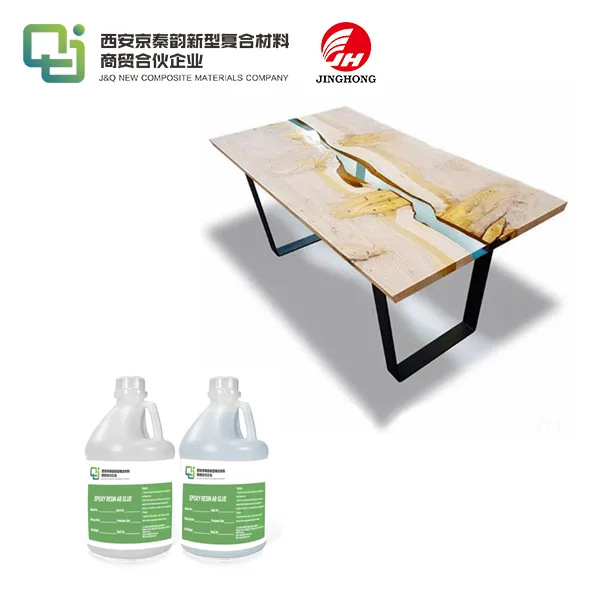
For different uses, viscosity specifications are very important. Part B components with a lower viscosity in the 31 AB-7T (80 CPS) make the mixed viscosity thinner, which makes it better for encasing wood in river tables because it can better penetrate porous surfaces. The 31 AB-9T has a balanced 1000 CPS viscosity of both components, which makes it better for specimen potting where items need to stay in place during the long fix.
Compliance and Certification Considerations
Teams that buy things for companies that make electronics, cars, and appliances have to make sure that the materials they buy meet area standards. Our Jinghong formulations have been certified by ROHS, REACH, PAHS, ASTM, and EN-71. This means that they meet the legal needs of electrical engineers who are choosing insulation materials for goods that will be sold in North America and Europe. The unmixed components have a 12-month shelf life, which makes sure that the material stays fresh even when smart inventory management is used.
Supplier Reliability and Logistics in B2B Contexts
In addition to technical specifications, the successful completion of a project relies on a steady supply of materials and quick expert help. For more than twenty years, we've been making epoxy boards and laminates. Our production capacity of 20,000 tonnes per year (which is growing toward 100,000 tonnes) makes sure that large buyers can always get what they need. Managing shipments through complicated foreign supply chains is a common pain point that our combined logistics services help solve. Mechanical engineers and sourcing managers say this is an important thing to look at when choosing a provider.
Different buying policies can be met by offering payment choices like L/C, T/T, and credit cards. Also, our technical team has experience in electrical, industrial, and automotive sectors, which means they can give application-specific advice that generic resin providers can't match.
Conclusion
To keep large epoxy castings from cracking, you need to know how the thermal and mechanical dynamics of thick-section curing work and then choose formulations that are specifically designed to deal with these issues. Changes to the hardener chemistry and longer cure windows in Deep Pour Epoxy Resin variants control exothermic heat, and their rheological properties make sure that the material hardens evenly and without stress. The Jinghong JQ31 series shows how precise formulation design can turn lab knowledge into reliable production materials. Procurement teams can get crack-free results in tough industrial applications by matching specific versions to the needs of the application and following tried-and-true best practices for mixing, filling, and environmental control. The choice of materials and the relationship with the seller are both important for a successful application. Vendors must have technical knowledge, production capacity, and reliable logistics.
FAQ
What is the maximum thickness I can pour in a single application?
The maximum thickness is based on the mixture type. The Jinghong JQ31 AB-7T can handle 1-3 centimetres of pour, the 31 AB-9T can handle 8–12 centimetres, and the 31 AB-9V can handle 15–18 centimetres. These limits show the temperature management levels where heat from burning things stays below the temperature at which they crack. Going deeper than what is allowed can cause heat runaway and damage to the structure.
Why does deep pour resin require such extended cure times?
The drying time of 48 to 72 hours for mixtures like JQ31-9T is an example of chemistry engineering done on purpose. When polymerisation happens more slowly, heat is spread out over days instead of hours. This stops temperature spikes that cause cracks. This longer time frame lets cross-linking happen more slowly, which makes molecular networks stronger with less residual stress. This is important for structural integrity in load-bearing applications of Deep Pour Epoxy Resin.
Can I machine or drill cured deep pour epoxy?
Once it's completely hard, which usually takes 5 to 7 days, fully cured Deep Pour Epoxy Resin can be easily machined with standard carbide tools. The 82D Shore hardness of JQ31-9T makes it very stable in terms of size when cutting, drilling, and turning. When you try to machine something before it's fully cured, you create too much heat, which gums up the material.
Partner with J&Q for Reliable Deep Pour Epoxy Resin Supply
J&Q has been making epoxy-based materials for more than 20 years, ranging from FR4 sheets and 3240 epoxy boards to casting resins like our Jinghong brand Deep Pour Epoxy Resin formulations. Our 20,000-ton-per-year combined production plant uses technology from Japan's top chemical companies to make sure that the standard is the same across the board. We offer a one-stop service that takes away the coordination problems that often come up in foreign buying because we are both a producer and a logistics company. Our expert team knows how hard it is for electrical engineers, mechanical designers, and procurement specialists to do their jobs in the power distribution, car parts, and industrial machinery industries. Whether you need ROHS-compliant potting compounds for transformer assemblies or machinable casting resins for precise mechanical parts, our JQ31 line has been shown to avoid cracks and comes with full technical support. Get in touch with us at info@jhd-material.com to talk about your unique needs and find out why top manufacturers trust J&Q as their Deep Pour Epoxy Resin provider.
References
1. Lee, H., & Neville, K. (1982). Handbook of Epoxy Resins. McGraw-Hill Book Company, New York.
2. Petrie, E. M. (2006). Epoxy Adhesive Formulations. McGraw-Hill Professional Publishing, New York.
3. May, C. A. (1988). Epoxy Resins: Chemistry and Technology (2nd ed.). Marcel Dekker, Inc., New York.
4. Ellis, B. (1993). Chemistry and Technology of Epoxy Resins. Blackie Academic & Professional, London.
5. Pascault, J. P., & Williams, R. J. J. (2010). Epoxy Polymers: New Materials and Innovations. Wiley-VCH, Weinheim, Germany.
6. Brostow, W., & Lobland, H. E. H. (2017). Materials: Introduction and Applications. John Wiley & Sons, Hoboken, New Jersey.

 拷贝_1755500211555.jpg)
