How Does Epoxy Sheet Meet Industrial Insulation Requirements?
2026-08-19 16:57:52
Epoxy Sheet meets industrial insulation requirements through its exceptional combination of high dielectric strength, thermal stability, and mechanical durability. Manufactured from epoxy resin reinforced with fiberglass cloth under high pressure and heat, these thermoset laminates deliver reliable electrical isolation, dimensional stability across temperature extremes, and resistance to moisture penetration. Conforming to NEMA standards including G10, FR4, and G11 grades, epoxy sheets provide fail-safe performance in high-voltage environments while maintaining structural integrity under mechanical stress, making them indispensable for critical applications ranging from PCB substrates to transformer insulation barriers.
Understanding Epoxy Sheet as an Industrial Insulator
Industrial settings need insulation materials that always work well when they're under a lot of stress. When electrical systems handle high levels and production lines run all the time, material failure isn't just annoying; it's disastrous.
Core Composition and Manufacturing Process
Epoxy Sheets start out as a long piece of glass cloth that is fully saturated with epoxy resin. Controlled sealing with heat and pressure makes chemical links that can't be broken. This is what makes thermoset laminates different from thermoplastics. Using this method, composite materials are made with layers of glass fibers that are locked inside a finished resin framework. The controlled manufacturing environment makes sure that thickness tolerances are always the same, usually within ±10% for standard grades. This is very important for engineering managers who need to make sure that precise component assemblies are made.
Electrical Insulation Properties
The dielectric strength of a material tells you how well it can handle voltage without breaking. Good epoxy laminates have dielectric strengths above 20 kV/mm when viewed perpendicular to the laminates, which effectively separates the conductors. The low dissipation factor—usually less than 0.035 at 1 MHz for FR4 grade—keeps signals from getting weak in high-frequency circuits. Because of this property, printed circuit board makers always use FR4 Epoxy Sheets for multilayer boards where signal integrity can't be compromised.
Thermal Resistance Characteristics
The glass transition temperature (Tg) is the point at which fiberglass materials change from being stiff to being flexible. Standard grades of FR4 keep their Tg values between 130 and 140°C, while high-Tg versions reach 170-180°C. This thermal stability keeps the shapes from warping during lead-free soldering processes that reach their highest point of 260°C. Continuous working temperatures up to 130°C are good for power distribution uses because the materials don't break down. This means that the insulation stays in good shape for decades.
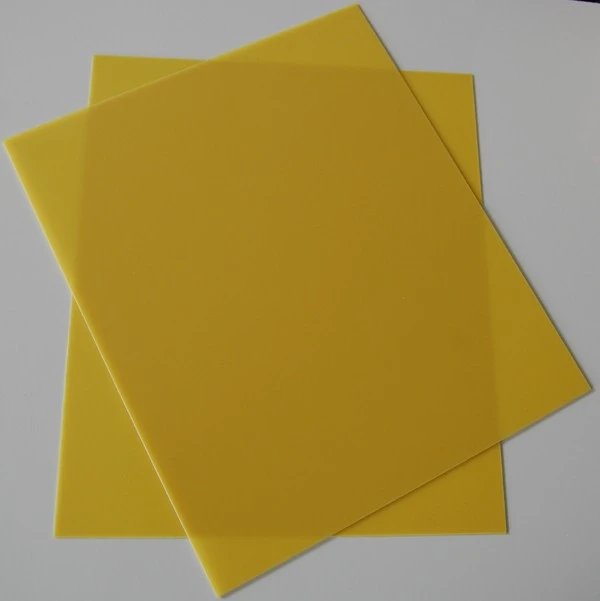
Epoxy Sheet vs Other Industrial Insulating Materials
When making a purchase choice, you have to weigh the pros and cons of different material options against the needs of the application and your budget. Technical teams can see things more clearly when they know how Epoxy Sheets compare to other options.
Paper or cotton cloth mixed with phenolic glue is used to make phenolic laminates, and for Epoxy Sheet, these are cheaper, but they don't work as well electrically, and their dielectric strength is usually only 12 to 16 kV/mm, so they can't be used for high-voltage tasks, but phenolic materials are great for mechanical uses that need to be resistant to pressure and easy to make, and this is why they are still used for gears and structural spacers in machinery. These are cheaper, but they don't work as well electrically. Their dielectric strength is usually only 12 to 16 kV/mm, so they can't be used for high-voltage tasks. But phenolic materials are great for mechanical uses that need to be resistant to pressure and easy to make. This is why they are still used for gears and structural spacers in machinery.
Sheets made of polycarbonate and plastic are clear and don't break easily when they get too hot. Their normal working temperature doesn't go above 120°C, which means they can't be used in motor housings or generator systems that naturally produce heat. Chemical resistance doesn't work either when it comes to industrial solvents and oils that are common in manufacturing settings.
PVC sheets are competitive in terms of price, but their electrical properties are not as good. PVC can only be used in low-voltage, room-temperature situations because its dielectric strength is only 15 to 18 kV/mm and it doesn't work well above 60°C. Because the material bends easily when it's put under mechanical stress, it can't be used for structural insulation parts that need to stay the same size.
When it comes to buying options, Epoxy Sheets offer good value. Even though the initial cost of the materials is 30–50% higher than those made of phenolic or PVC, the longer service life, lower failure rates, and lack of having to replace them as often show that the total cost of ownership is higher. It's now much easier to find suppliers, and lead times for standard grades are usually between two and four weeks for bulk orders. This makes inventory management possible for production planners.
How Does Epoxy Sheet Meet Specific Industrial Insulation Challenges?
Real-world uses try materials in places other than the lab. Chemical splashes, temperature changes, voltage spikes, and mechanical vibrations must all be able to pass through industrial shielding at the same time.
High-Temperature Performance in Demanding Environments
As transformers work, the copper windings produce heat, which puts constant thermal stress on the companies that make them. Epoxy Sheets serve as coil insulation barriers and standoff supports, preserving structural integrity while isolating high-voltage windings. UL standards-based tests show that G11 grade epoxy laminates keep 90% of their flexural strength at room temperature even after 1,000 hours at 155°C. This longevity keeps the insulation from breaking down, which could cause equipment to break down and cost a lot of money in downtime.
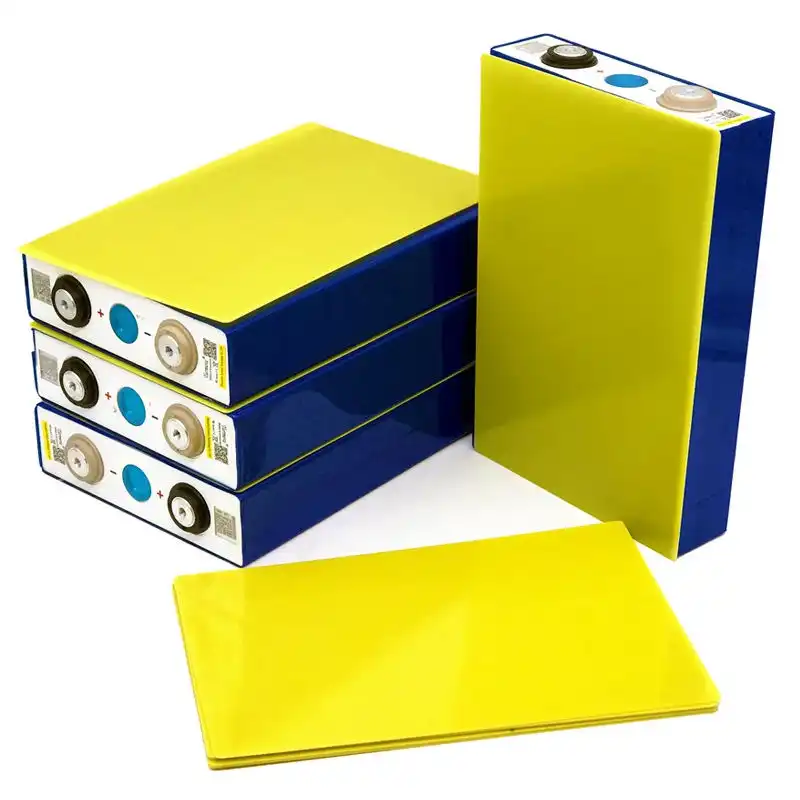
Problems with thermal control can be seen in automotive battery pack uses, and for Epoxy Sheet, when batteries for electric cars are charged and drained quickly, they produce a lot of heat, and epoxy walls separate cell groups while transferring heat to cooling systems, and this calls for materials that don't change shape when they are compressed or break when they expand, and with a low coefficient of thermal expansion (usually 14–17 ppm/°C in the horizontal direction), FR4 laminates keep their shape at temperatures ranging from -40°C to 140°C. When batteries for electric cars are charged and drained quickly, they produce a lot of heat. Epoxy walls separate cell groups while transferring heat to cooling systems. This calls for materials that don't change shape when they are compressed or break when they expand. With a low coefficient of thermal expansion (usually 14–17 ppm/°C in the horizontal direction), FR4 laminates keep their shape at temperatures ranging from -40°C to 140°C.
Chemical Resistance in Harsh Industrial Settings
Hydraulic fluids, cutting oils, cleaning agents, and sometimes acid or alkaline splashes can get on insulating materials that are used on factory floors. Epoxy Sheets exhibit good resistance to mineral oils, aliphatic hydrocarbons, and weak acids, and they keep their insulation qualities even after being exposed to them for a long time. This chemical inertness keeps switching parts and motor terminal boards safe in places where breaking down materials would be dangerous.
For liquid hydrogen systems, aerospace uses need materials that can work at cryogenic temperatures as low as -269°C. Many plastics become brittle when it gets very cold, but epoxy composites stay flexible and don't break easily when they get hit. This makes them good for superconducting magnet insulation and structure supports where a catastrophic failure could put missions at risk.
Electrical Performance Under High-Voltage Stress
Voltages in power distribution equipment range from 11 kV to 765 kV. This creates very strong electrical fields that put stress on insulation materials. Epoxy Sheets act as phase barriers and busbar supports, stopping conductor flashover while holding the weight of heavy copper bars. ASTM D495 says that arc resistance for good epoxy laminates usually lasts longer than 180 seconds. This means that the material doesn't carbonize or track when it's exposed to electrical sparks.
For PCB applications, the dielectric properties need to be stable over a wide range of frequencies. The dielectric constant (relative permittivity) of FR4 Epoxy Sheets stays the same at 4.4–4.8 GHz from 1 MHz to 1 GHz, which makes it possible to control resistance in high-speed digital circuits in a reliable way. When it comes to telecommunications equipment and data center infrastructure, where signal timing tolerances are measured in picoseconds, this consistency is very important.
Practical Procurement Guide: Selecting and Maintaining Epoxy Sheets
When looking for industrial materials, you have to balance technical requirements, supplier dependability, and supply chain issues. Engineering managers need models to help them make smart choices.
Key Selection Criteria for Your Application
When choosing a thickness, mechanical and electrical needs come first. Thicknesses usually range from 0.4 mm to 100 mm, but thicker stock can be machined to fit specific sizes. Electrical uses need dielectrics that can handle the working voltage well. As a general rule, 1 mm of thickness is needed for every 10 kV of voltage stress. For mechanical uses, the needed thickness is figured out by looking at the flexural strength needs and the expected load conditions.
The performance characteristics are based on the grade designation. For use at room temperature, G10 has good mechanical strength and average electrical qualities. FR4 gives flame protection that meets the UL94 V-0 standard, which is important for electronics that need to be safe. G11 raises the temperature range to 180°C, which makes it useful for high-heat motor and generator uses. By knowing these differences, you can avoid over-specification, which drives up costs, and under-specification, which increases the chance of failures in the field.
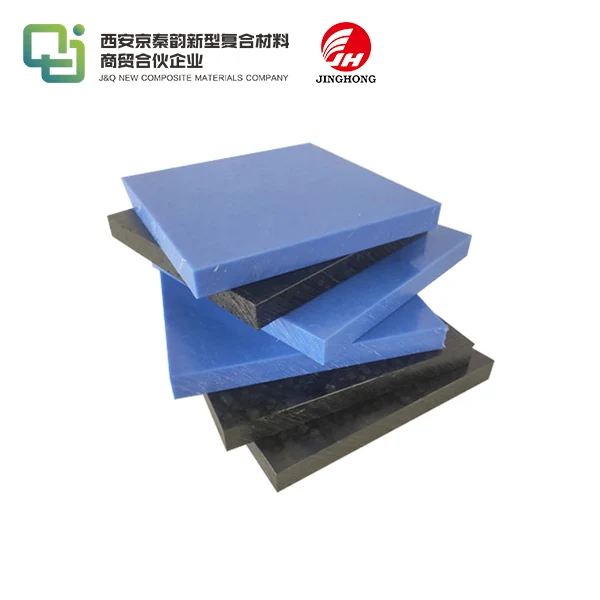
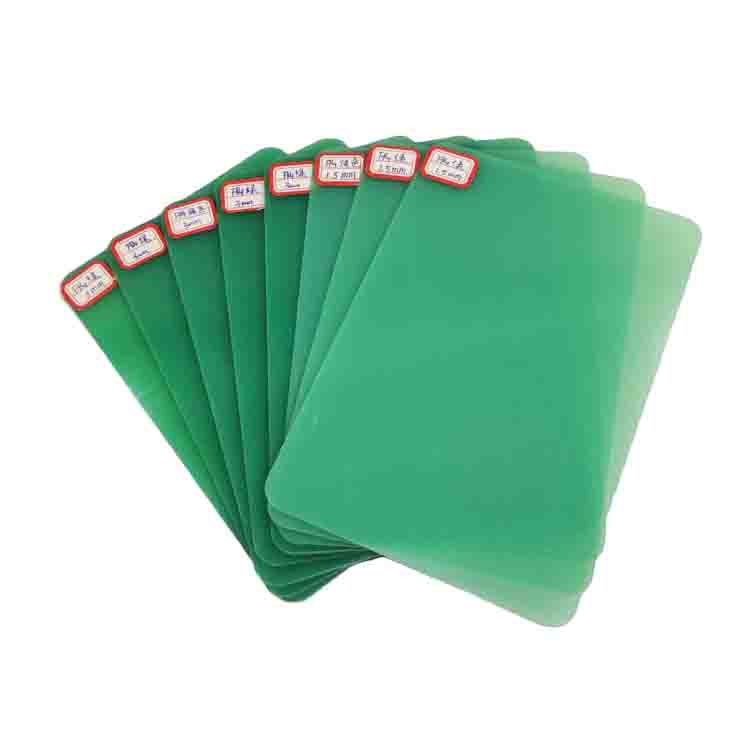
Color coding helps identify parts while they are being put together, and for Epoxy Sheet, green color usually means FR4 PCB-grade material, while natural tan means normal glass/epoxy construction, and the black color could mean that there is carbon filler added to improve heat conductivity, but this makes the insulator less effective for electricity, and technical buying teams should include color standards in purchase orders so that workers on the production floor can see if the materials are being used correctly. Green color usually means FR4 PCB-grade material, while natural tan means normal glass/epoxy construction. The black color could mean that there is carbon filler added to improve heat conductivity, but this makes the insulator less effective for electricity. Technical buying teams should include color standards in purchase orders so that workers on the production floor can see if the materials are being used correctly.
Installation and Handling Best Practices
Because the glass reinforcement is rough, carbide tools are needed to machine epoxy laminates. Edges that are clean can be made with CNC machines, laser cuts, or water jet systems, but each has its own pros and cons. When conventional drilling, backing material should be used to keep the drill bit from delaminating during breakthrough. Dust collection devices keep workers safe from the glass fibers that fly through the air when they cut.
The way something is stored affects how well it works. Epoxy Sheets don't absorb much water—usually less than 0.5% by weight—but they should be kept in climate-controlled areas if possible. Large sheets don't bend when stored vertically, and safe interleaving paper stops surface scratches that could lead to cracks when mechanical stress is applied. Because material that is closer to room temperature cuts more neatly, letting cold stock warm up before manufacturing improves the quality of the edges.
Preparing the surface makes it easier for Epoxy Sheets to stick to other materials. Using 220 grit sandpaper for light scratching and then isopropyl alcohol to clean the surface gets rid of dirt and improves the strength of the glue bond. For some uses, plasma treatment or chemical etching is needed to get the best adhesion, especially when joining different types of materials together in layered systems.
Future Outlook and Innovations in Epoxy Sheet Insulation
New discoveries in materials science are always changing what can be done with composite insulation materials. Keeping up with new technologies helps buying teams plan for needs that change over time.
Nanotechnology is used in new formulations to improve the properties of traditional epoxy. Nanoscale fillers like carbon nanotubes, graphene, and ceramic nanoparticles make things more thermally and electrically conductive at the same time, which seems like a contradiction but opens up new uses. These improved materials keep sensitive parts from getting too hot while still isolating the energy. This makes them perfect for small power systems where managing heat is harder.
Environmental laws are pushing the creation of halogen-free flame retardants to take the place of bromine chemicals. Concerns about poisonous byproducts of burning have been addressed by new resin systems that achieve UL94 V-0 flame ratings by using phosphorus-based chemicals or aluminum hydroxide fillers. These eco-friendly materials keep their electrical and mechanical properties while lowering the damage they do to the environment over the course of a product's life.
Automation in manufacturing makes things more consistent and cuts costs. Modern process controls keep an eye on the resin content, cure temperature profiles, and pressure application in real time. This reduces batch-to-batch differences, which used to make quality control harder. Automated screening systems that use machine vision can find internal gaps and delaminations that can't be seen with the naked eye. This makes sure that customers only receive defect-free goods.
The end-of-life issues of thermoset products are taken care of by recycling programs. Epoxy laminates that have hardened need different methods for reprocessing than thermoplastics that melt. Pyrolysis processes get back the glass fibers and turn the resin into fuel. Mechanical grinding, on the other hand, makes fillers that can be used in other ways. These changes are becoming more important as companies focus their sustainability efforts on circular economy principles.
Conclusion
Epoxy Sheets offer unrivaled dependability for industrial insulation thanks to their ideal mix of electrical, thermal, and mechanical qualities. Engineers in many fields choose these materials when failure is not an option because they have been shown to work well in high-voltage electrical equipment, PCB platforms, and harsh environments. The money you spend on good epoxy laminates now will pay off in the long run because they last longer, need less maintenance, and keep working well even in tough situations. As research in materials leads to better formulations and more environmentally friendly ways of making things, Epoxy Sheets will continue to be the best insulation choice for businesses that value safety, dependability, and performance.
FAQ
What makes Epoxy Sheets better for insulating against electricity than fiberglass?
Epoxy Sheets are fiberglass-reinforced epoxy resin compounds, which are often mixed up with other materials. They have better electrical qualities than basic fiberglass materials. Polyester or vinyl ester resins are used in most fiberglass, but the epoxy resin matrix has higher dielectric strength and lower moisture absorption. In high-voltage situations, this mixture gives better long-term insulation safety.
How do I figure out what thickness I need for my project?
Figure out the thickness based on the voltage needed. A safety cushion of about 1 mm per 10 kV of working voltage is enough. For mechanical uses, flexural strength estimates must be done by taking into account the span length and the loads that are expected. Talking to technical procurement experts will make sure that your specifications balance the need for performance with the cost of materials and the time it takes to machine them.
Can Epoxy Sheets handle being around chemicals in the workplace?
Most industrial chemicals, like mineral oils, aliphatic hydrocarbons, and weak acids, can't damage good epoxy laminates. Strong oxidizing acids and some ketones, on the other hand, may break down the plastic core over time. Material safety data and chemical compatibility charts from reputable suppliers help with choosing the right materials for different chemical environments, which guarantees their dependability over time.
Partner with J&Q for Reliable Epoxy Sheet Solutions
With more than 20 years of experience, J&Q knows how to make high-performance insulation products for tough industrial uses. We have been in business for more than 20 years and have been trading internationally for ten years. During that time, we have formed partnerships with electrical manufacturers, machinery builders, and power sector companies all over North America. Because we know how important your insulation needs are, we only offer Epoxy Sheet goods that meet strict NEMA, UL, and ROHS safety standards. Our combined logistics skills allow us to handle everything in one place, from placing an order to delivering it. This means that you can count on predictable wait times that work with your production plans. Our expert team works with your engineering staff to find the best solutions, whether you need standard FR4 grades for PCB uses or custom-machined G11 parts for high-temperature settings. Get in touch with us at info@jhd-material.com right away to talk about your needs with an expert Epoxy Sheet seller who is dedicated to quality, dependability, and quick response.
References
1. National Electrical Manufacturers Association. (2019). NEMA LI 1-2019: Industrial Laminated Thermosetting Products. Rosslyn, VA: NEMA Standards Publication.
2. Institute of Electrical and Electronics Engineers. (2020). IEEE Standard for Qualifying Permanent Connections Used in Substation Grounding. IEEE Std 837-2014. New York: IEEE Press.
3. American Society for Testing and Materials. (2018). ASTM D229-17: Standard Test Methods for Rigid Sheet and Plate Materials Used for Electrical Insulation. West Conshohocken, PA: ASTM International.
4. Underwriters Laboratories. (2021). UL 94: Standard for Safety of Flammability of Plastic Materials for Parts in Devices and Appliances. Northbrook, IL: UL Standards.
5. Harper, C.A. (2015). Handbook of Plastics Technologies: The Complete Guide to Properties and Performance, Fourth Edition. New York: McGraw-Hill Education.
6. Tanaka, T., & Imai, T. (2013). "Advances in Nanodielectric Materials Over the Past 50 Years." IEEE Electrical Insulation Magazine, 29(1), 10-23.