How Strong Is G10 Fiberglass Sheet? A Deep Dive into Its Mechanical Properties
2026-04-30 16:03:10
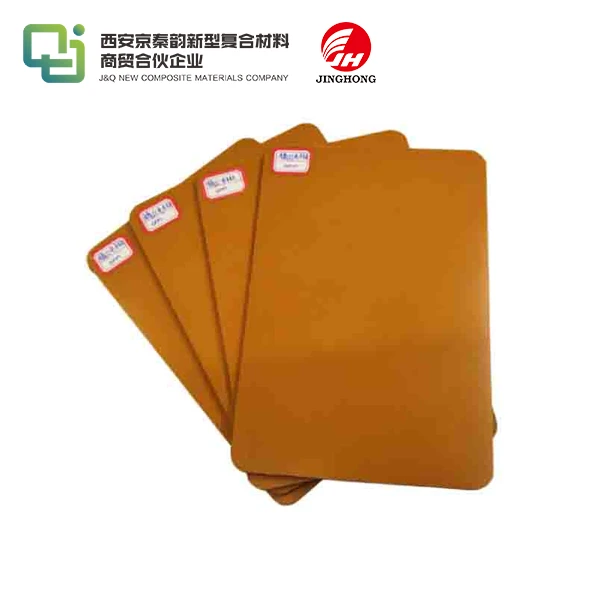
It is clear that G10 fibreglass sheet is one of the most mechanically strong composite materials used in making today. This high-pressure laminate is made of knitted glass cloth and epoxy resin. It has tensile strengths of more than 40,000 psi, compressive strengths of more than 50,000 psi, and bending strengths that are higher than many metal alloys. Because of these great qualities, G10 is a great choice for electrical insulation, structural parts, and precise cutting tasks that need to be both strong and good at conducting electricity. Knowing these qualities helps buying teams choose materials with confidence that match performance with cost-effectiveness.
Understanding the Mechanical Properties of G10 Fiberglass Sheet
Manufacturing Process and Material Composition
The way G10 fibreglass laminate is made is where its strength starts. Continuous strand glass cloth, usually E-glass, is the first thing that manufacturers use. It gives the structure its shape. This knitted cloth is saturated with an epoxy glue that has been specially made to have a certain thickness and reactivity. The wet cloth, which is now known as prepreg, is stacked in layers with the fibre direction carefully managed.
During the hardening stage, heat and pressure turn these layers into a rigid mixture. Depending on the cement system, industrial presses use pressures between 1,000 and 2,000 psi and temperatures between 150 and 180°C. Cross-linking happens inside the resin matrix because of this thermosetting process. This makes chemical bonds that can't be broken and hold the glass fibres in place. This makes a stiff material that is very strong for its weight and doesn't have many holes inside that could affect its mechanical performance.
To make sure that all production runs are the same, good makers keep an eye on the glue content, hardening time, and cooling rates. Changes in these factors can have an effect on the end qualities. This is why licensing and group tests are so important for B2B purchasing decisions.
Tensile and Compressive Strength Characteristics
G10 is very strong against pulling and breaking forces, which makes it a good choice for structure uses. When measured perpendicular to the lamination plane, the normal tensile strength is between 40,000 and 50,000 psi. Some luxury types get even higher numbers. This means that a G10 part that is the right size can hold up against heavy hanging loads or stress forces without permanently changing shape.
Just as amazing is the compressive strength, which is often higher than 50,000 psi in the direction of the laminations. This quality is very important for parts that need to fight crushing forces and keep their electrical separation, like motor braces, bushing supports, and load-bearing insulators. The glass fibre reinforcement spreads the compression loads throughout the structure of the material. This stops the plastic from breaking in weak spots, which can happen when the plastic isn't strengthened.
G10 boards and laminates keep their better mechanical qualities in a wider range of weather conditions than phenolic laminates or FR4 boards. The epoxy structure is better at keeping water out than phenolic resins, which can become soft in wet situations. This stability makes sure that the mechanical specs stay the same whether the material is used in dry switchgear cabinets or wet coastal factories.
Flexural Strength and Stiffness Performance
The flexural qualities of a material show how it reacts to bending forces, which happen a lot in electrical panels, structural frames, and mechanical gaps. Flexural strength numbers for G10 are usually between 50,000 and 60,000 psi, which means that thin pieces can cross gaps without deflecting too much. This quality is useful in PCB support structures and transformer insulation, where being dimensionally stable under pressure stops short circuits and mechanical interference.
Its modulus of elasticity for G10 fiberglass sheet, which measures how stiff it is, is between 2.5 and 3.5 million psi, based on how much glass is in it and how the fibres are woven together. When the loads are the same, a higher modulus number means less displacement. This means that accurate parts will work more reliably. Using beam equations, engineers can figure out exact bending rates, which lets them make sure design choices without over-engineering or wasting materials.
Test results from approved makers show that G10 keeps its bending qualities even after being loaded and unloaded many times, showing that it is very resistant to wear. This toughness is important for things like spinning machinery parts or equipment mounts that are shaking, where materials are put through millions of stress cycles over the course of their useful life.
Thermal Stability and Temperature Resistance
Mechanical strength is often the main topic of conversation when choosing a material, but thermal features have a big impact on how well it works in the real world. G10 can withstand constant working temperatures of up to 130–140°C and can withstand short-term exposures of up to 180°C. Throughout this range, the epoxy resin system keeps its shape, so there is no bending or delamination that could damage mechanical parts.
The material's coefficient of thermal expansion stays low compared to plastics that aren't strengthened. This keeps stress from building up in units made of more than one material when the temperatures change. This quality is very important in barriers for car battery packs and power distribution equipment where parts go through daily temperature changes. Comparing the rates of heat expansion of materials next to each other stops delamination and keeps the assembly's integrity.
If a job needs to be run continuously at temperatures above 140°C, buying teams should look at G11 grade laminates. These use higher-temperature epoxy systems that make the working range go up to about 180°C constant duty. The cost of materials goes up as a result, which is why temperature requirement analysis is an important part of developing specifications.
Electrical Insulation Properties Supporting Mechanical Applications
G10 is one of a kind among building materials because it is both strong and doesn't conduct electricity. Most dielectric strengths are higher than 400 volts per mil of thickness. This means that thin sections can adequately separate voltages in small circuits. This trait makes it possible for electrical covers and motor parts to be lighter and take up less room.
Measurements of volume resistance show that G10 keeps its insulation qualities even when it is mechanically stressed. When some ceramics are split, they can turn into conductive lines. But the epoxy-glass combination stays electrically isolated unless the damage goes all the way through the thickness of the material. This extra safety cushion lowers the risk in high-voltage situations where vibrations or mechanical impacts could happen during service.
Low dielectric constants (4.5 to 5.0) reduce electrostatic coupling in high-frequency circuits. This makes G10 a good choice for RF protection and precision instrument parts. The material's loss slope stays below 0.02 across normal operating frequencies, which means that it loses very little energy and doesn't make much heat when it's working with electricity.
Procurement Considerations for G10 Fiberglass Sheet
Identifying Qualified Suppliers and Manufacturers
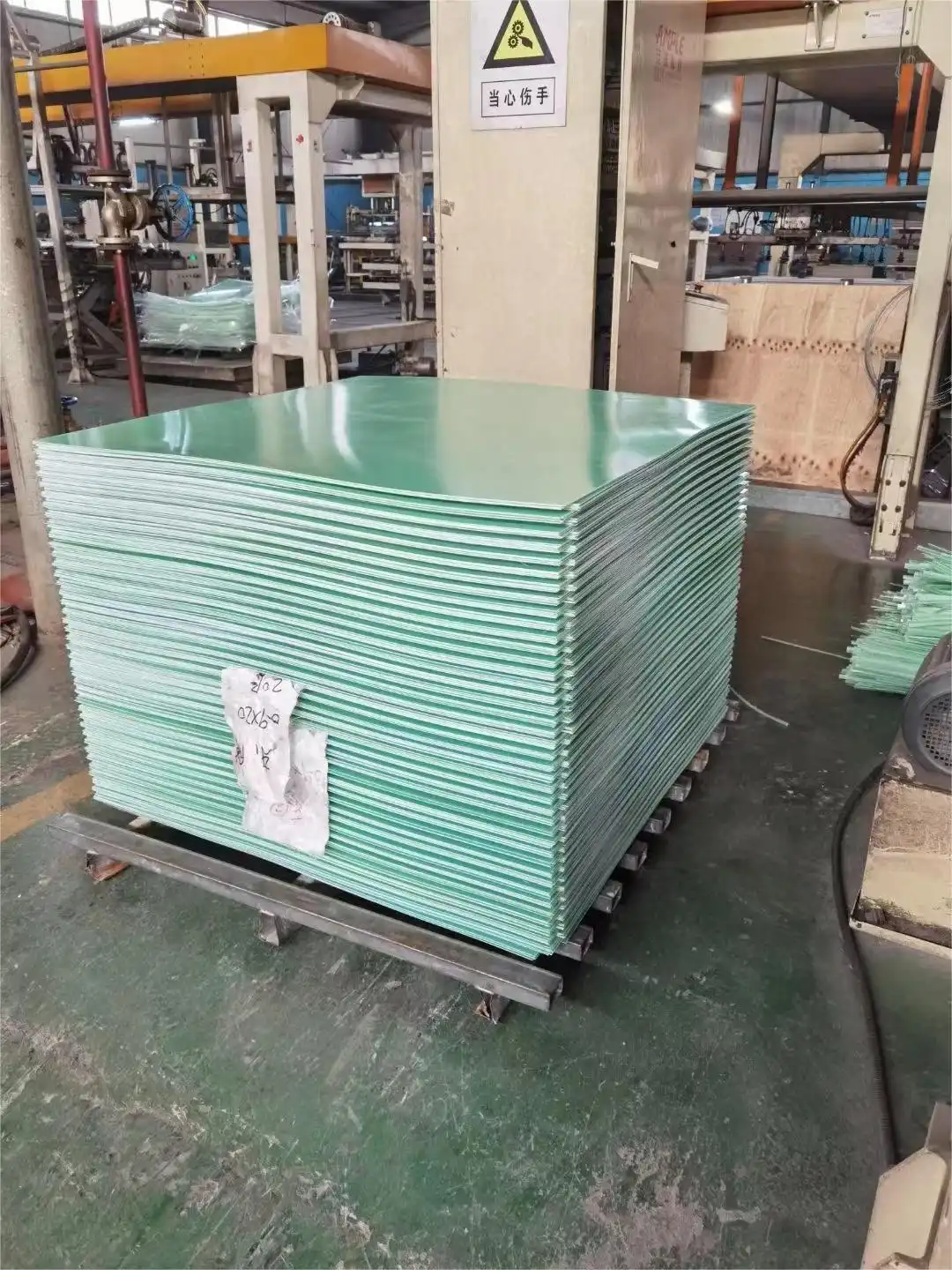
For G10 fiberglass sheet buying to go well, suppliers must first be evaluated based on their ability to make things and their quality processes. For stable product quality, well-known manufacturers keep their ISO 9001 certification up to date, which shows that they follow the rules for process control and paperwork. Look for providers that offer certifications for the materials they sell and test results that list the mechanical and electrical qualities of each batch of products they make.
Where a product is made affects wait times and the cost of transportation. Domestic providers in the US offer faster shipping times and easier ways to communicate. On the other hand, Asian makers can often offer competitive prices for big orders. For example, a balanced buying strategy might use both local sources for quick-turn samples and international partners for large-scale production runs.
Suppliers who are open about how their products are made show that they are reliable and have good technical knowledge. Reliable makers are happy to share details about their glue systems, drying plans, and quality control methods. This openness helps buying teams figure out if a company can meet certain needs and gives them trust in the security of the supply chain in the long run.
Understanding Pricing Structures and Volume Considerations
Prices for materials change depending on their width, volume, and how complicated the specifications are. Standard commercial-grade G10 in typical sizes has the best prices because of economies of scale and easy access to stock. Custom thicknesses or sheet sizes that aren't standard usually come with higher prices because of the cost of the tools and the minimum quantity that needs to be made.
A lot of the time, promises to buy in bulk lead to big price cuts. Suppliers may offer savings of 15 to 25 percent for long-term contracts that promise minimum purchases. These deals are good for everyone: buyers get stable prices and supplies, and producers can see more clearly when planning their production. To find chances for volume-based agreements, procurement teams should look at how much is bought each year.
Lead times are longer for special orders or times of high demand. Standard widths can be shipped within days from stock, but special orders may take 4 to 8 weeks to complete, which includes testing for quality and production. Strategic buyers keep extra supplies of important specs on hand in case production goes up without causing schedule problems.
Quality Verification and Certification Requirements
Certifications for materials are important proof for quality control and tracking. Suppliers you can trust will give you certificates of compliance that say the products meet NEMA G-10 standards and list their mechanical, electrical, and thermal qualities. These papers make it possible for receiving review and help customer sites meet ISO quality system standards.
Tensile strength, bending strength, dielectric strength, and moisture absorption statistics should all be included in test results that ship with materials. By comparing these numbers to the standard ranges, you can be sure that the materials are consistent and find any quality problems before they are made. When goods are delivered, procurement teams should set accepting standards and checking processes to make sure that important qualities are as expected.
Verification by UL or another third party adds authority for apps that need to follow rules. G10 may not need to be listed with UL, but parts made from approved laminates can include material approvals in their product certifications. Figuring out which licenses apply to your applications makes following the rules easier and cuts down on the time it takes to get approval.
Building Supplier Relationships for Long-Term Success
Reliable seller ties for G10 fiberglass sheet go beyond just buying things; they also involve working together to solve problems. Good providers give expert support to help customers choose the best specs, solve problems with cutting, and get the most out of the materials they use. This knowledge is especially useful when making a new product, since the performance of the materials directly affects the success of the design.
Clear information about predicted demand helps sellers keep enough supplies and production capacity on hand. Sharing future project schedules helps makers make the best use of their resources, which cuts down on lead times and keeps supplies from going down. Business reviews done on a regular basis help relationships get stronger and find ways to cut costs or make processes better.
Support after the sale is what sets great sellers apart from average ones. Responding to complaints about quality, being ready to look into performance problems, and being flexible when it comes to changing specifications are all signs of a commitment to customer success. These aspects of the service usually make the modest price fees worth it compared to the cheapest options that don't have the technology tools.
Maximizing the Value of G10 Fiberglass Sheets in Your Projects
Machining Best Practices for Optimal Results
When you machine G10 correctly, you can keep its mechanical properties and get clean edges that don't delamination. When compared to high-speed steel, carbide tools give better results because their sharp cutting edges lower the amount of heat produced and fibre loss. Cutting speeds of 300 to 600 surface feet per minute are good for both output and surface quality. Feed rates should stay reasonable to keep tools from getting too loaded.
Dust collection systems keep the shop clean and protect the people who work on the machines. Fine particles are made when G10 is machined, and long-term contact can hurt the lungs. Enough air flow and collection tools make the workplace safe and keep dust from building up on precise machine parts and controls.
Pay attention to the quality of the entrance and exit holes when you're drilling. Backing plates keep the sides from breaking when drills break through, so the edges of holes are clean and don't split. Peck drilling is a good way to get rid of chips in deep holes because it keeps heat from building up and damaging the resin. When you use the right method, you can make holes that are precisely sized to fit tight-tolerance plugs and screws without having to do any extra work.
Storage and Handling Recommendations
Controlling the environment while G10 fiberglass sheet is being stored keeps its qualities and stops it from twisting. Keep sheets flat on flat, level surfaces that have enough support to keep them from sliding between touch points. Thinner sheets can bow when stored vertically, especially in places where the temperature or humidity changes. The best conditions are in climate-controlled buildings, but G10 can work in normal industrial settings without breaking down.
Keep sheet surfaces clean and free of scratches and other things that could make cutting and finishing harder. Using paper or plastic film to interleave keeps the surface from getting damaged while it is being moved or handled. Take off any protective covers right before you start cutting to keep your work area free of shop dust and other things that could affect the bonding or finishing process.
Following the first-in, first-out rule for inventory movement keeps things fresh. Epoxy laminates don't break down quickly, but if they are stored for a long time in bad circumstances, water could get in and change their electrical properties. Material quality stays the same across production runs by keeping track of arrival times and putting in place recycling processes.
Integration into Complex Assemblies
To glue G10 to other things, you need to prepare the surface and use chemicals that work with G10. Using sandpaper or Scotch-Brite pads to do light scratching makes mechanical anchor points that make the bond stronger. By cleaning with solvent, machine grease and other contaminants that might get in the way of glue soaking are removed. Epoxy glue stick to G10 surfaces very well, but structural acrylics dry faster, which is better for putting together a lot of parts at once.
In demountable systems, solid connection points are provided by mechanical fixing through bolted joints or threaded inserts. Inserts with metal threads that are pressed or glued into G10 can handle multiple screw placements without the threads wearing down. The right hole size and fitting force specs keep the inserts from coming free or the laminates from breaking, which could weaken the assembly.
Differences in temperature growth between G10 and nearby materials should be taken into account during design. Leave space between fastening holes or use flexible nuts that can adapt to changes in size caused by temperature cycles. This care keeps stress from building up, which could lead to cracks or fasteners coming loose in use.
Conclusion
The mechanical strength of G10 fibreglass sheet is very high, and it also has electrical insulating qualities that make it useful in many industrial settings, from power distribution to precision machinery. It works well in tension, compressive, and bending loading conditions, so engineering managers and sourcing specialists can rely on it as a reliable choice for materials that always work well in tough situations. Knowing how things are made, how different materials compare, and what to think about when buying things helps you make choices that improve both efficiency and cost-effectiveness. The real-life examples show that the technology works reliably across many industries, and the best practices for cutting and integration make sure that the product's value stays high throughout its entire lifecycle.
FAQ
What range of temperatures can G10 fibreglass sheet handle?
G10 keeps its mechanical and electrical traits even when it's exposed to temperatures of up to 140°C for long periods of time. For short periods of time, it can handle temperatures of up to 180°C. The epoxy glue system stays stable in this temperature range. It doesn't shrink or change size in ways that could make it harder to put the parts together. Applications that need constant service above 140°C should look at G11 grade materials that are made with higher-temperature epoxy formulas. Testing results show that G10 keeps its structure integrity and dielectric strength even when temperatures change from -40°C to its upper limit. This means that it can be used in outdoor setups and places where temperatures change quickly.
When we buy G10 material, what approvals should we ask for?
For each production batch, you should ask for certificates of compliance that say the product meets NEMA G-10 standards and thorough test results that show the product's mechanical strength, insulating qualities, and ability to absorb wetness. These papers make it possible for arriving inspections to be checked and help meet the standards for quality system tracking. Suppliers should give out material safety data sheets that explain how to handle and get rid of the product. Applications in controlled fields might need UL recognition or other third-party licenses that are mentioned in component approvals. However, flame ratings aren't usually included with normal G10 grades.
Can G10 sheets be changed to fit the needs of a certain project?
Manufacturers can make sheets with any thickness, size, or type of material that is needed for a particular purpose. When compared to stock materials, custom orders usually have lower minimum amounts and longer wait times. However, they offer better performance and less waste for high-volume production. Talk to sellers about thickness limits, surface finish requirements, and mechanical property specs during the quote process to make sure they fully understand all the needs that will affect price and possibility.
Partner with J&Q as Your Trusted G10 Fiberglass Sheet Supplier
J&Q has been making high-quality G10 fibreglass sheet products for the electrical, machinery, and car businesses around the world for more than 20 years. Our vertically integrated operations combine in-house production with dedicated transportation services. This makes the whole buying process smooth, from the design stage to delivery. Technical support teams help you choose the right materials, make suggestions for cutting, and do application engineering. This makes sure that your projects work as well as possible and cost as little as possible. We keep a large stock of standard sizes so that orders can be filled quickly. Our manufacturing freedom also lets us meet unique specs for large orders. Every package comes with quality approvals and batch testing paperwork to help with your inbound review methods and regulatory compliance needs. Email our team at info@jhd-material.com to talk about your G10 needs, get detailed datasheets, or get quotes for large orders. Discover the benefits of working with a well-known company that makes insulation materials and is dedicated to technical quality and customer success in markets around the world.
References
National Electrical Manufacturers Association, "Industrial Laminating Thermosetting Products NEMA LI 1-1998," Standards Publication, 1998.
Harper, Charles A., "Handbook of Plastics, Elastomers, and Composites," Fourth Edition, McGraw-Hill Professional, 2002.
Mallick, P.K., "Fiber-Reinforced Composites: Materials, Manufacturing, and Design," Third Edition, CRC Press, 2007.
Strong, A. Brent, "Fundamentals of Composites Manufacturing: Materials, Methods, and Applications," Second Edition, Society of Manufacturing Engineers, 2008.
Peters, S.T., "Handbook of Composites," Second Edition, Chapman and Hall, 1998.
Gay, Daniel and Hoa, Suong V., "Composite Materials: Design and Applications," Third Edition, CRC Press, 2007.