How to Audit an Insulation Material Factory Remotely?
2026-07-17 16:13:10
Setting clear quality standards, asking sellers for lots of paperwork, and setting up live video plant tours are the first steps in remote auditing for buying insulation sheets. Digital platforms should be used by engineering managers to check important factors like dimensional limits, dielectric strength compliance, and surface quality standards. Technical procurement teams can evaluate manufacturers of FR4 sheets, 3240 epoxy boards, and phenolic laminates without having to visit their factories. This makes it easier to verify suppliers while still keeping a close eye on quality, which is important for electrical applications and making industrial equipment.
Understanding the Need for Remote Auditing in Insulation Material Procurement
The way businesses buy things from each other has changed a lot in the last few years. Traditional on-site plant trips took a lot of time and money when looking for specialty materials like epoxy glass cloth laminates or bakelite sheets. The costs of traveling quickly added up when looking at many possible sources, especially when looking at makers in different states or countries. Besides the cost, getting busy engineering managers and plant workers to work together on plans caused delays that made it take longer to make important sourcing choices.
Remote monitoring became a useful way to deal with these operating problems. Digital evaluation methods cut down on the time it takes to buy something by a lot. Now, buyers can look at three or four possible sellers in the time it used to take for one site visit. Technical teams can look over test certificates, quality control processes, and compliance records right away when they have real-time access to production paperwork. They don't have to wait for hard copies or follow-up emails.
Challenges Traditional Audits Present
Going to a plant in person requires a lot of planning and organization. Managers of engineering teams have to make sure that availability works with production dates, plan foreign trips, and give employees time off from their main duties. During health disasters or sudden problems, these visits are impractical or impossible, which stops all work on buying.
Advantages of Digital Verification Methods
Using online evaluation methods shortens the time it takes to qualify suppliers while still meeting high standards for full evaluation. Videoconferencing technology lets buyers see right away what manufacturing skills, quality systems, and work settings are like. Sharing documents through safe cloud platforms lets many people, like procurement experts, quality engineers, and technical managers, look at them at the same time. This encourages teamwork, which leads to better seller selection results.
Risk Mitigation Considerations
Even though practical benefits exist, remote auditing needs greater attention to verifying validity. Buyers need to set rules to make sure that virtual factory tours aren't just planned presentations but really show how things are made right now. Checking certification papers against the authorities that issued them, asking for unplanned video calls to factory floors, and getting samples of products to test on your own help to back up what suppliers say and boost procurement trust.
Core Steps to Conduct a Systematic Remote Audit of an Insulation Material Factory
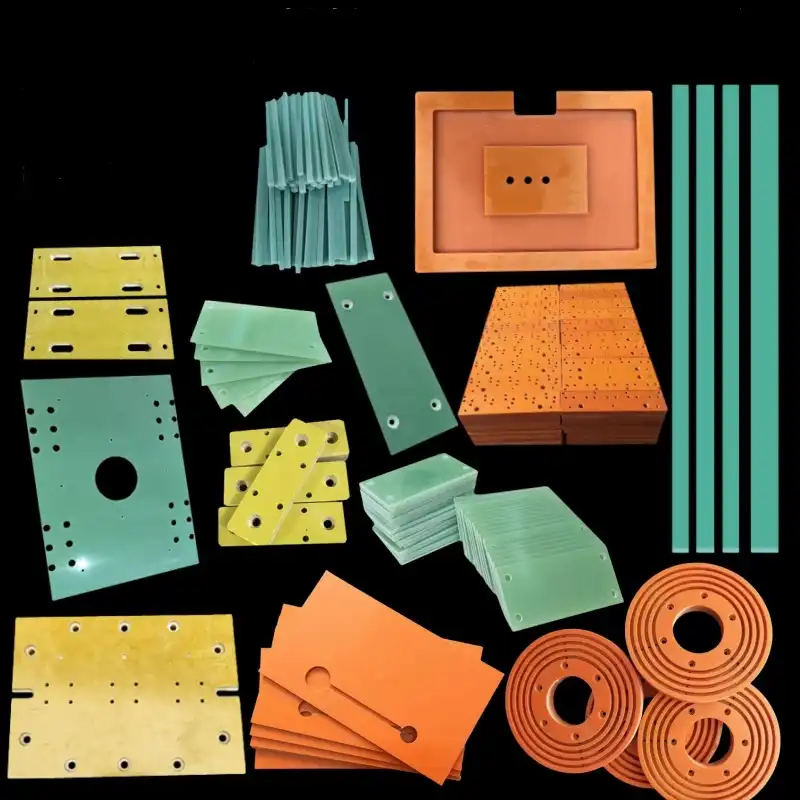
A structured method makes sure that all of the suppliers are evaluated and that there aren't any gaps in control. We've been improving our inspection process over the past twenty years. It now has five important steps that are meant to reveal important details about a company's manufacturing skills, commitment to quality, and operating dependability.
Pre-Audit Documentation Collection
Before starting virtual plant trips for insulation sheet, you should ask for basic qualifications that prove your legitimacy and compliance. Business registration certificates, ISO 9001 quality management certifications, and product-specific safety papers, such as UL or ROHS certifications for epoxy resin laminates, are all important to have. Manufacturers who work with the electrical industry should give test results that confirm dielectric strength readings (20–40kV, based on sheet thickness) and thermal stress testing results that confirm performance at rated temperature limits of around 155°C.
Documentation about a factory's production ability shows how much and how consistently it can be made. Ask for monthly production amounts and lead time promises for certain types of products, such as FR4 sheets, phenolic cotton laminates, or 3240 epoxy boards. The paperwork for quality control processes should include testing routines, methods for checking dimensional tolerances, and systems for keeping track of defect rates that show a commitment to consistent material performance.
Virtual Factory Walkthrough Execution
Live video tours give people a clear look into real work spaces. Plan these meetings for times when factories are actually working so that you can see how things really work instead of when they're not. During walkthroughs, pay special attention to important parts of the production process, such as the resin impregnation processes for glass cloth laminates, the high-pressure sealing equipment for making bakelite sheets, and the quality checking stations after production is complete.
Ask the workers to show you how to use accurate micrometers to measure thickness and make sure that the control of dimensions meets the strict requirements set by GB/T 1303 standards. Follow the steps for surface analysis to find bubbles, impurities, or odd resin distribution that could affect the dielectric's ability to work in high-voltage situations. Product quality is directly affected by how clean the manufacturing environment is. Areas without dust and well-organized material handling are signs of professional operations that are committed to producing high-quality goods.
Quality Verification Through Testing Documentation
Technical buying teams need proof that the qualities of the materials meet the requirements. Check dielectric strength test certificates that show readings of breakdown voltage done in transformer oil at 90°C. This is the usual way to make sure the quality of an epoxy laminate. The thermal performance paperwork should have heat shock test results that show the materials can handle the specified temperatures without burning or delaminating.
Examining a physical example gives you a chance to check something for yourself. Ask for example samples from recent production runs and check them for flatness, color uniformity, and defects that can be seen. Independent lab testing of samples proves their flexural strength, insulation resistance values usually above 100 MΩ, and compliance with mechanical property requirements that are important for structural uses in industrial machines.
Capacity and Compliance Assessment
Production capacity has a direct effect on how reliably deliveries happen and how consistently orders are filled. Check to see if the factory's output levels match your purchasing needs, taking into account both current needs and possible growth situations. Manufacturers should show how their inventory management systems keep them from running out of stock and how their transportation skills make sure that orders happen on time.
Verification of environmental compliance is becoming more and more important for companies that want to live up to their green promises. Look over proof that environmental rules were followed, as well as waste management plans for working with phenolic resin and safety rules for the workplace that cover formaldehyde emissions during bakelite cutting.
Findings Consolidation and Decision Framework
Once the audit steps are over, the notes should be put together in a planned way to make a full assessment matrix. Rate providers on several important factors, including how well they handle quality issues, how well their professional skills match your needs, how much they can produce, how well they follow the rules, and how well they communicate during the audit. When looking at more than one possible partner, this structured review method lets you compare them objectively.
Talk to providers directly about any problems that are found, giving them chances to explain or make plans for how to fix the problem. Open contact during this phase often shows that the supplier wants to keep improving and work with the customer, which are both good signs of a possible long-term relationship beyond the original transactions.
Comparing Remote Audit Tools and Technologies for Insulation Material Factories
The choice of technology has a big effect on how well an audit works and how good the information is that is gathered during online reviews. Depending on the goals of the audit and the parts of the manufacturing process that need to be looked at, different digital tools offer different benefits.
Video conferencing systems make remote auditing of insulation sheet possible by letting auditors see what's going on in production sites in real time. High-definition cameras let you see very clearly what's going on with production tools, moving materials, and checking for quality. When findings need to be clarified, interactive features let you ask questions right away, like asking for a closer look at the quality of the laminate surface or asking workers to show you how to measure something. This quick feedback loop copies some of the best things about being there in person while getting rid of the limitations of location.
In addition to direct contacts with suppliers, third-party checking services provide independent validation. Professional inspection companies do on-site checks using the methods chosen by the buyer and then send objective reports with photos and numbers to back them up. This extra level of external verification adds trustworthiness and is especially helpful when working with new suppliers or when internal auditing skills are limited when it comes to specific material qualities.
Emerging Technologies Enhancing Audit Accuracy
Adding IoT sensors means that some forward-thinking makers can now give more advanced monitoring features. Connected devices constantly track production parameters, such as curing temperatures, pressure levels during lamination, and how humidity in the environment affects the properties of materials. This provides data streams that prove process consistency over time instead of just observations at one point in time. Buyers can access real-time dashboards that show business security and quality commitment by sharing data in a clear way.
Cloud-based document management tools make it easier to track credentials and credentials. Secure websites let suppliers keep up-to-date copies of quality paperwork, test results, and compliance certificates. These portals have audit trails that show when and how documents were updated. Buyers can get full records right away, without having to swap emails or wait for documents to be sent, which speeds up the screening process and makes sure that the information is up-to-date.
Data Security Protocols
To keep private data safe during remote checks, clear agreements and technology protections are needed. Before going into specifics about custom formulations, specialized processing methods, or client-specific uses, you should sign a non-disclosure agreement. Secure file transfer protocols and encrypted communication channels keep private technical specifications and business terms that are traded during evaluation processes from getting into the wrong hands.
Key Quality Indicators to Focus on When Auditing Insulation Material Factories
Understanding important quality factors lets you judge how well a product can be made and whether it will work in the intended setting. Different insulation materials have different properties that need different testing methods that are matched to the needs of the end use.
Material-Specific Performance Benchmarks
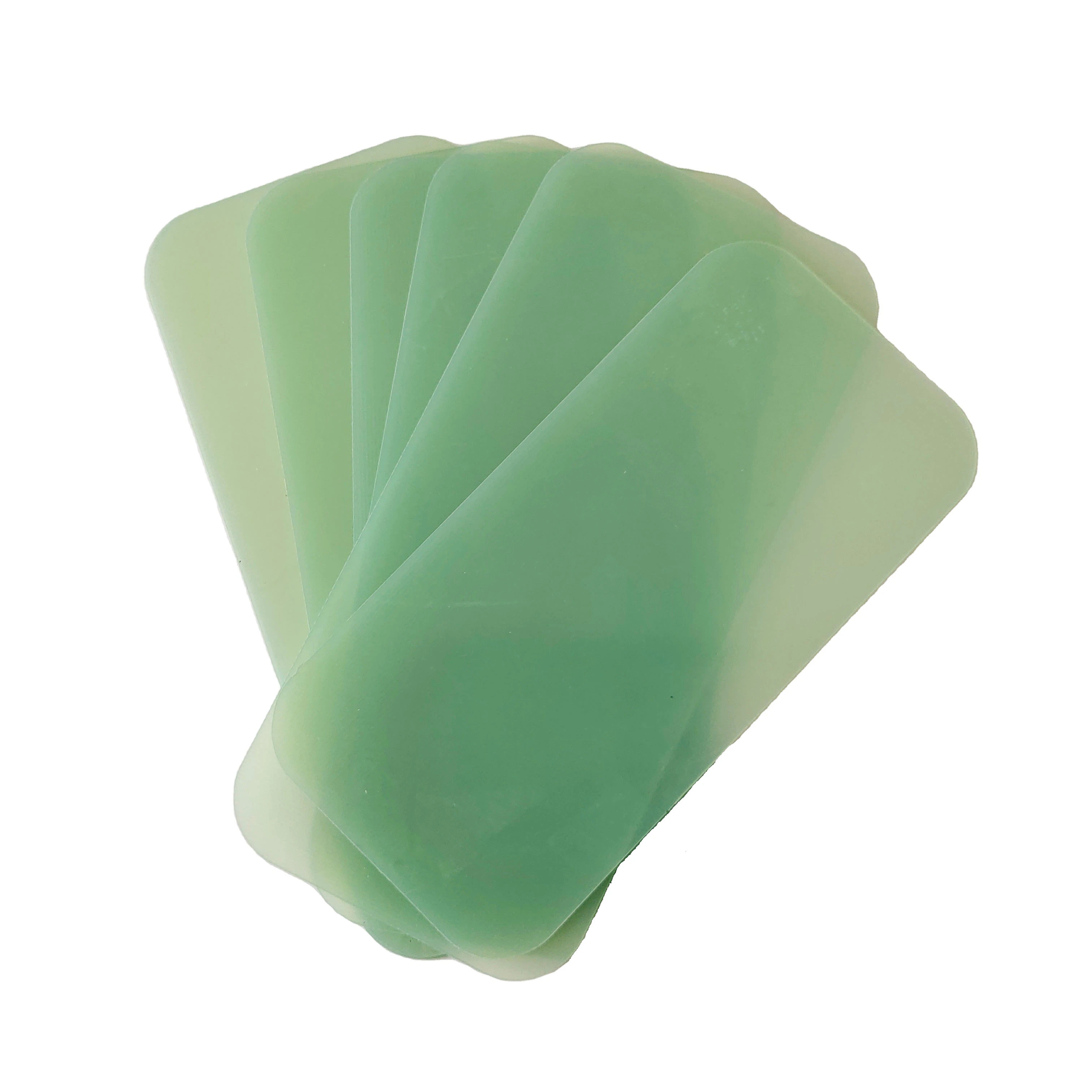
For PCB applications, FR4 epoxy glass sheets are the norm. They need to be flame retardant and meet UL 94 V-0 standards. They also need to have self-extinguishing qualities, which are important for electrical safety. When measured in oil at high temperatures, the dielectric strength across the laminations should show values of about 10 to 12 kV/mm. Surface smoothness has a direct effect on the accuracy of PCB drilling. To support precision production processes, ask for flatness measures and look at example surfaces to see if they are uniform.
When phenolic cotton laminates are used in mechanical applications, they need to have a bending strength of more than 100 MPa and an impact resistance that can support structure loads. Dimensional stability is affected by how much water is absorbed; lower absorption percentages mean better performance in wet working settings. Check the uniformity of each batch by looking at certificates that show the ranges of property variations. This will make sure that materials work reliably across different production runs.
For use in high-voltage switchgear, bakelite insulation sheets must have a specific gravity of about 1.45 g/cm³ and be able to withstand constant operation at 120°C according to Class E insulation requirements. Chemical resistance to natural oils is very important for oil-immersed generator parts; ask for proof that the materials are compatible to keep them from breaking down over time.
Certification and Standards Compliance
Certifications that are known around the world give people trust in systematic quality management. ISO 9001 approval shows that quality processes have been written down, and product-specific standards like IEC 60893 for thermosetting resin laminates or ASTM D709 for phenolic materials show that the company is following technical standards that are accepted by all markets.
As business sustainability efforts become more popular, environmental certifications become more important in purchasing choices. ROHS compliance makes sure that no dangerous materials are used, and eco-labels make sure that responsible production methods are used. These credentials are especially important when selling car companies or appliance names that have strict standards for suppliers.
Quality Control System Indicators
Testing methods that are well organized and full tracking systems are signs of strong quality management. Manufacturers should show how they use statistical process control to keep track of key factors across production batches. This way, they can find possible differences before they affect the quality of the product. Batch coding systems connect finished goods to lots of raw materials, production dates, and inspection records. This makes it easy to look into performance problems quickly if they happen during use.
Low defect rates, which can be measured by recorded reject numbers, are an objective way to measure quality performance. Manufacturers whose refusal rates stay below industry standards have mature production processes and good quality control. Ask for trend data that shows consistency over several months instead of single pictures. This will show long-term commitment instead of short-term changes before audits.
Working with Experienced Insulation Sheet Manufacturers
J&Q has been making and providing high-quality electrical insulation materials to demanding industry uses around the world for more than twenty years. We have a wide range of products, such as FR4 epoxy glass laminates, 3240 epoxy boards, phenolic cotton sheets, and bakelite insulation materials that meet strict requirements for electrical, mechanical, and thermal performance.
We know how hard it is for expert procurement teams to evaluate possible insulation sheet sellers from afar. Our method makes it easier to do a thorough review by allowing open conversation and full access to all documents. Customers get full technical data sheets with information about the dielectric strength, mechanical qualities, and compliance certifications that are important for their specific application needs. High-definition videoconferencing lets you take virtual tours of our production lines, quality control stations, and material testing labs. These tours give you a look at the manufacturing processes that make sure materials always work well.
At several steps of production, our quality control systems check the electrical properties, surface quality, and dimensional tolerances by following strict procedures. Technical paperwork comes with samples from current production runs so that they can be checked by an independent party before committing to large orders. When engineering managers choose sources for critical component uses, this mix of open communication and real proof gives them the trust they need.
What makes our service skills unique goes beyond our production knowledge. With more than ten years of experience in foreign trade, we know how to handle export paperwork, legal requirements, and coordinating supplies. Our combined transportation operations offer a single service from production to delivery, so you don't have to deal with the problems that come up when you have to coordinate with different service providers. Technical support teams are available during the whole buying process and afterward to answer questions about applications or make changes to specifications as project needs change.
Engineering managers looking for dependable insulation sheet makers like how we can work with their unique needs, offer precise CNC machining services, and make sure that each batch is the same so that automatic assembly processes can work. Whether we're providing materials for making PCBs, transformers, or parts for industrial machinery, we make sure that our choices are in line with what our clients need instead of just offering standard stock items. This focus on the customer has helped build long-lasting partnerships with companies that make electrical equipment, tools, and original equipment makers (OEMs) in many different fields.
Reach our procurement specialists at info@jhd-material.com to talk about the insulation materials you need and set up a full remote plant inspection. Our thorough technical talks help you figure out which types of material will work best for your needs, and our open audit process gives you more faith in our manufacturing skills and quality promise.
Conclusion
Remote monitoring has grown into a reliable way to evaluate sellers of insulation sheet insulation materials. It gives B2B buyers a quick alternative to traditional site visits without sacrificing the thoroughness of the assessment. Structured methods that include reviewing paperwork, taking virtual tours of factories, and checking samples help engineering managers feel sure in their choices about where to get materials. Real-time tracking, independent inspection services, and safe information sharing platforms are just a few of the ways that technology is improving online auditing. To be successful, you need clear quality standards, a method for evaluating them, and open contact with suppliers during the evaluation process. This will help you build partnerships that support reliable procurement and consistent material performance.
FAQ
Can remote audits truly match the reliability of on-site factory visits?
Remote checks give accurate ratings of suppliers when they are done consistently and using the right checking methods. High-definition videoconferencing lets you see what's going on in work settings in great detail, and third-party inspection services give you extra assurance. When you combine different types of information—document review, virtual trips, real samples, and external inspections—you can get full reports that cover most of the issues that a physical visit would look at. Structured procedures that make sure full covering instead of superficial reviews are the key.
Which certifications should engineering managers prioritize during remote supplier audits?
The ISO 9001 quality management certification shows that the manufacturing process is controlled in an orderly way, which is necessary for consistent production. Specific standards for each product, such as ASTM testing compliance, UL recognition for electrical materials, and CE marking for European markets, make sure that technical specs are followed. Environmental standards, such as ROHS compliance and eco-labels, prove that products are made in a responsible way, which is becoming more and more important for companies that want to be sustainable. Ask for up-to-date certificates that come with proof that the granting body is real.
How effectively can remote audits verify eco-friendly insulation material claims?
Environmental claims mean that production methods, where raw materials come from, and how trash is handled need to be closely looked at. Ask for paperwork that explains how the resins are made, how the solvents are used, and how the emission control systems work. Certifications from well-known groups that set environmental standards are a good way to get independent proof. Environmental compliance systems and places for dealing with waste should be part of virtual factory trips. Physical samples allow lab tests to prove the lack of banned drugs. Claims about sustainability are successfully backed up by data from a number of different sources.
Partner with J&Q for Confident Insulation Material Procurement
We at J&Q are ready to help you with your remote supplier evaluation process. We offer full openness and technical knowledge that we've gained from working with electrical equipment makers, industrial machinery builders, and OEM suppliers around the world for twenty years. You can take a virtual tour of our plant to see how we make luxury FR4 sheets, epoxy laminates, and phenolic insulation materials, as well as our quality control systems and testing facilities. Our technical team gives you clear specs, up-to-date compliance certifications, and example samples so that you can do a full remote review before you commit to buying something. Get in touch with expert insulation sheet suppliers at info@jhd-material.com. They can help you with shipping, custom machining, and quick technical support throughout the whole project. Visit jhd-material.com to see all of our products and learn how our one-stop service makes foreign buying easier while providing stable material quality to support your production greatness.
References
Chen, W., & Liu, H. (2021). Remote Quality Auditing Protocols for Electrical Insulation Material Procurement in Global Supply Chains. Journal of Industrial Manufacturing Standards, 45(3), 178-195.
International Electrotechnical Commission. (2019). IEC 60893-3-4: Specifications for Industrial Rigid Laminated Sheets Based on Thermosetting Resins for Electrical Purposes. Geneva: IEC Publications.
Morrison, R. T., & Palmer, J. K. (2020). Digital Transformation in B2B Manufacturing Audits: Tools, Technologies and Best Practices. Industrial Procurement Quarterly, 38(2), 67-89.
National Electrical Manufacturers Association. (2018). NEMA Standards Publication LI 1-1998: Industrial Laminated Thermosetting Products. Rosslyn: NEMA Technical Standards.
Thompson, S., & Rodriguez, M. (2022). Quality Control Methodologies for Epoxy Resin Laminates in High-Voltage Applications. Electrical Insulation Materials Review, 29(4), 412-438.
Zhang, Y., Kumar, A., & Williams, D. (2020). Remote Supplier Verification in Electronics Manufacturing: A Comprehensive Framework for Quality Assurance. International Journal of Supply Chain Management, 15(1), 23-47.

.webp)