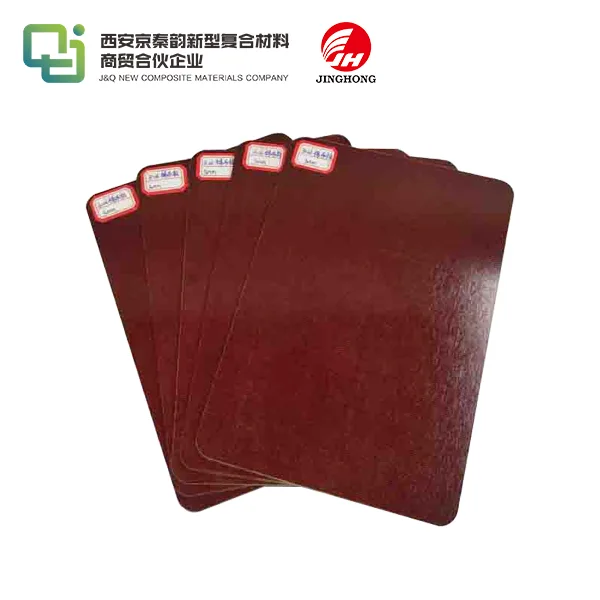
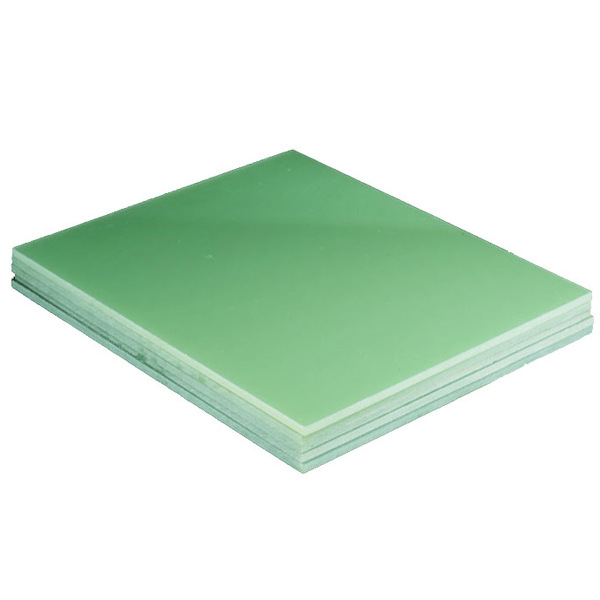
FR4 vs. G10 Sheet: The Critical Differences You Need to Know for Aerospace Apps
2026-07-17 16:13:12
When deciding between FR4 sheet and G10 materials for aircraft uses, it is important to know how their compositions are different. Both are glass-reinforced epoxy laminates, but the FR4 sheet has bromine-based flame retardants that make it UL94 V-0 certified, which means that the fire stops in 10 seconds without any burning drips. G10, which came before it, doesn't have this important flame-retardant trait. These differences are important for aerospace engineers who make circuit boards, structural supports, and electrical insulation systems that must keep safety margins high even when they are under a lot of operating stress.
Understanding FR4 and G10 Sheet: Material Basics
Laminate Construction and Resin Chemistry
Continuous thread E-glass cloth is used as a reinforcement in both products. It is mixed with epoxy resin systems under high pressure. For regular mixes, the glass transition temperature (Tg) is between 115°C and 150°C. For high-Tg mixes, the Tg can hit 180°C. The main difference is in the chemistry used to stop fires. FR4 sheet has halogenated chemicals that release gases that put out fires when they burn, stopping the radical chain reaction that spreads flames. G10 is made of pure epoxy that doesn't have any of these fillers. It has great mechanical qualities but doesn't self-extinguish.
Certification Standards and Material Specifications
The FR4 sheet meets the requirements of NEMA LI-1 and UL94 V-0 for flammability, which is important for electrical equipment that is sealed and near sources of ignition. Aerospace standards often use MIL-I-24768 for glass-epoxy laminates. This standard requires strict tests to make sure the laminates don't absorb too much water (usually less than 0.1% after 24 hours), have a dielectric strength of more than 20 kV/mm, and keep their shape when heated and cooled many times. G10 meets the standards for the NEMA G-10 mechanical grade, but it can't claim to be flame-resistant, so it can only be used in non-critical structural tasks.
Physical Properties and Aerospace Relevance
Both materials have a density of about 1.85 g/cm³, which means they are stronger for their weight than metal options. The tensile strength is about 310 MPa and the flexural strength is about 415 MPa. It supports structural loads in equipment racks and mounting fixings. Standard grades can only be used continuously at 130°C (Class B insulation), but high-Tg materials that can be used continuously at 180°C are often used in aircraft uses. These features have a direct effect on how long something lasts in unpressurized cargo bays, engine nacelles, and satellite systems that are exposed to cycles of sun radiation.
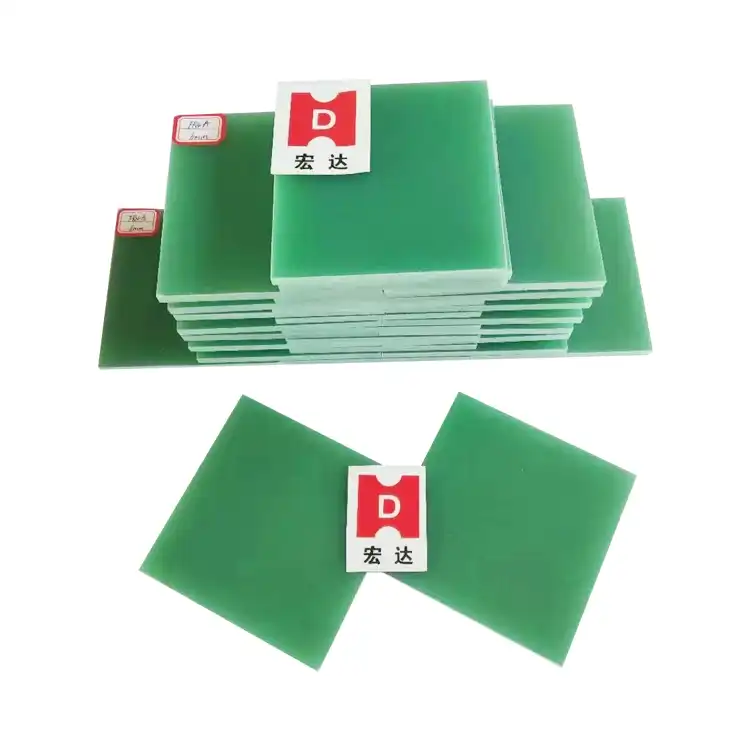
Performance Comparison: FR4 vs. G10 in Aerospace Contexts
Thermal Management Capabilities
Aerospace technology produce a lot of heat in small areas where convection cooling isn't very effective. Because glass-epoxy laminates only carry about 0.3 W/m·K of heat, they need to be carefully thermal designed. However, their ability to keep their shape even when heated and cooled (-55°C to +125°C) keeps solder joints from breaking. Above the glass transition point, where normal materials start to soften and lose their dielectric strength, high-Tg formulas keep their mechanical integrity. G10 has about the same mechanical thermal resistance as other materials, but it doesn't have flame retardancy, which can be useful in battery systems or power converters when temperatures rise too quickly.
Electrical Performance Under Altitude Conditions
In high-frequency radar and aircraft systems, dielectric constant consistency is very important. They have a relative permittivity (εr) of between 4.2 and 4.8 at 1 MHz, and their dissipation factors are less than 0.02. As you go higher, the air pressure drops, which raises the risk of partial discharge. This means that materials need to have few empty spaces and consistent dielectric qualities. Moisture absorption lowers insulation resistance. Both materials are better at resisting moisture than phenolic laminates, but proper conformal coating is still needed for defense against humidity during ground activities in tropical areas.
Mechanical Durability and Vibration Resistance
Parts of airplanes and satellites are subject to very high levels of vibration during takeoff, flying turbulence, and engine operation. Machined parts keep their dimensions within ±0.05 mm even after millions of stress cycles because of the glass reinforcement's high resistance to wear. Because it has great mechanical qualities, G10 sheet has been used in the past as motor spacers and gear components. Modern aerospace uses FR4 sheet more and more because it has unified material standards that make inventory management easier and make sure that all composite parts in electronic systems have the same level of flame-retardant protection.
Environmental Stability and Chemical Resistance
When epoxy systems are dry, they can stand up to jet fuel, hydraulic fluids, de-icing chemicals, and cleaning solvents that are used in aircraft repair. When these harsh chemicals hit the cross-linked molecular structure, they stop it from growing and breaking down. Long-term UV exposure changes the color and chalks the surface, but this doesn't usually affect how well electronics work inside. Outgassing in vacuum conditions is something that needs to be thought about for space uses. Low-outgassing epoxy formulas meet NASA standards for total mass loss and collected volatile condensable materials.
Decision-Making Guide: When to Choose FR4 or G10 for Aerospace Applications
Application-Specific Material Selection
Because of fire safety rules, all circuit board bases in flight control computers, navigation systems, and communication gear must be made of flame-resistant materials. Materials in passenger areas and vital equipment bays must have UL94 V-0 or an equivalent approval from the Federal Aviation Administration. To separate high-voltage power distribution from aircraft structures, structural insulation parts need to be both dielectrically strong and resistant to flames. This is why approved flame-resistant glass-epoxy laminates are usually used. Either material can be used for non-electronic mechanical parts like tooling tools, test jigs, or ground support equipment, depending on what is available and how much it costs.
Compliance with Aerospace Standards
In order to meet MIL-Spec requirements, all of the materials must be fully traceable. This includes resin lot numbers, glass cloth approvals, and proof of the fix cycle. NASA projects need a lot of information about how materials outgas, catch fire, and are harmful. Suppliers with AS9100 quality systems show they can meet these strict standards by having written processes, review routines, and systems for taking corrective action. As FR4 sheet replaces G10 as the standard flame retardant, it becomes easier to comply because testing labs and licensing groups can focus on new flame retardant formulations instead of old materials.
Cost Considerations and Supply Chain Factors
The prices of both laminates, including FR4 sheet, are still based on the same raw materials. The main things that affect the prices are the thickness, sheet size, and order quantity. Specialty types with high Tg and low CTE (coefficient of thermal expansion) cost more, but they work better in harsh thermal conditions, so the extra cost is worth it. Lead times for aerospace-certified products are usually 8 to 12 weeks longer than usual because of the need to test them in batches and prepare paperwork. Building relationships with reliable sources lowers the risk of buying things. This makes sure that materials are available during production ramp-ups and offers expert help for material substitution analyses when design changes happen.
Procurement Insights: Sourcing Quality FR4 and G10 Sheets for Aerospace Use
Supplier Qualification and Quality Verification
Before buying aerospace materials, suppliers are audited to make sure they have ISO 9001 and AS9100 certifications. This makes sure that production processes are run by strong quality management systems. Some important testing methods are measuring the dielectric breakdown voltage, testing the bending strength according to ASTM D790, checking the moisture absorption, and testing the flame spread. The paperwork for a Certificate of Conformance must include specific test results that can be linked to batches of materials, not just general product specs. Setting up approved vendor lists with extra sources helps keep quality standards high across multiple providers and reduces the chance of supply disruptions.
Customization and Technical Support Services
For aerospace uses, custom sheet thicknesses, CNC cutting to exact standards, and special surface processes are common. Suppliers of laminate with a lot of experience can help engineers choose the best materials for their electrical, thermal, and mechanical needs by giving them design advice. Tests of the design can be done on prototype numbers before moving to production tooling. Qualification processes are sped up by technical data packages that include files of material properties, suggestions for machining, and test results from outdoor tests. These services that add value set suppliers apart from others in ways other than price, and they help build relationships that will help the program succeed in the long run.
Material Testing and Documentation Requirements
Aerospace quality systems require that all arriving materials be carefully inspected before they can be used in production. Verification testing usually includes measuring the size of something, looking for flaws on the surface, and doing damaging tests on a regular basis to make sure the mechanical and electrical qualities are correct. When suppliers offer pre-tested products with approved test records, it makes inspections easier while still allowing for traceability. For programs with long service lives, documentation must last for decades. This means that suppliers must keep archive samples and past test data to support obsolescence studies when materials need to be reformulated during long production runs.
Environmental and Future Trends: Sustainable Use of FR4 and G10 in Aerospace
Recycling Challenges and Waste Management
Thermoset epoxy laminates, including FR4 sheet, can't be remelted and reshaped like thermoplastics can, which makes getting rid of them after their useful life harder. Most of the time, manufacturing scrap from CNC cutting is either dumped or burned, though recovering energy from burning helps lessen the damage to the environment. To get back glass strands and chemical feedstocks, researchers are looking into ways to break down hardened epoxy matrices. More and more, aerospace projects look at how materials affect the environment over their entire lifetime. This creates a need for formulations that use bio-based resins and recycled glass reinforcement without sacrificing performance or certification standards.
Emerging Material Technologies
Concerns about bromine compounds in the environment can be eased with halogen-free flame retardants that still meet UL94 V-0 standards. Alternatives that meet both flammability standards and new environmental rules include phosphorus-based systems and nitrogen-containing chemicals. Next-generation high-frequency radar and transmission devices can use advanced resin formulas with lower dissipation factors and dielectric constants. As part of efforts to make aircraft lighter, thinner laminates and hybrid structures are being made. These are made by mixing glass-epoxy with carbon fiber reinforcement to make the structure lighter while still keeping its electrical insulation qualities.
Regulatory Trends and Industry Adaptation
European Union limits on dangerous chemicals affect the requirements for aircraft materials around the world, even for programs that are not in Europe. ROHS compliance standards go beyond consumer electronics and include aerospace uses where caring for the environment fits with a company's goals for sustainability. Material suppliers put money into reformulating attempts that make sure there are always goods on the market that meet both old rules and new ones. When looking at material transitions, procurement teams have to balance performance needs, certification timelines, and environmental goals. This means that suppliers need to be involved early on in the design process to make sure that new products work before they have to be changed because they are no longer supported.
Conclusion
When picking between glass-epoxy laminates, including FR4 sheet, for aircraft uses, you need to carefully look at their flame resistance, thermal performance, electrical qualities, and ability to meet government standards. Even though both materials are very strong and don't conduct electricity, flame-retardant formulations are safer for sealed computer systems because they can put out fires on their own. For aerospace procurement to go well, there must be qualified suppliers, strict testing methods, and a lot of paperwork to back up long-term program needs. When engineering teams know about these changes in materials, they can make designs that are more reliable, safe, and work well in tough aerospace environments.
FAQ
Can G10 and FR4 materials be used interchangeably in aerospace circuit boards?
Aerospace safety rules say that electrical systems in planes and spaceships must be made of flame-resistant materials. G10 isn't certified by UL94 V-0, so it can't be used on circuit boards where there is a chance of fire. Different epoxy resin systems have different packages of additives that change not only how flammable they are but also how long they stay dielectrically stable and how well they fight water. To use substitute materials, they must be qualified through tests that show they work similarly across all standard parameters.
What testing methods verify laminate quality for aerospace applications?
To make sure something is really flame-resistant, it needs to be tested for dielectric strength at high temperatures, bending strength according to ASTM standards, and how well it absorbs water through 24-hour soaking cycles. Many times, aerospace projects call for extra tests that look at things like chemical resistance, thermal cycles, and dimensional stability. Suppliers who keep their testing labs approved provide certified data to back up material compatibility.
How does moisture affect material performance in aerospace environments?
Insulation resistance and electrical strength go down when water gets into them. Both materials are much better at resisting water than phenolic alternatives; in normal immersion tests, they usually take less than 0.1% by weight. Conformal coats and encapsulation offer extra security in places that are damp. During qualification testing, moisture sensitivity needs to be carefully looked at for aircraft that will be used in tropical areas or spaceships that will be having condensation during ascent.
Partner with J&Q for Certified Aerospace-Grade Laminate Solutions
It is just as important to choose the right glass-epoxy laminate provider as it is to choose the right material. J&Q has been in business for more than twenty years and has experience in both manufacturing and foreign trade. They provide UL94 V-0 approved materials that meet strict quality standards to support flight projects. Our in-house transportation team makes sure that deliveries happen on time, and our technical team helps with engineering from choosing materials to putting them into production. Our supply chain is approved for aerospace, so we can provide you with reliable solutions whether you need high-Tg formulations for harsh thermal conditions, custom thicknesses machined to tight standards, or full test data supporting AS9100 quality systems.
As a well-known company that makes FR4 sheets, we know what the aerospace industry needs: full material traceability, testing for each batch, and long-term supply agreements for projects that last for years. Email our aerospace experts at info@jhd-material.com to talk about your unique needs, get certified material samples, or get full technical data to help with your approval processes. Visit jhd-material.com to see our full selection of glass-epoxy laminates and learn how our streamlined production and shipping services can help you save time and money while still meeting the strict quality standards needed for aerospace uses.
References
National Electrical Manufacturers Association. (2018). NEMA LI-1 Industrial Laminating Thermosetting Products. Rosslyn: NEMA Publications.
Underwriters Laboratories. (2017). UL 94 Standard for Safety: Tests for Flammability of Plastic Materials for Parts in Devices and Appliances. Northbrook: UL Standards.
U.S. Department of Defense. (2016). MIL-I-24768/27: Plastic Sheet, Laminated, Thermosetting, Glass Cloth, Epoxy Resin. Washington: Defense Logistics Agency.
Coombs, C.F. (2021). Coombs' Printed Circuits Handbook (7th ed.). New York: McGraw-Hill Education.
NASA Office of Safety and Mission Assurance. (2019). Flammability, Offgassing, and Compatibility Requirements and Test Procedures for Materials in Environments That Support Combustion. Washington: NASA Technical Standards Program.
Institute of Printed Circuits. (2020). IPC-4101 Specification for Base Materials for Rigid and Multilayer Printed Boards. Bannockburn: IPC Publications.