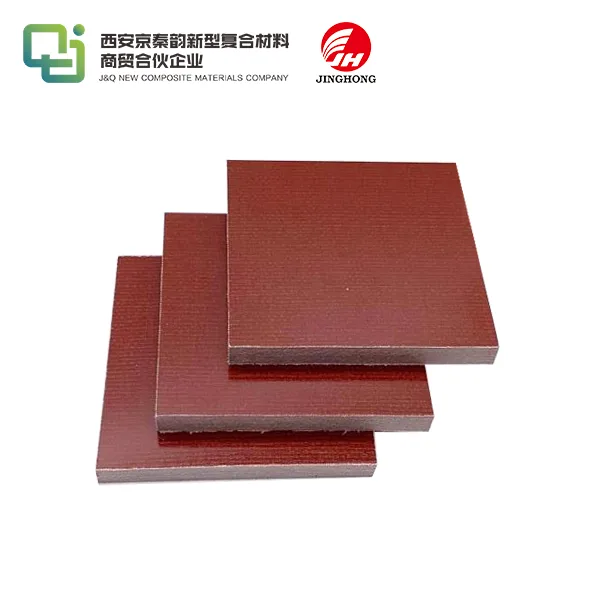
How to Choose NEMA Grade L Phenolic Cotton Board for Custom Machined Components?
2026-11-19 16:42:12
You should know what the parts will be used for and what their load, temperature, humidity, and voltage are before you choose NEMA Grade L Phenolic Cotton Board for them. Next, make sure that the laminate's fine cotton weave fits your body. Compare it to Grade C, Grade LE, or FR4, and then ask the supplier about the thickness, sheet size, and paperwork. It's easy to cut with Grade L, so you can use it to make fine gears, relay bases, and terminal strips. This guide was made to help engineers and buyers in the appliance, automotive, machinery, power, and electrical industries move from the idea stage to the order stage.
Why Material Selection Matters for Custom Machined Components?
What Grade L Is Made Of?
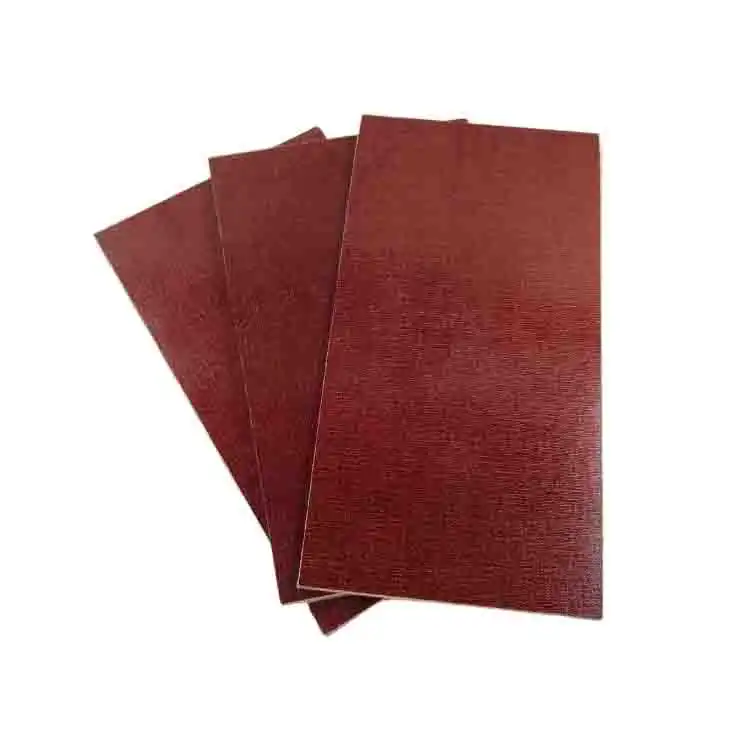
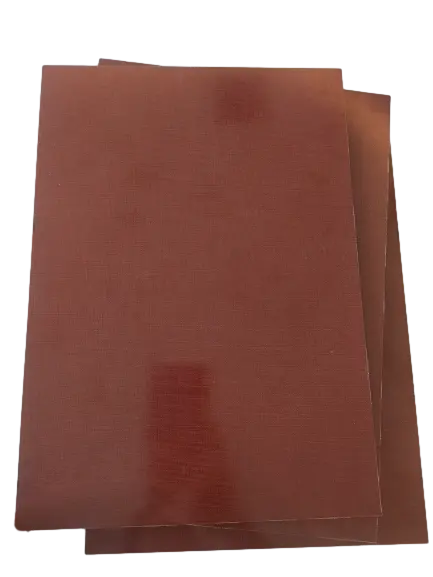
It is NEMA Grade L and a thermoset laminate. They soak fine-weave cotton cloth in phenolic resin and then bake and hot-press it into sheets. It weighs less than 4 ounces per square yard, which is less than the canvas used in Grade C. The board cuts well because the weave is finer. A saw, drill, lathe, mill, or plane can all cut it well. NEMA LI-1 and ASTM D709 determine the grade. NEMA Grade L and Hongda 3026 phenolic cotton board are the same thing in China, so people in the US can use either name to talk about the same thing.
Why Name and Thickness Alone Fall Short?
Two sheets with the same grade name can still do different things on your part. Different factors like temperature, moisture, tolerance, geometry, and electrical performance can affect each other. Something like a gear tooth with a thin root or a flat terminal strip will put different amounts of stress on the laminate. A lot of the time, drawing gaps creates extra work that doesn't need to be done. At about 125°C (257°F), Grade L can be used all the time. The cotton can become weaker if the temperature goes above that point. These things should be talked over before you place your order. This will save time on the machine and protect your schedule.
Where Grade L Fits Across Industries?
Hongda NEMA Grade L Phenolic Cotton Board is used to make fine-tooth gears, relay bases, radio parts, terminal bases, and strips. It's often used in places where it's very humid. Lots of people who buy from us use these things. In electronics, it's used to hold and space out terminals. People who build machines use it to make gears and wear parts. Power companies use it to keep buildings safe from low voltage. It is cut into auto parts and insulation pads, and for appliance brands, it is used to make motor brackets and insulation frames. Paper phenolics or FR4 should be used instead of Grade L or FR4 if you need to work with hot wires.
Define Requirements and Evaluate Core Properties
Document the Operating Conditions
Write down the terms before you ask for a quote. As well as the voltage and frequency, you should also list the mechanical load, the temperature range, the humidity, the chemicals, the vibrations, and how long you expect the part to last. For example, if the shape has sharp corners, thin walls, or small holes or threads, it may not be possible to use the same material or machine it the same way. The phenolic resin can handle acids, oils, greases, common solvents, and places that are acidic. But I don't think Grade L should be used with strong acids. To protect parts that will be outside from UV light for a long time, you should coat them. Based on a short requirements sheet, the supplier can tell you about the thickness, the gap for machining, and the steps for inspection.
Read the Property Data Correctly
The standards say that NEMA Grade L Phenolic Cotton Board has a specific gravity of 1.34 to 1.38, a flexural strength of about 16,000 psi along its length, and a compressive strength of over 35,000 psi across its width. When it comes to low-voltage structural insulation, the dielectric strength perpendicular to the laminations is fine. At this grade, however, electrical performance is not very important. Find out how each number was arrived at, how thick the specimen was, and how it was treated. There are a lot of different ways that ASTM D790 and ASTM D229 test electrical insulation sheets. You can't directly compare the outcomes of various approaches. Use the datasheet's numbers as guides, then compare them to what you need to do.
Machining Behavior and Moisture
Grade L is known for having smooth edges and small details. Very sharp tools with diamond or carbide tips should be used, and they should be moved quickly but not too slowly. To keep the laminate from blowing out, make sure the sheet is tightly clamped and that the side that will be exiting is backed with scrap material. During machining, when the resin gets hot, a phenol smell comes out. Okay, but you need more air to flow. Because Grade L doesn't soak up as much water as natural cellulosic materials, it tends to be found in damp places. Grade LE is better at keeping heat in and resisting water, so choose it when it's more important that the electricity stays stable in damp conditions.
Compare Alternatives and Match the Board to Your Part
Grade L vs. Grade C and Grade CE
The weave of Grade C canvas is rougher, and it can take more damage. While Grade L isn't as strong against impact, it is easier to work with and has a smoother surface. The weave of Grade CE canvas stays the same, but it is stronger against water and electricity. If your part has fine threads, thin teeth, or tight edges, Grade L is often the best place to start. If the part is going to take a lot of shock, like a big flat pad, Grade C is better. Pick the weave based on the main risk, like breaking during service or chipping during machining.
Grade L vs. Grade LE, Paper Phenolics, and FR4
Use the table as a quick guide and choose based on your most important need.
| Material | Base | Best fit |
|---|---|---|
| Grade L | Fine cotton | Fine gears, relay bases, terminal strips |
| Grade LE | Fine cotton, electrical | Damp conditions with insulation needs |
| Grade XX/XXX | Paper | Higher-voltage or humid electrical work |
| FR4 | Glass epoxy | High-voltage, high-humidity electrical use |
Anyone who wants to replace something should make sure that the technical data are the same and, if necessary, test a prototype or first article.
Design Parts for the Laminate
It works better if the drawings are good on the laminate. Note down the important sizes, tolerances, surface finishes, edge requirements, and space for electrical wires. If you don't need to, don't use thin sections or sharp internal corners. Add radii instead. Don't run out of stock before the machine is done. Make sure you pay attention to the direction of the laminate near holes, threads, and high-load areas when you cut. Layers can chip or come apart at the cut edge. Many parts are used, like insulating washers, spacers, terminal supports, coil forms, bushings, guides, gears, mounting plates, and brackets. Hongda sheets range in thickness from 0.5 mm to 100 mm, so there is usually a good thickness to start with.
Evaluate Suppliers and Plan Procurement
Check Technical Compliance First
First, write down the full name: NEMA Grade L, which is also written as 3026 in Chinese. Ask for electrical and mechanical data, a temperature range, information on how moisture affects it, the thicknesses that are available, how flat the material is, how consistent each batch is, and how you can track the material. Think about what the criteria will be used for. More than anything else, electrical parts care about how well they conduct electricity. Gears and wear parts care more about how tough they are and how stable their sizes are. Look into whether the company makes, changes, sells, or trades goods. Don't just take it for granted that something is UL or RoHS-approved; check the paperwork first. If they are important for your project, ask for certificates, inspection reports, and compliance documents.
Know the Hongda Supply Specifications
Hongda NEMA Grade L Phenolic Cotton Board comes in a wide range of thicknesses, from 0.5 mm to 100 mm. Sheets are usually 1220 mm by 2020 mm. Normal packing is used, and a pallet keeps it safe. Every year, the business can make 13,000 tons of goods; the smallest order is 500 kg. T/T is used to pay. For more than 20 years, J&Q has made and sold insulating sheets. For more than 10 years, they have also done business with other countries. We have our own logistics company, so there is only one team that needs to move the sheet, pack it for export, and ship it.
Calculate Total Landed Cost
You can compare quotes in more than one way besides the price per sheet. There should be costs for everything: cutting down on waste, machining, inspection, packaging, freight, and importing. Cut-to-size blanks can help you get rid of waste in your layout. A sheet that is 1220 mm by 2020 mm might fit your parts well or leave a lot of extra. To find out about stock, lead time, MOQ, prototype support, and mixed sizes, check the status page. It is important to keep export packaging safe from water, impact, edge damage, contamination, and warping. Pallet protection can help with this. It can take longer to machine sheets that aren't flat or the same thickness all over, which can be more than the small price difference.
Run a Structured RFQ and Avoid Common Mistakes
Build the RFQ Package
With a structured RFQ, you can compare suppliers on the same level. Write down the details of the job, the material name, any drawings or models that you may have, the finished size, any tolerances, the expected volume, the need for samples, the paperwork, the packaging, the destination, the schedule, and the material. Find out from suppliers how they test, what sizes of stock they have, how they can machine, how they check the first item, how they keep track of batches, and how long it takes to place another order. Check first to see if the technical requirements are met, then the unit price. Then, give each quote a score based on how well it communicates, how customizable it is, how quickly it is delivered, how much it costs altogether, and how well it helps you after the sale. If several quotes are close, a simple scoring sheet can help you make a fairer choice.
Use This Selection Checklist
Before you sign off on the work, do this last check. These are the three kinds of questions I ask.
- Application fit: Confirm the part is a mechanical or low-voltage insulating component, and check that the real operating temperature stays below the 125°C continuous rating. Review load, humidity, chemicals, UV exposure, and geometry, and switch to Grade C, Grade LE, or FR4 if one requirement clearly points away from Grade L.
- Dimensional control: Confirm thickness, flatness, and tolerance requirements on the drawing, then add machining allowance and radii for internal corners. Ask the supplier how it controls thickness across the sheet, and request a first-article or prototype run when the part has thin walls, small holes, or tight tolerances before volume production.
- Procurement readiness: Verify datasheets, batch traceability, stock status, MOQ, lead time, cut-to-size support, export packaging, and inspection criteria. Share this list with each supplier during quotation review, so missing information appears before production begins rather than after the first shipment arrives at your plant. Compare the MOQ and sheet size against your forecast.
Most changes to the specs are made by these questions before they get to the machine shop.
Avoid Common Buying Mistakes
A lot of the time, buyers don't pay attention to the machining allowances or only look at the grade name. They also compare the isolated dielectric values or think that different reinforcements are the same. Some people don't think about the laminate's direction, temperature, or humidity. Also, just because a sample is good doesn't mean the whole batch will be the same. Before you approve a supplier, check out their process control, inspection records, ability to trace, and production capacity. Grade L is only good for grinding very small parts and making things that are very strong. You shouldn't use it instead of the electrical grades your application needs.
Conclusion
Know what the parts will be used for, the load, the temperature (near the continuous limit of 125°C), the humidity, the voltage, and the shape before you choose NEMA Grade L Phenolic Cotton Board for them. You can machine things cleanly and accurately because the cotton weave is very fine. If you need something stronger for electrical or moisture needs, Grade C is better than Grade LE, paper phenolics, or FR4. Strengths above 35,000 psi and flexural strengths close to 16,000 psi are only useful when the test methods are the same. Roundness, room for cutting, and the direction of the laminate should all be shown on the drawings. You should look at technical data, traceability, thickness and flatness control, packaging, and the total landed cost of a supplier when you are looking at them. Because the lowest price for the sheet doesn't always mean the lowest price for the part when it's all put together.
FAQ
Can NEMA Grade L be used for high-voltage insulation?
No, most of the time. It is a mechanical level. Choose FR4 or paper phenolics (Grade XX/XXX) if you need to work with high voltage or humidity.
How does Grade L differ from Grade C?
There are more bumps in the weave of Grade C, and it is stronger when hit. More fine tools are used to cut Grade L, which makes the finish smoother.
How do I prevent delamination during machining?
Turn the speed up and the feed rate down to a steady level. Do not dull your tools. Use diamond or carbide tips. For the exit side, put a strong clamp and back it up with scrap metal.
Is Grade L suitable for outdoor use?
No, most of the time. If the part needs to be in the sun for a long time, cover it up. UV light darkens and dulls phenolic resin.
What are the Hongda size and order details?
Sizes range from 0.5 mm to 100 mm thick, and the standard size is 1220 mm x 2020 mm. You can pay by T/T, and the minimum amount you can order is 500 kg.
Request a Quote for NEMA Grade L Phenolic Cotton Board from J&Q
You can email J&Q at info@jhd-material.com with your drawings, number of sheets, operating temperature, and delivery schedule. We've been a supplier of NEMA Grade L Phenolic Cotton Board for a long time. We can help you pick the right materials, have them cut to size, look over the machine's work, order prototypes, make OEM products, package them for export, and ship them with our own logistics company. Visit jhd-material.com to find out more. We can help you lower the chance that you won't meet your needs.
References
1. NEMA LI 1 Industrial Laminated Thermosetting Products, National Electrical Manufacturers Association, 1998
2. ASTM D709 Standard Specification for Laminated Thermosetting Materials, ASTM International, 2017
3. ASTM D229 Standard Test Methods for Rigid Sheet and Plate Materials Used for Electrical Insulation, ASTM International, 2019
4. ASTM D790 Standard Test Methods for Flexural Properties of Unreinforced and Reinforced Plastics, ASTM International, 2017
5. ASTM D570 Standard Test Method for Water Absorption of Plastics, ASTM International, 2018
6. Handbook of Thermoset Plastics, William Andrew Publishing, 2013
_1732777843529.webp)