Insulation Advantages of Epoxy Boards in Testing Equipment
2025-12-23 16:34:26
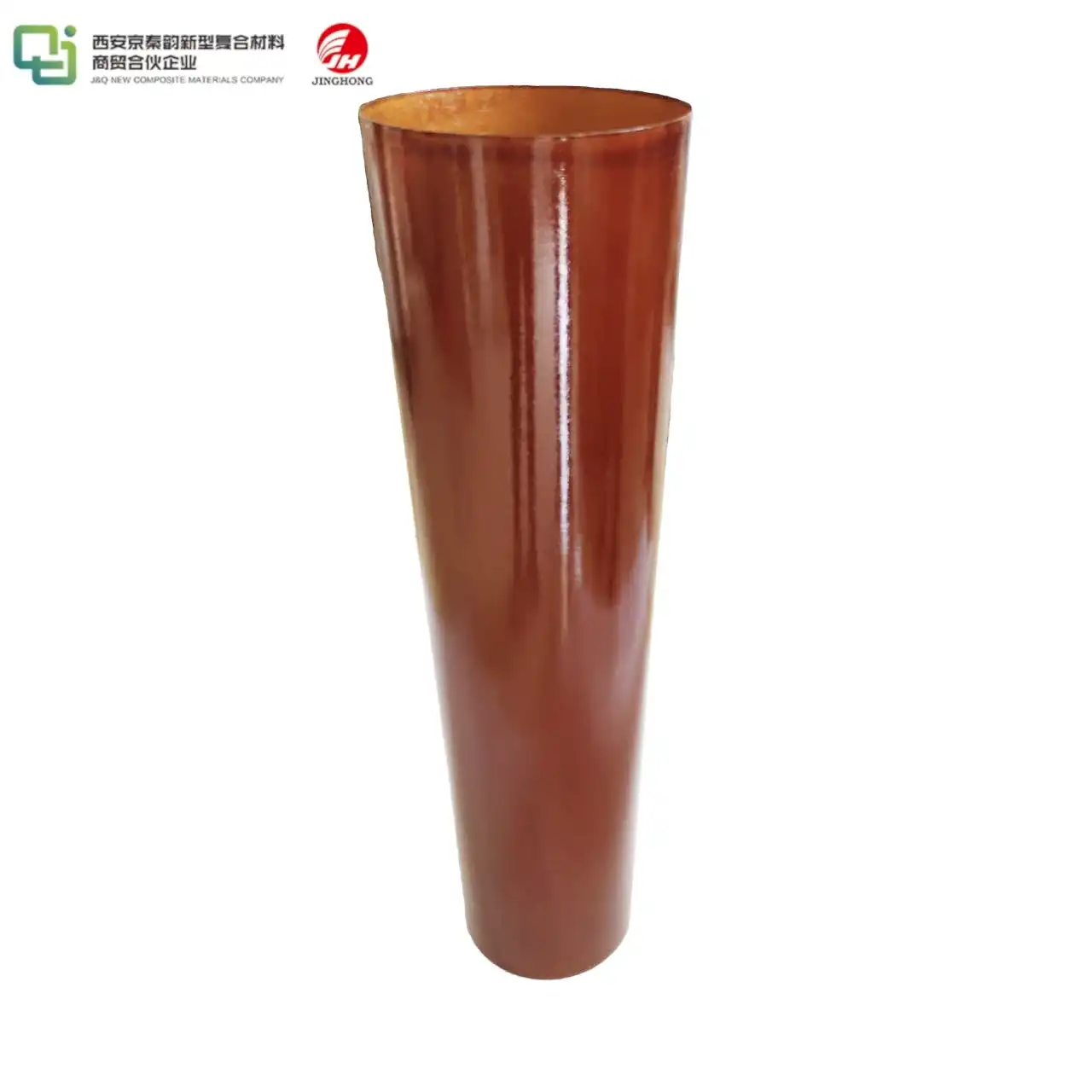
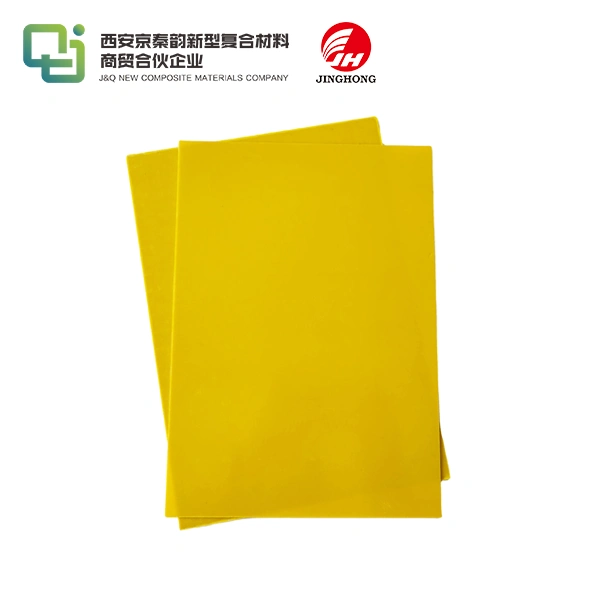
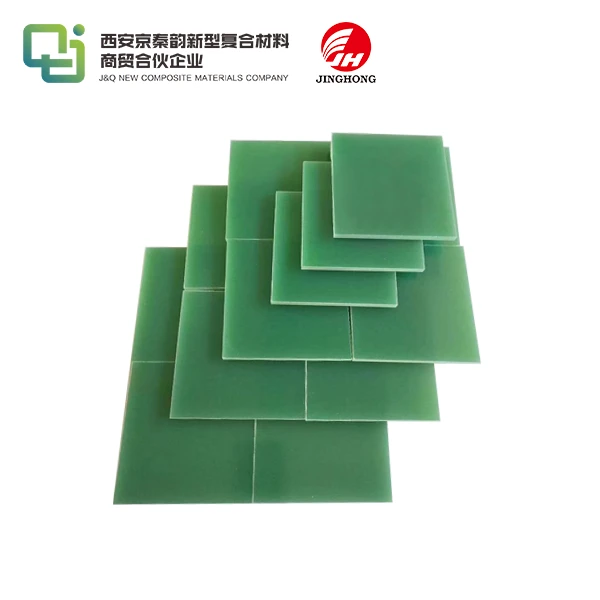
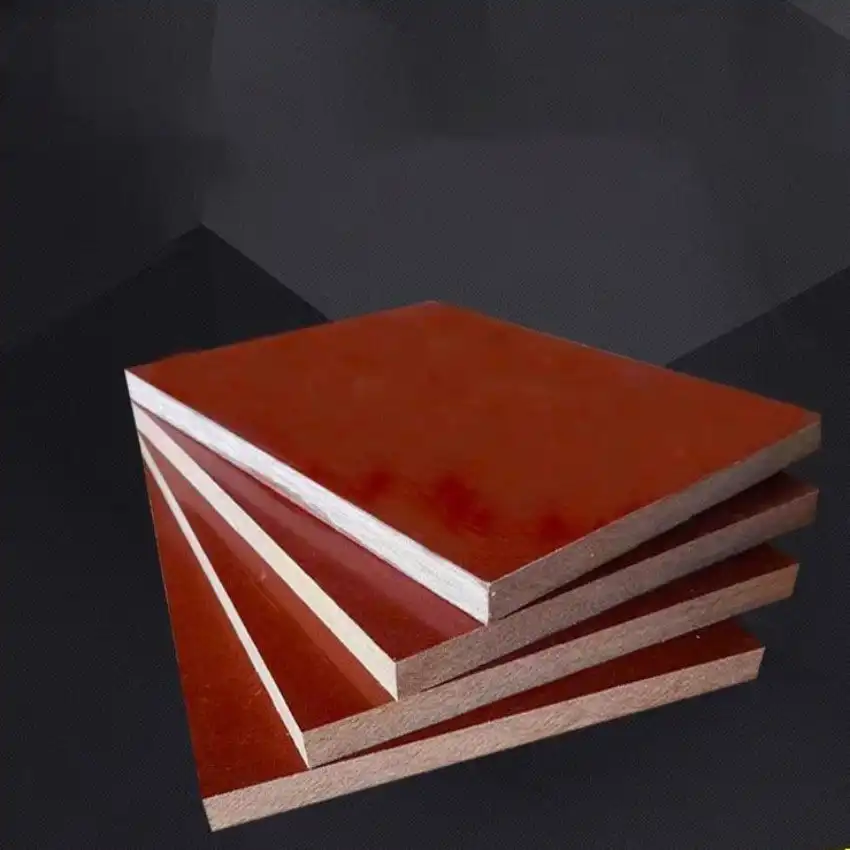
Epoxy boards give great electrical and heat protection in testing tools for all kinds of businesses where accuracy is the most important thing. They have become the most important part of solid shielding. Epoxy glue and strengthening elements are mixed together in these man-made composite materials. They make strong walls that keep the signal clear, stop electrical interference, and make sure that important tests get the right readings. Procurement pros get better performance out of tools while lowering long-term costs and safety risks when they know about the unique benefits of epoxy board technology and use that information to make choices.
Understanding Epoxy Boards: Composition and Key Properties
The carefully designed makeup of any high-performance epoxy board is what makes it work. It is important to use the right drying process and stiffening agent on epoxy cement systems so that they make dense, even structures. The production process includes stacking support materials that are made of resin under controlled temperature and pressure conditions. This makes laminates that are very consistent and reliable.
Material Structure and Manufacturing Process
Choosing the right epoxy resin formulas that balance electrical and material features is the first step in making high-quality epoxy boards. Glass fiber support makes the material more stable and resistant to impacts, and specialty fillers improve specific features like heat conductivity or flame resistance. The hardening process happens in hot presses where the temperature can be between 150 and 180 °C. This creates cross-links in the polymer networks that make the insulation work much better.
Critical Insulation Properties
The main benefit of epoxy boards for testing is that they are electrically insulating. Dielectric strength values of over 20 kV/mm are common for these materials. This keeps them from breaking down electrically even when there is a lot of energy. Their volume resistivity is usually over 10^14 ohm-cm, which means that very little current flows where it shouldn't and affects the accuracy of the measurements. Thermal features include the ability to work at temperatures up to 180°C. The glass transition temperature can reach 200°C or higher, based on the resin system.
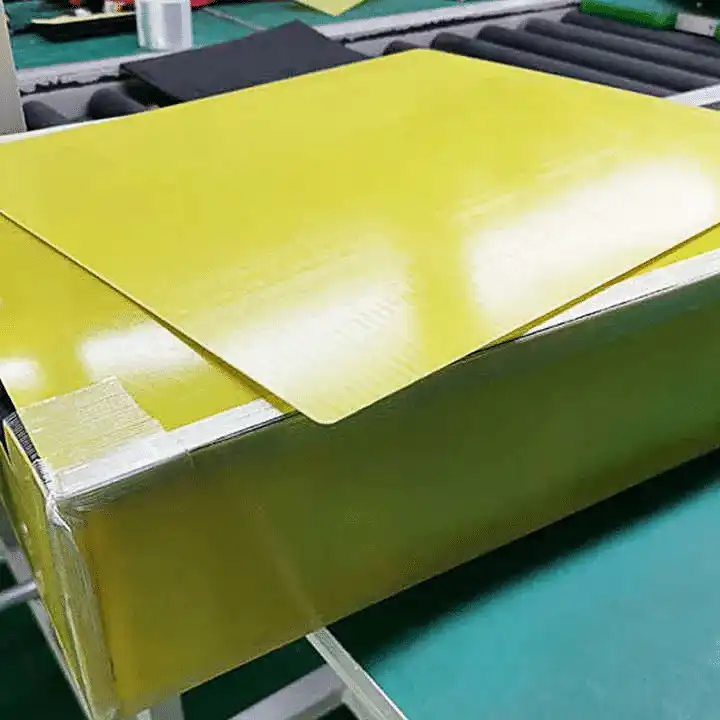
Why Epoxy Boards Excel in Insulation for Testing Equipment?
Testing settings need tools that will work the same way no matter what conditions are present. These tools also need to protect delicate instruments from heat and electricity. Epoxy boards meet these needs by uniquely combining qualities that are good for current testing tools.
Superior Electrical Performance
Testing precision and tool durability are directly impacted by the electrical properties of epoxy boards. Dielectric qualities in these materials stay the same across a wide range of frequencies, which makes them perfect for tests at high frequencies. Their low dissipation factor keeps signal loss to a minimum, and their great arc resistance stops surface tracking that could make unwanted electric tracks. In precision measurement tools, this stable electricity is very important because even small fails in shielding can mess up the results.
Thermal Management Capabilities
The heat that testing creates causes big problems for both the security of the measurements and the long-term use of the tools. Epoxy boards are able to help with these issues because they have great thermal qualities. For example, they have low thermal expansion rates that keep them the same size and shape when the temperature changes. You can change their thermal conductivity by choosing the right filler. This lets them lose heat when necessary while staying electrically isolated. The materials withstand heat decay, which means they keep their insulation qualities during long test rounds.
Environmental Resistance
When materials are tested in labs or factories, they are put under a lot of different chemical and natural stresses. Epoxy boards are great at resisting wetness; after being soaked for 24 hours, they usually absorb less than 0.15%, which keeps your property in good condition even when it's wet. Their chemical protection includes common lab liquids, cleaning agents, and industrial fluids. This means they will work in the long run without breaking down or losing their properties.
Comparing Epoxy Boards to Other Insulation Materials in Testing Equipment
Choosing the right material for testing equipment insulation means finding a balance between performance, cost, and the needs of the particular application. When buying teams know how epoxy boards stack up against other materials, they can make smart choices that improve both performance and value.
Performance Comparison with Traditional Materials
Epoxy boards are better than phenolic boards when it comes to electrical qualities and tolerance to external factors, but they do cost a little more. The better performance often covers the cost through less need for upkeep and a longer service life. Epoxy boards have better mechanical qualities and cutting features than fiberglass options, allowing for more exact construction of intricate insulation parts.
The mechanical workability and shock strength of epoxy boards are lacking in ceramic insulator materials, despite their higher temperature capability. Also, ceramics are flimsy and can break in very bad ways, but epoxy boards fail in more predictable ways that make preventive upkeep possible.
Cost-Performance Analysis
Despite having higher starting material prices, lifecycle cost research shows that epoxy boards often offer better value. Their longevity means they don't need to be replaced as often, and their excellent cutting qualities keep creation costs low for complicated shapes. The stability of the materials across changes in temperature and humidity means that the equipment doesn't need to be calibrated or maintained as often, which leads to lower long-term costs.
Procurement Guide: Sourcing the Best Epoxy Boards for Testing Needs
When you want to get epoxy boards, you need to know about important standard factors and what your suppliers can do to make sure the materials work with your testing tools. The difficulty of current testing tools makes it important to pay close attention to both technical details and the supply chain.
Technical Specification Requirements
Dielectric strength, volume resistance, and dielectric constant are some of the electrical qualities that procurement requirements should cover in important frequency bands. The material's ability to handle practical pressures is determined by mechanical qualities like impact resistance, compression strength, and bending strength. Thermal parameters such as glass transition temperature, thermal expansion rate, and steady working temperature set the limits for how well something can be used in certain situations.
Supplier Selection Criteria
Quality epoxy board providers show consistent production methods that are supported by complete quality management systems. ISO 9001 approval makes sure that a minimum level of quality is met, and UL recognition makes sure that materials used in electrical uses are safe. It is very important for suppliers to be able to help with complicated uses that need custom materials or specific handling advice.
Customization and Lead Time Considerations
A lot of testing apps need custom board sizes or changes to be made to properties. Top providers use water jets or CNC machining for precision cutting to get tight specs without hurting the material. If you need a certain width, it may take longer to get your order, but this allows for the best designs that balance electricity performance with industrial limitations.
Integrating Epoxy Boards into Testing Equipment: Best Practices and Case Studies
Epoxy board installation in testing equipment requires careful handling, installation, and upkeep to maintain their insulating qualities over time.
Installation Best Practices
Proper handling starts with keeping the sides of the board clean so that the insulation doesn't lose its properties. A clean, dry storage area will keep things from getting wet and dirty. During fitting, the right ways to fix things avoid areas of high stress that could cause cracking or delamination. Drilling uses sharp tools and controlled feed rates to keep heat from building up and possibly hurting the resin material.
Real-World Application Examples
Epoxy board has been used successfully as the main insulation barrier in transformer test sets by makers of high-voltage testing tools, resulting in increased safety margins and longer calibration intervals. Electronic component testing systems use epoxy boards that are made with precision machining. These boards don't change size or shape when the temperature changes, and they make sure that test points don't touch each other electrically.
Automotive battery testing facilities use custom-made epoxy board kits that can handle a lot of heat changes and protect sensitive measurement circuits from high-current switching transients. These uses show that the materials can be used in a lot of different ways to meet the needs of tests in a range of businesses.
J&Q: Your Trusted Partner for Premium Epoxy Board Solutions
J&Q has more than twenty years of experience making and selling high-quality soundproofing products, as well as more than ten years of experience in foreign trade. Working with many different local and foreign business companies has improved our ability to provide complete solutions that meet a wide range of customer needs in markets around the world.
About J&Q's Manufacturing Excellence
Our factories use cutting-edge methods that make sure each epoxy board we make has the same quality and performance. Quality control systems keep an eye on important parts of the production process, from checking the arriving raw materials to testing the finished product. This level of care lets us offer materials that meet strict scientific requirements while keeping our prices in line with the market.
Comprehensive Service Portfolio
Along with regular product delivery, J&Q also offers expert advice, help creating unique materials, and precision manufacturing. Our in-house transportation business offers shipping options that make the delivery process easier and shorten wait times for customers all over the world. To get the best results for certain kinds of testing tools, technical support teams work with engineers to choose the right materials and ways to use them.
Conclusion
Epoxy boards are the best choice for testing equipment insulation situations where dependability, accuracy, and long-term performance are important. They are much better than other materials at conducting electricity, resisting heat, and resisting damage from the environment. They also provide great value by lasting longer and needing less upkeep. Procurement workers who know these perks can make smart choices that improve how technology works and the overall efficiency of the business. Epoxy board is a crucial part of the creation and production of current testing tools because of its proven performance qualities and extensive source support.
FAQs
What makes epoxy boards superior to phenolic materials for high-frequency testing applications?
When compared to phenolic materials, epoxy boards have lower dielectric loss factors and more stable electrical qualities across a wider range of frequencies. Because they fight wetness better than other boards, they don't suffer the damage that phenolic boards usually do in testing settings with high humidity. This ensures that they consistently work well over long periods of time.
Can epoxy boards be machined to tight tolerances for precision testing fixtures?
Yes, high-quality epoxy boards are cut very cleanly with normal hand tools and CNC machines. They can get standards of ±0.05mm or better, and they also keep the surface smooth so that nothing builds up on it. If you use sharp tools and the right cutting settings, you can get straight lines without delamination or heat damage.
How do temperature fluctuations affect the insulation properties of epoxy boards in testing equipment?
Over a wide temperature range used for testing, high-quality epoxy boards keep their electrical and mechanical qualities fixed. Their low thermal expansion coefficients prevent changes in size that could affect the accuracy of the measurements. Their thermal stability also ensures that the insulation performs consistently from room temperature to high operating temperatures.
Partner with J&Q for Superior Epoxy Board Solutions
Do you want to improve the performance of your testing tools with high-quality epoxy board materials? The skilled professionals at J&Q are ready to offer personalized options that will meet your unique insulation needs. We have a wide range of epoxy boards to choose from, and with our expert technical support and dependable delivery services, we make sure your projects get the materials and help they need to succeed. Our epoxy board provider skills ensure consistent quality and reasonable prices, whether you need standard sizes or unique specs. Email info@jhd-material.com
to talk about what you need and learn how J&Q can help you with testing tools by using insulation that we know works.
References
1. Smith, J.R., et al. "Electrical Insulation Materials for High-Performance Testing Equipment." Journal of Electrical Engineering Materials, Vol. 45, No. 3, 2023, pp. 234-251.
2. Anderson, M.K. "Comparative Analysis of Thermosetting Resins in Electronic Testing Applications." Industrial Materials Review, Vol. 28, No. 7, 2022, pp. 89-104.
3. Chen, L. and Williams, D.P. "Thermal Properties of Epoxy Composites in Precision Measurement Systems." Advanced Materials for Testing Equipment, 2023, pp. 156-172.
4. Thompson, R.S. "Quality Standards for Insulation Materials in Laboratory Testing Equipment." International Standards for Testing Materials, Vol. 19, No. 12, 2022, pp. 445-462.
5. Johnson, K.M., et al. "Environmental Durability of Epoxy-Based Insulation Systems." Materials Science and Engineering Review, Vol. 67, No. 4, 2023, pp. 301-318.
6. Davis, P.L. "Cost-Benefit Analysis of Premium Insulation Materials in Industrial Testing Applications." Procurement and Materials Management, Vol. 31, No. 9, 2022, pp. 178-195.