Nema Grade Fr4 Epoxy Sheet for Electrical Insulation in Switchgear
2026-10-27 17:24:42
Nema Grade Fr4 Epoxy Sheet is a good choice if you need a hard, flame-resistant switch that doesn't conduct electricity. It's also easy to machine. Spacers, phase barriers, busbar supports, and phase barriers are some of the things that it can be used for. It is made with epoxy glue and spun glass cloth. Before giving the go-ahead, they should look at the NEMA grade, the UL 94 V-0 rating at the given thickness, the dielectric data, the creepage and clearance, and the limits. You can learn how to pick, design details, and buy checks in this book. That also shows how J&Q helps people in the US buy tech.
Why Nema Grade Fr4 Epoxy Sheet Fits Switchgear Insulation?
Switchgear Conditions That Shape Material Choice
A lot of things can damage the insulation in switchgear, like high voltage, shaking, water, and strict fire safety rules. When you push on insulation, it should stay the same shape for years. A lot of these things can be done with FR4 epoxy glass composite, which is a hard sheet. Engineers use it to make phase separators, busbar supports, arc shields, terminal supports, spacers, and fixing plates, among other things. Stretchy films aren't very strong, and making one-of-a-kind clay pieces costs more. FR4 can be cut, drilled, and routed with regular shop tools. It is strong, cheap, and easy to use.
What Is the Sheet Made Of?
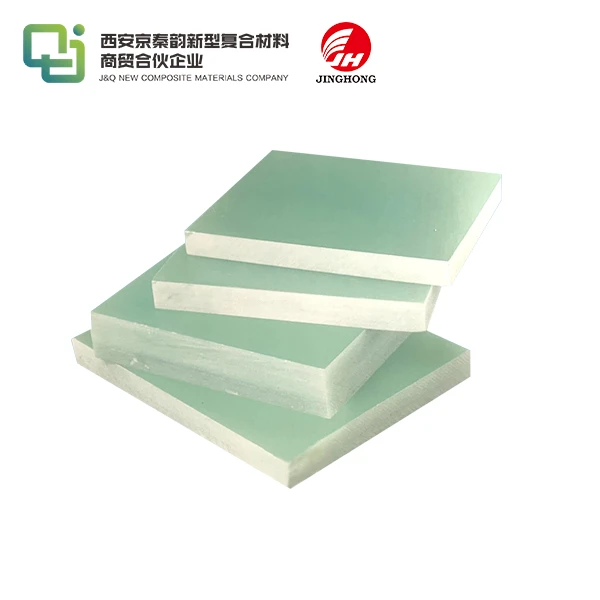
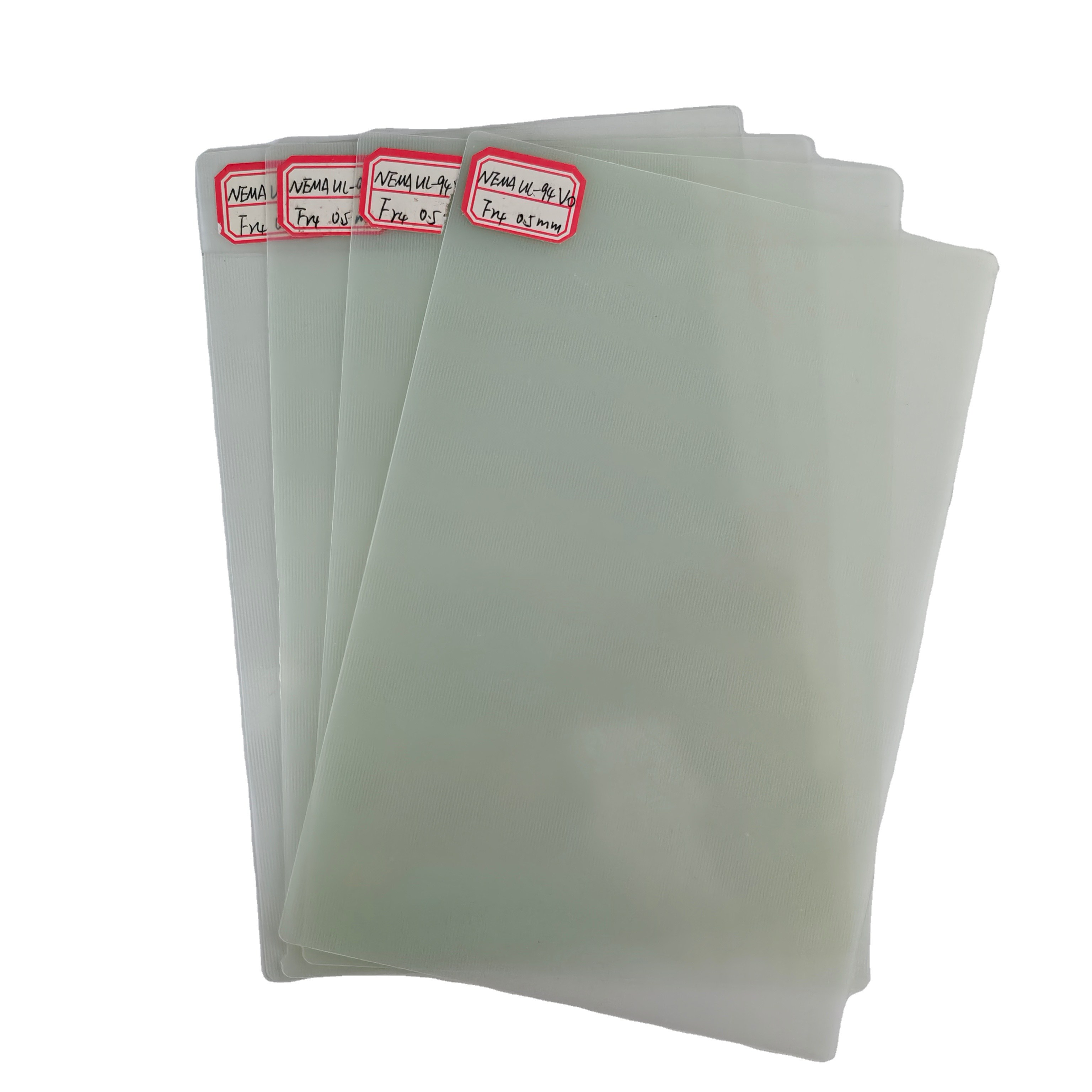
Nema Grade Fr4 Epoxy Sheet is a rigid laminate that bonds woven glass-fiber reinforcement with a flame-retardant epoxy resin. The glass fabric supplies mechanical strength and resists deformation. The epoxy matrix adds dielectric insulation, chemical resistance, and bonding strength. The "FR" stands for flame retardant, and the "4" refers to the glass-epoxy type in the NEMA LI 1 designation system. Our JingHong sheets use 7628 E-glass fabric with epoxy resin and come in a natural light green color. Formulations and test methods vary between producers, so we suggest confirming the exact grade, certification scope, and thickness-specific performance on the current technical datasheet.
Which Industries Rely on It?
FR4 sheet is used by companies that work with electricity and electronics to support PCBs, make parts for switchgear, and make parts for motors. It's used by people who make machines to keep parts from rusting and to put space between moving parts. It is used by many power and energy companies in transformers and switch boxes for phase barriers and busbar supports that need to be strong against flame and creep. It is used to make heat-resistant screws, battery pack covers, and insulation pads for auto parts. Motor clamps, insulation frames, and parts that keep heat from moving are made from it. The seller has to make sure that these things stay the same from sheet to sheet so that the bands stay the same and the width stays the same.

Properties, Material Comparisons, and Selection Steps
Properties to Check Beyond Dielectric Strength
The FR4 sheet can be pulled apart by more than 275 MPa, has a dielectric breakdown of more than 40 kV parallel to the laminations, a dielectric constant of 4.2 to 4.8, and can't hold more than 0.25% water. The temperature at which normal grades turn into glass is between 130°C and 140°C. The temperature at which high-Tg grades turn into glass is between 170°C and 180°C. Don't take these as facts. Check the data for each lot to see if it passed ASTM D149 for dielectric breakdown and ASTM D790 for flexure. Just because a dielectric is strong doesn't mean that the design is good or bad. You should also look at the working voltage, impulse conditions, contamination, and risk of partial discharge. UL 94 V-0 should be checked at that width.
FR4 Compared With G10, Phenolic, and Other Insulators
G10 and FR4 share the same glass-epoxy base, and FR4 adds flame-retardant performance, which is why switchgear designers often choose a Nema Grade Fr4 Epoxy Sheet. Phenolic laminates, including Bakelite and phenolic cotton cloth sheet, may cost less and suit less demanding parts, spacers, and wear components. Polyester glass laminate, polycarbonate, nylon, ceramic, and molded epoxy can win in specific cases, depending on temperature, geometry, flexibility, or production volume. When you compare datasheets, match thickness, test direction, conditioning, and test standard first. Then weigh certification, service life, machining needs, availability, and total landed cost, not dielectric strength alone.
Choosing Thickness and Grade
First, learn what the part does, how it works electrically, how much it weighs, what temperature it can handle, where it's used, and how long it will last. When choosing the width, you should think about how the samples were tried, how the insulation is designed, and how it needs to be attached. Not all of the parts can handle values like 1 mm, 2 mm, and 3 mm. Sheets of JingHong can be as thin as 0.3 mm or as thick as 100 mm, so they can be used for a wide range of things, from thin gaps to thick building plates. This is what you should use to compare a sample to before you buy a lot of something. Look at this to see the tolerances, hole patterns, and quality of the edges. That's where problems are found before they get to the queue where things are made.
Design, Installation, and Application Examples
Creepage and Clearance in FR4 Parts
It is fastest to move through air through clearance, while it is faster to move along the top of what is being moved. Standards from IEC 60664-1, voltage, pollution level, humidity, and height all tell us how far apart we need to be. On paper, a wall might look thick enough, but it can still fail if dust or water gets inside and lets electricity through. Slots, holes, screws, and sharp edges that aren't in the right place can cut through insulation or make electric fields stronger. You can smooth out rough spots and keep screw holes away from tracks that are being used a lot. Check out more than just the sheet's width. Also, see how the ends are shaped.
Fastening and Thermal Expansion
The laminate can crack if you use the wrong screws or don't leave enough room around each hole. FR4 doesn't get bigger like steel, aluminium, or copper do. These changes can make things bend, loosen, or stress out when they are heated and cooled a lot. There should be slots or small gaps where the metal parts meet the plastic so that you can put them in the right place. Make sure the holes are clean and free of chips before you drill. When you put stress on rough edges, they can break. Machined parts need to be cleaned before they can be put together. Some surfaces may not work as well if you leave dust on them.
Application Examples in Switchgear and Equipment
FR4 that has been cut out is used to make gap fillers, phase separators, mounting plates, busbar supports, and supports for terminals. It can also be used in transformers and switch cabinets as arc chutes and phase barriers. It is possible to stop the flow of electricity by tracking resistance. As long as the holes are the right size and shape, OEM parts can be put on automatic lines over and over. For medium-voltage devices, it is important to make sure that they meet the right standard for system voltage, impulse conditions, partial discharge behaviour, and pollution level. It's possible that this is IEEE C37.20.2 for equipment made of metal. Catalogue data can not be used instead of engineering calculations and model tests. It can only be used to help with them.
JingHong FR4 Specifications and J&Q Service
Product Specifications at a Glance
You should know these things about our JingHong FR4 sheet.
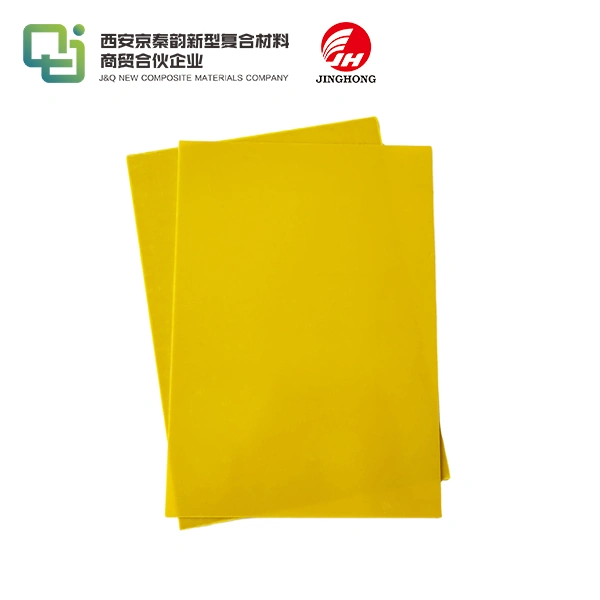
- The 7628 E-glass cloth is put together with epoxy glue. For real, it's a light green colour. It stays warm and stiff because of the epoxy matrix, and the shape of the sheet stays the same because of the glass cloth. We can talk about other colours if a project needs them through our OEM service.
- Widths and lengths: The widths range from 0.3 mm to 100 mm. The sizes are 1030 mm x 1230 mm each. People can find sheets that are 1030 × 2030 mm, 1220 × 2440 mm, 1030 × 1030 mm, or 1030 × 2070 mm in custom forms, so they can cut them the way they want.
- Shipping and order terms: The least you can buy is 500 kg, and you can pay by T/T. Boxes and safe pallets are used to send the sheets. Based on your needs and where you want them to go, we can ship them by sea, land, or air.
These specs for a Nema Grade Fr4 Epoxy Sheet can help teams that are buying things get clear numbers that they can use to check against cutting plans and drawings.
Standards, Certifications, and Testing
Our Nema Grade FR4 Epoxy Sheet is strong enough to pull apart according to ASTM D638 and NEMA LI-1-1990. It also has a UL 94 V-0 fire rating. To get UL approval, our products must be safe to use with energy. To get RoHS compliance, our products must be safe to use in and around the home. It also has ISO 14001 and ISO 45001. Sheets are put through tests to see how strong they are, how well they keep heat out, and how well they let electricity flow through them. Some of these tests check how well the material can handle being hit and how stable it is at high temperatures. One spark must be used every 10 seconds or less for UL 94 V-0, and there must be no drips of fire that light the cotton below. Please let us know about any new grades and awards your group has earned.
OEM Service, Experience, and Export Support
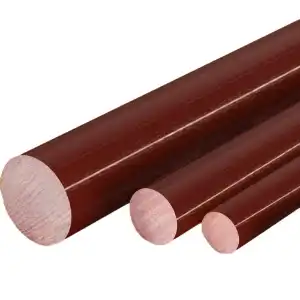
Different switchgear programs need sheets that are a different size, colour, and set of properties. J&Q can make our sheets to order. We will let you know what we can do after you send us your pictures and what you want. Over the past 20 years, we've made and sold shielding sheets. For over 10 years, we've also worked with other countries. Traders from all over the world and in our own country have also done business with us for a long time. From the time you place your order until it gets to you, you will only have to deal with one group. You can also buy Bakelite sheets, NEMA CE sheets, phenolic cotton cloth sheets, FR5/G11 sheets, 3240 epoxy sheets, insulation tubes and bars, and more. This helps people who need a lot of different kinds of insulation.
Buying Guide: Costs, Quality Checks, and Supplier Evaluation
Cost Factors and What an RFQ Needs
Prices for FR4 sheets depend on many things, such as the type of material used, the glue system, the thickness, the sheet size, the colour, testing, licensing, cutting, packing, and shipping. You can use cut-to-size parts instead of whole ones to save time and money. If you buy whole sheets, the prices might go down. Plans, numbers, a yearly forecast, limits, the place where the goods will be delivered, verification requirements, and Incoterms are all part of a full RFQ. That way, the seller can offer the right grade, and prices won't have to be changed over and over again. We need at least 500 kg, so please let us know early on how much you think you can bring so that we can plan shipping and groups.
Quality Verification Checklist
Get a technical report, a clearance certificate, a batch certificate, paperwork about flame retardants, electrical test data, and records of measurements and checks before you buy. People who need them should ask for RoHS or REACH tags. When the item is brought in for inspection, look at its length, width, thickness, how smooth it is, flaws, cracks, voids, burrs, hole depth, hole position, and batch number. You could damage the product during transport, use an unapproved material instead of an approved one, have an inconsistent resin content or thickness, machine it incorrectly, or give it the wrong flame rating. This is possible because the specs are clear and there are sampling plans. You can keep track of each batch and make sure that the production deliveries match the accepted sample.
Supplier Scorecard for Long-Term Supply
A review can be used in a number of ways to compare service companies. There are a lot of things that can be used, like technical compliance, paperwork, standardisation, wait time, transportation, engineering support, and total landing cost. You shouldn't just look at the unit price to judge FR4. Standard grades work well for almost all kinds of insulation. But thermal ageing, dielectric, and flammability data need to be checked for parts that need to be able to handle flames, high voltage, or high temperatures. Keep approved plans and samples on file, and let your provider know about any changes you make to the plastic, tools, method, or production line. If you need to, find a new provider and stay in touch with the old one. Mark the sheets with the grade, width, and batch number. Then, lay them out flat and make sure they are clean and dry.
Conclusion
Because it is made of flame-resistant epoxy and woven glass, Nema Grade Fr4 Epoxy Sheet is strong, resistant to heat loss, stable in size, and simple to machine. It's a good choice for insulating things because of this. More than just how well it keeps heat in is what makes the choice. What takes place is determined by the voltage, the temperature, the moisture level, the flame grade at the given thickness, the creepage and clearance, and the mechanical load. FR4 is more expensive, gets hotter, and doesn't come in as many shapes or sizes as G10. It's also not as likely to catch fire. You should also keep an eye on your designs' fastening torque, edge distance, and thermal expansion. When buyers check incoming lots, compare samples to drawings, and ask for certificates and test data, they lower their risk. Suppliers who are consistent, write down their work, and keep track of changes also get points. Following these steps will turn a datasheet into a good part that can be made.
FAQ
Is FR4 suitable for all switchgear insulation parts?
Not at all. It depends on the environment, rules, power, temperature, motor stress, flame needs, and the type of fuel used. To make sure they work before making a lot of parts, formulas and test pieces should be used.
What is the difference between FR4 and G10?
Glass cloth and epoxy glue are both used. Fires are less likely to start with FR4, and our sheets meet UL 94 V-0 standards. You should still read the grade and the seller's details to get a good idea of the exact prices before you buy.
Can FR4 sheet be machined, and how should I store it?
Yes. If you have the right tools and clean up the dust, you can cut, drill, route, and mill it. To keep your sheets safe, make sure they are clean, dry, and laid out flat. Number them and write the score on them.
Request a Nema Grade Fr4 Epoxy Sheet Quote from J&Q
Looking for a Nema Grade Fr4 Epoxy Sheet supplier that understands switchgear requirements? J&Q brings more than 20 years of insulating sheet experience, over 10 years of foreign trade experience, and our own logistics company for one-stop service. Send your drawings, thickness, quantity, and destination to info@jhd-material.com, and our team will recommend a suitable grade and share samples and documents. Visit jhd-material.com for more details.
References
1. National Electrical Manufacturers Association, NEMA LI 1: Industrial Laminated Thermosetting Products, 1998
2. Underwriters Laboratories, UL 94: Tests for Flammability of Plastic Materials for Parts in Devices and Appliances, 2013
3. IEEE, IEEE Std C37.20.2: Standard for Metal-Clad Switchgear, 2015
4. International Electrotechnical Commission, IEC 60664-1: Insulation Coordination for Equipment Within Low-Voltage Supply Systems, 2020
5. ASTM International, ASTM D149: Standard Test Method for Dielectric Breakdown Voltage and Dielectric Strength of Solid Electrical Insulating Materials at Commercial Power Frequencies, 2020
6. ASTM International, ASTM D790: Standard Test Methods for Flexural Properties of Unreinforced and Reinforced Plastics and Electrical Insulating Materials, 2017
_1747991245292.webp)