Phenolic Cotton Sheet: How to Avoid Grade Mismatches in Purchasing
2026-11-02 17:22:55
Be sure of what you want it to do and how you want it to be done before you ask for a price. If you don't, you might get the wrong grade. Next, ask the supplier to name the exact type of stuff, support, and resin system. Cotton fabric and phenolic resin that has been glued together make up a Phenolic Cotton Sheet. You can tell what kind it is by its grade, thickness, and how it was made. It is necessary to write down the range, dielectric strength, density, and water absorption. Yes, please send a sample that is the right thickness and include records of the batch and the specifications with your order. This is how J&Q works in the US, and this guide shows you each step.
Why Grade Selection Matters Before You Buy?
Grade Is More Than a Product Name
This is what most people say: "Phenolic Cotton Sheet, 10 mm." It's not clear, so don't ask that question. You can tell how a Phenolic Cotton Sheet works by looking at the cotton cloth, the resin system, how it is pressed, and how thick it is. It's possible for two sheets of the same size to have different dielectric strengths, take in water at different rates, or stay the same size over time. It could break, wear out, get wet, or fail an OEM check if you pick the wrong one. In the US, there is a line that makes clothes, cars, toys, tools, and machinery. One lot that is turned down can stop the queue. If you pick the right grade, you can stick to your plan and budget before a big order comes in.
What Is a Phenolic Cotton Sheet?
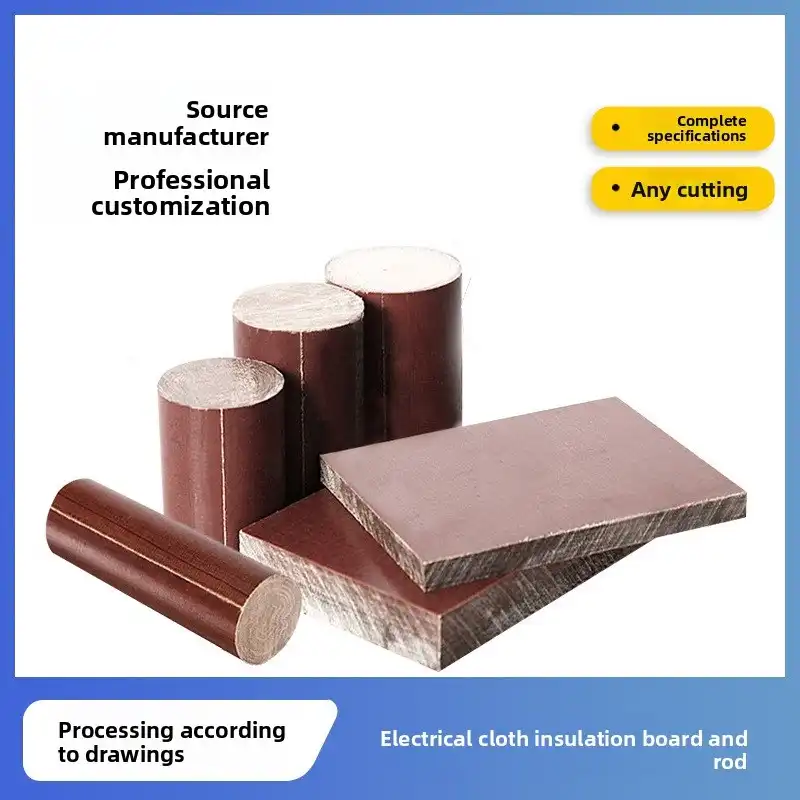
That's another name for this heated Phenolic Cotton Sheet. Hemp resin is poured over stitched cotton cloth, which is then stacked, heated, and pressed together to make it tough. It is stronger and less likely to tear because it has cotton in it. Because of the resin, it gets warmer, stiffer, and better able to handle heat and chemicals. One part is metal, and the other part is pure electrical protection. Some gears don't make noise and can hold weight. How well the glue was pressed affects how thick it is, how it's spread out, how dense it is, and how even its thickness is. For a grade to be called "phenolic laminate" is not enough. Always ask for their full name.
Quick Answer: Four Steps to Prevent a Mismatch
This is the quick form. To begin, write down the part number, the load, the voltage, the temperature, the humidity, and any liquids or oils that are present. Second, write down all of your wants and split them into three groups: those that you must have, those that you would like to have, and those that you don't have to. Third, find out if the numbers given are standard or guaranteed, and ask the service provider for numbers that are specific to your grade. Fourth, get a piece that is the right width and look at the rough spots, sides, glue lines, and how it cuts. "High strength" isn't a very useful claim. A score that is based on how the test was given will teach you a lot more. Then, right away add the proven needs to the order.
Where Mismatches Start and How to Spot the Right Grade?
Main Causes of Grade Mismatches
Of the ones that don't match, the first part is wrong. Some people who buy phenolic goods think that items made from paper, cotton cloth, and fiberglass are all the same. They're not. It can change how tough something is, how well it works in water, how easy it is to work with, how well it conducts electricity, and how much it costs to add reinforcement. It's also not enough for the Phenolic Cotton Sheets to be the same thickness; two sheets of the same thickness can have different densities, glue materials, and sizes that stay stable. Making changes to a catalog is another risk. Most of the time, the numbers given come from lab tests, and they might not accurately reflect the steady pressure, friction, humidity, chemicals, or heat in your plant. Finally, prices vary a great deal when it comes to checking, cutting, packing, and tolerance, so a low number could mean a different item.
How to Identify the Correct Grade?
I believe you should write down the steps for Phenolic Cotton Sheet. First, write down the part number, the direction of the load, the voltage, the temperature, the humidity, the chemicals, and the length of time the part will be used. Next, think of the failure you fear the most, like breaking, cracking, or wearing out. Check out the grade next. In the United States, NEMA LI 1 and ASTM D709 cover laminates made of cotton fabric. Names for them are C, CE, L, and LE. You can tell the difference between canvas and linen grades by how thick the weave is. It can be used for electricity if it has the letter E on it. Discover the supplier's rules and how the numbers were checked to make sure they are right. Test a sample first before you make a big order.
Properties Buyers Should Compare
You should compare more than one big number. To make sure electrical parts work, check the dielectric strength, insulator resistance, and moisture sensitivity (ASTM D149). When you look at mechanical parts, you should check for tensile, compressive, bending, and impact forces, as well as wear and physical stability. As stated in ASTM D570, it is important to check for water absorption since water can change the size and functionality of an electrical circuit. It is important to keep the thermal cycle and short-term heat exchange separate from action that happens all the time. It should be able to work with the same cleaners, oils, and solvents that you do. Using tools is also important. To keep edges and tolerances clean, use sharp tools, keep the heat down, lift thin pieces, and sweep away dust.
Comparing Materials, Thickness, and Applications
Phenolic Cotton Sheet vs. Paper, Fiberglass, Nylon, and PTFE
Look at the parts and how likely it is that they will fail. Certain people offer phenolic on paper as a Bakelite sheet for sale. It's good for things that don't have to hold a lot of weight or cost a lot of money. Adding cotton to a Phenolic Cotton Sheet makes it harder and better able to handle wear, which is good for joints and gears. Most of the time, electricity works better with fiberglass laminates like FR4. However, cutting tools wear out faster. Nylon can slide and get hit, but it can also get bigger and soak up more water. PTFE doesn't stick to things very well and doesn't mix with acids. Also, when it's full, it doesn't feel very hard. It's like a job to me because people don't always do well on tests.
Choosing Thickness and Tolerance
When choosing the right width, you need to think about the space for fitting, the mechanical load, the bending resistance, the hole or thread depth, and the cutting space. Getting the thinnest sheet might save you money at first, but it's also more likely to bend, break, or be thrown away. Standard widths can help you find things faster, save you money on tools, and shorten the time it takes to get them. Inches can be made to order so that they fit OEM designs and so that less waste is made during machining. The sides must be square, smooth, long, wide, and thick. Write them down. Find out how much it costs to cut the useful sizes into standard, finishing, cutting, and smallest ones. Teams that work in inches should mark in both millimeters and inches so that the picture they give matches the sheet they give.
Application-Based Grade Selection
The report card for Phenolic Cotton Sheet is where the grade should come from. Check the dielectric strength, how wet the equipment is, and how evenly the width of the busbar supports, switchgear panels, and terminal boards is spread out. Phenolic cotton laminates are good for breakers that need to stay together while they work because they are stronger. But they aren't as good at blocking electricity as epoxy glass or FR4. Vibration, changes in temperature, and oil contact should be added to the motor and transformer parts. The gears, pinions, and pulleys need to be checked for load, speed, and grease while the cloth and paper machines are running. Also, when it hits metal wheels, it makes less noise. Check the level of swelling because boat and car bearings can work with either oil or water. Spacers and washers need to be the right thickness and be strong enough to be pushed together.
Procurement, Custom Orders, and Supplier Checks
Build a Complete RFQ
There is less email when there is a full RFQ. Describe the item by its name, what it's used for or its grade, its size, the range of thicknesses it can be, how much of it you need, how it should be cut, its condition, its standards, its certificates, its packing, where it's going, its Incoterms, and the way a sample was made. You should know the supplier's MOQ, wait time, guaranteed values, test methods, and how to keep track of each batch. Most people in the US need proof that a Phenolic Cotton Sheet follows UL or RoHS rules. Tell the seller right away, and ask them what proof they have that the item is real. Make sure that the grade, range, amount, and shipping terms are all the same when you compare prices. To find the landed cost, you need to add up the costs of cutting, packing, freight, duties, inspection, and the waste that the machine is likely to create.
Custom Size, Cut-to-Size, and Bulk Orders
When you have your own machine shop, a range of part sizes, a steady need, or good material utilization, it makes sense to buy full sheets. By cutting parts as they are needed, you can cut costs on stock, labor, scrap, and machine time. You should keep track of the changes that were made to the drawing, the cutting tolerance, the edge finish, the accuracy of the holes, and the way that the work was inspected. You have to agree to a reference sample before you can make a big sale. Next, write down what paperwork needs to be done and when to make things. Also, think about how to package them and fix things that break. A long-term supply deal can set the technical requirements, quality standards, shipping terms, and ways to track packages as long as you buy the same part over and over.
Supplier Verification and Quality Control
Look at three parts of the supplier's process before you give them an order.
- Type of source and what it can do: Before you do business with a company, find out if it's a manufacturer, a trader, a distributor, or a manufacturer that cuts things. You should ask the company about their pressing tools, controls for lamination, inspection steps, capacity, and how long they've been exporting. There are different levels of duty and technical know-how for each type of business, which affects how quickly problems are fixed after delivery.
- Documents: Make sure you get an export paper, a technical data sheet, a statement of composition, a certificate of conformity, an inspection or test report, quality licenses, and even an export paper if you need them. Each paper should have the same grade name, batch number, and test method as the one on your order. Make copies and keep them with the records for your lot.
- Check coming in: When it gets there, read the labels to find out the grade, batch number, size, thickness, flatness, quality of the surface, and packaging condition. In case something goes wrong in the field, your team can quickly compare a few samples from each lot to see what went wrong with the important parts.
With these checks, you can make and check a seller claim.
Five-Question Grade-Matching Test
Find out these five things before you buy something. Is the cloth that was used to make it stronger really made of cotton? Does it match the plan? What does the grade do? Does it stop electricity from leaving, protect against wear and tear, or squeeze? The numbers must be promised, able to be kept track of, and simple to measure. The cutting allowance, tolerance, thickness, and flatness should be the same as what's shown on the drawing. How much work can the source do while still running at the same speed? Find out more about the product, see more samples, or get a new price if the answer is "no" or not clear before you buy it.
Conclusion
Don't just buy something because it's cheap or because it has a good name. Instead, check that the grade, thickness, application, support, and production consistency are all good. Cloths made of cotton, paper, and plastic all behave in different ways. Also, having the same width doesn't always mean having the same performance. When people use NEMA and ASTM names and test methods, they can talk about things in the same way. If you compare measurements of electrical, mechanical, moisture, and heat to how things really work, it's easier to decide what to do. If you want to be sure that everything is clear, look over the RFQs, sample approval, supplier documents, incoming inspection, and the last five-question test. After that, you need to keep the order safe. If the specs for your Phenolic Cotton Sheet aren't clear, something is less likely to fail in the field, take longer to qualify, or happen.
FAQ
What is Phenolic Cotton Sheet used for?
People buy it, along with control panels, gears, bushings, screws, spacers, and parts for motors and generators.
How do I pick a grade of electricity?
In your specification, you should look at the dielectric strength, heat, moisture, thickness, and thickness. Grades that start with "E," like CE and LE, are made to work with electricity.
What's the difference between cotton mesh and paper?
The cotton cloth can handle more damage because it is stronger. Paper-based phenolic is good for small loads and a lot of insulator parts.
Can I get different sizes? Which forms do I need to send?
Yes, J&Q does sell flat sheets, parts that are cut to fit, and custom shapes. For example, you should ask for the compatibility certificate, test report, and batch number.
Request a Grade-Matched Phenolic Cotton Sheet Specification from J&Q
Send an email to info@jhd-material.com with your drawing, the thickness, the range, your goal, how you plan to work, and an idea of how much you need. We've been making insulated sheets for more than 20 years and have worked with other countries for more than 10 years. We also have our own transportation business. We make and sell Phenolic Cotton Sheet, so we can take care of everything. The people who work here look at questions from different grade levels, give examples, and answer hard ones. jhd-material.com has more information.
References
1. NEMA LI 1, Industrial Laminated Thermosetting Products, 1998
2. ASTM D709, Standard Specification for Laminated Thermosetting Materials, 2017
3. ASTM D149, Standard Test Method for Dielectric Breakdown Voltage and Dielectric Strength of Solid Electrical Insulating Materials at Commercial Power Frequencies, 2020
4. ASTM D570, Standard Test Method for Water Absorption of Plastics, 2018
5. IEC 60893-1, Insulating Materials: Industrial Rigid Laminated Sheets Based on Thermosetting Resins for Electrical Purposes, Part 1, 2004
6. UL 94, Standard for Tests for Flammability of Plastic Materials for Parts in Devices and Appliances, 2013
_1754967691873.webp)
_1753951194967.jpg)