Epoxy Resin Rigid Laminate: Key Specs to Verify Before Ordering
2026-11-02 17:22:42
Before ordering epoxy resin rigid laminate, I verify six things: the exact grade and standard, dielectric strength with its test conditions, continuous operating temperature, mechanical strength and machining behavior, thickness and flatness tolerances, and the supplier's inspection records. A datasheet that ties every value to a named test method tells you far more than a sheet price does. At J&Q, we have produced and sold insulating sheet for more than 20 years, and these checks help buyers avoid warping, dielectric failures, and costly rework.
Start With the Grade, Standard, and Construction
Confirm the Resin System and Glass Reinforcement
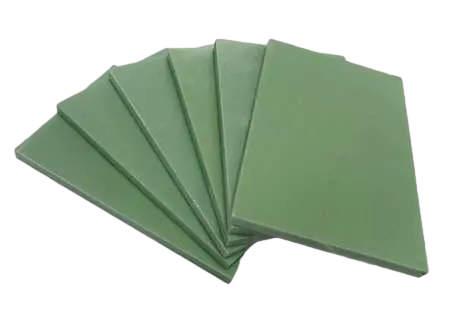
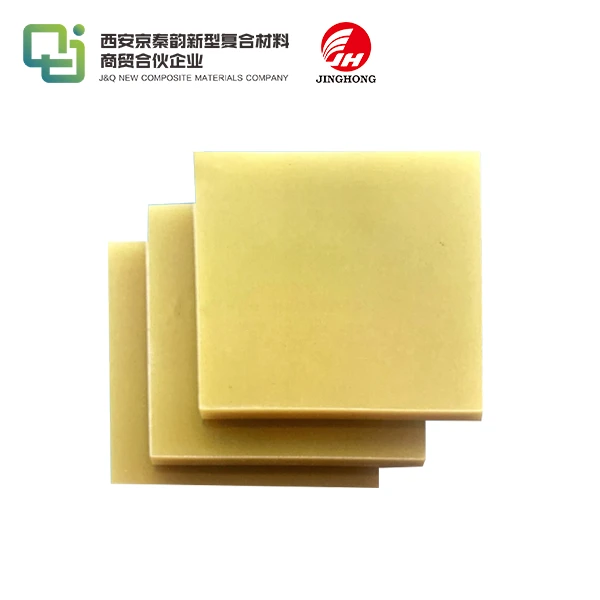
Epoxy resin rigid laminate is a thermosetting composite. Layers of woven glass fabric are impregnated with epoxy resin, then pressed and cured under heat and pressure. That description fits several products, so my first question is always what sits inside the sheet. Ask the supplier to name the resin system, glass fabric type, resin content, and layer arrangement. Standard, high-temperature, and flame-retardant systems behave differently under heat and load. Our FR4 sheets and 3240 epoxy boards both use glass cloth with an epoxy binder, yet buyers purchase them against different specifications. A clear construction statement on the datasheet lets your engineers judge fit before any sample ships.
Compare FR4, G10, G11, and Alternative Materials
Epoxy resin rigid laminate is a broad category, and FR4, G10, and G11 are narrower NEMA grades within it. However, there is no grade for G10 that says it can't catch fire. With FR4, it's less likely to catch fire, and it meets the UL 94 V-0 standard. In other words, the light goes out on its own after 10 seconds. The G11 is made to work in warmer places. But glass-epoxy is generally harder and doesn't soak up as much water. Phenolic laminate costs less and can't hold as much weight. You should really look at "fiberglass sheet" because the glue might not be epoxy but polyester. When the rules and the test results don't match up, it takes me a while to figure out what to do.
Match the Grade Name to a Recognized Standard
Having grade names but no way to measure them is not very useful. I check UL 94 data and NEMA LI 1, which has lists of G10, FR4, and G11 to see if they are unsafe for the US market. IEC 60893-3-2 is mostly used to buy things from other countries these days. It goes over sheets that are glued together tightly with epoxy resin. This is because approved PCB base material and general insulation sheet are not the same thing. IPC-4101 is another place where people can look for printed circuit boards. Seek out the manual and check each number against the norm. You can't buy something and say "UL 94 V-0" unless you have proof, like a test report or UL records. They have to do it before the claim is true.
Verify Electrical, Thermal, and Mechanical Performance
Evaluate Electrical Insulation Data
That's why I always read the notes that have the dielectric strength number on them. People see that first. These are the tests for dielectric breakdown that are in ASTM D149. The test is done in various ways, and the outcomes are various based on the sample's thickness and the methods used. What you see is not the same as what you feel on the surface. The dissipation factor, the volume resistivity, and the surface resistivity are also things you should look at. You can use them for various tasks. This is very important when the frequency goes up. Also, look at how much water is soaked up. Wet or dirty areas don't cover as well when there is water there. Along with tracking resistance and arc resistance, you should add flame rating to your list of things to check for high-voltage gear and switches. You cannot just tell them that their home is "electrical grade" and leave it at that.
Separate Short-Term Heat Resistance From Continuous Temperature
What if a veneer can only handle a little extra heat? That doesn't mean it can always be hot. I separate four terms on each datasheet: short-term exposure, thermal breakdown, glass transition temperature (Tg), and constant service temperature. Most FR4 has a Tg of 130°C to 140°C. These types, which have a Tg above 170°C, work better for many heat cycles and soldering without lead. Check out how the laminate's size changes as the temperatures in X, Y, and Z change. Important to do this if it's going to be used in a small space or on metal. Not how hot G11 is, but the job cycle, power, humidity, and mechanical load are what count.
Assess Mechanical Strength and Machining Behavior
Epoxy resin rigid laminate is something that a lot of people buy to stand up and keep heat in. You should ask about the item's strengths when it is pushed, pulled, compressed, and hit, as well as the temperature and test conditions. ASTM D790 is often used as a guide for tests that bend things. When you weave woven glass, the direction you do it changes how it works, so make sure you check the direction of the test. It may not yield as much if the unit is cracked near the holes that were punched, warped, or not flat. The sheet is rough too because it has glass in it. To keep the sides from coming apart, use tools that are covered in solid carbide or diamond, make sure the feed rates are correct, and do climb milling. Getting rid of dust also keeps people and things safe. Before you buy custom parts, make sure the company has the skills to saw, drill, mill, and use CNC machines.
Check Dimensions, Process Control, and Documentation
Define Thickness, Flatness, and Sheet Size Tolerances
It's not enough to be big to do the job right. Write down the item's length, width, thickness, shape, edge condition, and how it looks on the outside. For CNC or cut-to-size parts, add the gauges, grit limits, hole sizes, and checking method. Depth changes how it fits, how heavy it is, how stiff it is, and how far away the insulation is. It does go up by the same amount sometimes, though. Find out if the size you want is in stock or if it has to be made. Also, check to see if stronger boxes need to be sent with bigger sheets. If you want mechanical spacers, gears, and wear parts to fit right, make sure the width doesn't change from batch to batch. They are great for when you need something to look or be a certain size.
Ask How the Sheet Is Made and Inspected
Take a look at the press. Steps are taken to make sure the right amount of glue is used, the layers are stacked properly, the sheet is pressed, cured, cooled, and trimmed. Find out what changes the service provider makes to the temperature, pressure, set time, and rate at which it cools. These things change the dielectric's holes, how it works, and how simple it is to bend and split. You can ask for inspection records that show the item's size, flatness, appearance, electrical properties, mechanical performance, and ability to start a fire if you need to. You should be able to trace your order back to the raw materials, production records, and shipping lots it came in. It's more important to have quality that doesn't change from batch to batch for long-term projects like cars and appliances than to have a single good sample.
Request Certificates That Match the Supplied Grade
Most of the time, people in the US look for quality systems that follow ISO 9001, comments that say they are safe for RoHS and REACH, paperwork from UL, and proof that they meet the standards. Make sure that every certificate you buy has the grade you want on it and not a different grade made by the same company. Most of the time, groups that make electronics and computers need UL and RoHS files. Power tool makers, on the other hand, care more about paper that can't catch fire and stays the same temperature. Make sure you have the paperwork and that the product name, width range, and date on it match what is written on the order before you place it. Missing test conditions, grade names that don't match, and high temperatures that can't be proven are all red flags that should make you want to know more.
Match Epoxy Resin Rigid Laminate to Your Application
Electrical, Electronics, and Power Equipment
Strong dielectrics are needed for parts that hold up PCBs, shields for switches, and transformer insulation. But first, each one needs to be checked. Fire, damage to the track, and sparks shouldn't be able to hurt some switch parts. Some parts of transformers may also need to be able to stay the same size, handle oil, and work on their own. It is important to always think about the motor insulation's vibration, varnish compatibility, thermal cycling, and rated temperature. It is best to keep the approved PCB layer and the general-purpose insulating sheet separate when making printed circuit boards. First, check to see if it works with copper covering. Next, look at how much it expands with heat and what kind of flame it is. FR4 is often chosen for UL 94 V-0.
Industrial Machinery and Automotive Parts
Epoxy resin rigid laminate is used by machine builders to fill in holes, make parts that don't wear out, and keep the structure's heat in. How thick it is and how strong it is when hit with weight are the most important things. In cars, FR4 and phenolic materials are used to make barriers for battery packs, fixings that can handle heat, and pads that keep things cool. They also care a lot about how stable and level the tools are. Before anything else, I need a sample of the first piece that is cut just like the picture. After that, I talk to these buyers about the range of temperatures, stiffness, and how to keep tolerances in check. Glass-epoxy should be used for parts that will get wet or hot. Phenolic cotton sheet should be used to make parts that will wear out over time. Parts that are very important for safety should be easy to test and know what the limits are.
Home Appliance Manufacturing
Companies that make appliances use Bakelite and epoxy sheets to make parts that keep heat in and motor clamps that don't leak. When you need to make a lot of parts, it's important to get them on time, at a low cost, and of good quality. The best places for epoxy resin rigid laminate are those that need to handle more power, water, or heat. For cheap parts that don't need to be able to handle a lot of heat, this kind of Bakelite works better. I think you should check the price of the whole thing, not just the sheet. It should say how much it costs to fix things that are broken and get rid of waste. Pick a lead time, a package, and a label early on. If even one part is late, the whole run can stop.
Build the Order Specification and Choose a Supplier
Write a Practical RFQ
A clear RFQ lets sellers say how much their things cost. Write down the grade, standard, amount of plastic and metal used, surface needs, performance goals, tolerances, sheet size, thickness, and what kind of cuts, packing, labels, and paper are needed each year. For new designs or designs that need to be tested for safety, there should be a sample or first-article stage. At this time, there should be clear acceptance guidelines and test methods. See the wait time, the amount of work that can be done, the setup costs, the inspection costs, the freight, the insurance, and the risk of junk. MOQ means "minimum order quantity." Before you sign the order, make sure you agree to the Incoterms, the terms of payment, the export papers, and the packing that won't get wet. Things being sent to the US also need to have the right paperwork and a place where they can be met.
Qualify an Epoxy Resin Rigid Laminate Manufacturer or Supplier
If the company does more than just sell paper, you should know about this. Does it only sell paper? Find out how strong the business is, what grades they offer, what lab tools they have, if they can make custom sizes, and if they have experience with industrial machinery, motors, switches, and transformers. Someone who has exported before should be able to give you datasheets, samples, compliance papers, batch identification, and a clear picture of what needs to be done to fix the problem. J&Q has made and sold soundproofing sheets for over 20 years. They've done business with other countries for more than 10 years. We offer our own shipping service and work with business traders in the US and other places. To put it another way, the same group makes the goods and sends them.
Use a Final Pre-Order Checklist
People who want to buy something need to do these quick steps before I send them the money.
• Documents and specifications: Write down the grade, the resin system, the reinforcement, the standard that applies, and the test conditions. For the job, make sure that the size, electrical, thermal, mechanical, moisture, and flame-retardant needs are met. Make sure that the test method is written next to each value on the data sheet.
• Dimensions and handling: When you deal with numbers, you have to set limits for things like thickness, sheet size, smoothness, surface quality, cutting details, labels, packing, and standards for how well something works. Make sure it fits or looks good by looking at a sample. So that your inspectors and the seller can both read the same numbers, write down the values that are acceptable.
• Business terms: Look at the lead time, certificates, Incoterms, payment terms, warranty, how claims will be handled, and how you can keep track of each batch. The purchase order should list each item so that everyone who is buying, making, checking for quality, and delivering can all follow the same rules.
Working through these items catches most avoidable supply risks before material ships.
Conclusion
First, you should find out what kind of epoxy resin rigid laminate it is. Grades FR4, G10, and G11 all have different levels of resistance to heat and fire. After that, you can connect each grade to a well-known standard like UL 94, IEC 60893-3-2, or NEMA LI 1. You need to know how the electricity was tested, how thick it is, and how it was changed. It's important for thermal rates to be able to tell the difference between being used for a long time and being exposed for a short time. They last longer and fit together better if they are smooth, physically strong, and have space between the layers. The quality is always the same because of records that keep track of the grade, the process, and the batches. When something is used as a button or a tool, the most important specs change. Many people need to write down and agree on the RFQ to make sure that everyone is on the same page.
FAQ
What is the difference between FR4 and G10?
Both are made of glass and epoxy and are the same in terms of how they work and how strong they are. The UL 94 V-0 list says that FR4 has chemicals that put out fires, but none of the types in G10 do that.
Can standard FR4 handle lead-free soldering?
FR4 starts to melt at temperatures between 130°C and 140°C. The Z-axis doesn't grow too much, so that is safer than lead. It's better to have high-Tg FR4 above 170°C.
Can I machine epoxy resin rigid laminate sheets?
Yes. Use diamond or solid carbide-coated tools, make sure you use the right feed rates, and clean up the dust because glass fiber is rough. Before you buy something, make sure the seller knows about the CNC and cut-to-size tools.
Which documents should I request before ordering?
You should ask for a datasheet with test methods, an approval certificate, UL and RoHS papers, inspection records, and the ability to keep track of each batch in case you need to. It's used to check the fit before the whole thing is made.
Request an Epoxy Resin Rigid Laminate Quote From J&Q
Putting sheets between walls has been made and sold by J&Q for over 20 years. The business has done business in other countries for more than 10 years. You can also use our business to ship things. Epoxy resin rigid laminate is what we use to make FR4 sheets and 3240 epoxy boards. We can talk about what you need in terms of paper, width, sheet size, and number of pages. You can email info@jhd-material.com or visit jhd-material.com to get samples and find out more.
References
1. NEMA LI 1 Industrial Laminated Thermosetting Products, 1998
2. IEC 60893-3-2 Insulating Materials: Industrial Rigid Laminated Sheets Based on Thermosetting Resins for Electrical Purposes, Requirements for Rigid Laminated Sheets Based on Epoxy Resins, 2011
3. UL 94 Standard for Tests for Flammability of Plastic Materials for Parts in Devices and Appliances, 2013
4. ASTM D149 Standard Test Method for Dielectric Breakdown Voltage and Dielectric Strength of Solid Electrical Insulating Materials at Commercial Power Frequencies, 2020
5. ASTM D790 Standard Test Methods for Flexural Properties of Unreinforced and Reinforced Plastics and Electrical Insulating Materials, 2017
6. Printed Circuits Handbook, Seventh Edition, McGraw-Hill, 2016
_1740986340093.webp)