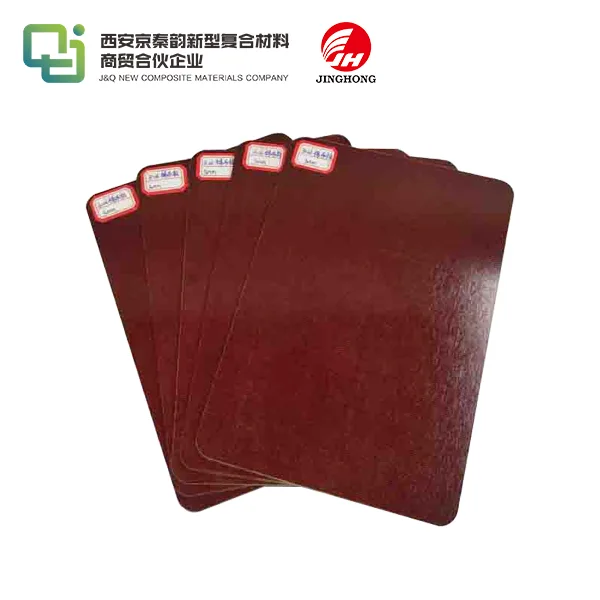
Phenolic Paper Laminate Provides Easy Machining for Custom Insulation Parts
2026-09-08 17:30:27
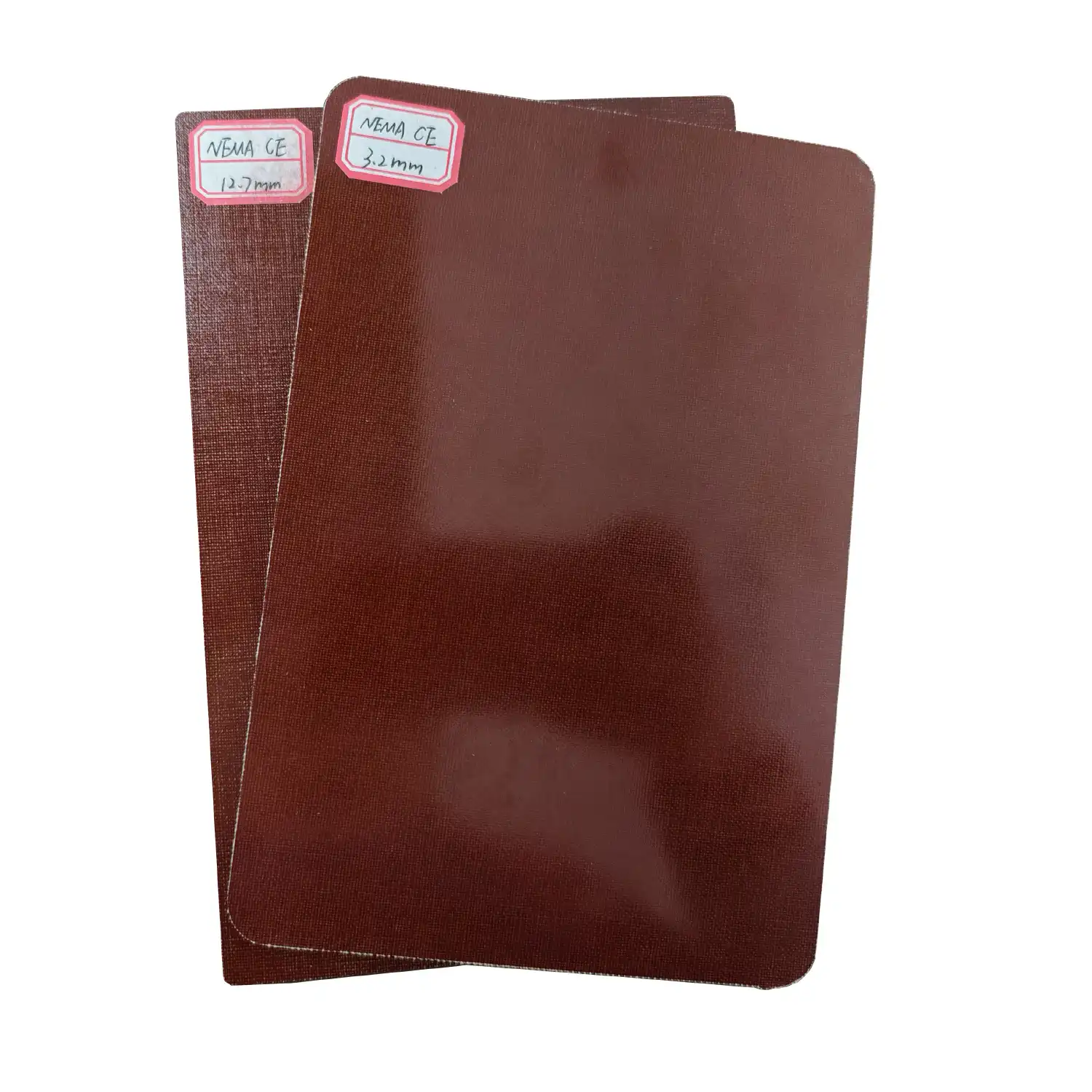
Phenolic paper laminate stands out as one of the most useful materials available when your production line requires reliable electrical protection with tight physical standards. This thermosetting composite is made by injecting phenolic resin into layers of kraft paper under heat and pressure. It has a great balance of dielectric strength, mechanical rigidity, and ease of machining. This material always meets the technical needs that engineers and procurement teams care about the most, whether they are looking for parts for switchgear assemblies, transformer coil barriers, or motor insulation frames.
Understanding Phenolic Paper Laminate and Its Core Properties
What Makes This Material Different From Other Laminates?
There is an industrial laminate called phenolic paper laminate. It is easy to work with and costs less because it is made from paper. It doesn't soak up as much water and is better at blocking electricity than phenolic sheets made of cotton fabric. It costs a lot less, lasts longer, and is easier to work with than epoxy glass laminates like FR4. Because of this, it is the best choice when shielding for medium voltage is enough, and cost is a factor.
The material is compliant with international standards like ASTM D709, IEC 60893, and NEMA LI-1 types (X, XX, XXX, XP, XXP, XXXP). If you buy something in the US or another country, this global compliance system makes sure that the quality is the same.
These are the main technical details that show how well it works:
- For dielectric strength (across laminations), the strength is generally 300–500 V/mil (12–20 kV/mm) when measured in oil. This is enough for 50/60 Hz medium-frequency insulation uses.
- Flexural strength: Good sheets have a flexural strength of more than 100 MPa, which means they keep their shape even when they are stressed mechanically in support frames, spacers, and gears.
- Not much water can get through: less than 1% for grades XXX and XXXP and about 2.5% for Grade X. This directly affects the right conditions for working.
- It can continuously be rated at Class E (120°C) or Class B (130°C), which makes it perfect for use in motor and generator settings.
- Chemical resistance: Mineral oils, weak acids, and chlorinated hydrocarbons can't hurt phenolic glue that has been cured. This means it is safe to use in oil-filled switchgear and generator enclosures.
When put together, these traits help electrical engineers and OEM buying managers with real issues, such as getting correct performance data, understanding limits, and finding materials.
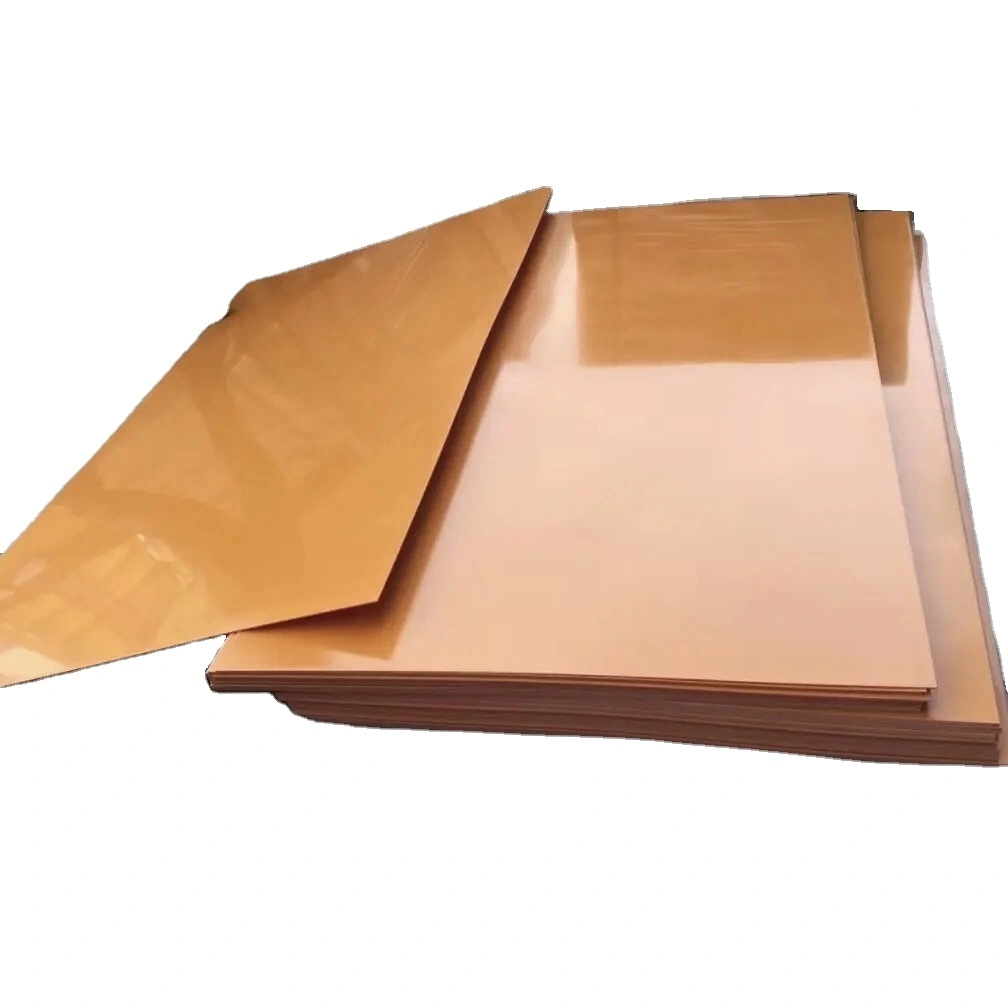
Why Phenolic Paper Laminate Enables Easy Machining for Custom Insulation Parts?
Machining Advantages That Matter on the Shop Floor
One of the best things about paper-based phenolic paper laminate that makes it useful is how easily it can be machined. Because the layers of kraft paper are all the same, they have a consistent cutting resistance that makes tool wear less than with glass-filled alternatives. CNC milling, drilling, routing, and punching can all make edges that are smooth and exact measurements without the need for special tooling updates.
The "P" ending grades (XP, XXP, and XXXP) have plasticizers that let them be punched cold or warm, at temperatures ranging from 40°C to 80°C. This quality is very important for making a lot of parts, where pressing presses are used instead of CNC machines to save money.
Compared to plywood or regular plastics, phenolic laminate keeps its tight size limits much better when the temperature changes. This is important when parts need to fit perfectly inside motor housings or control panels. The paper-resin matrix doesn't make abrasive glass fiber dust when it's cut, as epoxy glass laminates do. This is better for both tooling and workplace safety.
For example, a transformer maker that needs to find unique spark barriers can go from sheet stock to finished punched parts in just one production shift, with almost no waste and quality that stays the same from batch to batch. This is the kind of operational efficiency that procurement managers and engineering leads look at when they look at the whole cost of ownership instead of just the price per unit.
How to Choose the Right Grade for Your Application?
Matching Grade to Operating Environment
Choosing the right grade of Phenolic Paper Laminate insulation sheet has a direct effect on how well the finished part works in real life. Grade X is best for dry construction uses and puts mechanical strength first. Grade XX is a general-use grade of electrical insulation. Grade XXX has the most resin and the least amount of moisture absorption, so it can be used in damp places where high dielectric strength is needed.
Here is a useful strategy for choosing a grade based on the type of application:
- Electrical switchgear and motor insulation: Grade XXX or XXXP — these have better dielectric properties and are less sensitive to moisture, so they last a long time.
- Transformer coil spacers and arc barriers: Grade XX or XXX — these are stable in oily settings and don't react chemically with mineral oils.
- High-volume punched components: Grades XP, XXP, XXXP — plasticized formulas keep stamping processes from cracking the parts.
- Structural mechanical spacers and gears: Grade X — these have the highest bending strength when under a lot of mechanical stress.
In addition to grade, you should also think about the tolerances for sheet thickness, the surface finish you need, and whether your business needs pre-cut panels or full sheets. Experienced makers can offer customization choices like specific thickness increments, custom sheet dimensions, and surface treatment, which cut down on the work that needs to be done later on in the manufacturing process.
These selection criteria help procurement teams and R&D engineers choose the right materials from the start, so they don't have to make expensive changes in the middle of a project.
Procuring Phenolic Paper Laminate: What B2B Buyers Need to Know
Evaluating Suppliers for Long-Term Partnership
It takes more than checking prices per sheet to find a reliable phenolic paper laminate provider. Compliance documentation is very important. Look for manufacturers that can give you UL recognition, RoHS compliance certificates, and material test reports that can be linked to well-known standards like NEMA LI-1 or IEC 60893.
Just-in-time production plans are directly affected by rules on minimum order quantities and lead times that can be changed. Having suppliers who can handle both shipping and logistics gives you a big advantage because they lower the risk of damage during transit and make the paperwork for importing easier. Advice on how to store sheets is also important. To keep them from twisting from uneven moisture absorption, they should be kept horizontally on flat boards in a climate-controlled space that is close to 20°C and below 50% relative humidity.
Over time, strategic relationships with suppliers that are based on uniform quality, quick technical support, and open communication lower buying risk and make the supply chain more predictable.
Conclusion
For a variety of industrial insulation applications, phenolic paper laminate offers a reliable combination of dielectric strength, chemical resistance, and ease of machining. Its NEMA- and IEC-compliant grades make it easier for buying teams to choose, and the fact that it can be machined cuts down on production cycle times and overall costs. This material is a mature, tried-and-true option for B2B buyers in the automotive, industrial machinery, electrical manufacturing, and power distribution sectors. It strikes a good balance between technical performance and business viability.
FAQ
What distinguishes Grade XX from Grade XXX?
Grade XX is a general electrical-grade laminate that can be used for normal insulation tasks in dry to slightly damp conditions. Grade XXX has more resin, which means it absorbs less water (below 1.0%) and has better electrical strength. It is necessary to specify XXX when electrical performance must be uniform in wet or oily settings.
How does this material compare to FR4 epoxy glass laminate?
It's much cheaper to work with paper phenolic paper laminate than FR4, and it can be cut faster with less tool wear. FR4 is better at handling high electrical frequencies and is more resistant to mechanical pressure. Paper phenolic is the cheaper and more useful choice for normal 50/60 Hz insulation jobs that don't need to handle extreme mechanical shock.
Is phenolic paper laminate fire retardant?
Standard grades have a UL 94 HB rating, which means they burn slowly and don't put out themselves. For uses that need strict non-flammability, you should choose FR-1 or FR-2 fire-retardant grades. These grades have chemical changes that make them more flame-resistant.
What machining methods work best?
CNC cutting, drilling, turning, and punching all do good work. P-suffix grades are made to be used for punching tasks only. For long production runs, it's best to use carbide tools to keep the quality of the edges even when making a lot of them.
Connect With J&Q — Your Trusted Phenolic Paper Laminate Supplier
J&Q has been making insulating sheets like Phenolic Paper Laminate for more than 20 years and has been trading with other countries for more than 10 years. Because our logistics operations are all connected, we can provide full service, from custom sheet sizes and help with grade selection to on-time delivery. We help electrical makers, machinery builders, buyers in the power sector, and sellers of auto parts all over the world and in the United States.
Reach out today to request product samples, a tailored quotation, or technical consultation on grade selection for your specific insulation application. Contact us at info@jhd-material.com or visit jhd-material.com to start the conversation.
References
1. National Electrical Manufacturers Association (NEMA). NEMA LI 1: Industrial Laminating Thermosetting Products. NEMA, 2020.
2. International Electrotechnical Commission. IEC 60893: Insulating Materials — Industrial Rigid Laminated Sheets Based on Thermosetting Resins. IEC, 2019.
3. ASTM International. ASTM D709: Standard Specification for Laminated Thermosetting Materials. ASTM International, 2017.
4. Harper, Charles A. Handbook of Plastics Technologies. McGraw-Hill, 2006.
5. Brydson, J. A. Plastics Materials, 7th ed. Butterworth-Heinemann, 1999.
6. Underwriters Laboratories. UL 94: Tests for Flammability of Plastic Materials for Parts in Devices and Appliances. UL Standards, 2021.
_1732777843529.webp)