
How Does 94V0 FR4 Fiberglass Sheet Improve PCB Reliability?
2026-09-08 17:30:22
When engineering teams ask what separates a board that lasts a decade from one that fails in the field, the substrate choice is almost always part of the answer. A 94V0 FR4 fiberglass sheet is a woven-glass-reinforced epoxy laminate that carries the UL 94 V-0 flammability rating—meaning a burning specimen self-extinguishes within 10 seconds with no flaming dripping. That single property, layered on top of high dielectric strength (~50 kV/mm), flexural strength exceeding 340 MPa, and a Glass Transition Temperature (Tg) of 130°C–140°C for standard grades, makes this material the backbone of reliable PCB design worldwide.
Understanding 94V0 FR4 Fiberglass Sheet and Its Core Properties
What the FR4 Grade Actually Means?
The NEMA grade number FR4 stands for "Flame Retardant 4." Woven fiberglass cloth and a brominated epoxy resin binder are mixed in the base and then cured under high pressure to form a hard laminate. The UL 94 V-0 rating is based on the bromine component. This is a standard set by Underwriters Laboratories that regulators and OEM qualification teams often use. In addition to not being flammable, the material meets the standards set by IPC-4101 and ASTM D709 for electrical performance and stability in size. This gives buying teams around the world a standard way to measure quality.
Key Technical Properties That Drive PCB Longevity
The performance profile of the material is balanced on three axes on purpose. A density of 1.85 to 2.08 g/cm³ keeps the board stiff without adding too much weight. In high-voltage designs, inter-layer arcing can't happen if the breakdown voltage is higher than 40 kV parallel to the laminations. According to ASTM D570, water absorption stays below 0.2%. This keeps the dielectric properties safe in wet working conditions. High-Tg versions increase thermal resistance to 170°C to 180°C, which is good for reflow soldering and high-temperature industrial cabinets. These numbers are not just marketing hype; they can be checked against well-known test methods around the world.
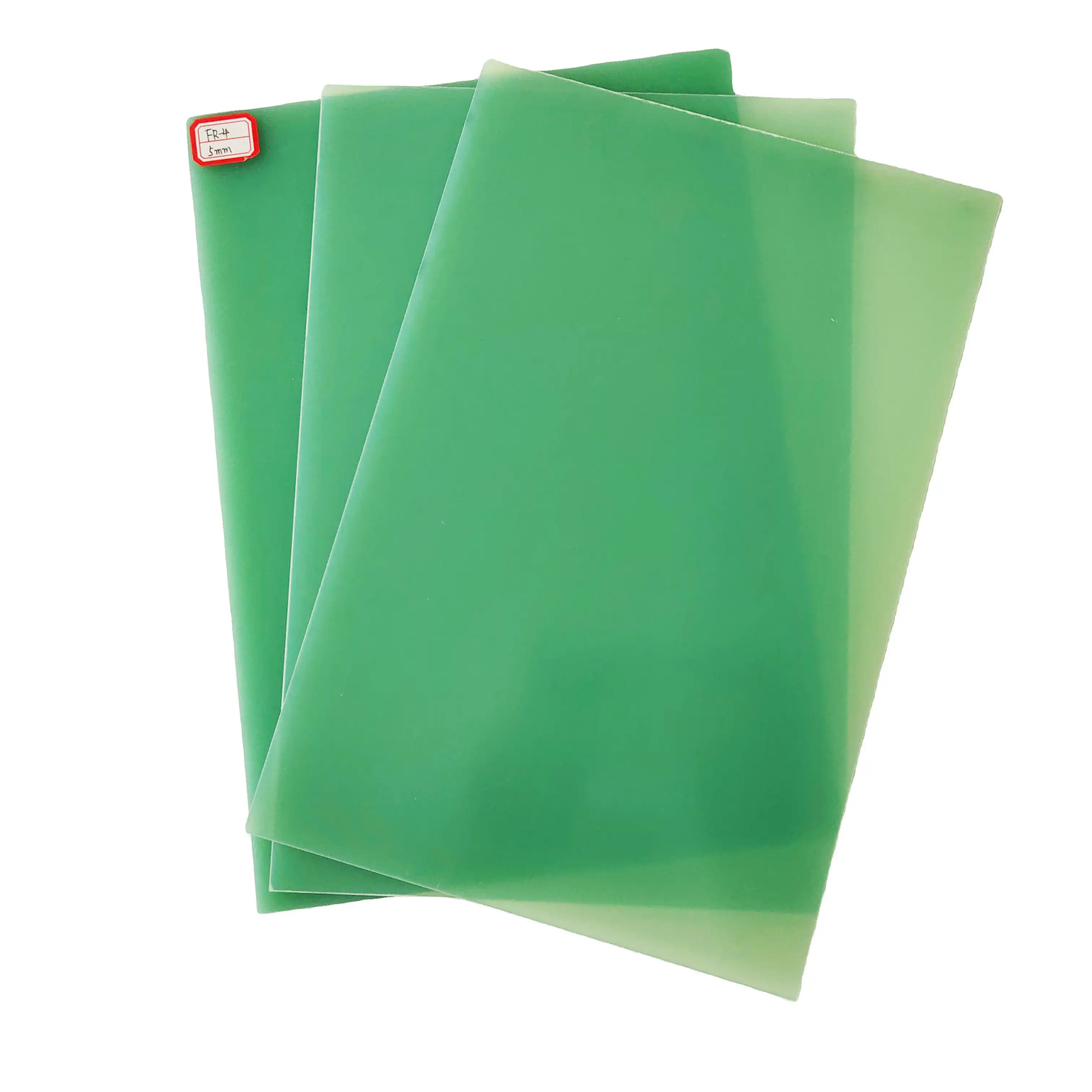
How Does 94V0 FR4 Fiberglass Sheet Address Common Reliability Challenges in PCB Manufacturing?
Three things are most likely to shorten the life of a PCB made from 94V0 FR4 Fiberglass Sheet: thermal stress, electrical interference, and fire spread. Knowing how the material fights against each one helps engineering managers make sure that their specifications are accurate.
Here are the core reliability advantages this substrate delivers in practice:
- Thermal warp resistance: The epoxy-glass structure spreads heat evenly across the laminate plane. Boards keep their shape even after many soldering cycles because the Tg cutoff is not crossed during normal reflow profiles (usually 240°C–260°C peak, which is well above the 130°C continuous rate but only for a short time). Standard 94V0 FR4 Fiberglass Sheets are used to make wave solder pallets that can withstand hundreds of thermal cycles without warping.
- Sustained dielectric integrity: Even small amounts of dirt or water can lower the quality of a signal at high frequencies. Because this laminate absorbs less than 0.2 percent water, the dielectric constant stays steady. This lowers signal loss in high-frequency circuits that work at 1 GHz or higher. This directly means that telecommunications and automotive radar modules will fail less often.
- Flame propagation barrier: The V-0 rating makes sure that the substrate doesn't catch fire, unlike CEM-1 paper-phenolic boards, which can keep burning. This trait can keep a single part failure from turning into a system-wide thermal event in thick switchgear boxes or battery management units.
These traits don't work by themselves; they work together. When the procurement team chooses this laminate for a motor drive control board, they are addressing heat, voltage, and safety compliance all at the same time. This saves a lot of time and effort for engineers.
Comparing 94V0 FR4 Fiberglass Sheet With Alternative Materials in the Market
FR4 vs. CEM-1: Where the Gap Shows
CEM-1 uses a core made of both paper and fiberglass, which saves money on materials but lowers its ability to resist water, bend, and catch fire. 94V0 FR4 Fiberglass Sheet has a bending strength of more than 340 MPa, while CEM-1's is usually between 170 and 200 MPa. CEM-1 might work for single-layer consumer boards that don't need to meet any important safety standards. Because it has a structural and safety gap, 94V0 FR4 Fiberglass Sheet is the best choice for multi-layer PCBs, high-voltage insulation barriers, or any assembly that needs to be UL-certified.
Selecting the Right Thickness and Grade
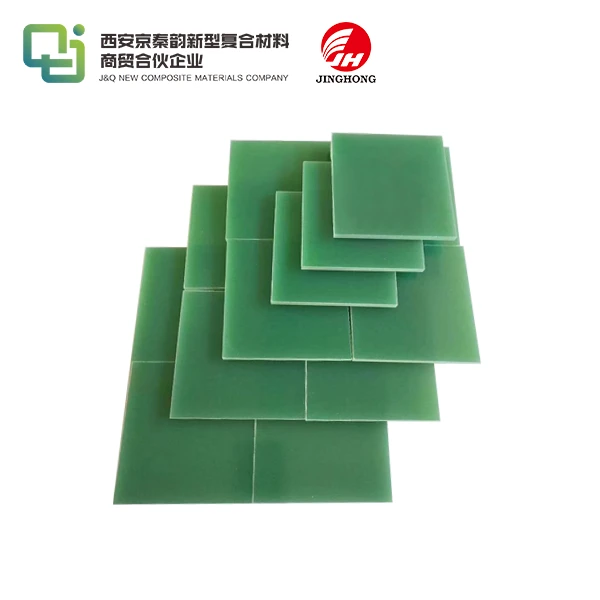
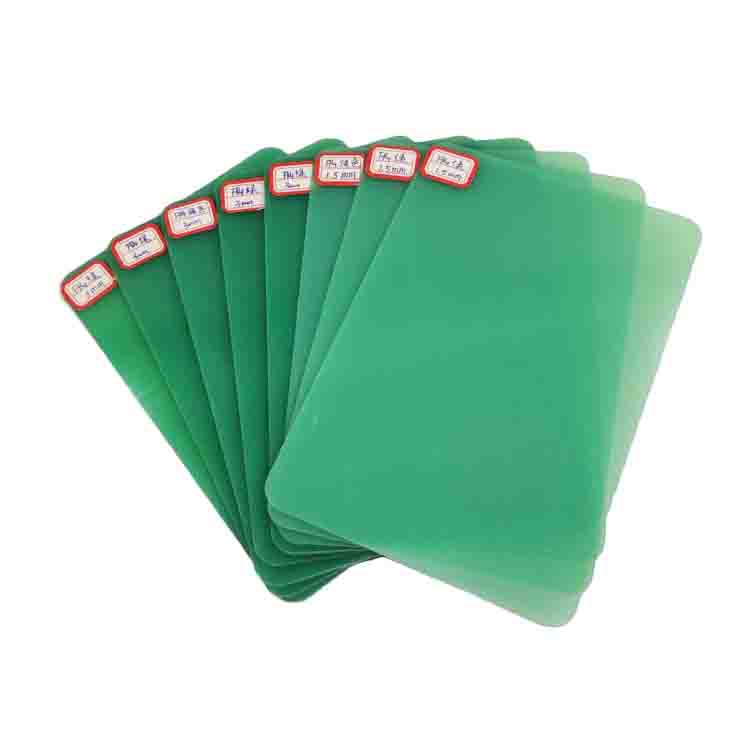
Sheets are usually between 0.5 mm and 50 mm thick, and there are very tight tolerances (±0.1 mm for thin sheets). The number of layers, the weight of the copper, and the mechanical loads the assembly will have to handle all affect the thickness choice. High-Tg versions are worth the extra cost in places where boards will stay above 130°C for a long time, like in electronics under the hood of cars or industrial servo drives. Talking to a highly savvy seller about these requirements before buying keeps you from having to pay a lot of money for redesigns later on.
Procurement Best Practices: How to Select and Buy 94V0 FR4 Fiberglass Sheets for Your Projects
Evaluating Supplier Credentials
There is more to it than just having certifications. A trustworthy 94V0 FR4 Fiberglass Sheet supplier should show proof of UL recognition, traceable material test reports, and an active quality management system like ISO 9001. OEM customizing options, such as CNC cutting, custom panel sizes, and surface finishing, show that the maker has a real understanding of the process and is not just a reseller.
Validating Quality Before Full Commitment
Requesting a sample of the material and sending it in for a basic inspection is something that all experienced procurement teams do. Some important checks are even thickness, a clean surface (no dry spots, bubbles, or inclusions), and a simple dielectric breakdown test according to ASTM D149. These steps don't take long at all, but they make sure that non-conforming material doesn't get into a production run. Suppliers who are sure of the quality of their goods are happy with this low-stress method.
Real-World Applications and Case Studies Demonstrating the Impact of 94V0 FR4 on PCB Reliability
Automotive, industrial automation, consumer electronics, and power transfer are just some of the fields that have made solid track records with this material. Tier-1 automotive makers use 94V0 FR4 Fiberglass Sheets for battery pack insulation barriers and inverter control boards. These parts must be able to fight flames and keep their shape when heated and cooled many times. 94V0 FR4 Fiberglass Sheets are used as arc barriers by transformer makers because the V-0 grade gives an approved safety cushion during arcing fault situations.
In consumer electronics, the push for miniaturization and high-density interconnect (HDI) boards actually makes the case for 94V0 FR4 Fiberglass Sheet stronger. Thinner laminates (less than 0.5 mm) keep their full dielectric integrity at lower masses. This lets smaller designs work without losing long-term dependability. When compared to assemblies built on lower-grade substrates, these sectors consistently show lower warranty return rates and longer mean-time-between-failures (MTBF). The business case is simple: a slightly higher cost of materials per board means much lower costs for failures in the field over the life of the product.
Conclusion
Reliability in PCB design is not a coincidence; it is planned by carefully choosing the materials that are used. 94V0 FR4 Fiberglass Sheet is the best choice for demanding electronics in many industries because it is resistant to flames, has a high dielectric strength, is mechanically rigid, and is certified to meet safety standards. The material always works well in situations where weaker alternatives would fail, like in switchgear protection and car control modules. The most value from this tried-and-true laminate will come from procurement teams that favor certified suppliers, ask for sample proof, and match grade specs to their thermal and mechanical needs.
FAQ
What is the difference between G10 and 94V0 FR4?
Flame retardants that go out on their own are not in G10. 94V0 FR4 Fiberglass Sheet is basically G10 with bromine added to the resin, which gives it the UL 94 V-0 safety rating. In places where fire safety rules must be followed, this makes 94V0 FR4 Fiberglass Sheet the industry standard for electronics.
Can standard FR4 handle continuous high temperatures?
94V0 FR4 Fiberglass Sheet is designed to work continuously at 130°C (IEC Class B). High-Tg versions increase resistance to 170°C to 180°C, making them good for soldering pallets and other high-temperature industrial parts.
Does the color indicate the UL 94V0 rating?
Not at all. The epoxy-green color is standard in the industry, not a sign of certification. Sheets that are black, yellow, or white can all have the same V-0 rating. The rating is based only on the chemistry of the resin and the results of tests to see how flammable it is.
How should FR4 laminate be machined?
Because the glass fibers are rough, you need tools coated with tungsten carbide or diamond. High spindle speeds and good dust clearance keep cut edges from delaminating and protect the health of the user.
Does FR4 absorb moisture?
According to ASTM D570, the amount of water absorbed is less than 0.2%. Even a small amount of uptake can change the dielectric constant in high-precision applications, so it is best to store it in a dry place for sensitive uses.
Partner With J&Q for Certified 94V0 FR4 Fiberglass Sheet Supply
J&Q has been making shielding materials for more than 20 years and has been trading with other countries for more than 10 years. We are a reliable source for 94V0 FR4 Fiberglass Sheet, and we offer custom sizes that are ready for CNC, full UL and RoHS paperwork, and one-stop shipping through our own freight network. You can email our technical team at info@jhd-material.com or go to jhd-material.com to get samples and talk about the details of your project right away.
References
1. IPC — IPC-4101E: Specification for Base Materials for Rigid and Multilayer Printed Boards — IPC, 2017.
2. Underwriters Laboratories — UL 94: Standard for Tests for Flammability of Plastic Materials for Parts in Devices and Appliances — UL, 2013.
3. ASTM International — ASTM D709: Standard Specification for Laminated Thermosetting Materials — ASTM, 2017.
4. ASTM International — ASTM D149: Standard Test Method for Dielectric Breakdown Voltage and Dielectric Strength of Solid Electrical Insulating Materials — ASTM, 2020.
5. Coombs, C.F. & Holden, H. — Printed Circuits Handbook, 7th Edition — McGraw-Hill Education, 2016.
6. Harper, C.A. — Electronic Packaging and Interconnection Handbook, 4th Edition — McGraw-Hill Education, 2004.
.webp)
_1764832732545.jpg)
_1764655473125.jpg)
