How Does 3640 Epoxy Tube Improve Equipment Performance?
2026-09-08 17:30:19
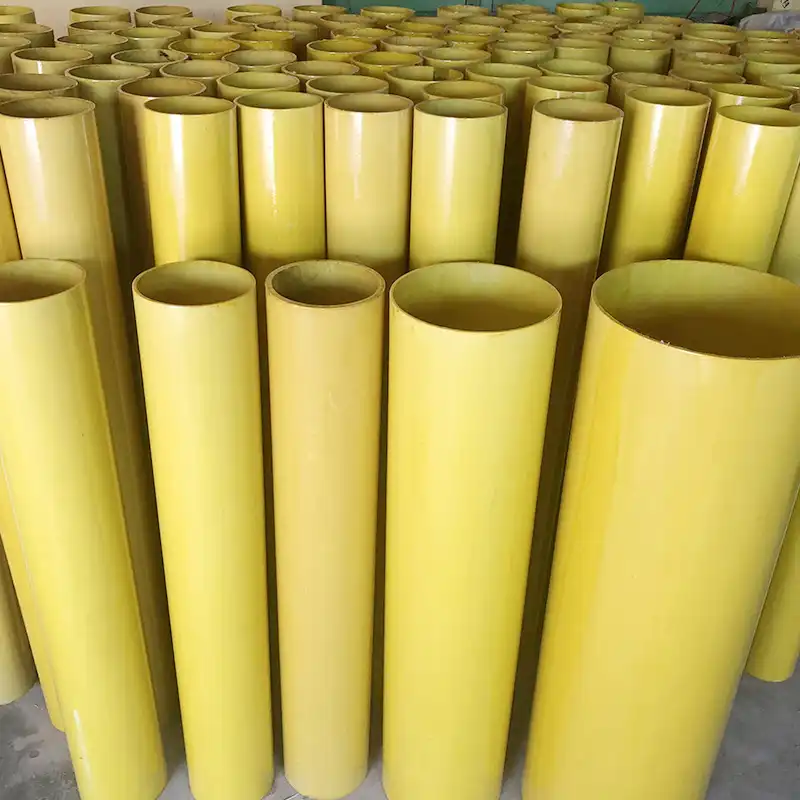
The 3640 epoxy tube improves equipment performance by delivering exceptional electrical insulation, mechanical strength, and thermal stability in demanding industrial environments. Manufactured from alkali-free glass fabric cloth impregnated with epoxy-phenolic resin, this laminated tube maintains dimensional integrity under thermal cycling, resists moisture absorption, and withstands dielectric stress that would compromise standard plastic tubing. Whether you're managing transformer coil assemblies, switchgear components, or motor insulation systems, integrating this epoxy fiberglass tube into your equipment design directly reduces failure rates, extends service life, and lowers long-term maintenance costs.
Understanding 3640 Epoxy Tube and Its Key Properties
Understanding a material's structural make-up and performance range is very important before deciding to buy it for industrial use. To make the 3640 Epoxy Tube, alkali-free glass fabric that has already been saturated with epoxy resin is rolled out and then heated and pressed to harden it. The end result is a solid cylinder that is rated Class B (130°C) and has great dielectric and dynamic properties.
Thermal and Electrical Performance
This tube works reliably in temperatures ranging from Class B to Class F (up to 155°C). It has a dielectric strength of more than 10 kV/25 mm in oil, and its insulation resistance stays at least 100 MΩ after being submerged. Water absorption stays below 0.05%, which prevents hydrolytic breakdown in damp substations or transformers that are full of liquid, which is a real weakness in cheaper insulation materials.
Mechanical Integrity and Machinability
The tube has a high axial compressive and interlaminar shear strength because it has a density of 1.70–1.90 g/cm³. This makes it possible to use CNC to cut threaded spacers, insulation cylinders, and end coils without the material coming apart or cracking on the surface, which is very helpful in settings where accuracy is important for OEM manufacturing.
Because of these features, the 3640 Epoxy Tube is a solid choice for engineers who need a material that is reliable for both structure and electricity.
How 3640 Epoxy Tube Enhance Equipment Performance?
Power systems and industrial machinery often break down because the insulation is wearing down, water is getting in, or the parts are wearing out. Each of these weaknesses is directly fixed by the 3640 Epoxy Tube.
Here are the main performance gains this material brings to all fields:
- Transformer and coil insulation: The tube works as an insulation end coil in distribution transformers and as a coil insulation cylinder for dry-type transformers. It doesn't absorb much water, so there is no chance of dielectric breakdown in places with a lot of dampness. This is a known way for substations in the Southeast and Gulf Coast of the United States to fail.
- Switchgear and motor components: Its hoop-stress resistance keeps the dimensions from changing when the switchgear is running at high speeds. When electrical factories switched from normal thermoplastic sleeves to epoxy laminate tubes, the number of times they had to repair the insulation dropped by a measurable amount.
- Structural insulation in heavy machinery: It is used by machinery builders as mechanical spacers and insulating fittings in places where load-bearing uniformity is important. The interlaminar bond in the tube stays strong even when mechanical stress changes, which cuts down on unplanned downtime.
- Automotive battery pack barriers: To keep battery pack cells apart, Tier-1 car suppliers use precisely cut epoxy insulation parts. In this market segment, you can't skimp on thermal stability and dimensional accuracy within production tolerances.
These improvements in efficiency directly lead to lower repair costs and fewer breaks in production. 3640 Epoxy Tubes always do better than other options when buying teams look at the total cost of ownership instead of the unit cost.
Comparing 3640 Epoxy Tube with Alternative Tubing Solutions
People who work in procurement often compare 3640 Epoxy Tubes to options made of silicone, polyurethane, and UV-cured epoxy. Each material can be used in some situations, but in high-stress manufacturing settings, the differences become very important.
Silicone tubing is great for applications that need to be flexible and work in low temperatures, but it doesn't have the rigid structure needed for transformer coil cylinders or high-voltage switchgear. Polyurethane tubes are good at resisting wear and tear, but they creep a lot when they are under constant compression, which means they are not reliable for load-bearing insulation jobs. UV-cured epoxy systems have short cycle times, but they don't always work well in settings that are constantly hotter than 100°C.
The 3640 Epoxy Tube works better than all of these other options when thermal cycling, dielectric stress, and mechanical load all happen at the same time. Because it doesn't react with transformer oil or chemicals, it's a key material in liquid-filled power equipment, where silicone and polyurethane can't perform as well physically. 3640 Epoxy Tube laminate is still the standard for electronics manufacturers who need insulation that can be cut with a CNC machine and has stable tolerances across production batches.
Procurement Insights: How to Source High-Quality 3640 Epoxy Tube?
Comparing unit prices is not enough to find real, high-performance 3640 Epoxy Tubes. Some suppliers in the market for industrial insulation materials have resins of varying quality, thickness tolerances that aren't always met, and quality management systems that aren't up to par.
When choosing a 3640 Epoxy Tube seller, put these things in order of importance:
- Verified manufacturing standards: Make sure they meet GB/T 5132 or an IEC EP GC series rating that is similar. Suppliers with documented production lines and facilities for ventilation and dust removal always provide cleaner, drier goods.
- Batch quality documentation: Request material test results that include dielectric strength, water absorption, and compression strength for each batch. Reliable sellers give these to you ahead of time.
- OEM customization capability: If an electronics or automaker needs non-standard wall thicknesses or cut lengths, make sure the supplier can handle custom production runs with tight dimensional tolerances.
- Sample availability: Reliable 3640 Epoxy Tube manufacturers that serve the US market always offer samples before making large orders.
- Logistics reliability: Shippers whose logistics operations are streamlined cut down on delays and the chance of damage for fragile laminated tubes traveling across borders.
Avoiding fake or low-quality insulation material is not just a matter of saving money; it's also a matter of safety and liability for high-voltage equipment. Working with verified, knowledgeable suppliers saves both the quality of the product and the performance of tools further down the line.
Maximizing Return on Investment by Integrating 3640 Epoxy Tubes
3640 Epoxy Tubes have a return on investment (ROI) that goes far beyond the price of purchase. When power transfer systems break down, it can cost business owners tens of thousands of dollars every hour. When insulation fails and an unplanned outage happens, the cost of replacement materials is small compared to the amount of work that has to be done and the fees for emergency service.
When 3640 Epoxy Tubes are used in transformer assemblies, motor parts, and switchgear insulation systems, facilities report longer service intervals and fewer emergency maintenance calls. Because the tube is naturally resistant to chemicals in transformer oil, it keeps its electrical properties even after years of being submerged in oil all the time. This is a durability benefit that quickly pays for itself.
In the future, dry-type transformer technology and higher-density battery systems in electric cars will make more people want precision-machined epoxy insulation parts with better thermal ratings. By spending money on good epoxy laminate materials, procurement teams can now meet these new requirements without having to react to supplier changes.
Conclusion
The 3640 Epoxy Tube isn't just an insulation part; it's also good for businesses that need to make sure their electrical systems work well and their machines are precise. Its high dielectric strength, temperature stability, resistance to moisture, and ability to be machined on a CNC machine solve real engineering problems in the electronics, automobile, industrial machinery, and power sectors. If procurement teams look at this material's total term value instead of its initial cost, they will find that it always justifies its place in important equipment assemblies.
FAQ
What industries commonly use 3640 epoxy tubes?
The 3640 Epoxy Tube is used a lot in making electronics and electrical goods, distributing power, making transformers, building industrial machinery, and putting together car parts. Coil insulation cylinders, switchgear parts, motor insulation brackets, and battery pack barriers are all common uses for this material.
What temperature range can these epoxy laminated tubes handle?
They are recommended for continued use in Class B (130°C) temperatures, and some formulations work well in Class F (155°C) temperatures as well. Because of this, they can be used in transformer coil assemblies and other high-temperature industrial settings.
Is the 3640 epoxy tube resistant to transformer oil?
Yes. This tube has a high chemical resistance to transformer oil and most industrial solvents. This makes it a good choice for power equipment that is usually submerged for a long time.
Can these tubes be custom-machined for OEM applications?
Of course. The interlaminar shear strength of the material allows CNC cutting into threaded parts, cylinders, and spacers without delamination, meeting the exact physical needs of OEMs.
How do I verify supplier quality before placing a bulk order?
Before placing a large order, make sure you get test results on the materials, make sure they meet GB/T 5132 or IEC EP GC standards, and ask for samples.
Connect with J&Q for Your Epoxy Tube Requirements
J&Q brings over 20 years of insulation material manufacturing experience and more than a decade of international trade expertise to every partnership. As a trusted 3640 epoxy tube supplier, we offer OEM customization, stable batch quality, sample availability, and end-to-end logistics support through our own logistics company. Reach our technical team directly at info@jhd-material.com or visit jhd-material.com to request datasheets and discuss your project specifications.
References
1. IEC 60893-3: Specification for Industrial Rigid Laminated Sheets Based on Thermosetting Resins — International Electrotechnical Commission, 2003.
2. GB/T 5132: Epoxy Woven Glass Fabric Laminated Tubes — Standardization Administration of China, 2009.
3. Tanaka, T., & Greenwood, A.: Advanced Power Cable Technology — CRC Press, 1983.
4. IEEE Electrical Insulation Magazine — IEEE Dielectrics and Electrical Insulation Society, 2018.
5. Brydson, J.A.: Plastics Materials, 7th ed. — Butterworth-Heinemann, 1999.
6. Handbook of Epoxy Resins — Lee, H. & Neville, K., McGraw-Hill, 1967.