The Difference Between FR4 and FR5 Sheet: High-Temperature Performance
2026-07-16 17:18:27
When selecting insulation materials for electronics and industrial applications, understanding the thermal capabilities of FR4 sheet versus FR5 becomes critical. The primary difference lies in their glass transition temperatures and sustained heat tolerance. Standard FR4 sheet typically operates continuously at around 130°C with a Tg of 130-140°C, making it suitable for general-purpose electronics. FR5, enhanced with modified epoxy resin systems, achieves significantly higher performance with a Tg exceeding 170°C and continuous operating temperatures reaching 180°C or more. This fundamental distinction directly impacts reliability in high-temperature environments common in automotive electronics, power distribution equipment, and aerospace applications where thermal stress can compromise structural integrity and electrical insulation properties.
Understanding FR4 and FR5 Materials: A General Overview
Both materials are used as base layers in electrical insulation and PCB production, but their make-ups are very different in important ways that affect how well they work.
Core Material Composition and Structure
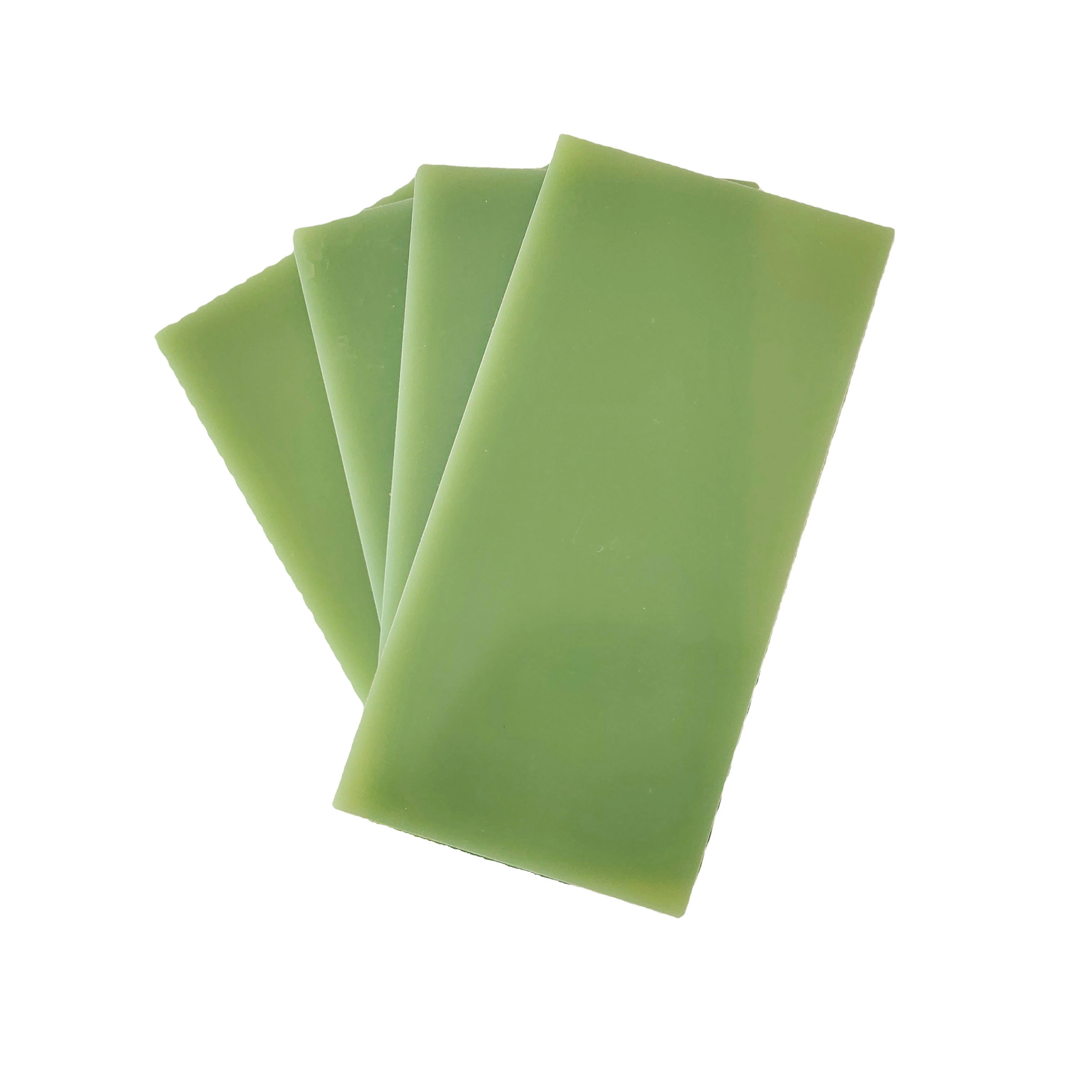
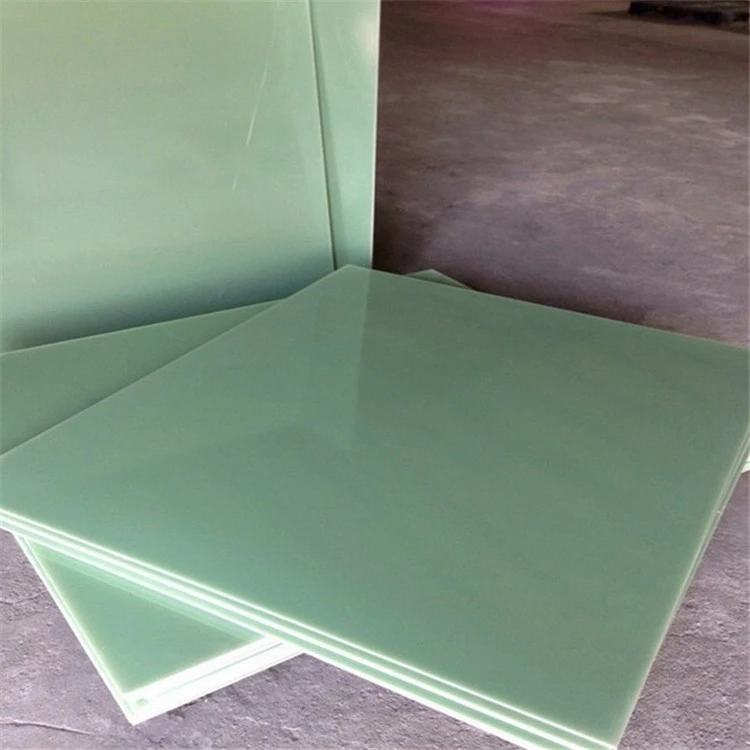
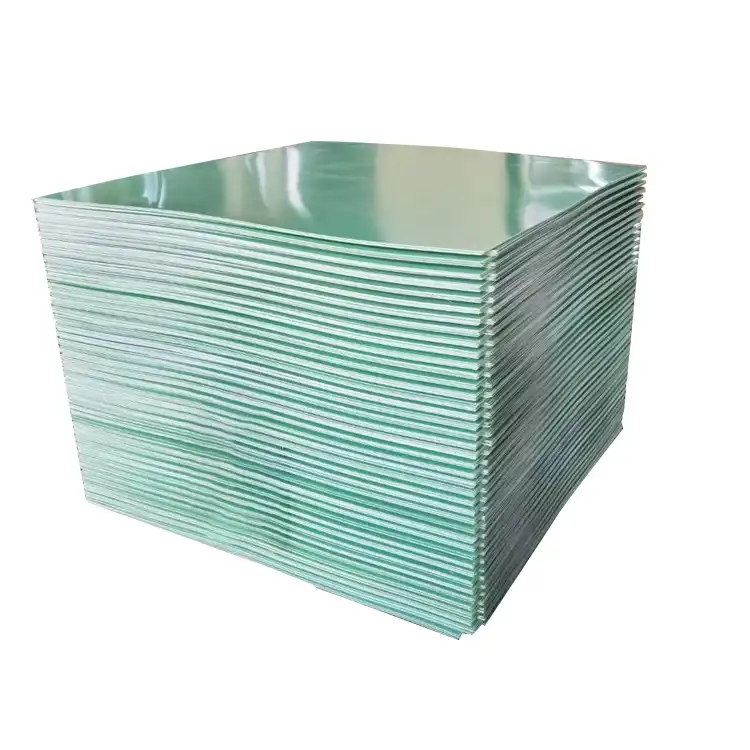
FR4 sheet is made of knitted continuous filament glass cloth that has been mixed with flame-resistant epoxy resin, which usually has chemicals based on bromine. This mix makes a material that is hard, stable in shape, and meets NEMA LI-1 and UL94 V-0 standards. The glass fiber content is usually between 40 and 70% by weight. The glass fiber gives the material its mechanical strength, and the epoxy matrix protects against chemicals and electricity. During production, we've seen that this mix makes FR4 sheet very useful in a wide range of industries.
FR5 uses tetrafunctional epoxy resins that have higher crosslink densities than the normal FR4 sheet's difunctional resins. This chemical design makes polymer networks that are tighter and don't break down at high temperatures. To make FR5, you need to use higher-quality raw materials and more carefully controlled drying cycles. This helps it become the best choice for specific uses.
Flame Retardancy and Safety Compliance
Both materials have UL94 V-0 flame ratings, which means that vertical test specimens put out themselves within 10 seconds without making burning drips. This important safety feature stops fires from spreading in electrical circuits that are very close together. Some flame retardants work by releasing gases that stop the flame from spreading when they burn. However, newer versions are looking into halogen-free options to meet changing environmental rules.
Both materials have strong electrical insulation qualities, with dielectric strength above 20 kV/mm and volume resistance above 10^14 ohm-cm. These features make sure that switchgear, motor parts, and transformer systems work reliably in places where voltage separation stops catastrophic failures.
Primary Industrial Applications
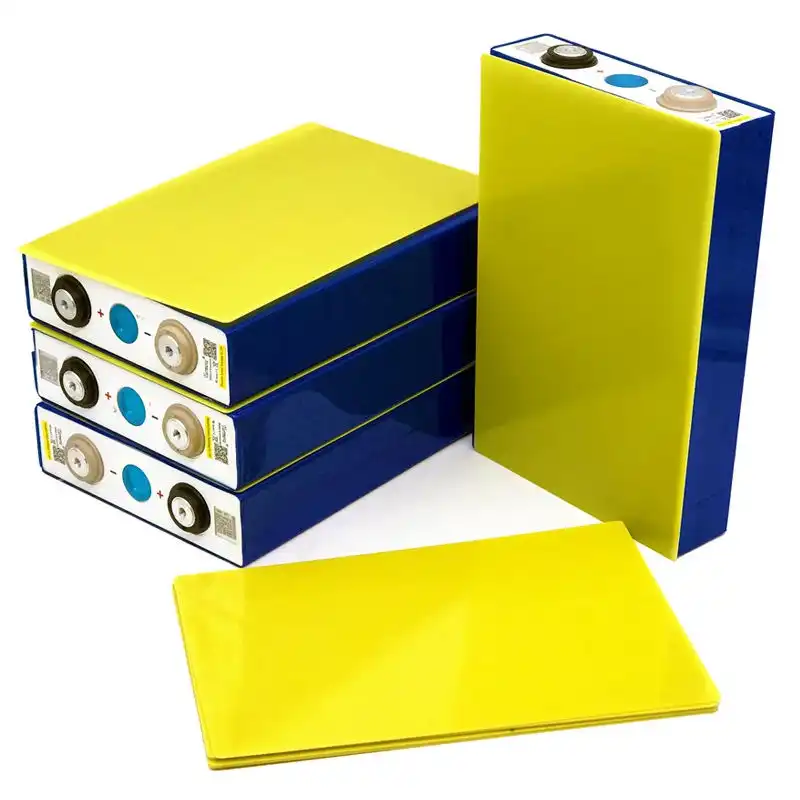
These materials are used in manufacturing because they meet certain temperature and mechanical needs. Electronics companies like FR4 sheet for making customer PCBs, control panels, and standard electrical casings because it is cost-effective and works well. Power plants and automakers are asking for FR5 more and more for battery management systems, high-voltage bus bars, and parts under the hood that will be exposed to temperatures longer than what FR4 sheet can handle.
In-Depth Comparison of High-Temperature Performance
Because of how these materials behave at different temperatures in tough situations, the glass transition temperature is the most important factor for buying choices.
Glass Transition Temperature (Tg) Analysis
The Tg is the temperature at which the hard epoxy glue changes into a rubbery state, which drastically changes its mechanical strength and stability in terms of size. Standard FR4 sheet has a Tg value of 130 to 140°C, but high-Tg versions can hit 170°C by changing the chemistry of the resin. FR5 always gets Tg values of 170-180°C or higher, which means it keeps its shape during heat cycles that would damage other grades.
This speed gap really shows up when wave soldering or reflow processes are done. When standard FR4 sheet PCB circuits are exposed to 260°C lead-free solder profiles, they could warp or delaminate if dwell times go beyond the design margins. FR5 can handle these sudden changes in temperature with little loss of shape, which lowers the amount of scrap in production settings.
Continuous Operating Temperature Limits
Continuous working temperature, not short-term temperature spikes, decides long-term dependability. At 130°C, FR4 sheet keeps its electrical and mechanical qualities for a long time, which is the same as Class B insulation grades. Applications that need to work 24 hours a day, seven days a week at higher temperatures need FR5's 180°C constant grade to keep the insulation from breaking down too soon.
We have seen faster aging in power electronics systems where the temperature is usually around 150°C. After 2,000 hours, the dielectric strength of normal FR4 sheet components started to decrease, but samples of FR5 stayed within specification for over 10,000 hours of the same conditions. This longevity directly affects the cost of warranties and the reliability of products in the field for OEM makers.
Thermal Expansion and Mechanical Stability
When temperatures change, the coefficient of thermal expansion (CTE) affects how accurately measurements are made. The in-plane CTE for both materials is about 15 to 18 ppm/°C, and the through-thickness values are 50 to 70 ppm/°C. The important difference shows up above Tg, where the rates of growth go up by a lot. The higher Tg of FR5 slows down this change, which helps keep tolerances tighter in precision parts that are heated and cooled many times.
This quality is very important for multilayer PCBs with fine-pitch components and hidden vias. Differential growth between copper lines and the substrate material causes stress on the metal that can break solder joins or separate layers. These failure modes can be lessened by specifying FR5 for car engine control units or LED driver boards that work in high environmental temperatures.
Fire Performance Under Extreme Conditions
Both materials meet the standards of UL94 V-0, but they react differently to being exposed to a flame for a long time. Better char formation is seen in FR5's enhanced resin systems, which make an insulating layer that slows heat entry. This quality is very important for arc-resistant switchgear and fire-rated electrical shelters, where secondary sources of ignition must not spread fires to nearby sections.
Comparative tracking index (CTI) values are given by testing methods like IPC-4101 specification sheets. These values measure how resistant something is to electrical tracking in dirty settings. The CTI values for high-performance FR5 types are higher than 600V, compared to 250–400V for normal FR4 sheet. This means that they are better at resisting contamination in wet or chemically aggressive environments.
When and Why to Choose FR4 or FR5 for Your Applications
To choose the right materials, you have to balance professional needs with budget and supply chain issues.
Application-Specific Selection Criteria
FR4 sheet is perfect for making most kinds of electronics, like consumer electronics, normal workplace controls, and low-power PCBs. It has a track record that goes back decades, it is priced competitively, and it is easy to get from any source. This makes it hard to economically justify using other materials. We suggest this standard when the temperature stays below 120°C during constant operation and when thermal cycling stays in a moderate range.
On the other hand, car battery control systems need FR5 to be resistant to heat. During charging processes, lithium-ion battery packs produce a lot of heat. Near high-current bus bars, temperatures can hit 160°C. Insulation walls made of FR5 keep the structure strong and the electrical connections separate for the whole life of the car. This stops thermal runaway situations that could be dangerous.
Another clear use case for improved materials is in power distribution equipment. In medium-voltage switchgear, the insulation around transformer coils and the arc chutes experience both long-term heat and short-term fault currents that create very high temperatures in certain areas. Because FR5 is more thermally stable, it has safety gaps that keep people and devices safe when things go wrong.
Cost-Performance Trade-offs
The cost of materials for FR5 grades is usually 40–80% more than those for similar FR4 sheet grades, but this difference depends on the thickness, sheet size, and order number. Engineering managers need to figure out if this extra cost is worth it in terms of longer product life, fewer warranty claims, or the ability to set more aggressive performance standards that set goods apart from competitors.
Lifecycle cost modeling has helped many of our clients with this kind of study. A motor controller assembly made of FR4 sheet might cost $3 less per unit, but it might break down 5% more often in the field during the guarantee time because it gets too hot. These problems go away when you switch to FR5, which saves you $45 per failed unit in guarantee service costs. When output goes over 10,000 units per year, the business case becomes strong.
Supplier Ecosystem and Customization Options
There are hundreds of manufacturers of FR4 sheet in Asia, Europe, and North America. This makes prices affordable and wait times quick. Standard sheet sizes are easy to find at wholesalers, which lets you make prototypes quickly and start making more of them. Custom CNC cutting services can make complicated shapes within days based on print specs.
FR5 is mostly only available from high-end laminate makers that focus on high-performance grades. Major providers keep enough stock of common sizes, but it may take 6 to 8 weeks for special formulations or thicknesses that aren't standard. To avoid production delays when a new product comes out, procurement teams should talk to suppliers as soon as the plans call for FR5.
Procurement and Cost Considerations for FR4 and FR5 Sheets
Understanding pricing structures, quality verification procedures, and suppliers' skills goes beyond what is written on public datasheets.
Pricing Dynamics and Order Economics
40 to 50 percent of the price of laminate comes from the cost of the raw materials, with resin systems making up the biggest chunk. Manufacturers charge more for FR5's advanced resin formulas, which are then passed on to customers. Price changes are also not straight because bigger laminates need longer press cycles and special tools, which raises the cost of production.
Different suppliers have very different minimum order numbers, which can be as low as one sheet for a prototype or as high as 100 or more sheets for volume prices. We usually see price breaks at 25, 50, and 100 sheets, and at bigger numbers, you can save anywhere from 15% to 30%. Blanket purchase orders with planned releases help procurement teams lock in good prices and keep an eye on the costs of keeping stockpiles.
Supplier Quality Systems and Certifications
Reputable companies keep their quality management systems up to date with ISO 9001 and other standards, such as IATF 16949 for car uses or AS9100 for aerospace grades. These frameworks make sure that the quality of each lot is the same by having written process controls, inspecting all arriving materials, and keeping an eye on the process statistically.
When engineering teams are looking at new sources, they should ask for detailed test results that list important specs like flexural strength, dielectric breakdown voltage, water absorption, and flame rating. Every package should come with batch approval, which lets you find the source if there are quality problems during production. We keep working with a number of approved sources to make sure that our customers always have access to our products and to keep the competition high.
Geographic Sourcing Strategies
While having a lot of factories in East Asia can save you money, it can also make contact harder and cause lead times to be longer. When you buy from a domestic seller, you usually pay 20–40% more because they offer faster delivery and more quick technical support. Hybrid methods are often used in successful buying strategies. For example, normal FR4 sheet can be bought in the United States for flexibility's sake, while specialty FR5 grades can be bought from other countries with longer planning horizons.
When importing large packages of laminate, logistics skills are very important. Using the right packaging keeps wetness from absorbing and edges from getting damaged during shipping. Ocean freight is still the most cost-effective way to ship container loads, while air freight is better for urgent sample needs, even though it costs more. Our combined transportation services make these things easier by taking care of clearing customs and delivering the last few miles to customer facilities.
Conclusion
Choosing between FR4 sheet and FR5 depends on how well you balance your heating needs with your budget and the supplier's abilities. Standard FR4 sheet works well and doesn't cost too much for general-purpose uses that run continuously below 130°C. It has a lot of suppliers and a lot of manufacturing knowledge to back it up. FR5 is worth the extra cost because it is more resistant to high temperatures, which is important for uses in aerospace, automotive, and power electronics where heat stress can risk safety and dependability. Successful procurement strategies match the exact powers of the material to the needs of the application. This way, both expensive over-specification and risky under-specification that affects the purity of the product are avoided.
FAQ
What continuous operating temperature defines the practical limit for standard FR4 sheet?
When used continuously at temperatures up to 130°C, which is equivalent to Class B insulation levels, standard FR4 sheet keeps working reliably. Higher temps can be tolerated for short periods of time during soldering, but long-term use above 130°C speeds up aging and weakens mechanical qualities. This range is extended by high-Tg versions to about 155°C. FR5 can work continuously at 180°C or higher, based on the composition.
How does moisture absorption affect the electrical properties of these materials?
According to ASTM D570, both FR4 sheet and FR5 absorb very little water, usually less than 0.15% after 24 hours of soaking. At high frequencies, however, absorbed moisture lowers the dielectric strength and raises the dissipation factor. Before putting things together, critical applications should define pre-baking methods (usually 4-6 hours at 120°C) to get rid of any moisture that has been absorbed and make sure the best electrical performance.
Can these materials withstand chemical exposure in industrial environments?
Epoxy resin systems that have been cured are very resistant to most industrial chemicals, such as mineral oils, weak acids, alkaline solutions, and common solvents. If strong acids or bases are exposed to glue for a long time, they can damage it. FR5 formulations usually have better chemical protection than normal FR4 sheet, which makes them better for places where chemicals are processed harshly or where harsh cleaning agents are used.
Partner with J&Q for Your High-Performance Insulation Material Needs
For your FR4 sheet and advanced laminate needs, J&Q has more than 20 years of experience making things and 10 years of experience dealing internationally. Our expert team knows the important differences in how different materials handle heat, which helps engineering managers and procurement specialists choose the best options that balance performance, cost, and supply reliability. We keep a large stock of FR4 sheet grades, high-Tg variants, and FR5 formulas so that we can handle everything from small trial runs to large production runs.
Our integrated logistics services make foreign buying easier by offering low-cost container loads and quick delivery that keeps production plans on track. Each package comes with UL and ROHS compliance paperwork and specific material certifications that make it possible to track your products all the way through the manufacturing process. Whether you're making battery management systems that need FR5's high thermal resistance or appliance parts that need precisely-specified FR4 sheet to save money, our applications engineering help makes sure that the specs match the real-world conditions.
Email our team at info@jhd-material.com to talk about your particular needs. We'll give you technical advice, cheap quotes, and sampling choices to help you make sure the material works well before you commit to large quantities. We're dedicated to building long-term relationships with you as your FR4 sheet provider that support the success of your product through reliable quality, quick service, and ongoing technical collaboration.
References
National Electrical Manufacturers Association (NEMA). "Standards Publication LI 1-1998: Industrial Laminating Thermosetting Products." Rosslyn, VA: NEMA, 2018.
Coombs, Clyde F. "Printed Circuits Handbook, Seventh Edition." New York: McGraw-Hill Education, 2016.
Harper, Charles A. "Electronic Materials and Processes Handbook, Fourth Edition." New York: McGraw-Hill Professional, 2018.
IPC Association Connecting Electronics Industries. "IPC-4101E: Specification for Base Materials for Rigid and Multilayer Printed Boards." Bannockburn, IL: IPC, 2020.
Underwriters Laboratories. "UL 94: Standard for Safety of Flammability of Plastic Materials for Parts in Devices and Appliances." Northbrook, IL: UL LLC, 2019.
Wong, C.P., and Moon, K.S. "High Performance Polymers and Composites for Electronics Applications." Materials Science Forum, Vol. 426-432, 2003, pp. 2479-2484.