The Science Behind the Flame Retardancy of UL94 V-0 FR4 Sheets
2026-06-24 17:27:26
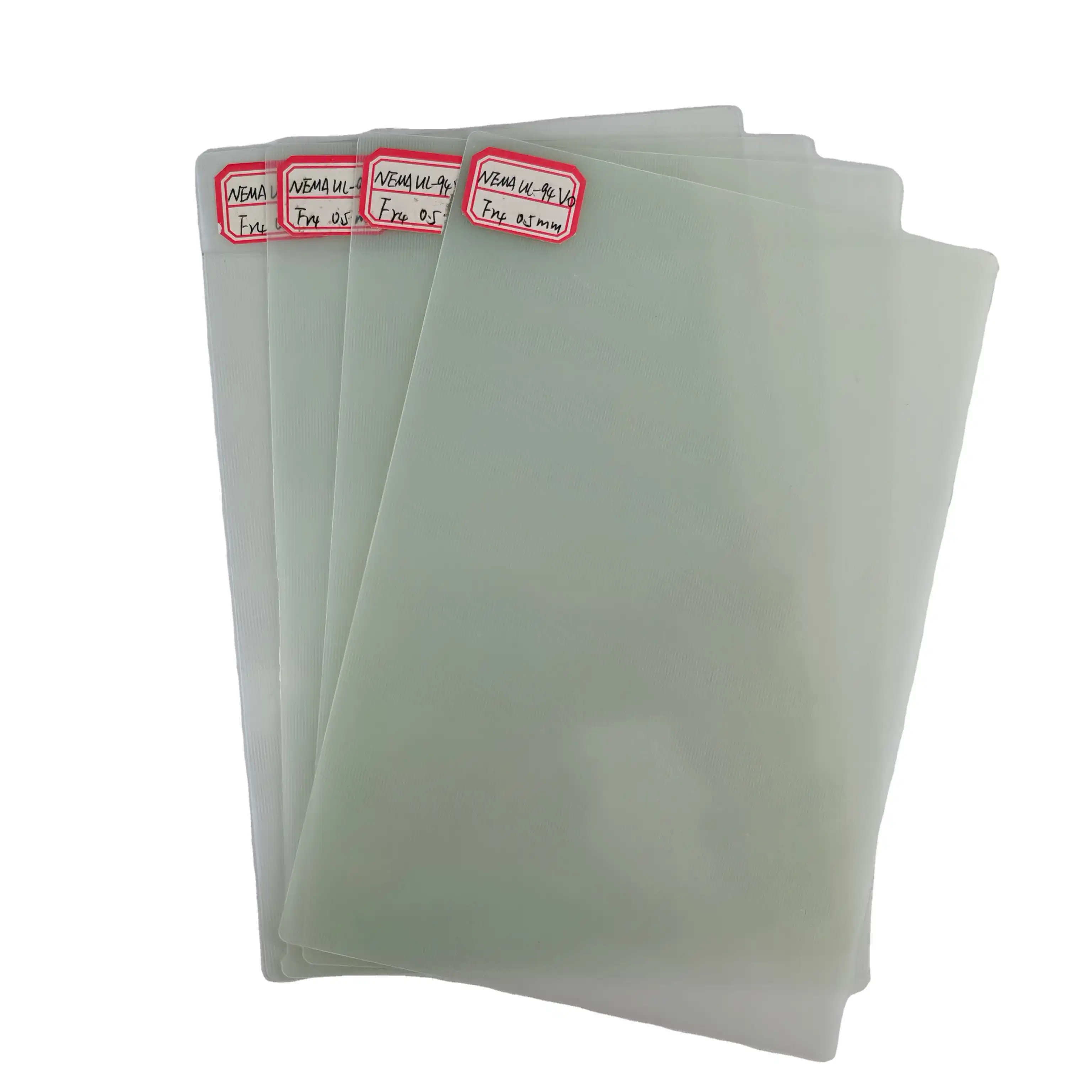
When your electrical equipment is exposed to high heat or an accidental spark, the materials you choose protect it from failing in a terrible way. UL94 V-0 rated FR4 sheets are the best flame-resistant insulation materials because they can put out fires on their own and have strong mechanical qualities. This certification makes sure that glass-reinforced epoxy laminates stop burning in 10 seconds during vertical testing without making flaming drips. This is a very important safety level for high-density circuit assemblies, battery barriers for cars, and power distribution equipment where thermal runaway can really be dangerous to operations.
Understanding FR4 Material and Its Flame Retardant Properties
The Fundamental Composition of FR4 Laminates
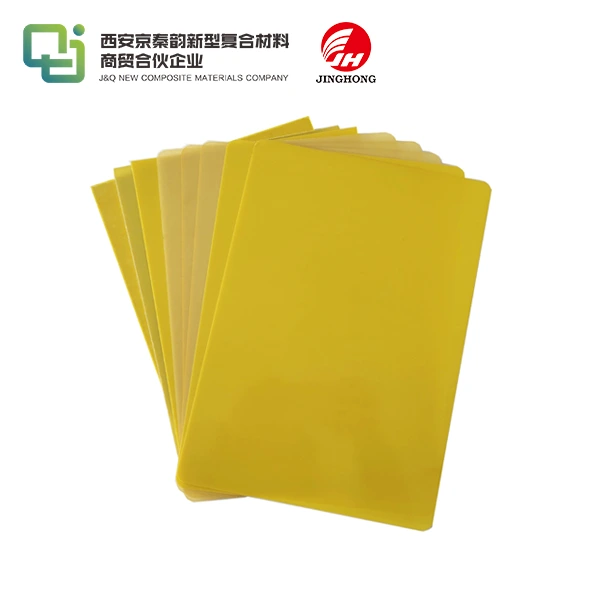
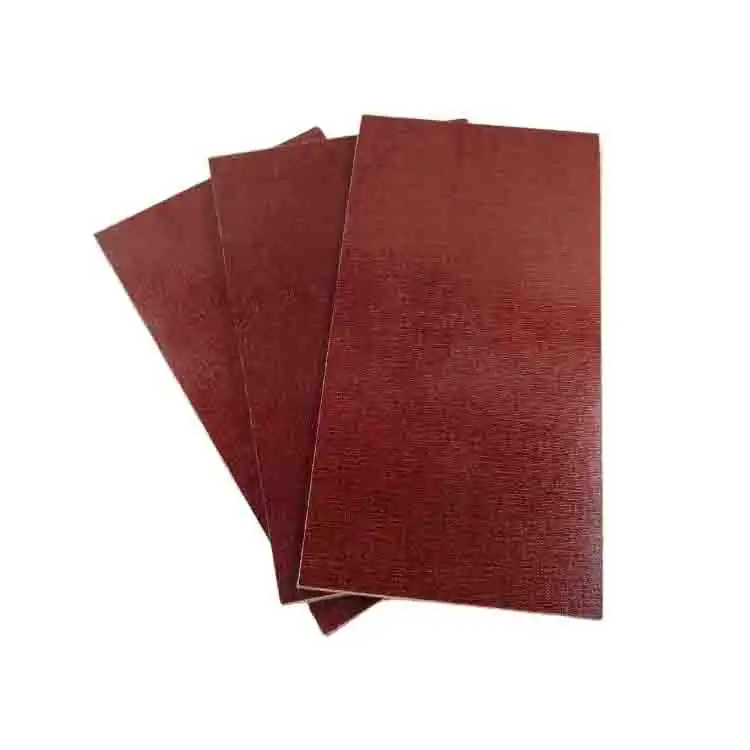
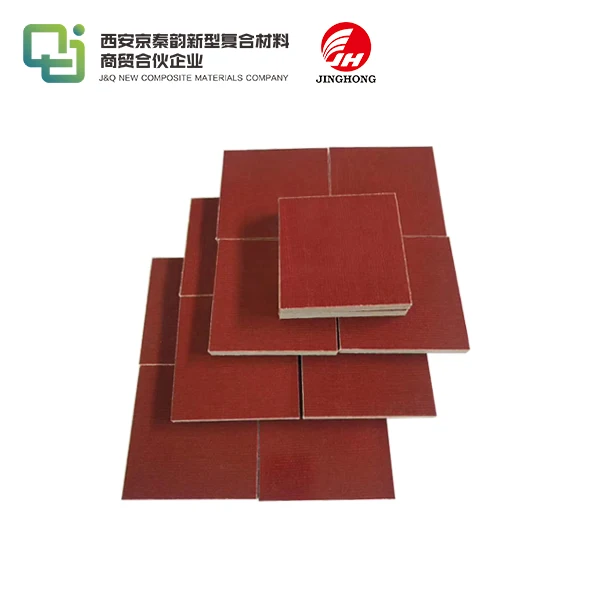
Chemical engineering and structure reinforcement have come together in a very complex way to make FR4. The material is made up of fiberglass cloth that is spun continuously and is soaked with thermosetting epoxy resin. This mix has a very high mechanical tensile strength (above 380 MPa) and an electrical insulation resistance (above 500 megohms), even when it's stressed by humidity. The "FR" label makes this material clearly different from its predecessor, G-10, which doesn't put out fires on its own and isn't used much anymore in safety-critical situations.
Chemical Integration of Flame Retardant Additives
UL94 V-0 grade epoxy sheets are resistant to flames because brominated chemicals are mixed directly into the resin matrix while it cures. These halogenated chemicals, which are usually tetrabromobisphenol A (TBBPA), stop chain reactions in burning by scavenging radicals. When bromine atoms are exposed to temperatures high enough to start a fire, they release and chemically interact with flammable fuel gases. This stops the flame from spreading by removing its energy. This reactive inhibition happens at the molecule level, which makes FR4 different from surface-coated options that can separate when heated and cooled.
The UL94 V-0 Testing Protocol Explained
As a way to give plastics a measurable level of flame protection, Underwriters Laboratories created the UL94 standard. For the V-0 grade, specimens must be able to put out their own fire within 10 seconds of two different vertical flame applications. Importantly, no test sample can make flame drips that light the cotton indicator below the sample on fire, and the total afterglow time can't be longer than 30 seconds. This strict process mimics real-life situations in which electronic parts are tightly packed and ignition sources are next to circuit substrates vertically.
Scientific Principles Behind UL94 V-0 Certification of FR4 Sheets
Vertical Burn Classification Hierarchy
According to the UL94 testing method, there are three vertical burn classifications: V-0, V-1, and V-2. These classifications have increasingly lower combustion limits. V-2 certified materials can burn for up to 30 seconds and make burning drips, but V-0 certified materials must put out fires almost instantly. This difference has big effects on how densely components are placed in switchgear panels and transformer insulation barriers, including FR4 sheets, where a vertical flame spread could affect many circuit levels at once. When engineering managers choose between these grades, they have to weigh the cost of failure with how bad the consequences would be in their individual situations.
Material Parameters Influencing Flame Resistance
How well glass-epoxy laminates achieve V-0 performance depends on a number of factors that affect each other. Changes in the resin's makeup, such as the amount of bisphenol A to epichlorohydrin precursors, have a direct effect on how fast char forms during pyrolysis. It may seem odd, but sheet thickness does matter. Thinner laminates may fail V-0 tests because they don't have enough thermal mass, while sheets that are too thick trap combustion heat. As a heat sink, copper cladding on PCB boards speeds up the cooling of the surface. This is something that procurement teams can use to help them choose materials for high-current uses.
Prevention of Hazardous Combustion Byproducts
UL94 V-0 testing checks whether materials make flaming drips that could fire nearby parts or people. It also checks if the materials are resistant to ignition. The crosslinked resin network in good FR4 keeps the structure solid even when heated, creating safe char layers instead of melting. This is very different from thermoplastic options, which melt and drip when hot. The aerospace and automobile industries value this trait the most, since battery pack fires and fuel system proximity produce situations where falling burning material poses too many secondary ignition risks to be acceptable.
Comparing FR4 Flame Retardancy Against Other PCB Substrate Materials
Performance Benchmarking: FR4 Versus Polyimide Substrates
Flexible circuits made of polyimide can withstand temperatures up to 260°C continuously, while normal FR4 can only handle temperatures up to 130°C. But polyimide materials usually only get V-1 or HB flame classifications because they are plastics and don't have any halogenated retardants in them. This trade-off is very important in aircraft electronics, where flexible circuits are better for weight reduction but V-0 approval is required for fire safety. More and more, hybrid designs use rigid FR4 pieces for structural mounting areas and polyimide for areas that bend and bend. This makes the whole system better at handling heat and flames.
Metal Core PCB Alternatives in High-Power Applications
Aluminum and copper core printed circuit boards have a heat conductivity of more than 200 W/mK, which is many times higher than FR4's value of 0.3 W/mK. This makes them a good choice for LED driver circuits and power conversion modules. But these metal bases depend on thin insulating layers that usually are made of non-halogenated epoxy materials that don't have good flame ratings. To improve heat transfer, the dielectric breakdown risk goes up as the thickness of the insulation goes down. Engineers in charge of power distribution need to figure out if active cooling systems can lower the fire risks that come with lower-rated dielectrics or if inactive FR4 insulation walls provide better fail-safe protection.
Real-World Industrial Application Cases
The car battery management system industry shows how UL94 V-0 approved glass-epoxy laminates can be used to meet different design needs. Electrical separation between cell groups, structural mounting for busbars, and thermal runaway control are all things that battery pack structures need to do in enclosures with limited mass. New electric car platforms from big companies use FR4 sheets as separator plates because the V-0 grade shows that they are flame resistant and CNC machining lets them have complex coolant channel shapes. This mix of safety approval, ease of mechanical workability, and low cost explains why options like ceramic insulators are still not widely used, even though they have better dielectric qualities.
Practical Considerations for Procuring UL94 V-0 FR4 Sheets
Critical Specification Parameters for Technical Procurement
Flame grade is only one part of choosing the right material. Buyers should choose the glass transition temperature (Tg) that works best for their thermal environment. Standard grades at 140°C are good for household electronics, while High-Tg versions at 180°C are better for under-the-hood uses in cars. Tolerances for thickness have a direct effect on assembly yield rates. Precision-ground sheets with a tolerance of ±0.05mm stop z-axis register mistakes in multilayer PCB stacks. Copper cladding weight, which is given in ounces per square foot, affects both the ability to carry current and the windows for the etching process. This means that electrical engineers and PCB makers need to be on the same page when developing specifications.
Verification of Certification Claims and Quality Documentation
There are many examples of false flame rates in the market, especially among brokers who get their supplies from mills that aren't recognized. Careful purchasing teams ask for tracking proof, such as UL Yellow Card certificates that are special to the manufacturer's factory and the grade of the material. As required by ASTM D570, batch testing records should show that the dielectric strength through the thickness is always above 18 kV/mm and the water absorption is always below 0.15%. Established suppliers keep statistical process control records that cover many production runs. This lets buyers look at capability indices (Cpk values) that go beyond just certification stamps to measure how consistent the manufacturing is.
Balancing Cost Factors with Performance Requirements
When compared to regular epoxy formulations, flame retardants that are brominated add a measurable amount to the cost of the material. V-0 approved sheets, including FR4 sheets, usually sell for 15–25% more than non-rated copies. However, this extra cost isn't important when you think about how much you could be sued for field fails or fines for not following the rules. Buying in bulk can help you save money. For example, if you commit to ordering every three months instead of buying things as they come up, you can often get better prices that cancel out the V-0 extra. When comparing sources, purchasing managers should look at the total cost of ownership, which should include the amount of scrap that is made because of problems with the machine and the cost of approval testing.
Future Trends and Innovations in Flame Retardant FR4 Materials
Halogen-Free Formulation Development
Environmental laws, like the RoHS order and REACH chemical limits, are pushing makers more and more toward flame retardant systems that don't contain halogens. The best options are phosphorus-based additives and intumescent compounds that contain nitrogen. However, the current formulas don't have as good of flame performance or mechanical qualities as brominated systems. Industry study groups are working hard to create mixed organic-inorganic nanocomposite methods. These methods use layered silicate platelets to help char form without adding any halogens. As regulations change and customer needs call for halogen-free compliance to rise, procurement workers should keep an eye on these new chemicals.
Enhanced Thermal Management Capabilities
Next-generation power systems that work at higher switching speeds and current densities need substrates that can fight flames and get rid of heat better at the same time. Material scientists are working on ceramic-filled epoxy mixtures that keep their UL94 V-0 approval and have a heat conductivity of close to 3 W/mK, which is ten times better than regular glass-reinforced laminates. These improved materials make it possible for passive thermal management to be used in situations that used to need active cooling. This makes the system simpler and more reliable. The technology is still too expensive for most uses, but it has clear value propositions in the defense and aircraft industries, where performance supports higher prices.
Sustainability and Circular Economy Initiatives
The insulation materials business is under more and more pressure to find better ways to get rid of thermoset composites that can't be recycled using normal mechanical or heat methods. New study into epoxy formulations that can be recycled and crosslinked in two ways could completely change how environmentally friendly glass-reinforced laminates are. At the same time, material suppliers are starting programs to collect production waste and working on chemical recovery methods that can reuse glass fiber and epoxy precursors. When setting up long-term sourcing partnerships, companies that are committed to sustainability should ask their providers for lifetime assessment data and circular economy roadmaps.
Conclusion
UL94 V-0 rated glass-reinforced epoxy laminates, including FR4 sheets, are a mature but still-evolving option for uses that need proven flame resistance along with mechanical strength and electrical protection. Radical scavenging and char formation are the science ideas behind brominated flame retardancy. They show that the material can put itself out on its own, which has been proven through strict vertical burn testing methods. Electrical production, industrial machinery, power systems, car, and appliance procurement teams can benefit from knowing both the certification standards and actual specification factors that set good suppliers apart. As rules about the environment push manufacturers to make products with fewer halogens and better thermal qualities, staying up to date on material developments lets you find ways to meet your performance, legal, and environmental goals.
FAQ
What distinguishes FR4 from G10 epoxy laminates?
Both are made of weaved fiberglass reinforcements and epoxy resin binders, so they are about the same in terms of how strong they are and how well they conduct electricity. The main difference is how resistant they are to fire: FR4 has brominated chemicals that make it self-extinguishing according to UL94 V-0 standards, but G10 doesn't have any flame retardants and keeps burning once it starts. Because of this safety difference, G10 isn't used very often anymore, unless it's needed in a specific situation where flame grades aren't needed.
How does sheet thickness affect UL94 V-0 performance?
Thinner laminates (less than 0.8 mm) might have trouble getting V-0 approval because they don't have enough thermal mass to put out fires quickly, and sheets that are too thick (more than 3 mm) can trap heat from burning. Standard certificates usually only confirm certain thickness ranges, so buyers need to make sure that the measures they give are within the tried ranges. For custom thickness needs, it may be necessary to do more quality tests to make sure that the V-0 performance stays the same.
Can halogen-free alternatives match brominated FR4 flame resistance?
UL94 V-0 grades can be reached with current flame retardant systems that are based on phosphorus or nitrogen, but they often come at the cost of less resistance to moisture, better dielectric qualities, or lower cost. As technology keeps getting better, halogen-free choices become more practical for uses where environmental concerns are more important than small changes in performance.
Partner with J&Q for Certified UL94 V-0 FR4 Sheet Solutions
J&Q has been making high-performance insulation materials for more than 20 years and has a lot of technical knowledge. They also have a lot of exporting experience from working with foreign markets for more than 10 years. Our vertical integration includes our own transportation operations, which makes it possible for us to provide smooth one-stop service from assisting with specifications to delivering goods to your facility after they have been cleared by customs. As a well-known FR4 sheet source with long-term relationships with both domestic manufacturers and global trade networks, we offer full traceability documents, such as UL Yellow Card certifications and batch testing reports that pass even the strictest procurement checks. Our technical team works directly with engineering managers to find the best material specifications, such as the glass transition temperature, copper cladding weight, and thickness tolerances. This way, you can be sure that the epoxy laminates you choose will exactly meet the needs of your application without being over-specified, which would drive up costs. Email our buyers at info@jhd-material.com to talk about your UL94 V-0 FR4 sheet needs and find out how our quality control measures and on-time shipping can help you meet your production goals.
References
Underwriters Laboratories. "UL 94: Standard for Safety of Flammability of Plastic Materials for Parts in Devices and Appliances." Underwriters Laboratories Inc., 2018.
National Electrical Manufacturers Association. "NEMA LI 1-1998: Industrial Laminating Thermosetting Products." National Electrical Manufacturers Association Standards Publication, 1998.
Schartel, B., and Hull, T. R. "Development of Fire-Retarded Materials—Interpretation of Cone Calorimeter Data." Fire and Materials, vol. 31, no. 5, 2007, pp. 327-354.
Kandola, B. K., and Horrocks, A. R. "Complex Char Formation in Flame-Retarded Fibre-Intumescent Combinations—Thermal Analytical Studies." Thermochimica Acta, vol. 294, no. 2, 1997, pp. 113-140.
Morgan, A. B., and Gilman, J. W. "An Overview of Flame Retardancy of Polymeric Materials: Application, Technology, and Future Directions." Fire and Materials, vol. 37, no. 4, 2013, pp. 259-279.
Weil, E. D., and Levchik, S. V. "Flame Retardants for Plastics and Textiles: Practical Applications." Hanser Publishers, Munich, 2009.