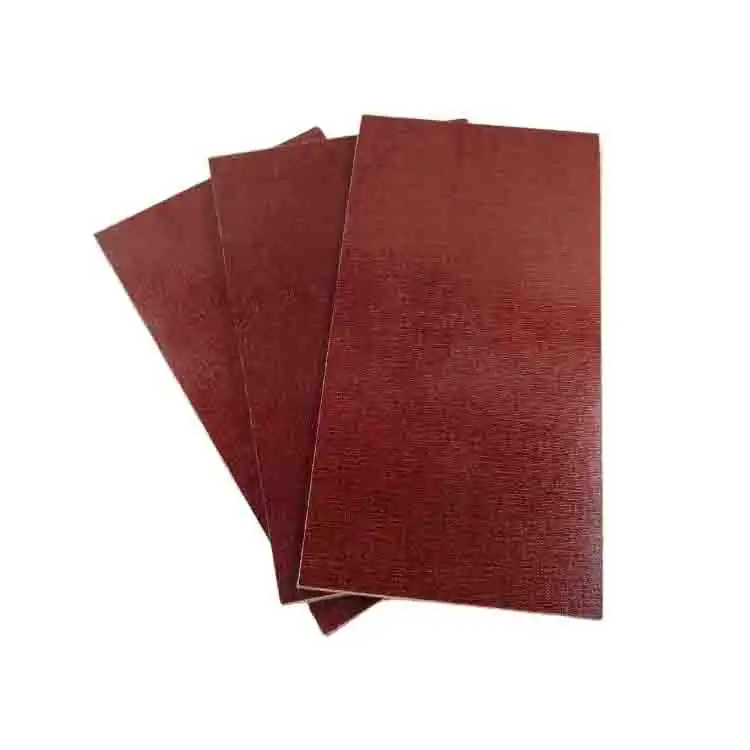
Thermal Expansion Data for FR4 Board Materials
2026-06-02 17:25:31
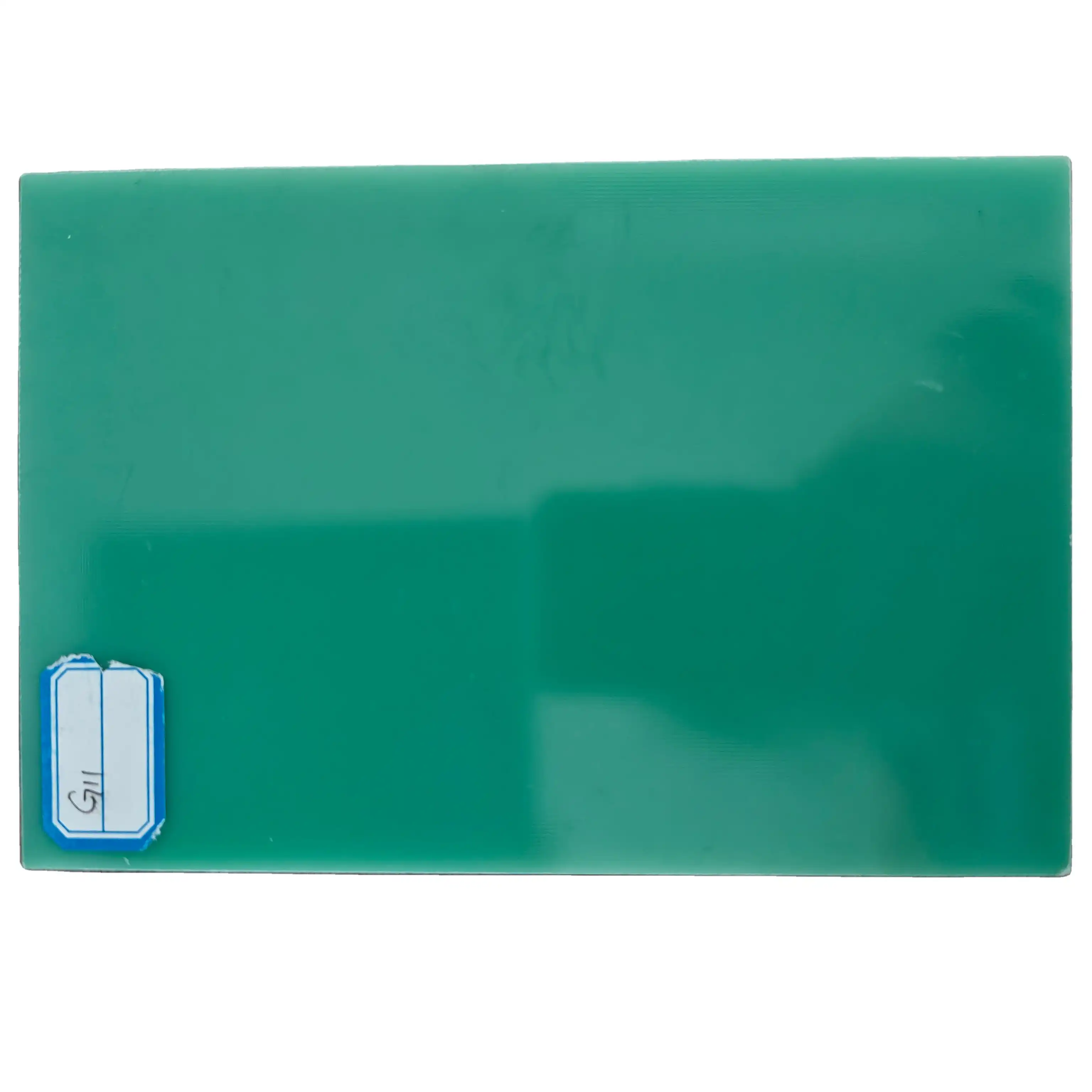
Understanding how materials expand and contract at different temperatures is important when choosing materials for precise electronics and electrical systems. The FR4 board is a high-quality glass-epoxy laminate. Its coefficient of thermal expansion (CTE) is usually between 12 and 16 ppm/°C in the X-Y plane and 50 to 70 ppm/°C along the Z-axis. When the temperature changes, this change in size has a direct effect on the trustworthiness of the PCB, the consistency of the mounting of the components, and the long-term stability of operations in a wide range of fields, from power distribution to automotive electronics. When engineering managers and procurement experts understand these temperature properties, they can choose materials that will not fail in the field, saving a lot of money.
Understanding Thermal Expansion in FR4 Boards
What Drives Thermal Expansion in Epoxy Laminates?
FR4 board expands when the temperature changes because the epoxy resin core and continuous filament glass cloth react in different ways. The glass strands limit expansion in the flat direction, which means that the CTE values are smaller along the X and Y axes. On the other hand, the direction of width that is controlled by resin has much higher expansion rates. This causes uneven behavior that needs to be carefully thought through during PCB stackup design.
The thermal efficiency is directly affected by the makeup ratio of the glass cloth and epoxy resin. About 60% of the weight of standard FR4 is glass, which gives it tensile strength and limits horizontal expansion. Formulations with more glass content lower CTE even more, but this may make them harder to work with and cost more.
Industry Measurement Standards for CTE
Using thermomechanical analysis (TMA) tools, thermal expansion testing is done according to the standard procedures set out in IPC-TM-650 Method 2.4.24. We track changes in the specimen's size as it is heated slowly from room temperature to 260°C. This lets us find the glass transition temperature (Tg), at which the rate of growth changes dramatically. Standard FR4 keeps stable CTE values below Tg, which are good for most industrial uses. When this level is reached, the epoxy turns into a flexible state and expands much more quickly.
When testing across the Z-axis, extra care needs to be taken because this is where the dimensions change the most and is often where multilayer PCB reliability is limited. Engineers can guess how things will behave during thermal cycling events like reflow soldering, where boards hit the Tg threshold many times, by having accurate CTE data along all three directions.
Why Thermal Expansion Data Matters for Reliability?
When temperatures change, mechanical stress is caused by CTE that isn't matched between the FR4 base and the mounting components. When normal FR4 is mixed with ceramic parts that have CTE values of about 6-7 ppm/°C, they cause differential expansion that can break solder joints or make pads crater. This effect is stronger in industries that need high stability, like automotive electronics, where goods have to last through thousands of thermal cycles from -40°C to 125°C.
The problems that power distribution equipment faces are similar. Manufacturers of transformers that use FR4 94V-0 epoxy board to insulate the coils need to take into account that the copper windings and insulating walls may not expand at the same rate. Delamination happens when thermal expansion planning isn't done properly. This leaves air holes that lower the dielectric strength and could cause a catastrophic failure under high voltage stress.
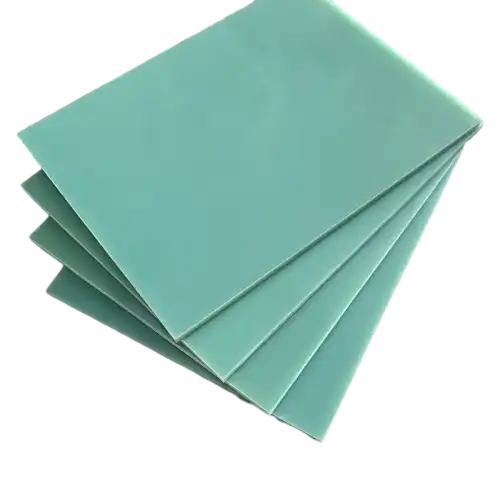
Dimensional and Thermal Properties of FR4 Boards
Typical CTE Values Across Three Axes
Standard-grade FR4 board has flat CTE values of 12 to 16 ppm/°C below the glass transition point, which is found to be between 130 and 140°C. The material's relatively low rate of expansion makes it a good choice for mounting silicon devices with a CTE of about 2.6 ppm/°C. However, for big die sizes, you will still need to use special thermal management methods.
When you look at the Z-axis CTE, things are very different. Values between 50 and 70 ppm/°C show that this direction is mostly made up of resin and not many glass strands to hold it together. Multilayer PCB designs need to account for this large through-thickness growth, especially at via barrel sites where copper plating is stressed by temperature changes.
High-Tg formulas (Tg 170°C and above) keep lower CTE values over a wider temperature range. This gives you more time to use the material before it enters the rapid expansion zone. These higher types are more expensive, but they work better in places where temperatures stay high for a long time, like power conversion units and electronics under the hood of cars.
Material Comparison: FR4 Versus Alternatives
When compared to CEM-1 composite boards, FR4 has better dimensional stability because it is made of continuous glass cloth support instead of paper. Because CEM-1 has a wider range of CTE values and is more sensitive to moisture, it can only be used in low-cost consumer products where heat cycling isn't a big deal.
Aluminum core PCBs have very good thermal conductivity (1-2 W/mK vs. 0.3 W/mK for FR4) and a low in-plane CTE of about 23 ppm/°C, which is very close to copper. However, these metal-backed boards give up some of their electrical separation freedom and need to be drilled in a certain way, which means they are best used for high-power LED uses and not for general-purpose electrical insulation.
Rogers high-frequency laminates, especially the RO4000 line, have a tightly controlled CTE of 10 to 12 ppm/°C in both horizontal directions. They also have better thermal stability at high temperatures. These high-tech materials are very expensive, but they are necessary for RF uses where low loss slope and stable dielectric constant are more important than material cost.
How Thickness and Layer Count Affect Thermal Behavior?
When heat is applied to single-layer boards, they react in a way that can be predicted, and their growth behavior is very similar to published CTE data. The effective Z-axis CTE changes as the number of layers in a multilayer build goes up. This is because the copper plane spread, prepreg resin content, and core material specs all play a role. Due to copper's constraining effect, boards with thick copper pours have slower general growth rates. However, this causes stress to build up at layer changes.
Controlling the thickness error gets harder as the board thickness goes above 3.2 mm. This is because the Z-axis expands during processing, which can make the finished measurements go outside the specification windows. When purchasing thick FR4 boards for industrial machinery that needs exact spacer measurements or fixing tolerances, procurement experts must make sure that thermal expansion requirements are communicated clearly.
We've seen that epoxy boards with a thickness of less than 1.6 mm have more uniform CTE traits. This is because differences in the amount of resin used and the way the glass is woven have less of an effect on these boards. This consistency leads to better results in automated assembly processes where the correct placement of parts has a direct effect on how well they work electrically.
Practical Implications of Thermal Expansion for PCB Design and Manufacturing
Design Strategies to Accommodate Thermal Movement
Plans for putting parts together must take into account the fact that packages and materials don't always have the same CTE. Large ball grid array (BGA) devices work better with underfill materials that physically connect the die to the board. This spreads thermal stress across the whole package area instead of focusing it on the solder balls around the edges. This method works especially well in automotive settings where high temperatures can make joints less reliable.
Via design needs the same amount of thought. When the temperature changes, the copper barrel plate and the FR4 board around it expand and contract at different rates. This creates hoop stress that can lead to breaking. Increasing the size of the holes a little, using smaller aspect ratios, and choosing electroless copper depositing before electroplating all make the barrel more flexible, so the copper can handle changes in size without breaking.
Layout engineers shouldn't put important signal lines next to big copper planes or power components that heat up a certain area. Different temperatures cause the board's surface to expand in different ways, which could bend movable parts or put stress on solder joints. Placing fixing holes and mechanical supports in the right places reduces warpage by stopping movement out of plane during temperature changes.
Common Failure Modes Linked to Thermal Expansion
The most common thermal expansion failure is delamination between the copper foil and the base. When interfacial bonding isn't strong enough to handle cycle stress, blisters form at the edges of the copper and epoxy, which can be seen as raised areas when looking at the samples. This effect gets worse in places with a lot of humidity, where water further weakens the contact. However, FR4's naturally low water uptake (<0.1%) makes it a strong material.
Over many temperature changes, barrel breaking appears in metal through-holes. Each time the copper is heated, it slightly deforms plastically as it tries to follow the growth of the FR4 around it. Cracks that start at the barrel-pad contact eventually spread through the thickness of the plating, raising the electrical resistance and possibly causing short-term open circuits that make it hard to fix in the field.
When the CTE difference causes shear forces that are higher than the epoxy resin's fracture toughness, pad cratering happens under the component terminations. Cracks spread into the glass-epoxy material right below the copper pad, making the structure weak and easy to damage by mechanical shock. This mode of failure is especially bad for drop-testing portable gadgets and moving equipment that is loaded with vibrations.
Material Selection Guidelines for Thermal Stability
When choosing the right FR4 types, you have to weigh thermal performance against cost and industrial needs. Standard Tg 130–140°C material is good for consumer electronics and office equipment that only needs to work at moderate temperatures. It is easy to machine with a CNC machine and is available from many suppliers at reasonable prices.
Mid-Tg versions (150–170°C) work well in places where temperatures can reach 85°C all the time, like in industrial control systems and telecommunications infrastructure. These materials stay the same size during lead-free soldering processes (peak temperatures of 250–260°C) without changing into a high-expansion rubbery state. This keeps flaws caused by stress to a minimum and increases the rates of assemblies.
High-Tg types that can withstand temperatures above 170°C are needed in power electronics, military systems, and under-the-hood uses for automotive systems. The higher glass transition point makes sure that the material stays well below Tg even in the hottest and coldest conditions. This keeps the mechanical strength and prevents creep. Material qualities have a direct effect on how reliable something will be in the field over time, so procurement teams should check that vendors' certifications refer to IPC-4101 standards when checking High-Tg specs.
Procurement Considerations for FR4 Boards with Thermal Expansion in Mind
Critical Specifications for Vendor Evaluation
Buyers need to ask for full CTE data that includes all three directions of the material and the whole temperature range that it will be used in. Reliable FR4 board providers give TMA test reports that show expansion curves from room temperature to 260°C. These reports clearly show the glass transition temperature and give CTE values for both the glassy and flexible states. This paperwork is very important for making sure that products are safe for use in temperature-sensitive situations.
Material approvals like UL94 V-0 flame rating, RoHS compliance, and following NEMA LI 1-1998 (formerly NEMA Grade FR-4) standards give you a basic idea of how consistent the quality is. In addition to these basic requirements, look for ISO 9001 certification and, even better, AS9100 or IATF 16949 certification when buying for the aircraft or automotive industries, where process control and traceability are more important than usual business requirements.
Dimensional tolerances should be looked at very carefully. For materials thinner than 3.2 mm, vendors should promise a thickness range of within ±10% and show statistical process control data that this is always achieved. Tighter tolerances may be possible in exchange for a higher price. This is especially important when FR4 sheets are used as precision spacers in industrial machinery systems, where mistakes can build up and spread through the mechanical parts.
Balancing Performance and Cost in Bulk Purchasing
Standard FR4 material prices are based on how the commodity market works, with large purchases leading to big savings per unit. Specialized high-Tg formulas, on the other hand, cost more because they need more complex plastic systems and stricter process control. By knowing what your actual thermal performance needs are, you can avoid over-specification, which drives up material costs without improving reliability.
When it comes to lead times, normal and specialty types are very different from one another. Standard FR4 boards usually get shipped out within two weeks from regional wholesalers. However, special formulations or thicknesses that aren't standard may need at least six to eight weeks to be ordered. These dates should be taken into account when making purchases, especially when working with production plans or just-in-time inventory systems.
Minimum order numbers (MOQ) can make it hard to make prototypes or small amounts of products. We've found that building ties with providers who offer flexible MOQ terms, even if it means paying a little more, gives us a lot of flexibility during the product development process. When designs are stable, switching to higher-volume buying saves money without limiting iteration in the early stages.
Quality Assurance and Incoming Inspection Protocols
By inspecting arriving materials, you can avoid changes in temperature performance that might not show up until the product is put together or used in the field. Basic checks include using precise measuring tools to make sure the dimensions are correct, looking for delamination or surface flaws, and making sure that the material certifications match the requirements listed in the buy order.
Advanced quality standards include testing arriving material lots for TMA on a regular basis, especially when working with important uses or getting to know new suppliers. This investment in characterizing the material makes sure that its real CTE profile matches the design assumptions. This keeps expensive surprises from happening during qualification testing or, even worse, failures in the field. Before agreeing to full production runs, thermal cycling tests on sample PCB coupons give you more trust.
Supplier checks show more about a company's technical skills and ability to follow processes than just licenses. Procurement teams can look at how resin is mixed, how the lamination process is controlled, and how quality is managed by visiting factories. These connections are very helpful for fixing problems or asking for special formulas that meet specific needs for heat expansion.
Innovations and Future Trends in FR4 Board Thermal Performance
Advanced Resin Formulations Reducing CTE
New discoveries in the science of epoxy resins have led to formulas with lower CTE values by changing the molecular structures and adding ceramic fillers. These new materials get close to CTE values of about 9–11 ppm/°C in the flat direction while keeping the flame resistance and electrical features that make FR4 board work. Early uptake is focused on high-reliability uses where the extra cost of the material makes sense because it matches chip packages better thermally.
Because of concerns about the climate and changing rules, halogen-free flame suppressant systems are still becoming more popular. These mixtures get their UL94 V-0 ratings from phosphorus-based additives instead of brominated substances. This allays worries about the safety of the burning goods. The thermal expansion properties of these materials are still similar to those of traditional FR4, but the performance of these materials is the same across all production operations thanks to careful process optimization.
It looks like hybrid laminate structures with ceramic-filled layers at key surfaces could help deal with CTE mismatch in mixed-up products. Designers can make localized thermal matching without switching whole boards to expensive unusual materials by putting low-expansion layers right under large components. This method finds the best balance between cost and performance in mixed-technology systems that have RF sections, digital logic, and power stages all on the same base.
Alternative Substrate Technologies
Ceramic printed circuit boards, especially those made of aluminum nitride and alumina, have very good heat conductivity and a CTE value of about 6-7 ppm/°C, which is very close to silicon. These materials make it possible for power electronics chips to be attached directly without the need for the thermal contact materials that are usually needed with FR4 boards. Ceramic boards can only be used in specific situations where the high prices of materials and processes make them worth the investment.
Metal core PCBs with FR4 insulating layers are a good middle ground. They have aluminum or copper base plates to spread heat and regular epoxy insulation layers to make the circuit layout. While the metal core limits plane expansion, it also moves heat away from important parts. However, the CTE of about 17–23 ppm/°C makes it hard to match with some types of parts.
Polyimide bendable circuits don't cause a lot of CTE problems because they can adapt to changes in size by moving around instead of building up stress. Even though they aren't a straight replacement for FR4, flexible interconnects are being used more and more to connect solid parts of assemblies where different subsystems' thermal expansion would otherwise make the assembly less reliable. This mixed method takes advantage of both FR4's low cost for stable parts and its adaptability when heat comfort is needed.
Strategic Recommendations for Future-Proofing Procurement
Material approval programs should include fast temperature cycling tests that go beyond what is needed for current applications. This will give you a safety net in case your products change in the future. Long-term reliability issues can be found before they cause returns from the field by testing in a wider range of temperatures or with more cycles. This protects the brand's image and lowers the cost of the guarantee.
Having ties with several qualified providers keeps you from being dependent on just one, which leaves you open to supply disruptions or changes in quality. Dual-sourcing methods cost money to qualify alternative materials and keep track of a lot of different kinds of inventory, but they reduce risk and are useful in fields where output interruptions cost a lot of money.
Participating in the development of industry standards through groups like IPC and NEMA lets you see changes in material requirements and testing methods early on. By taking part, you can make sure that your buying standards are in line with new best practices and have the chance to change standards in ways that support your technology needs and competitive positioning.
Conclusion
Thermal expansion data is a big part of choosing the right FR4 board for uses in electronics manufacturing, power transfer, industrial machines, and automotive systems. Knowing how CTE behaves at different temperatures, along different material axes, and in different formulations helps engineers and buying teams choose materials that will work well for the whole duration of a product. The industry standard is FR4 insulating board, which is stable in size, doesn't catch fire, and is strong mechanically. However, it is still important to follow thermal management rules. Focusing on verified thermal expansion data will help you make sourcing choices that support both current production needs and long-term product development as material science improves and new technologies come out.
FAQ
What are typical CTE values for standard FR4 material?
The flat CTE of standard FR4 is 12–16 ppm/°C below the glass transition temperature, which is usually 130–140°C, and 50–70 ppm/°C along the Z-axis. High-Tg formulas keep these lower values over a wider range of temperatures, which increases practical margins.
How do multilayer PCBs differ from single-layer boards thermally?
The behavior of composite CTE is affected by the spread of copper, the amount of prepreg resin used, and the core specs. Although dense copper pours limit expansion, they also cause stress concentrations at layer transitions. To control thermal cycling reliability, careful stackup design is needed.
What risks arise from inadequate thermal expansion data?
Solder joint failures, pad cratering, barrel breaking, and delamination are all caused by not characterizing the CTE well enough. These problems get worse in settings with a lot of frequency changes or thermal cycles. They could lead to failures in the field, which would hurt the brand's image and cost money for repairs. Having accurate temperature data lets you choose the right materials and make the best designs.
Partner with J&Q for FR4 Board Materials Engineered for Thermal Stability
J&Q has been making high-quality FR4 board materials and epoxy laminates with carefully controlled thermal expansion properties for more than 20 years. Our technical team works directly with your engineering and purchasing teams to make sure that the material specs meet your exact thermal performance needs. This is true whether you're making precision PCB boards, battery barriers for cars, or power distribution equipment. Strict quality control systems make sure that CTE values, dimensional limits, and standards like UL94 V-0 and RoHS compliance are always the same. As a full-service FR4 board provider with specialized logistics, we offer a one-stop service from choosing the materials to delivering them, along with detailed technical documentation and quick support. Get in touch with our team at info@jhd-material.com to talk about your thermal expansion needs and find out how J&Q's experience can help your important applications be more reliable and have fewer field failures.
References
IPC Standards Committee. (2021). "IPC-4101E Specification for Base Materials for Rigid and Multilayer Printed Boards." Institute for Printed Circuits, Bannockburn, Illinois.
Gilleo, Ken. (2018). "Thermal Management Materials for Electronics Packaging." Materials Science in Semiconductor Processing, Volume 98, pp. 234-251.
Tummala, Rao R. (2019). "Fundamentals of Microsystems Packaging." McGraw-Hill Professional, Chapter 8: Thermal Expansion and Reliability.
Zhang, Wei and Chen, Ming. (2020). "Comparative Analysis of PCB Substrate Materials Under Thermal Cycling Conditions." Journal of Electronic Materials, Volume 49, Issue 6, pp. 3421-3435.
National Electrical Manufacturers Association. (2020). "NEMA LI 1-2020: Industrial Laminated Thermosetting Products." NEMA Standards Publication, Rosslyn, Virginia.
Subramanian, Ravi. (2022). "Advanced PCB Materials and Their Thermal Characteristics for High-Reliability Applications." IEEE Transactions on Components, Packaging and Manufacturing Technology, Volume 12, Number 3, pp. 498-512.
_1732777843529.webp)