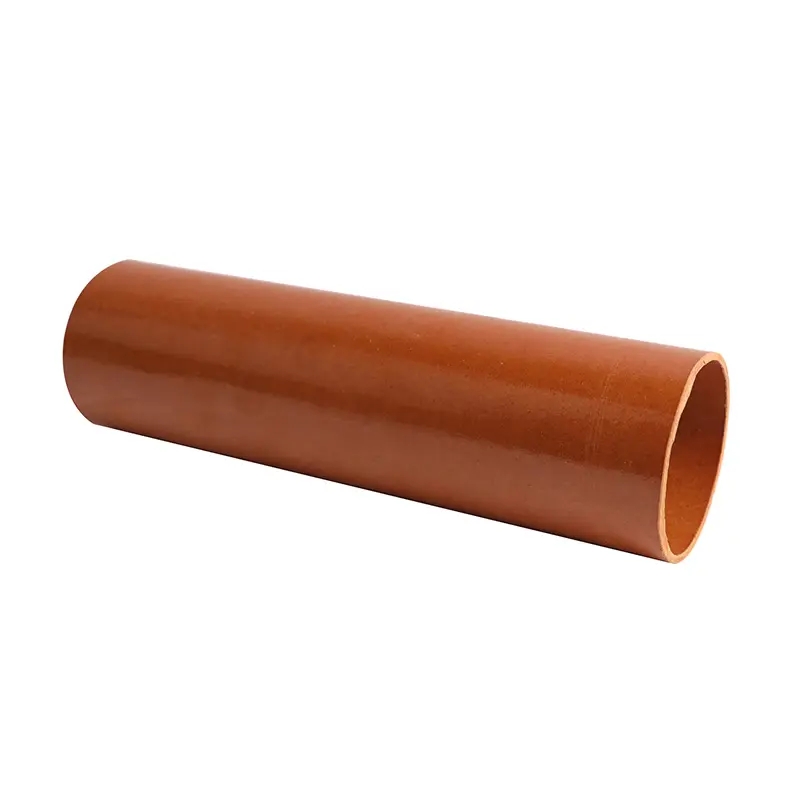
FR4 Board Selection Guide for Electronics Engineers
2026-06-01 17:26:38
Choosing the right FR4 board is what makes the difference between success and failure in the real world. This flame-resistant glass-epoxy laminate is an important part of modern electronics. It is used for everything from basic PCB bases to insulating high-voltage switchgear. Knowing what to ask providers, how it works, and comparing it to other options can save engineering teams months of troubleshooting and thousands of dollars in remake costs.
Understanding FR4 Boards: Materials, Properties, and Applications
What Makes FR4 Board the Industry Standard?
FR4 board is made of weaving fiberglass cloth that has been heated and pressure-treated to soak up epoxy glue. The "FR" label means that the material is flame retardant and meets UL94 V-0 standards. It goes out on its own within 10 seconds of being removed from a fire source. This mixture has a density of 1.85–2.10 g/cm³ and a flexural strength of more than 340 MPa. This makes it much harder than phenolic options while still being very good at keeping electricity away.
Core Electrical and Thermal Characteristics
When engineers look at shielding materials, dielectric strength is one of the most important factors they look at. Standard FR4 board keeps its breakdown voltage above 40–50 kV when layers are connected, and its dielectric constant is about 4.4–4.8 at 1MHz. The glass transition temperature (Tg) is usually between 130°C and 140°C, but some high-Tg types can hit 170°C for harsh heating conditions. At less than 0.1%, water absorption is still very low. This means that the laminate will work well even in wet situations where paper-based laminates would break down quickly.
Industry Applications Across Sectors
Epoxy boards are used by electronics companies for PCB bases, motor insulation frames, and circuit parts. Because they have a high Comparative Tracking Index, polished FR4 board parts are used as busbar supports and arc chutes in power distribution systems. This is because voltage stress stops electrical paths from forming. These laminates are used by people who make industrial tools as mechanical spacers and wear-resistant parts that need to be electrically isolated and strong. Automotive experts choose FR4 94v0 epoxy board for battery pack dividers and heat-resistant fittings because it keeps its shape even when it's heated and cooled many times.
Advantages Over Alternative Materials
FR4 board composite materials are better at resisting water and breaking than CEM-1 composite materials. Rogers' high-frequency laminates aren't as good value as normal FR4 board for uses below 2 GHz. The material can be machined cleanly with carbide or diamond-coated tools, but the glass in it needs to be properly extracted from the dust. The material is more resistant to acids and solvents than organic insulators, and it keeps its mechanical qualities at temperatures that would soften thermoplastics.
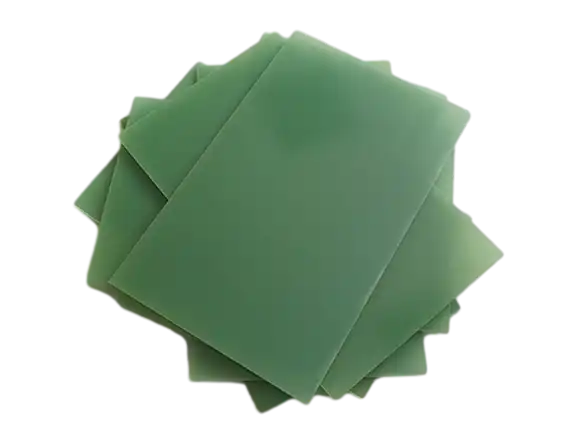
FR4 Board vs Other PCB Materials: How to Make the Right Choice
Performance Comparison Framework
The choice of material depends on how well its features match the needs of the purpose. CEM-1 is less expensive, but it soaks up more water, so it can't be used for outdoor gear. Polyimide-based boards work well in high temperatures, but they cost a lot. Aluminum core PCBs are good at getting rid of heat while keeping circuit complexity low. Flexible circuits let you make different shapes, but they lose stiffness and layer count in the process.
Rogers materials work really well in RF uses above 5 GHz, where FR4 board's loss factor is a problem. A company that makes telecom equipment recently moved their base station power sources from Rogers 4003C to high-Tg FR4 board. This cut the cost of materials by 60% without affecting reliability below 1 GHz. The choice took into account both the need for frequency response and the price limits that usually come up in B2B procurement situations.
Decision Criteria for Mass Production
Prototyping lets you try out different materials, but production needs stability. Standardized standards and wide availability of FR4 board lower supply chain risk. Tolerances for thickness meet IPC-4101 standards, which means they will work with automatic assembly equipment. The material has been used successfully in consumer electronics, industrial controls, and automotive uses in the past, which gives procurement managers trust when they look at its long-term dependability.
Total Cost Considerations
Lifecycle value is more important than price per square foot. Because FR4 board is easy to machine, it takes less time to make than pottery. Its temperature stability means that boards that bend during reflow soldering don't need to be fixed, which can be expensive. Recognition by UL and compliance with ROHS make the approval process easier, which speeds up time to market. Even though rivals' material prices are lower, these factors help to lower the total cost of ownership.
How FR4 Boards Are Manufactured: Insights into Quality and Consistency?
Production Process Overview
To start the manufacturing process, flame-resistant epoxy glue is mixed with knitted fiberglass cloth. Over 150°C and 1000 psi of heat and pressure are needed to fix multiple layers that are stacked on top of each other. For high breakdown voltage, this method makes the body dense and free of holes. Post-cure machining gets the final measurements, and surface treatments get the boards ready for copper coating on PCBs.
Quality Control and Certifications
Reliable providers have quality systems that are certified to ISO 9001 and hold standards like NEMA FR-4, MIL-I-24768/27, and EN 60893 (EP GC 202). These standards make sure that the dielectric strength, flexural qualities, and flame protection are the same from one production batch to the next. When boards go through PCB manufacturing steps, IPC-4101 standards set limits for thickness, warpage, and copper peel strength.
Visual analysis finds delamination and surface flaws, and electrical testing proves the dielectric is solid. Mechanical testing proves that the basic requirements for bending strength and impact resistance have been met. Batch traceability lets you move quickly if problems happen in the field, which protects both the producer and the end user.
Customization Options
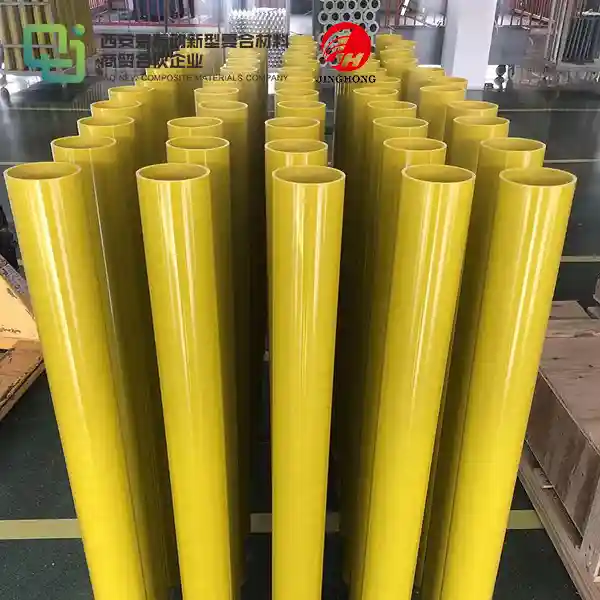
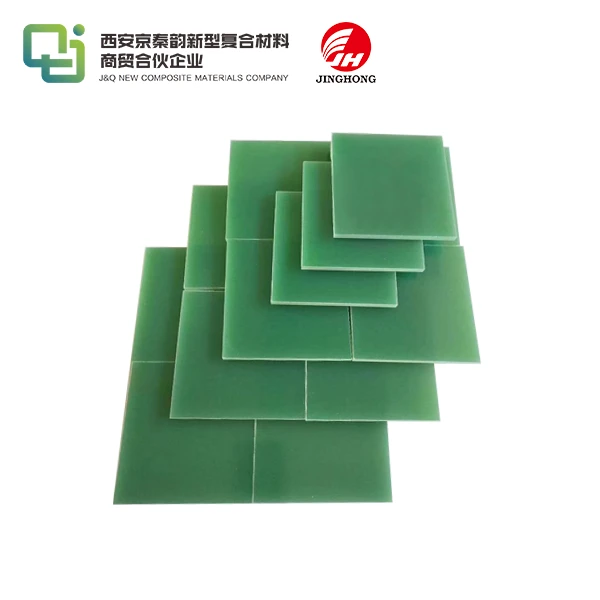
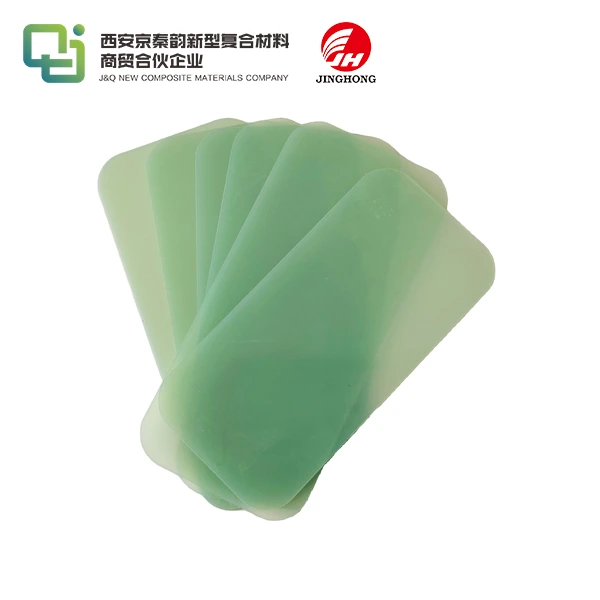
Thicknesses range from 0.5 mm to 100 mm to meet a wide range of needs. Standard sheets are 1020mm × 1220mm, but special sizes can be made to fit specific production needs. Different colors, like natural yellow-green, black, blue, or white, can be used for visual coding. They don't change the electrical properties unless they are loaded with carbon for ESD safety. When the job calls for it, engineers can ask for tighter thickness limits or higher Tg grades.
Procuring FR4 Boards: What Electronics Engineers and Purchasing Managers Need to Know
Supplier Evaluation Criteria
Checking the credentials of the seller shields you from getting low-quality products. Look for companies that have been in the business for a long time. Companies that have been making things for 20 years or more tend to keep the quality higher than newcomers. Certifications from UL, CSA, or similar groups show that you are committed to following the rules. Referrals from satisfied customers of well-known electronics makers give you trust in the speed and quality of delivery and expert help. What electronics engineers and purchasing managers need to know about getting FR4 boards.
Pricing Structures and Order Minimums
Prices based on volume show how economies of scale can help with transportation and production. Small orders for prototypes allow for testing of the design, while larger orders for production unlock better per-unit costs. Different items in stock can be shipped within days, while items made to order can take weeks to make and test for quality. Planning ahead is rewarded by bulk discount structures, which help buying teams get the best deals on inventory without affecting production plans.
Technical Specification Communication
Don't let mistakes cost you money; talk clearly. Give details about the thickness, including any needed certificates and surface finish needs. If CNC cutting is going to be done, let the seller know so they can help you choose the best materials for your tools. By asking for material datasheets and test results, you set clear standards. Samples let you test something before committing to large amounts of production, which lowers the risk in new apps.
Best Practices and Tips for Selecting Optimal FR4 Boards
Essential Evaluation Checklist
Everything below is affected by the makeup of the substrate. Make sure that the type of resin, the design of the glass weave, and the amount of filler meet your electrical and mechanical needs. When boards fit into plugs or housings, thickness tolerances are important. Make sure the specs match how you want to put the parts together. When it comes to power transfer or high-speed digital uses, dielectric properties determine how well high voltage works and how well signals stay intact. Tips and best practices for choosing the best FR4 boards.
Common Procurement Pitfalls
Production plans get thrown off when wait times are underestimated. It takes longer for custom thicknesses or approved grades than for normal stock things. Specifications that aren't aligned properly waste time and money because providers have to guess, which they often do wrong. Ignoring minimum order amounts can lead to price shocks or orders being turned down. Not thinking about shipping can change the cost and time of delivery, especially for large sales.
Balancing Performance and Cost
Premium materials are good for important tasks but lose money when they are used for everyday tasks. Instead of setting the defaults to the highest specifications, look at the real working conditions. A company that makes home appliances saved 30% on motor brackets by moving from high-Tg FR4 board to standard grade. This was done after thermal tests showed that the working temperatures never went above 110°C. Choosing materials in a smart way keeps dependability high while keeping costs low.
Conclusion
To choose the right FR4 boards, you have to weigh the technical qualities against the facts of buying. Whether or not components work as planned depends on the types of materials used, the quality of the making, and how reliable the source is. When electronics engineers and buying managers know these basics, they can safely make specifications that avoid both over-engineered solutions and materials that aren't good enough. The advice in this article sets up a strategy for systematic evaluation, which helps teams sort through their choices and find reliable suppliers.
FAQ
What thickness options work best for different applications?
Standard widths range from 0.5 mm for small PCB systems to 6 mm for parts that insulate buildings. For enough creepage distance, circuit boards usually use 0.8mm to 1.6mm, but high-voltage equipment needs 3mm to 6mm. When standard choices don't work with the design, custom sizes are made to meet specific mechanical or electrical needs.
How does FR4 perform at high frequencies compared to specialized materials?
For digital data and analog circuits with a modest speed, standard FR4 board works well below 2 GHz. When the frequency goes above 5 GHz, changes in the dissipation factor and dielectric constant favor Rogers or PTFE-based laminates. A lot of mixed-signal systems use FR4 board for the power and low-speed parts, and only use RF materials where the signal frequencies need them.
Which certifications verify supplier reliability?
UL recognition means that flame retardancy tests and regular plant checks are done. ROHS compliance makes sure that chemicals that aren't allowed stay below certain levels. ISO 9001 shows how to set up a quality control system. Adhering to the IPC-4101 guideline makes sure that PCB-grade materials meet performance standards set by the industry. For each order batch, ask for proof of compliance.
Partner with J&Q for Certified FR4 Board Solutions
J&Q has been making high-quality insulation sheets for more than 20 years and has also been trading internationally for more than ten years. We know that procurement managers and electronics experts need FR4 board suppliers they can count on to provide stable quality, keep their certifications up to date, and meet tight production schedules. Standard and high-Tg versions, special sizes, and CNC-machined parts that meet UL94 V-0, NEMA FR-4, and ROHS standards are all in our product line.
As a well-known FR4 board maker with in-house operations, we offer a complete service, from helping you figure out your needs to delivering your order. Our expert team can help you match the properties of a material to the needs of your application, whether you're making prototypes of new designs or increasing production numbers. Email us at info@jhd-material.com to talk about your project needs and get samples to make sure they are right. You can look at all of our insulation materials at jhd-material.com.
References
Institute for Printed Circuits (IPC). "IPC-4101: Specification for Base Materials for Rigid and Multilayer Printed Boards." IPC International, 2023.
National Electrical Manufacturers Association (NEMA). "NEMA LI 1: Industrial Laminating Thermosetting Products Standards." NEMA Standards Publication, 2022.
Coombs, Clyde F. "Printed Circuits Handbook, Seventh Edition." McGraw-Hill Education, 2016.
Underwriters Laboratories. "UL 94: Standard for Safety of Flammability of Plastic Materials for Parts in Devices and Appliances." UL Standards, 2021.
European Committee for Electrotechnical Standardization. "EN 60893: Insulating Materials - Industrial Rigid Laminated Sheets Based on Thermosetting Resins for Electrical Purposes." CENELEC, 2019.
Harper, Charles A. "Electronic Materials and Processes Handbook, Fourth Edition." McGraw-Hill Professional, 2015.