Top 5 Myths About G10 Fiberglass Sheet You Should Stop Believing
2026-05-07 14:37:30
When engineering managers and buying teams look for industrial insulation materials, they often find that different sources give them different information about how well G10 fibreglass sheet works. This confusion causes people to miss out on chances, give too many details, and sometimes have expensive material fails. Knowing what G10 epoxy laminate really does and doesn't give can make your parts much more reliable and help you get the most out of your material budget. Working with electricity, car, and tool makers for a long time, I've seen five common myths that keep people from making smart buying choices. Let me clear up these misunderstandings by giving you scientific proof and real-world examples.
Myth 1: G10 Fiberglass Sheet Is Not Suitable for High-Temperature Applications
A lot of procurement professionals don't think epoxy glass laminates are good for thermal settings because they think they'll break down after being exposed to heat for a long time. Companies can't get a flexible, low-cost material option because of this false belief.
Understanding G10 Thermal Performance Characteristics
When used continuously at temperatures up to 130°C (266°F), G10 fibreglass sheet keeps its mechanical structure very well. When you mix the epoxy resin binder with the weave glass cloth base, you get a hybrid structure that is much better at resisting heat deformation than regular plastics or phenolic materials. Quality G10 sheets can handle temperatures close to 155°C for short periods of time without immediately breaking down.
The material is made using a special method in which epoxy glue is mixed with fibreglass cloth to make prepreg layers. During lamination, these layers are subjected to controlled heat and pressure. This creates a thick, solid structure that keeps its shape even when thermal stress happens. Injection-molded plastics soften and bend at much lower temperatures, which is very different from how this product is made.
Real-World Applications in Thermal Environments
Motor cover uses are a great example of how thermally reliable G10 is. When electrical machines are running, they produce a lot of heat, which can make places very hot (above 100°C). Epoxy laminates are used by engineers for insulation shields, terminal boards, and mounting frames because the material keeps its insulating strength and supports the structure.
G10 parts are used by automakers in battery control systems that need to be very stable at high temperatures. The material acts as protection pads between the cell modules, keeping the electricity separate and able to handle the heat that is made during charging cycles. G10 doesn't break or lose its mechanical power like cheaper materials do when heated and cooled over and over again.
Comparing G10 Against Alternative Materials
Most of the time, G10 is more mechanically stable under heat load than FR4 sheets or phenolic cotton laminates. Phenolic materials tend to break easily at high temperatures, and normal FR4 may give up some of its mechanical qualities to be fire-resistant. When buying teams understand these trade-offs, they can choose the best material based on actual application needs instead of guesses.
But full openness is important for G10 fiberglass sheet. The epoxy glue in G10 can't handle temperatures that stay above 140°C for a long time, so uses that need better thermal stability should look at G11 or ceramic-filled laminates. Over-specification and early failure can be avoided by matching the material's powers to its real working circumstances.

Myth 2: G10 Fiberglass Sheet Is Not Waterproof and Cannot Be Used in Moisture-Prone Environments
Another common misunderstanding is that glass-reinforced epoxy materials soak up water and break down when they're wet. Because of this belief, a lot of industrial designers don't use G10 in outdoor or marine situations where it would work really well.
Water Resistance Properties of Epoxy Glass Laminates
The tightly cross-linked resin matrix that surrounds each glass fibre makes a shield against water that works much better than open materials. When submerged in water for 24 hours, normal G10 fibreglass sheet absorbs less than 0.5% of its weight in water, which meets NEMA guidelines for moisture protection. The structure stability and electrical insulation qualities are both protected by this impermeability.
Unlike phenolic-based composites, which can separate or grow when they come into contact with water, epoxy laminates that were made correctly stay the same size when they are wet. The glue system fully surrounds the glass support, stopping the capillary action that would bring water into the structure of the material.
Marine and Outdoor Industrial Applications
Epoxy fibreglass mixtures have been used by boat builders for many years because they don't absorb water. In naval electronics systems, G10 sheets are used as mounting panels, electrical insulators, and structural parts. The substance can be constantly exposed to salt spray, wetness, and short-term submersion without losing its electrical or mechanical qualities.
G10 is used as a spark blocker and an insulation support in outdoor power distribution equipment. These laminates are chosen by electrical utility companies because they keep working even in rain, snow, temperature changes, and UV light. When there is wetness in the air, the material doesn't break down like metals or organic barriers do.
Chemical Resistance Considerations
Epoxy glass laminates don't just stop water from sticking to them; they also stop many industrial chemicals, oils, and solvents. Because it is chemically stable, G10 can be used in manufacturing equipment, process machinery, and systems for handling chemicals where it may come into contact with chemicals by accident. Chemical compatibility data for specific locations should be asked for by procurement managers, but general moisture contact rarely affects the performance of materials.
Myth 3: G10 Fiberglass Sheet and FR4 Are the Same Material
The idea that G10 and FR4 are the same material may be the biggest misunderstanding that leads to design mistakes. Both are epoxy glass laminates and are made in a similar way, but their performance ratings are different in ways that make them less suitable for some uses.
Composition and Manufacturing Differences
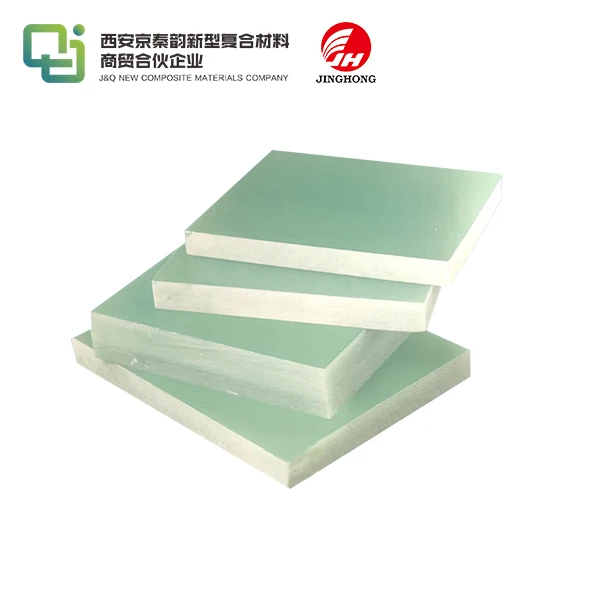
G10 fibreglass sheet is made of weaving glass cloth that has been mixed with epoxy glue and then pushed together with heat and pressure to make a thick material. Mechanical strength, physical stability, and electrical insulation without flame-retardant chemicals are still the key concerns.
FR4 has a glass cloth and resin base that are similar, but it also has flame retardants based on bromine that meet UL94 V-0 standards for flammability. Because this add-on makes FR4 more fire-resistant, it is now the usual choice for printed circuit boards and electronics systems that could have spark sources.
Performance Profile Comparisons
G10 usually has better material qualities than FR4 when it comes to tensile strength and impact protection. The pure epoxy matrix bonds more evenly with the glass support when there are no flame-retardant fillers present. This makes the hybrid structure a little stronger. G10 is very strong, which makes it useful for things like structure supports, wear-resistant parts, and made parts that need to work well mechanically.
On the other hand, FR4 is better at resisting flames and putting them out on its own, which are important for electrical and computer uses. Circuit board makers use FR4 because it lowers the chance of a fire spreading if a component fails. The material has been given the strict safety standards needed for both home and business gadgets.
Application-Based Selection Criteria
Engineering managers should choose between these materials based on how they will be used, not on how easy they are to find or how well they are known. G10's strength may help electrical protection in places with a lot of mechanical load. FR4's flame protection is needed for electronic systems that could have spark sources. For safety reasons, power transfer tools might need FR4, while the mechanical qualities of G10 work well for parts of industrial machinery.
When procurement teams work with experienced sellers, they get advice on how to choose materials based on running conditions, government rules, and cutting costs. Both of these things are useful when used in the right way.
Myth 4: G10 Fiberglass Sheet Has Limited Use Cases and Is Only Suitable for Electrical Insulation
Many buyers only think of epoxy glass laminates as materials for electrical shielding, forgetting the fact that these composites can be used for many other things as well. Because of this narrow view, designers are limited in their choices and can't use G10's unique set of features.
Mechanical and Structural Applications
G10 fibreglass sheet can hold a lot of tension—often more than 40,000 psi—so it can be used for load-bearing parts in industrial machines. The material is machined into gears, bearings, structural supports, and mechanical spaces that have to stay stiff under constant stress. Dimensional stability makes sure that tight tolerances stay the same over the span of the part.
Epoxy laminates are used in aerospace for internal panels, equipment fixing brackets, and structural supports that need to be light. The ratio of strength to weight is better than that of many metals, and it also acts as an electrical insulator. CNC machinability lets you make complicated shapes that would be hard or expensive to make out of metal.
Chemical and Wear Resistance Properties
G10 fiberglass sheet is resistant to oils, weak acids, and many solvents, which is good for industrial settings where chemicals are used. The makers of processing equipment choose the materials that are used for tank covers, valve parts, and fittings for handling chemicals. Because it doesn't corrode, it doesn't need to be maintained like metal parts do in harsh settings.
Epoxy glass laminates are useful for moving surfaces, machine parts, and parts that have been worn down. The material is stronger against rubbing than lighter plastics and doesn't weigh as much or cost as much as metals that don't break down. In these mechanical roles, the conditions of service are often tougher than in simple electrical insulation jobs.
Industry Diversification Examples
Automotive makers use G10 in battery pack systems not only to separate the cells electrically, but also to make the structure more stiff and keep the cells from getting too hot. The material makes the car safer in case of a crash while also keeping the electricity safe.
Epoxy laminates are used to make motor mounting brackets, heat separation barriers, and structural frames by companies that make home appliances. Electrical shielding, industrial strength, and low cost make G10 perfect for parts that are made in large quantities.
Wear pads, thermal barriers, and precision-machined parts are made from the material by people who build industrial machines. It can be used for a lot of different things, not just electrical ones. It can also be used in industrial and structural ways in many different businesses.
Myth 5: All G10 Fiberglass Sheets Are the Same Quality Regardless of Supplier
Teams that are trying to save money on purchases sometimes think that common materials like epoxy glass laminates are always of the same quality from one seller to the next. Misconceptions like this one can cause problems with performance, delays in production, and higher total costs of ownership.
Manufacturing Process Variables
Changes in quality start with the choice of raw materials. The best producers get glass cloth that has controlled weave patterns and fibre diameters that are all the same. The way epoxy glue is made has a direct effect on its material qualities. Different methods have different levels of heat protection, moisture absorption, and long-term stability.
There are big quality changes that happen during the coating process itself. For full glue impregnation and maximum cross-linking, make sure the temperature, pressure, and finish processes are all set correctly. Manufacturers who don't follow the rules may rush production, which can hide gaps, uneven thickness, and weaker mechanical qualities during the first review.
Certification and Quality Assurance Systems
Suppliers with a good reputation of G10 fiberglass sheet keep documents that show they follow manufacturing standards and quality control procedures. NEMA grade certificates show that the qualities of a material match the written requirements. With ISO quality control systems, work methods are always the same and can be tracked.
A very important standard that is often ignored during buying is thickness tolerance. When precise uses need tight control over dimensions, they need suppliers who can keep changes in thickness within small ranges. Cheaper sources might send you material that isn't always the same thickness, which can make it hard to machine and put together.
Value-Added Services and Technical Support
Besides providing high-quality materials, authorised wholesalers also offer important services that affect the overall success of the project. Support for technology helps engineering teams choose the right grades for each job. Custom cutting services cut down on waste and time spent on processing. Clear price structures let you accurately model costs without any nasty shocks.
Reliable wait times and steady supply keep production from being held up, which can cost a lot more than the saves in materials. Experienced sellers keep a wide range of goods in stock and have the transportation skills to make sure deliveries happen on time. When figuring out the total cost of ownership, these practical factors are often more important than small price differences.
Risk Mitigation Through Supplier Selection
Purchasing experts lower the risk in the supply chain by putting seller qualifications ahead of the lowest unit cost. Long-term relationships with qualified makers offer security, the chance to work together on technical issues, and chances to keep getting better. Putting money into provider quality pays off in the form of fewer mistakes, more regular performance, and better use of resources.
Professional sellers are different from common vendors because they offer quality assurance tests, material approvals, and performance warranties. When engineering managers know these differences, they can make choices about where to get materials that are best for both the performance of the materials and the overall cost of the project.
Conclusion
These five false beliefs about G10 fibreglass sheet still affect how many materials are chosen in many fields. Procurement teams can make better decisions when they know about the real temperature properties, moisture resistance, differences from FR4, wide range of uses, and quality changes. When properly defined and bought from qualified sources, the material is a great deal. When engineering managers get past these false beliefs, they can find a flexible, low-cost answer for structural, mechanical, and electrical insulation needs. For accurate material design and long-term component reliability, it's important to have both accurate scientific understanding and source experience.
FAQ
What range of temperatures can G10 fibreglass sheet handle?
G10 can work continuously at temperatures of up to 130°C (266°F), and it can be exposed to temperatures of up to 155°C for short periods of time. Upgraded materials like G11, which gives better temperature protection through changed plastic systems, should be considered for uses that need a higher thermal tolerance. The exact temperature performance relies on the load, the length of contact, and external factors that should be looked at for every use.
How well does G10 work when it's outside?
Epoxy glass laminates are very durable outside because they don't get damaged by water, UV light, or changes in temperature. G10 is good for aquatic uses, outdoor electrical equipment, and parts that will be exposed to the weather because it doesn't absorb much water and doesn't react with chemicals. When you prepare the surface properly and seal the edges, it works better for longer in tough environments.
Can normal tools be used to make G10?
The material is easy to work with on standard CNC machines that use carbide or diamond tools. Accurate measurements and smooth lines are made by drilling, grinding, turning, and waterjet cutting. It is very important to gather the dust properly because the cutting process makes small particles. Fabricators with a lot of experience can make parts with tight specs and complicated shapes that meet the needs of tough assembly jobs.
Partner with J&Q for Reliable G10 Fiberglass Sheet Supply
Each order for G10 fibreglass sheet comes from J&Q, which has been making things for more than 20 years and trading with other countries for more than 10 years. During the whole manufacturing process, our approved production center keeps a close eye on quality to make sure that the materials always have the right features to meet NEMA standards and customer needs. Our expert support services help engineering managers and buying teams choose the best materials for specific uses in the electrical, automobile, machinery, and power industries. We offer unique cutting services that cut down on waste and processing time. We also provide detailed testing paperwork to meet your quality assurance needs. Our combined transportation services make sure that your deliveries happen on time and on plan, so your production stays on track. Contact our team at info@jhd-material.com to talk about your project needs and find out how working with an experienced G10 fibreglass sheet maker can improve the stability of your parts and make your supply chain more efficient.
References
National Electrical Manufacturers Association. "NEMA Standards Publication LI 1-1998: Industrial Laminating Thermosetting Products." National Electrical Manufacturers Association, 1998.
Harper, Charles A. "Handbook of Plastics, Elastomers, and Composites." McGraw-Hill Professional, 2002.
Lubin, George. "Handbook of Composites." Van Nostrand Reinhold Company, 1982.
Schwartz, Mel M. "Composite Materials: Properties, Nondestructive Testing, and Repair." Prentice Hall, 1997.
Mallick, P.K. "Fiber-Reinforced Composites: Materials, Manufacturing, and Design." CRC Press, 2007.
Chawla, Krishan K. "Composite Materials: Science and Engineering." Springer-Verlag, 2012.