
Top 5 Tips for CNC Milling G10 Fiberglass Without Delamination
2026-07-08 17:28:59
To mill G10 fiberglass sheet without delamination, you need to be very careful about which tools you use, how you set the parameters, and how you hold the sheet in place. The unique structure of epoxy resin-bonded fiberglass makes it difficult to work with. Layer separation can happen if there is too much heat, bad feeds, or not enough fixturing. We've spent more than 20 years improving the way we machine electrical insulation materials. These five tips will help engineering managers and procurement teams avoid the most common mistakes they make when processing G10 for PCB supports, switchgear components, and precision insulation parts.
Understanding the Challenges of CNC Milling G10 Fiberglass Sheets
CNC cutting G10 fiberglass sheets is hard because the material is made up of layers that are joined together. When glass cloth layers and epoxy glue stick together, they make a material that is very good at insulating electricity and being strong, but it doesn't always respond well to machining forces.
Too much mechanical force, too much heat, and using the wrong tools or machining settings can all cause delamination. When cutting forces are higher than the interlaminar bond strength, layers split where they are weaker. Other things, like the direction of the fibers and the amount of resin present, have a big effect on the results of machining. For example, sheets with higher glass-to-resin ratios cut differently than sheets with higher resin contents.
Procurement managers and engineers who want to keep product quality high need to understand these root reasons. Delamination not only weakens the mechanical strength and electrical insulation, but it also causes more waste and higher costs, which hurts dependability and customer happiness. In power distribution uses, even small delaminations can make paths for electricity to flow, and when the structure isn't as strong, motor parts may break. Taking these problems into account helps you make better choices about tools and process controls that will lead to better production. This is especially true when you're making switchgear insulators, transformer barriers, or battery pack separators, where safety and performance are directly affected by how accurately the dimensions are met.
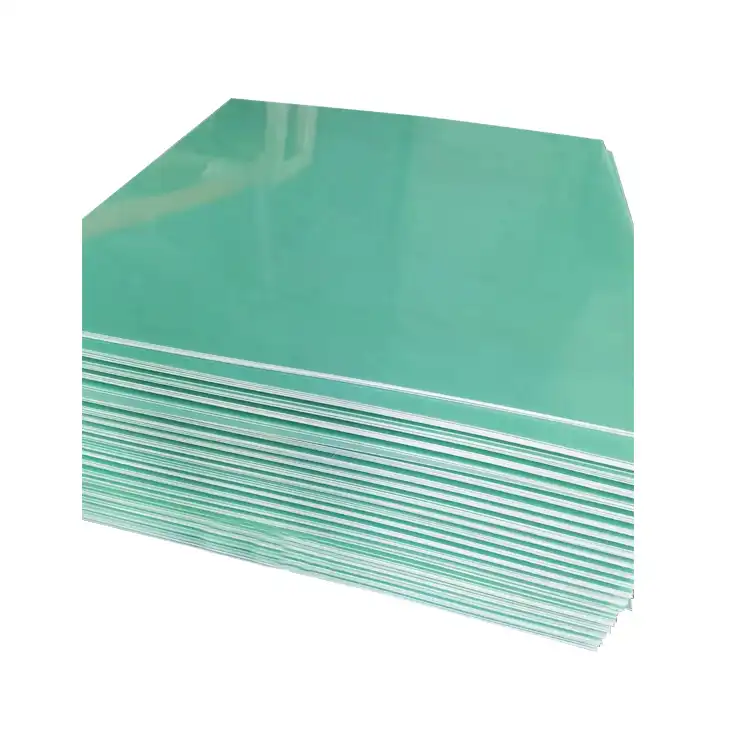
Tip 1 – Optimize Tool Selection and Geometry for G10 Fiberglass
When CNC sawing G10 fiberglass sheets, it is very important to choose the right cutting tools to avoid delamination. Because glass threads are rough, regular high-speed steel tools wear out quickly, leaving dull edges that tear the material instead of cutting it neatly.
Recommended Tool Materials and Coatings
Because they are hard and don't break down easily, carbide and diamond-coated end mills are usually the best choice. When working with fiberglass materials, solid carbide tools keep their sharp cutting edges for longer, and diamond finishes make them more resistant to wear during long production runs. To get the best cutting performance, chip evacuation, and fiber pull-out, the shape of the tool, such as the number of flutes and the angle of the helix, must be adjusted. For fitting tasks, two-flute designs usually work well, while four-flute designs are better for measuring tasks that need a smooth surface.
Cutting Edge Design Considerations
Sharp edges and special coats help cut down on friction and heat production, which makes tools last much longer and improves the finish on the surface. Tools made just for composites have positive rake angles that neatly shear threads instead of pulling them. Procurement teams can improve the accuracy and dependability of machining in industrial settings by carefully matching tools to G10's composite structure. This is especially useful when making terminal boards, insulation spacers, or precise fixings for automobile battery parts.
Tip 2 – Set Ideal CNC Milling Parameters to Prevent Delamination
Getting the most out of CNC settings like spindle speed, feed rate, depth of cut, and stepover is a key part of lowering the risk of delamination when cutting G10 fiberglass sheets. Heat load and mechanical stress at the cutting contact are both controlled by how these factors affect each other.
Spindle Speed and Feed Rate Balance
Keeping the spinning speed at the right level prevents heat buildup. For smaller diameter end mills, this level is usually between 18,000 and 24,000 RPM. Carefully controlling the feed rates lowers the mechanical stress on the laminate layers. Feed rates that are too slow cause rubbing and heat buildup, while feed rates that are too fast create too much cutting force. When cutting G10 solids, a chipload of 0.003 to 0.006 inches per tooth usually makes clean cuts.
Depth of Cut and Stepover Settings
To keep the surface's structure, shallow cuts should be made. Limiting axial contact to 0.125 inches or less per pass lowers stress between layers. Setting the stepover affects both the quality of the finish and the uniformity of the structure. Radial engagement between 40 and 60% of the tool diameter is the best compromise between efficiency and edge quality. These factors need to be fine-tuned based on the thickness of the G10 sheet and the needs of the application in order to make the product last longer and waste less material. This allows for cost-effective mass production of device insulation frames, motor brackets, and electrical component housings.
Tip 3 – Use Proper Workholding and Fixturing Techniques
For clean, accurate milling of G10 fiberglass sheets without risking movement or shaking, it's important to have good workholding and attachment design. The relatively thin shape of many insulation sheets makes them easy to bend when they are cut, which directly leads to delamination.
Clamping Methods for Sheet Stability
The sheets must be clamped in a way that takes into account their stiffness and thickness to keep them stable during the cutting process. Vacuum tables are great for holding lighter sheets because they spread the holding force evenly across the surface without causing stress points in one place. Putting toggle clamps near the cutting zones is a safe way to hold thicker materials in place, but be careful not to tighten them too much, as this can crush the top layers or cause pre-stress.
Vibration Control Strategies
Vibration calming methods improve cut quality even more by stopping fibers from coming apart and delaminating. Supporting sheets with temporary backing materials, like MDF or phenolic boards, lowers damage from breakout and makes the workpiece more rigid during the cutting process. High reliability and accuracy are important in business-to-business (B2B) manufacturing settings, and custom fixtures made for specific sheet sizes and production numbers make this possible. When these methods are combined, they help OEMs keep tolerances consistent and cut down on downtime caused by repair or scrap. This is especially helpful when making arc barriers for transformers or insulation pads for car uses, where accurate measurements affect how well the parts fit together and how much electrical space there is.
Tip 4 – Employ Cooling and Dust Extraction to Enhance Milling Quality
When CNC cutting G10 fiberglass sheets, it's important to keep heat and debris under control. Epoxy resin doesn't carry heat well, so heat from the cutting edge doesn't escape fast. This could damage the resin matrix and weaken the bonds between layers.
Cooling Method Selection
Different ways of cooling, like dry and wet drilling, have their own pros and cons. Dry machining keeps the electrical insulation qualities but needs careful heat control through optimized settings and cutting strategies that happen in short bursts. Wet machining can protect fibers and extend the life of tools, but it can also damage resin if it's not done right. For example, water-based coolants can make the resin less stable by absorbing water, and oil-based fluids can affect areas that will be used for later bonding operations.
Dust Management Systems
By getting rid of rough fiberglass dust in real time, efficient dust extractor systems make workers safer, machines last longer, and surfaces look better. Fiberglass particles can be harmful to your lungs and wear down machine parts faster if they build up. When placed near the cutting zone, high-velocity extraction picks up debris before it can settle down or get in the way of later passes. Optimizing cooling and extraction helps with both product quality and following health and safety rules in the workplace. This is why they are essential in modern B2B production setups that make coil insulation parts, switchgear panels, or precision gears for machinery.
Tip 5 – Post-Milling Inspection and Quality Assurance Practices
Strong checking procedures after milling are important for finding delamination and surface flaws early on, which keeps recalls and quality problems to a minimum. Quality control does two things: it makes sure that the next batch is the same as the last, and it gives feedback so that the process can keep getting better.
Inspection Techniques and Detection Methods
Different types of testing, like eye inspection, microscopy, and ultrasonic testing, give different levels of information and help with both online and offline quality control. A visual check can find obvious delamination, edge chipping, or surface burning. A microscopic study, on the other hand, can find fiber damage or resin cracking below the surface. Ultrasonic testing can find internal delamination that can't be seen by looking at the surface. This is especially useful in power distribution or aircraft, where secret flaws can put people in danger.
Feedback Loop Implementation
By setting up good feedback loops, the buying and engineering teams can use inspection data to change the machine parameters before they are needed. By keeping an eye on defect trends across different production batches, you can find links between process variables and quality results. This helps improve both internal operations and seller requirements. This approach based on data not only improves CNC settings and tooling choices, but it also makes it easier to evaluate suppliers and make sure that purchases are made correctly. This leads to long-term partnerships based on consistent quality and dependability when getting materials for motor parts, circuit boards, or battery pack barriers.
Conclusion
Using a CNC mill to cut G10 fiberglass sheets without delamination takes careful consideration of the tools, settings, workholding, environmental control, and quality checks. Every part works together. For example, the best tools won't work without the right parameters, the best parameters won't work without safe fixturing, and even the best machining won't be useful without inspection input. By consistently using these five tips, engineering managers and procurement experts can gain a competitive edge by lowering the amount of waste and making sure that all production runs are the same size. When you invest in the right methods, your tools will last longer, you'll have to do less work, and your parts will be more reliable in demanding mechanical and electrical insulation uses.
FAQ
What thickness of G10 sheet works best for CNC milling?
Standard CNC machines can successfully cut G10 fiberglass sheets that are between 0.031 and 0.5 inches thick. Thinner materials (less than 0.062 inches) do better with vacuum workholding and less cutting force. Thicker parts can handle rougher conditions, but heat buildup through the material depth needs to be watched out for.
How does G10 compare to FR4 regarding delamination during machining?
Both are made of glass-epoxy, but FR4 usually has flame retardants that are brominated, which changes how it can be machined a little. Because it is made of a purer resin, G10 fiberglass sheet is slightly easier to work with when it comes to machining, but the difference isn't very big when the right methods are used on both materials.
Can suppliers provide custom-cut G10 sheets to reduce machining time?
Many skilled G10 fiberglass sheet providers offer precise cutting services using waterjet or laser technology, producing nearly net-shape blanks that require less CNC work afterward. This method cuts down on the cost of internal cutting and wasteful material use while maintaining accurate measurements. It is especially useful for making a lot of standard insulating parts.
Partner with J&Q for Premium G10 Fiberglass Sheet Solutions
J&Q has been making electrical insulation materials for more than 20 years and has designed them to work well with CNC machines. As a G10 fiberglass sheet supplier, we can offer tight quality control, a range of thickness choices, and expert advice to help you get the most out of your machining processes. We have full approvals that meet UL and ROHS standards, which means that our products are safe for use in both electrical and vehicle settings. We can safely support your production plans because our combined transportation services offer short delivery times and stable stability from batch to batch. Our engineering team works with suppliers to the auto industry, machinery makers, and companies that make power tools to find solutions to delamination problems by choosing the right materials and making the process better. You can email us at info@jhd-material.com to talk about your specific needs, get technical datasheets, or set up sample packages that show how committed we are to machining-grade quality and procurement excellence.
References
Peters, S. T. (2018). Handbook of Composites Manufacturing and Processing. Society of Manufacturing Engineers Press.
Mazumdar, S. K. (2021). Composites Manufacturing: Materials, Product, and Process Engineering. CRC Press Technical Publications.
Kaw, A. K. (2019). Mechanics of Composite Materials: Analysis and Design Applications. Taylor & Francis Engineering Series.
Campbell, F. C. (2020). Manufacturing Technology for Aerospace Structural Materials. Elsevier Advanced Materials Division.
Mallick, P. K. (2022). Fiber-Reinforced Composites: Materials, Manufacturing, and Industrial Applications. Marcel Dekker Industrial Press.
Strong, A. B. (2017). Fundamentals of Composites Machining and CNC Processing. Society of Plastics Engineers Technical Volume.

_1755583592640.webp)
