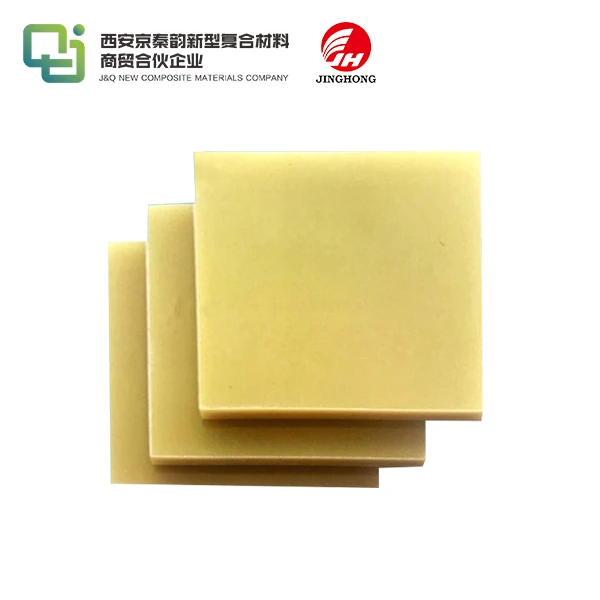
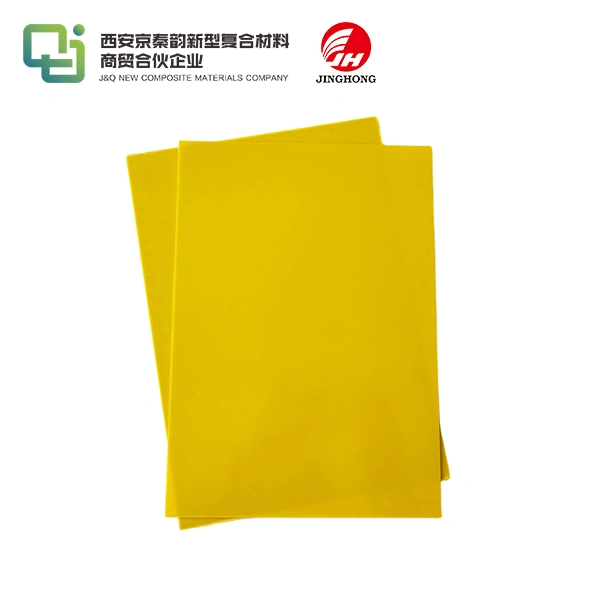
Using 3240 Epoxy Board for Electrical Structural Parts
2026-01-15 17:19:06
The success of your project depends on the insulating material you use when constructing sturdy electrical structural elements. The 3240 epoxy board is a unique solution that provides engineers and procurement specialists with the ideal ratio of mechanical strength, electrical insulation, and affordability. For switchgear, motor parts, and precision electrical assemblies, this glass fiber epoxy laminate has emerged as the preferred option in a variety of industries, including power generation and automotive.
Understanding 3240 Epoxy Board and Its Properties
The 3240 epoxy board is an advanced engineering material made by carefully impregnating woven fiberglass cloth with a specific epoxy resin. This method of production produces a composite material with strong mechanical qualities necessary for structural applications and outstanding electrical insulation qualities.
Material Composition and Manufacturing Process
Every high-quality epoxy glass laminate starts with precisely chosen E-glass fibers that are woven into a consistent, taut fabric. This fabric goes through several steps of epoxy resin impregnation during production, with exact amounts of thermosetting resin applied to each layer. The ideal cross-linking of the polymer matrix is ensured by the controlled temperature and pressure conditions during the curing process, which normally reaches 150–180°C.
A material with outstanding dimensional stability and uniform electrical characteristics across its thickness is the product of this painstaking production procedure. Tensile strength exceeding 300 MPa is provided by the glass fiber reinforcement, while excellent dielectric strength values of up to 16 kV/mm are contributed by the epoxy matrix.
Key Technical Specifications
Procurement teams can make better judgments if they are aware of the technical specifications for glass epoxy boards. The material is appropriate for high-frequency applications since it has a dielectric constant of roughly 4.5–5.5 at 1 MHz. Even in harsh settings, its volume resistivity of more than 10^12 ohm-cm guarantees dependable electrical isolation.
Another important benefit is temperature performance. These boards can withstand continuous operation at temperatures ranging from -40°C to +130°C without losing their structural integrity or electrical characteristics. The material's performance is usually unaffected by brief exposure to temperatures as high as 180°C, which makes it perfect for applications requiring thermal cycling or high operating temperatures.
Comparison with Alternative Materials
In certain applications, the 3240 version has clear advantages over FR4, G10, and phenolic alternatives. The 3240 grade offers great mechanical strength and chemical resistance, while FR4 offers outstanding flame retardancy. It provides superior electrical qualities at a more affordable cost when compared to G10 materials.
Compared to many phenolic substitutes, the material is more CNC machinable, enabling complicated geometries and exact tolerances without delamination or fiber pullout. This feature is especially useful for producers of complex electrical components that need precise dimensional control.
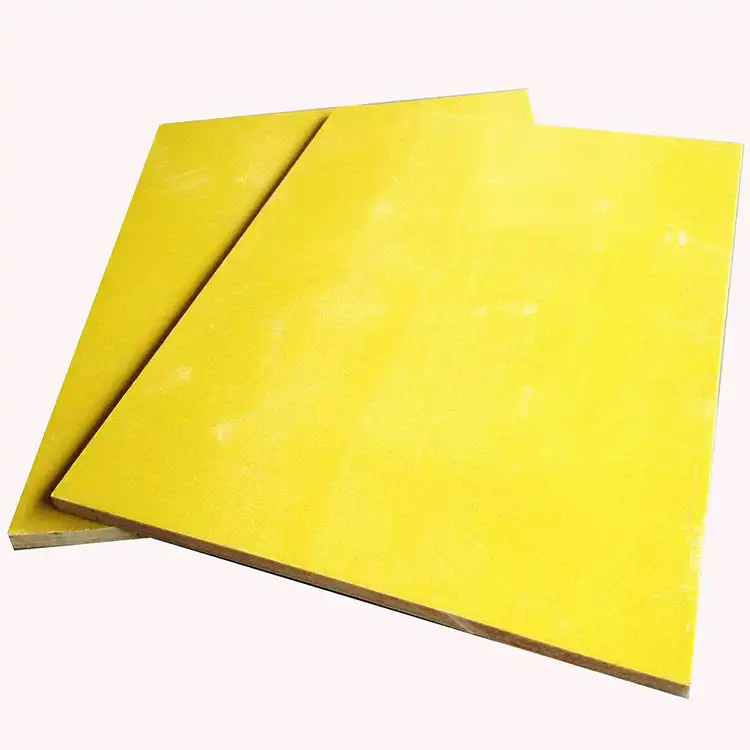
Advantages of Using 3240 Epoxy Board for Electrical Structural Parts
Materials for modern electrical systems must be able to endure ever-tougher working conditions while upholding safety and dependability requirements. Glass fiber epoxy laminates perform exceptionally well in these challenging applications thanks to a number of important performance attributes.
Enhanced Electrical Performance
In high-voltage applications, these boards' remarkable dielectric strength gives engineers peace of mind. According to ASTM D495 testing, arc resistance surpasses 120 seconds, meaning that switchgear and motor control applications have better safety margins. In instances where surface flashover or electrical tracking could jeopardize system integrity, this performance feature becomes especially useful.
After a 24-hour immersion test, moisture absorption is still consistently low, usually less than 0.15%. Even in humid industrial settings or maritime applications, where conventional materials can perform worse, this feature guarantees steady electrical qualities.
Mechanical Durability and Structural Integrity
High-quality epoxy boards' mechanical qualities enable them to withstand demanding structural applications. Under cyclic loading circumstances, flexural strength usually surpasses 400 MPa while exhibiting exceptional fatigue resistance. Because of these properties, the material is perfect for uses involving mechanical stress or vibration, including transformer support structures or motor mounting brackets.
Impact resistance is higher than that of ceramic or entirely organic substitutes, which lowers the possibility of catastrophic failure during installation or maintenance. In crucial applications, the material's capacity to absorb energy without breaking brittlely adds an extra degree of safety.
Chemical Resistance and Environmental Stability
Electrical components for 3240 epoxy board are frequently subjected to hostile air conditions, cleaning solvents, and aggressive chemicals in industrial settings. Excellent resistance to the majority of industrial chemicals, such as oils, mild acids, and alkaline solutions frequently found in manufacturing facilities, is demonstrated by high-quality glass epoxy laminates.
Long-term performance in applications exposed to artificial or natural lighting is ensured by UV stability. Properly made epoxy boards retain their mechanical and electrical properties over a lengthy service life, in contrast to certain organic materials that deteriorate when exposed to UV light.
How to Choose the Right 3240 Epoxy Board for Your Projects
Both application requirements and procurement restrictions must be carefully considered for material selection to be successful. In order to ensure dependable supply chain support, engineers must strike a compromise between technical demands and financial considerations.
Technical Specification Analysis
Clearly outlining the electrical requirements for your application is the first step in the decision process. Ascertain the frequency range, maximum operating voltage, and any unique dielectric needs. Take into account the mechanical loads that your components may encounter, including dynamic stresses, static loads, and environmental influences like temperature fluctuations.
The choice of thickness has a significant impact on mechanical and electrical performance. Custom thicknesses are available for specific purposes, with standard thicknesses ranging from 0.5mm to 50mm. Although thicker sections offer more mechanical strength, they may also need more expensive materials and longer machining periods.
Customization Options and Considerations
Many applications call for particular measurements or characteristics that aren't found in regular grades. Reputable vendors provide surface treatments, CNC machining, and precise cutting as examples of customized services. Take lead times and minimum order numbers into account while assessing customisation possibilities.
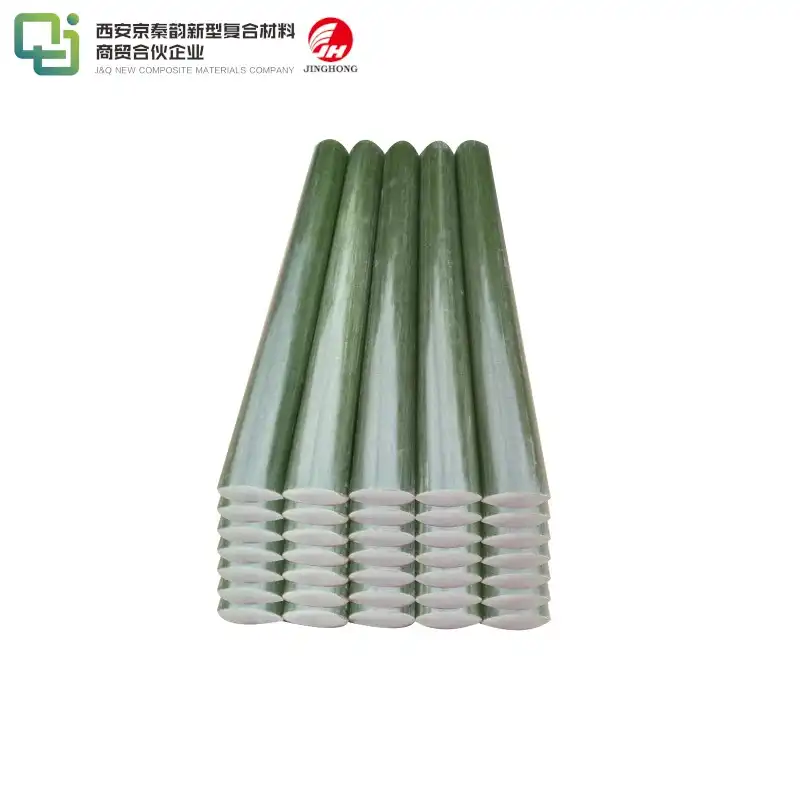
Options for color coding can enhance quality control and streamline assembly procedures. Although natural glass epoxy has a light green appearance, additives can create particular colors for identification without sacrificing mechanical or electrical qualities.
Supplier Qualification and Certification
Consistent material quality and adherence to pertinent requirements are guaranteed when working with recognized suppliers. Seek out vendors who sell materials complying with UL, ROHS, and other relevant standards and who maintain ISO 9001 quality management systems. For crucial applications that need traceability, request certificate of compliance paperwork.
In addition to providing materials, suppliers should be able to handle logistics, application engineering, and technical support. When providers comprehend your unique application requirements and are able to suggest optimizations or alternatives when necessary, the best collaborations form.
Procurement Guide for 3240 Epoxy Boards: Sourcing and Ordering Tips
Efficient procurement tactics minimize expenses and uphold quality standards while guaranteeing a consistent supply of materials. Procurement teams can support production timelines and budgetary goals by making well-informed judgments by having a thorough understanding of supplier capabilities and market conditions.
Identifying Qualified Suppliers
Glass epoxy laminates are sold worldwide by producers, distributors, and specialist converters, each of whom has unique benefits. Although direct partnerships with manufacturers may necessitate greater minimum orders, they frequently offer lower price for large volumes. Distributors retain inventory of regular sizes and grades while providing flexibility and quicker delivery for smaller volumes.
Consider production capabilities, quality systems, and technical support resources when evaluating possible suppliers. To ensure that the material qualities match your requirements, request samples for assessment and testing. Take into account the geographic location and logistical capabilities of suppliers, especially for projects or applications that need just-in-time delivery.
Order Planning and Inventory Management
Stockout risks are balanced with carrying costs in an efficient inventory management system. When choosing the best order quantities, take your consumption habits, supplier lead times, and storage capacity into account. In order to safeguard prices while preserving inventory flexibility, several suppliers provide blanket purchase orders with timed releases.
Lead times can greatly depending on supplier capacity, quantity, and material specifications. While special specifications could take four to six weeks or more, standard grades usually arrive in one to two weeks. When planning your project, take these deadlines into account and think about keeping safety stock on hand for important applications.
Quality Assurance and Incoming Inspection
For incoming materials for 3240 epoxy board, clearly define the quality standards and inspection protocols. For every shipment, ask for certifications of analysis that list important mechanical and electrical characteristics. Think about putting in place incoming inspection protocols for important characteristics including visual appeal, thickness, and dielectric strength.
Build connections with vendors who consistently deliver high-quality products and adeptly address any quality concerns. The top vendors provide technical assistance to address application issues and provide enhancements to the workflow.
J&Q: Your Trusted Partner for Premium Epoxy Board Solutions
With more than 20 years of expertise manufacturing and marketing insulating materials, J&Q has made a name for itself as a trustworthy supplier of premium glass epoxy laminates. With over 10 years of expertise in international trade and a thorough grasp of electrical insulation needs, we are able to provide solutions that satisfy the demanding requirements of manufacturers throughout the world.
Manufacturing Excellence and Quality Assurance
Modern manufacturing techniques are used in our production facilities to guarantee dependable performance and uniform material qualities throughout all product batches. Every production run is subjected to stringent quality testing, which includes dimensional inspection, mechanical testing, and electrical property verification. We have established enduring relationships with top manufacturers in a variety of industries because to our attention to detail.
From the selection of raw materials to the final packaging and delivery, every facet of production is covered by our quality control system. We uphold credentials that attest to our dedication to excellence, environmental stewardship, and client pleasure.
Comprehensive Product Portfolio
Different grades of epoxy boards made to satisfy particular application requirements are part of our wide range of products. We offer customizing services including CNC machining, precision cutting, and specialty surface treatments in addition to our basic solutions. Because of this flexibility, customers can obtain materials that are ready for use right away, cutting down on processing time and increasing production efficiency.
Customers can streamline their material selection and application procedures with the use of technical support services. Our technical staff collaborates closely with clients to comprehend their unique needs and provide the best materials and configurations for their uses.
Integrated Logistics and Customer Service
We are able to offer a full one-stop service that streamlines procurement and lowers supply chain complexity since we own specialized logistics skills. Through efficient shipping and routing, this integrated solution maintains cost effectiveness while guaranteeing dependable delivery schedules.
Throughout the course of a project, customer service encompasses more than just fulfilling orders; it also includes technical advice, application support, and prompt communication. We are aware that sustained cooperation and reciprocal assistance are necessary for partnerships to succeed.
Conclusion
A crucial choice that affects both the short-term project success and the long-term system reliability for 3240 epoxy board is the choice of suitable insulating materials. Glass fiber epoxy boards are perfect for demanding electrical structural applications because of their superior mechanical strength, electrical insulation, and processing qualities. Engineering teams may make well-informed decisions that maximize performance and efficiently control costs by having a thorough understanding of material qualities, supplier capabilities, and procurement best practices. Collaborations with seasoned suppliers who comprehend application needs and are able to deliver consistent quality, technical assistance, and dependable logistics are essential for material procurement success. Better product performance, fewer warranty issues, and higher customer satisfaction are all benefits of investing in high-quality materials and supplier relationships.
FAQs
What distinguishes 3240 epoxy board from other epoxy grades like 3313 or G10?
The primary differences lie in the resin system and glass fabric construction. While G10 uses a different epoxy formulation optimized for higher temperature performance, the 3240 grade provides an excellent balance of electrical and mechanical properties at competitive pricing. Compared to 3313 grades, the 3240 variant typically offers better electrical properties and improved chemical resistance, making it more suitable for electrical structural applications.
Can these boards withstand high-temperature electrical environments?
Yes, quality glass epoxy boards perform reliably in elevated temperature applications. Continuous operation temperatures up to 130°C are typical, with short-term exposure capabilities extending to 180°C. The material maintains its electrical insulation properties and mechanical strength throughout this temperature range, making it suitable for motor components, transformer applications, and other thermally demanding environments.
What are typical lead times and shipping considerations for bulk orders?
Standard grades typically ship within 1-2 weeks for quantities up to several thousand pieces. Custom specifications or large volume orders may require 4-6 weeks depending on manufacturing capacity and material availability. Shipping costs vary based on weight, dimensions, and destination, with consolidated shipments offering the best value for large orders. Many suppliers offer freight optimization services to minimize transportation costs.
How do minimum order quantities affect procurement planning?
Minimum order quantities vary significantly between suppliers and product configurations. Standard sheet sizes often have lower MOQs, while custom cutting or machining services may require higher volumes to justify setup costs. Working with experienced distributors can help smaller volume users access materials without meeting large manufacturer MOQs. Planning procurement around production schedules and inventory turnover helps optimize order sizes.
Contact J&Q for Your 3240 Epoxy Board Requirements
Ready to source premium glass fiber epoxy laminates that meet your electrical structural component requirements? J&Q combines two decades of manufacturing expertise with comprehensive logistics capabilities to deliver reliable solutions for your most demanding applications. Our experienced team provides technical consultation, competitive pricing, and dependable delivery schedules that support your production goals. Contact our 3240 epoxy board supplier team at info@jhd-material.com to request detailed specifications, samples, or quotations tailored to your specific requirements. Experience the advantage of working with a trusted partner committed to your success.
References
Institute of Electrical and Electronics Engineers. "Standard Test Methods for Electrical Insulating Materials." IEEE Standards Association, 2019.
American Society for Testing and Materials. "Standard Specification for Glass-Fabric-Base Epoxy Resin Laminates." ASTM International, 2020.
National Electrical Manufacturers Association. "Industrial Laminated Thermosetting Products." NEMA Standards Publication LI 1-2018.
International Electrotechnical Commission. "Specifications for Individual Materials Used for Electrical Insulation." IEC 60893 Series Standards, 2019.
Underwriters Laboratories. "Standard for Polymeric Materials - Electrical Equipment Evaluations." UL 746A-2013 with Revisions through 2019.
Society of Plastics Engineers. "Thermoset Plastics: Processing and Performance in Industrial Applications." SPE Technical Publications, 2018.

 拷贝.webp)