What are the Commonly Used Boards for PCB? Why Choose FR4?
2026-02-25 17:08:56
Choosing the right PCB base has a big effect on how well and reliably electronic devices work in industrial settings. FR4 fiberglass epoxy boards, CEM1 composite substrates, FR2 phenolic boards, aluminum-backed materials, Rogers high-frequency laminates, and polyimide bendable substrates are some of the PCB boards that are used most often. When it comes to these choices, the FR4 board is the best because it has the best combination of electrical protection, mechanical strength, heat stability, and low cost. This glass fiber reinforced epoxy laminate works well in a variety of manufacturing settings, which is why electronics companies, companies that build industrial machinery, and companies that sell auto parts all over the world choose it.
Introduction to Common PCB Substrate Materials
Understanding the materials used for PCB substrates is an important part of making technology today. During the decision process, different properties of the material are weighed against the needs of the product, the working conditions, and the available budget. Engineering managers and buying teams regularly check these materials to make sure that products work well and don't cost too much.
Several tried-and-true base materials are used in the electronics business. Each has its own benefits. Electrical protection and mechanical safety are both very good with fiberglass epoxy boards. Composite epoxy materials offer consumer technology options that don't break the bank. When used in normal ways, phenolic surfaces work reliably. For heat control tasks, metal-core boards work great. Advanced transmission devices work with high-frequency laminates. Flexible polyimide materials make it possible to make small devices.
The choice of materials has a direct impact on the production process, the dependability of the product, and the long-term costs of running the business. The dielectric constant and loss tangent standards are affected by the electrical performance needs. Flexural strength and physical stability needs are set by mechanical demands. The glass transition point and the rate of thermal expansion are affected by thermal factors. Chemical protection and the ability to absorb water are affected by the environment.
Professionals in procurement have to find a balance between technology requirements and supply chain issues. Availability of materials, lead times, and supplier certifications all play a role in buying choices. Following quality standards makes sure that regulations are followed. How prices are set for volume affects the economy of a project. Customization options help meet the specific needs of each design.
In-Depth Understanding of FR4 Board
Composition and Manufacturing Excellence
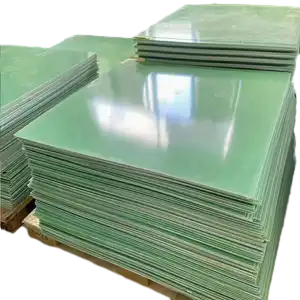
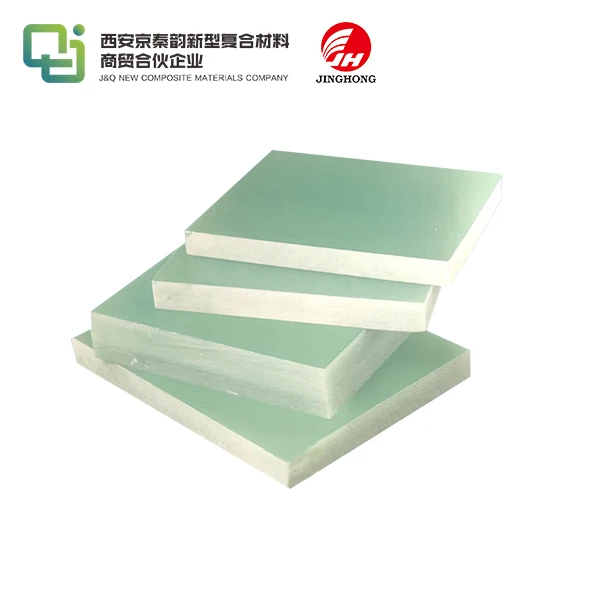
FR4 is a flame-resistant grade fiberglass epoxy laminate made of thermosetting epoxy resin and woven glass fabric support. In addition to having great mechanical properties, this hybrid structure also has great electrical qualities. The epoxy matrix provides great bonding and electrical protection, while the glass fiber provides dimensional stability and mechanical strength.
In the manufacturing process, layers of glass cloth are precisely impregnated with resin, and then controlled heat and pressure are applied during laminating. Temperature curves are usually between 160°C and 180°C, which makes cross-linked polymer networks that make the material more stable at high temperatures. Because there are multiple prepreg layers, the width can be changed from 0.1mm to 6.0mm to meet the needs of a wide range of applications.
Quality control methods for FR4 board make sure that the qualities of materials are the same from one production batch to the next. At a frequency of 1 MHz, the dielectric constant is usually between 4.2 and 4.8. The dielectric strength is higher than 20 kV/mm, which means that the electrical separation is stable. Flexural strength is higher than 400 MPa, which means it can be used in mechanical stress uses. The glass transition temperature goes up to 130°C, which lets it work at high temperatures.
Technical Properties and Performance Characteristics
Because it can handle heat well, FR4 is good for use in power circuits. The material stays structurally sound at temperatures ranging from -40°C to +130°C. A low rate of thermal expansion keeps the size stable during thermal cycles. Flame protection features meet UL94-V0 standards, making sure that safety rules are followed in important situations.
High-frequency uses up to several GHz can work with the electrical performance features. Signal loss is kept to a minimum by having low dielectric loss tangent values. Excellent volume resistance is more than 10^14 ohm-cm, which means that the insulator will work well. Surface resistivity stays stable even when humidity levels change. These qualities make it possible for electronics to work consistently in harsh settings.
Strong mechanical design helps automatic production processes work. CNC machinability makes it possible to make exact parts. The way the drill works allows for via building and component placement. Copper foil bonding is effective thanks to its adhesion qualities. Standard PCB preparation chemicals and cleaning products can't hurt it chemically.
Industry Applications and Standards Compliance
FR4 substrates are used by companies that make electronics for consumer electronics, industrial tools, and car systems. The material can be used to make layered PCBs, which lets you make complicated circuit designs. Long-term link stability is ensured by the reliability of the component mounting. Surface mount technology is easier to use when the solder masks are compatible.
The mechanical qualities of FR4 are used in industrial tools for building structural parts. Motor control systems depend on being able to insulate against electricity. Thermal stability makes it possible to work in harsh conditions. Consistency in dimensional tolerances makes sure that parts fit and work properly.
Following the IPC-4101 specifications is part of following standards. This makes sure that the quality and efficiency of materials are always the same. For North American countries, UL approval means that the product is safe. Following ROHS rules takes away worries about dangerous chemicals. ISO 9001 quality systems make sure that the production process can be tracked and controlled.
Comparing FR4 with Other Popular PCB Materials
Performance Analysis Across Material Categories
In order to compare materials like FR4 board, you need to carefully look at their electrical, mechanical, and thermal qualities, as well as their costs. Depending on the needs of the product and the conditions of operation, each type of material has its own benefits. Knowing about these trade-offs helps you make smart choices about what materials to use.
Comparing the electrical performance of different materials shows that they have different properties. FR4 has balanced insulating qualities that make it useful in many situations. Rogers materials work very well at high frequencies, but they cost a lot. The cost of CEM1 plates is lower, but their electrical performance isn't great. For aluminum surfaces, managing heat is more important than electrical properties.
Here are the main things that make different popular PCB materials work differently:
- FR4 fiberglass epoxy boards have great mechanical strength, can work at temperatures up to 130°C, have dielectric constants around 4.5, and are cheap enough for mass production.
- Rogers high-frequency laminates have better electrical performance with fixed dielectric constants and low loss tangents below 0.002. However, they need to be processed in a certain way and cost more in materials.
- CEM1 composite substrates have reasonable costs and good enough electrical qualities for market uses. However, they are not as strong as glass fiber reinforcement.
- Aluminum metal-core boards are great for dissipating heat because they have a thermal resistance of more than 1.0 W/mK, which lets LEDs and power electronics cool down but takes away their ability to isolate electrical signals.
The suitability of a product and the choice to buy are directly affected by these material qualities. Engineering teams have to find a mix between performance needs, price limits, and the ability to make things.
Cost-Benefit Analysis and Sourcing Considerations
Economic factors have a big impact on the choice of materials used in many business settings. FR4 materials offer the best balance of price and performance for most electronics manufacturing needs. When you have proven supplier lines and standard specifications, you can get volume price benefits. When manufacturing technology works with each other, it saves money on tools and process development.
Alternative materials are more expensive because they have to be made in a certain way or are hard to get. Rogers materials usually cost three to five times as much as regular FR4 materials. Polyimide surfaces need special tools to be handled and processed. When attaching metal-core boards, there are more thermal contact issues to think about.
Material availability and wait times are affected by how reliable the supply line is. FR4 has a lot of suppliers, which makes sure that it is always available. Specialized products may have longer wait times and fewer source choices. Shipping prices and methods for managing inventory are affected by where things are located.
Quality certifications for FR4 board are different for each material provider and affect the choices about what to buy. Established FR4 sellers usually keep full sets of certifications. Suppliers of specialized materials may focus on certain standards set by the business. The standards for reviewing suppliers depend on how important the application is and what the government wants.
Procurement Guide for FR4 Boards
Supplier Evaluation and Selection Criteria
To successfully purchase FR4, suppliers must be evaluated across a wide range of performance factors. The ability to manufacture something determines the regularity of quality and the dependability of delivery. The right material specifications and application help are made possible by technical knowledge. Certification compliance checks that quality methods and following the rules are working.
When evaluating a supplier, you should look at their production ability, quality control methods, and technical help skills. Facilities that make things must show that they have the right tools and controls for the process. Quality approvals, such as ISO 9001, UL recognition, and standards specific to the business, guarantee consistent performance. The technical support teams should help with choosing the right materials and with application building.
Logistics prices, delivery times, and the stability of the supply chain are all affected by where things are located. Suppliers in the same country may be able to offer faster lead times and lower shipping costs. International sellers may be able to offer reasonable prices because they can buy in large quantities. Regional supply chain plans find a mix between lowering costs and reducing risks.
Long-term partnership possibility affects the choice of a seller. Collaborative relationships make it possible to create custom solutions and give priority help when there aren't enough resources. Suppliers who are financially stable make sure that their products and services are always available. Aligning the technology plan helps meet the needs for future material development and growth.
Pricing Structures and Negotiation Strategies
Understanding how FR4 prices work helps with bargaining for purchases and making budgets. Base prices are affected by the cost of raw materials, the difficulty of production, and the demand in the market. When you make a volume promise, you can usually get deeper discounts. Standardizing specifications cuts down on modification fees and handling costs.
When negotiating prices, the total cost of ownership, which includes original material costs, should be taken into account. Consistency in quality cuts down on testing costs and rejection rates. Technical help services cut down on the time and risk that go into making an application. Reliable delivery keeps output from stopping and speeds up charges.
The terms of a contract have a big effect on how the purchase works and who takes on the risk. Pricing may be better if you commit to a certain volume, but you need to be able to accurately predict demand. Price stable agreements protect against changes in the market. Quality agreements set standards for success and ways to fix problems.
Terms of payment for FR4 board affect both cash flow and the way relationships work. Longer payment terms may cause material costs to go up. Early payment discounts can lower the total cost of buying something. Consignment agreements keep materials available while reducing the amount of money spent on supplies.
Customization and Technical Specification Management
Because FR4 can be customized, it can provide the best options for each application. Different PCB stackup designs can work with different thicknesses. Copper foil comes in different types that can support different circuit patterns and current handling needs. Surface processes make things easier to connect and more resistant to the environment.
The buying, engineering, and supply teams all need to work together to create technical specifications. The properties of a material must match the needs of the product and the manufacturing skills. Specifications for tolerances balance the need for efficiency with the cost consequences. Testing methods make sure that materials are compliant and that they always work the same way.
Document management makes sure that specifications are followed correctly and that everything can be tracked along the supply chain. Material approval papers guarantee quality and make sure that regulations are followed. Test records confirm the qualities and performance traits of a material. Change control methods make sure that specifications stay the same throughout the span of a product.
Continuous material performance and source compliance are tracked by quality assurance systems. Incoming checking procedures make sure that the material meets the requirements. Statistical process control finds patterns and possible problems with quality. Supplier scorecards keep track of performance data and push for ongoing efforts to get better.
Practical Design and Manufacturing Tips for FR4 Boards
Optimal PCB Layout Techniques for FR4 Applications
A good PCB design makes the most of the features of the FR4 material while reducing problems with production and performance limits. When designing a stackup, you have to balance the needs for electrical speed with the needs for mechanical support. Layer count optimization lowers the cost of materials while keeping the purity of the signal and the ability to control heat.
Trace route plans should take into account the insulating and temperature qualities of FR4. To do controlled impedance design, you need to be very exact about the trace shape and stackup. For high-speed signal routing to work well, the ground plane needs to be set up correctly and optimized. Copper pour optimization and via thermal relief design are two ways to deal with heat.
Strategies for placing components improve the yield of production and the dependability of assembly. Having enough space between components stops thermal interference and makes automatic building processes easier. Pick-and-place computing is easier when orientation consistency is used, and assembly mistakes are less likely to happen. Accessibility standards make sure that review and repair can be done correctly.
Following the design rules for FR4 board makes sure that the product can be made and that the standard is always the same. Etching flaws can be avoided by setting minimum trace width and spacing requirements. Via size and placement rules take into account the power to drill and the need for dependability. Solder mask design rules make sure that the mask covers properly and sticks well.
Fabrication Considerations and Quality Control
FR4 board quality and output effectiveness are both improved by optimizing the manufacturing process. The drilling factors need to take into account the amount of glass fiber and the properties of the glue. Feed rates and spinning speeds are used to balance the quality of the holes with the life of the tool. Getting rid of debris keeps things from getting dirty and makes sure that the metal sticks well.
Etching process control keeps the accuracy of the trace and the quality of the surface. Chemical amounts change how fast and how the sides of the walls are etched. Controlling the temperature makes sure that the operation is the same in all panel areas. Rinse methods keep waste from building up and surfaces from getting dirty.
The conditions for lamination have a big effect on the quality and dependability of the board. The right temperature patterns must be used to fix the resin properly without breaking down the material. Pressing down on the layers makes sure there are no gaps and that they stick together properly. In order to reduce warpage and physical distortion, cool-down methods are used.
Quality control methods make sure that the manufacturing process works well and that the result meets standards. Electrical testing checks that the connection stays connected and that the separation is correct. Dimensional checking makes sure that the tolerances are met and that the stackup is correct. Microsection analysis checks the quality of the internal layer identification and the layers themselves.
Performance Optimization Strategies
Optimizing thermal control uses the properties of FR4 to make it more reliable and work better. The thermal via design makes it easier for heat to move from parts to the ground planes. Copper weight choice strikes a balance between the ability to carry current and the limitations of production. Component derating makes sure that the machine works reliably within the temperature limits of the material.
Signal integrity tuning takes into account the dielectric qualities of FR4 and how it behaves at different frequencies. Differential pair signaling keeps resistance under control and lowers electromagnetic interference. Strategies for the ground plane keep transmission interference and crosstalk to a minimum. Via tuning lowers signal gaps and boosts performance at high frequencies.
Mechanical stress reduction keeps the board from breaking when it's being used. The placement of mounting holes evenly spreads mechanical loads. Flex relief areas account for changes in how much heat expands or contracts. Strategies for placing components keep stress levels low around heavy parts.
Strategies for protecting the environment make things more reliable over time, even in tough situations. Choosing a conformal layer protects against water and chemicals. Covering the wire with a solder mask keeps it from oxidizing and getting dirty. Methods for sealing the edges of laminate keep wetness from getting into the uncovered laminate.
Conclusion
After many years of use, FR4 boards are still the standard PCB base material because they offer great electrical performance, mechanical dependability, and low cost. The glass fiber reinforced epoxy design gives uniform dielectric qualities, great thermal stability, and higher mechanical strength in a wide range of industrial settings. FR4 is the best choice for electronics makers, industrial machinery builders, and car component suppliers because it is compatible with many manufacturing processes, is widely available from many sources, and comes with full certification support.
The material's track record in household technology, industrial controls, and automotive systems shows how reliable and flexible it is. The technical specs always meet the strict needs of the product while keeping costs low. Supplier networks offer stable access and technical support, making sure that global production operations can easily buy things and get the same high-quality products.
FAQ
Why does FR4 dominate the PCB substrate market?
The reason FR4 is the market leader is that it has the best mix of efficiency features and cost benefits. The material is very good at keeping electricity from flowing through it, and its dielectric constants make it perfect for most uses. The mechanical strength is higher than what is needed for normal industrial processes and operating stresses. Thermal stability allows for operation at high temperatures while keeping the purity of the dimensions. Cost-effectiveness lets a lot of things be made without lowering standards for quality or dependability.
How does FR4 compare with Rogers materials for high-frequency applications?
Rogers materials work better at high frequencies because they have more stable electrical properties across frequency bands and lower dielectric loss tangents. FR4, on the other hand, can still be used for uses up to several GHz and has big cost benefits. The frequency needs, performance limits, and price constraints all affect the choice of material. In many situations, FR4 works well enough, so Rogers materials are only used in high-stress RF and microwave situations where better electrical performance is worth the extra cost.
What certifications should buyers seek when selecting FR4 suppliers?
FR4 providers you can trust should keep their UL certification for safety and flame retardant qualities. Getting ISO 9001 approval proves that your quality management system and process control skills are up to par. Following the IPC-4101 guideline makes sure that the properties and performance requirements of materials are always the same. ROHS approval proves that dangerous substances are not released into the environment. Certifications specific to an industry, like the automotive IATF 16949 standard, may be needed based on the needs of the product and the market.
Partner with J&Q for Premium FR4 Board Solutions
J&Q offers great FR4 board options based on its more than 20 years of experience making insulating sheets and its wide range of foreign trade skills. Our large network of suppliers and long-term partnerships with top makers make sure that your projects always have access to materials at reasonable prices. Advanced quality control systems make sure that every package meets strict standards. In addition, our expert support team is here to help with program questions and customizations.
Our combined logistics skills make the whole buying process easier, from placing an order to delivering it. This simplifies the supply chain and lowers the overall cost of the project. Whether you need standard specs or custom FR4 board setups, our team can help. We back up our solutions with thorough certifications and quality assurance programs. Get in touch with info@jhd-material.com right away to talk about your FR4 board needs with skilled buyers who understand your technical requirements and spending limits.
References
Harper, Charles A. "Electronic Packaging and Interconnection Handbook." McGraw-Hill Professional, 2019.
Blackwell, Glenn R. "The Electronic Packaging Handbook." CRC Press, 2018.
Coombs, Clyde F. "Printed Circuits Handbook." McGraw-Hill Education, 2020.
Institute for Printed Circuits. "IPC-4101D: Specification for Base Materials for Rigid and Multilayer Printed Boards." IPC International, 2019.
Tummala, Rao R. "Fundamentals of Microsystems Packaging." McGraw-Hill Professional, 2017.
Lee, Ning-Cheng. "Reflow Soldering Processes and Troubleshooting: SMT, BGA, CSP and Flip Chip Technologies." Newnes, 2018.
_1740986340093.webp)