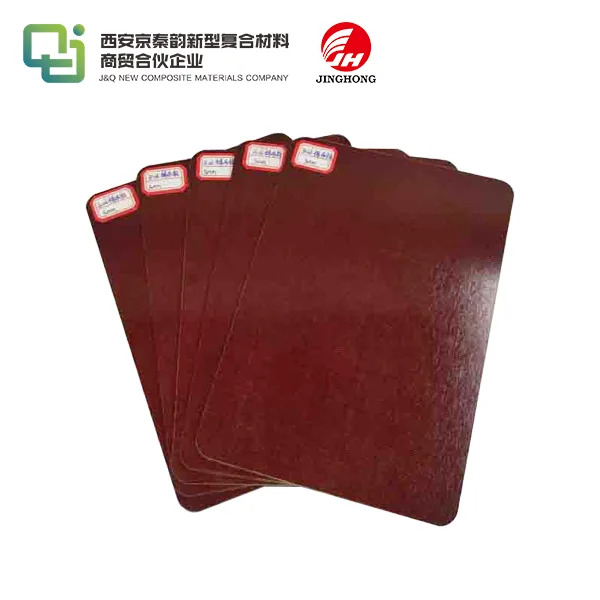
Why Phenolic Paper Board Is Used in Low-Voltage Systems?
2026-01-19 16:51:10
Phenolic paper board's remarkable mechanical strength, thermal stability, and insulating qualities make it the foundation of low-voltage electrical systems. By combining cellulose paper and phenolic resin, this laminated composite material creates a dependable barrier against electrical hazards while retaining structural integrity in harsh environments. When compared to traditional insulators, this material offers better dielectric strength, flame resistance, and chemical stability, which is why engineers chose it. Its extensive use in power distribution, industrial applications, and electrical manufacturing shows how reliable it is in safeguarding delicate components while maintaining operational safety standards.
Understanding Phenolic Paper Board and Its Relevance in Low-Voltage Systems
Phenolic paper board is an advanced engineering solution that tackles important issues with structural support and electrical insulation. Multiple layers of cellulose paper are injected with thermosetting phenolic resin to create this composite material, which is then carefully cured to produce its best qualities.
Composition and Manufacturing Process
High-quality paper sheets are saturated with phenolic resin under carefully monitored circumstances as part of the manufacturing process. A uniform laminate with constant qualities across its thickness is produced by stacking and compressing several layers under pressure and heat. Uniform density, mechanical strength, and electrical properties that satisfy exacting industrial standards are guaranteed by this technique.
To attain the best performance qualities, high-quality manufacturers precisely regulate the resin content, curing temperature, and pressure factors. Because of its exceptional dimensional stability, the final product is appropriate for precise applications where tolerances are crucial.
Technical Specifications in Low-Voltage Applications
Phenolic paper board, which has a dielectric strength of 14–20 kV/mm, offers dependable insulation in low-voltage systems that operate below 1000V AC or 1500V DC. These characteristics are maintained by the material between -40°C and +130°C, guaranteeing reliable operation in a variety of environmental circumstances.
Excellent electrical isolation between components is provided by the volume resistivity, which is greater than 10^12 ohm-cm. Because of these features, it is especially useful in distribution boards, motor control panels, and switchgear applications where complete dependability is necessary for electrical safety.

Core Properties Making Phenolic Paper Board Ideal for Low-Voltage Systems
Phenolic paper board is the best option for demanding electrical applications because to its special blend of mechanical, thermal, and electrical qualities. Procurement experts can make well-informed selections based on technical requirements by being aware of these qualities.
Electrical Insulation Excellence
Phenolic paper board's main benefit in electrical applications is its superior dielectric strength. Under typical working settings, the material efficiently avoids electrical breakdown and offers safety margins during fault conditions or voltage transients.
Minimal energy dissipation is ensured via a low dielectric loss factor, which improves system efficiency and lowers heat production. This feature becomes especially crucial in high-frequency applications where performance might be greatly impacted by energy losses.
Even in contaminated conditions, the material's tracking resistance keeps conductive channels from forming on the surface, preserving the integrity of the insulation. This feature is crucial in industrial or outdoor locations where moisture and dust are constant problems.
Thermal Performance and Stability
Phenolic paper board's superior heat dissipation properties enable it to efficiently handle thermal loads without sacrificing structural integrity. The thermal conductivity of the material prevents hot spots that might cause system failures by facilitating heat transmission while preserving insulating qualities.
UL94 V-0 criteria are met by flame retardant qualities, which offer crucial fire safety in electrical equipment. When ignition sources are eliminated, the material rapidly self-extinguishes, reducing the risk of fire spreading in crucial applications.
Consistent performance across the common working ranges of electrical equipment is ensured by temperature stability. Phenolic paper board, in contrast to several plastic substitutes, does not significantly deteriorate over time in terms of its mechanical and electrical characteristics.
Chemical and Environmental Resistance
Phenolic paper board's exceptional resistance to oils, solvents, and cleaning agents makes it appropriate for industrial settings where chemical exposure happens often. In demanding applications, this resistance prolongs equipment life and lowers maintenance needs.
Moisture resistance keeps electrical qualities intact even in the face of condensation or sporadic water contact, preventing deterioration in humid environments. This inherent resistance is strengthened by proper sealing and finishing, which offers long-term dependability in demanding conditions.
Because of its resistance to oxidation and UV degradation, the material is stable in applications that include exposure to the elements or high temperatures. Over the course of the equipment's lifecycle, this durability results in longer service life and lower replacement costs.
Comparative Analysis: Phenolic Paper Board vs. Alternative Materials
Procurement decisions require careful evaluation of available materials based on performance requirements, cost considerations, and long-term value. This comprehensive comparison helps identify the optimal solution for specific applications.
Performance Comparison with Fiberglass Alternatives
When compared to phenolic paper board, fiberglass-reinforced plastics usually have inferior electrical insulation qualities despite having excellent strength-to-weight ratios. The paper-based composite maintains outstanding mechanical qualities appropriate for structural applications while achieving improved dielectric strength.
Phenolic paper board is preferred for machining since it cuts cleanly and doesn't fray fibers or cause tool wear like fiberglass materials do. This benefit lowers production costs and enhances precision component dimensional accuracy.
Phenolic paper board frequently offers greater value in electrical applications when insulating qualities are more important than pure mechanical strength, according to cost research. The material's track record of success in electrical applications lowers design risk and streamlines approval procedures.
Advantages Over Traditional Bakelite
Compared to Bakelite formulations, modern phenolic paper board offers better uniformity and quality control. Many of the brittleness and dimensional instability problems that were seen in early phenolic materials have been resolved by advancements in manufacturing.
Another important benefit is environmental compliance, since modern formulations satisfy environmental standards and RoHS regulations without sacrificing performance. Regulatory approval procedures and worldwide supply chain management are made simpler by this compliance.
Modern phenolic paper board can now accept a wide range of surface treatments, coatings, and joining techniques that increase adaptability in intricate assemblies, demonstrating a considerable expansion in processing capabilities.
Economic Considerations vs. Metal Alternatives
Although metal insulators have good mechanical qualities, they need extra insulating layers in electrical applications, which raises the cost and complexity of the system. Phenolic paper board simplifies designs and cuts down on assembly time by combining structural and insulating properties into a single component.
In applications like transportation or portable equipment, where lowering the total system weight adds value, weight advantages become important. The density of the material is usually between 1.3 and 1.4 g/cm³, which is significantly less than that of metal substitutes.
Corrosion immunity lowers lifetime costs and increases dependability over long service periods by removing the maintenance needs related to metal components in severe environments.
Practical Applications of Phenolic Paper Board in Low-Voltage Systems
Applications in the real world show how adaptable and dependable phenolic paper board is in a variety of electrical and industrial fields. These examples show how the material provides long-term benefit while resolving certain engineering issues.
Switchgear and Control Panel Applications
Arc barriers made of phenolic paper board are used in motor control centers to provide crucial protection during switching operations. Arc propagation is inhibited by the material's structural integrity and flame resistance, which also preserve dimensional stability under heat stress.
Distribution panels include the components needed for mounting boards and phase separators, where mechanical support and electrical separation are combined. Custom shapes and mounting holes are possible without sacrificing structural integrity because to the exceptional machinability.
The material's constant electrical characteristics over vast sheets are advantageous for low-voltage switchgear systems, guaranteeing consistent performance throughout intricate installations. High-quality producers offer material certifications that make adhering to safety regulations and electrical codes easier.
Transformer and Power Distribution Uses
Phenolic paper board is used in power transformers for insulation barriers and coil supports, where it is crucial to have both mechanical strength and electrical insulation. Under the frequent temperature cycling that occurs during transformer operations, the material retains its characteristics.
Materials used in distribution transformer applications must be able to endure external environmental conditions while preserving electrical safety margins. Phenolic paper board is appropriate for these demanding applications due to its UV stability and resilience to weather.
The material's adaptability to specific machining and shaping techniques allows for optimal geometries that enhance electrical performance while minimizing material waste, which is advantageous for specialized transformer designs.
Industrial Equipment Integration
Phenolic paper board is used in manufacturing equipment's motor mounts and electrical enclosures, where electrical safety regulations and vibration resistance coexist. The mechanical characteristics of the material guarantee operator safety while offering sturdy mounting platforms.
Chemical resistance becomes crucial in industrial settings when the material is used for panel fabrication and component mounting in process control systems. The non-conductive qualities support delicate electronic components while preventing electrical interference.
The material's dimensional stability and precision machining capabilities are advantageous to automation systems because they allow for tight tolerances that are necessary for correct component alignment and dependable operation over long periods of time.
How to Successfully Procure Phenolic Paper Board for Your Low-Voltage Projects
While satisfying technological criteria, efficient procurement procedures guarantee material quality, supply dependability, and cost minimization. Successful supplier relationships and project outcomes are facilitated by an understanding of important procurement factors.
Supplier Evaluation and Selection Criteria
The basis for evaluating suppliers is provided by quality certifications; ISO 9001 certification denotes well-established quality management systems. While RoHS certification verifies adherence to environmental requirements, UL accreditation guarantees items meet safety standards crucial for electrical applications.
Production capacity, quality control methods, and the availability of technical assistance should all be considered when evaluating manufacturing capabilities. Material certifications and specialized testing services that meet application-specific needs can be obtained from suppliers who have their own testing labs.
Geographic distribution networks have an impact on logistics expenses and delivery dependability, especially for projects with strict deadlines or several delivery sites. Suppliers with well-established distribution relationships frequently offer cheaper pricing and higher service standards.
Technical Specification Development
With standard thickness ranges usually available from 0.5mm to 50mm, dimensional needs must take assembly clearances and manufacturing tolerances into consideration. Project schedule may be impacted by minimum order quantities or longer lead times for custom thicknesses.
Relevant standards like ASTM D229 or IEC 60641 should be cited in electrical specifications to guarantee uniform material qualities from various suppliers. Depending on the safety factor requirements and application voltage levels, different dielectric strength requirements may apply.
Operating temperature ranges, exposure to humidity, and chemical compatibility with cleaning agents or process fluids must all be taken into account in environmental standards. These specifications affect the choice of materials and may call for certain surface treatments or formulas.
Quality Assurance and Testing Protocols
Important characteristics including dielectric strength, geometrical precision, and visual quality should be confirmed by incoming inspection processes. Plans for statistical sampling assist in preserving supplier accountability while striking a balance between inspection expenses and quality assurance goals.
To verify that a material is suitable for its intended usage, application-specific testing may involve temperature cycling, humidity exposure, or chemical resistance assessment. These tests lower the chance of field failure and assist find possible problems prior to full-scale manufacturing.
Material certifications, test results, and traceability records required for regulatory compliance or quality audits should be specified in documentation requirements. Uncertainties are avoided and thorough record keeping is ensured by explicit documentation standards.
Conclusion
Phenolic paper board's exceptional insulating qualities, mechanical dependability, and thermal stability continue to demonstrate its importance in low-voltage electrical systems. The material's special blend of properties provides cost-effectiveness and design freedom while meeting important safety and performance standards. Procurement professionals can make well-informed judgments that maximize both technical performance and long-term value by being aware of these benefits.
Phenolic paper board offers a tried-and-true basis for dependable and safe designs as electrical systems grow more complex and regulations change. Its proven track record in a variety of applications, along with continuous advancements in manufacturing and materials, guarantees its continued relevance in contemporary electrical engineering solutions.
FAQs
What voltage ratings can phenolic paper board handle safely?
Phenolic paper board typically provides dielectric strength ratings of 14-20 kV/mm, making it suitable for low-voltage applications up to 1000V AC or 1500V DC. The actual voltage rating depends on thickness, environmental conditions, and safety factor requirements specific to each application. Proper installation and maintenance practices ensure these ratings are maintained throughout the equipment lifecycle.
How does phenolic paper board compare to FR4 in electrical applications?
While FR4 offers excellent performance in printed circuit board applications, phenolic paper board provides superior mechanical strength and cost-effectiveness for structural electrical components. FR4 excels in high-frequency applications, but phenolic paper board offers better thermal characteristics and easier machining for mechanical components requiring electrical insulation.
What customization options are available for phenolic paper board?
Standard customization includes thickness variations from 0.5mm to 50mm, custom sheet sizes up to manufacturing equipment limits, and various surface treatments or coatings. Specialized formulations can address specific chemical resistance or thermal requirements, while CNC machining provides complex shapes and precision features. Minimum order quantities may apply for custom specifications.
What certifications should I look for in phenolic paper board suppliers?
Key certifications include UL recognition for electrical safety compliance, RoHS certification for environmental regulations, and ISO 9001 for quality management systems. Industry-specific certifications may include NEMA standards for electrical applications or military specifications for defense applications. Supplier audit reports and material test certificates provide additional quality assurance.
How long is the typical lead time for phenolic paper board orders?
Standard specifications typically ship within 2-4 weeks from order confirmation, while custom formulations or non-standard dimensions may require 6-8 weeks lead time. Large quantity orders or specialized testing requirements can extend delivery schedules, making early procurement planning essential for project success. Suppliers with inventory programs may offer shorter lead times for frequently used specifications.
What storage and handling requirements apply to phenolic paper board?
Proper storage requires dry conditions with relative humidity below 65% and temperature control between 15-25°C to maintain dimensional stability. Materials should be stored horizontally with adequate support to prevent warping and protected from direct sunlight or chemical vapors. Handling procedures should avoid edge damage and maintain clean surfaces for optimal machining and assembly results.
J&Q: Your Trusted Phenolic Paper Board Manufacturer for Low-Voltage Excellence
J&Q stands ready to support your low-voltage system requirements with premium phenolic paper board solutions backed by over 20 years of manufacturing expertise. Our extensive experience in insulation materials, combined with more than a decade of international trade collaboration, positions us uniquely to understand your technical needs and delivery expectations. We maintain comprehensive quality systems that ensure consistent material properties while offering customization capabilities for specialized applications.
Our integrated logistics network provides complete supply chain solutions, eliminating coordination challenges common with multiple suppliers. This one-stop service approach reduces procurement complexity while ensuring reliable delivery schedules that support your project timelines. Whether you require standard specifications or custom formulations, our technical team works directly with your engineering staff to optimize material selection and application design.
Contact our specialists at info@jhd-material.com to discuss your specific requirements and receive detailed technical information about our phenolic paper board products. Our team can provide material samples, application guidance, and competitive quotations that demonstrate the value we bring to your projects.
References
Institute of Electrical and Electronics Engineers. "IEEE Standard for Insulation Coordination - Application Guide." IEEE Std 1313.2-2020, Institute of Electrical and Electronics Engineers Standards Association, 2020.
American Society for Testing and Materials. "Standard Test Methods for Rigid Sheet and Plate Materials Used for Electrical Insulation." ASTM D229-18, ASTM International, 2018.
International Electrotechnical Commission. "Pressboard and Presspaper for Electrical Purposes - Specifications for Individual Materials." IEC 60641-3-1:2008, International Electrotechnical Commission, 2008.
National Electrical Manufacturers Association. "Industrial Laminated Thermosetting Products." NEMA LI 1-2019, National Electrical Manufacturers Association, 2019.
Underwriters Laboratories Inc. "Standard for Safety - Component Prequalification." UL 1446, Underwriters Laboratories Standards Technical Panel, 2017.
Zhang, Michael K. and Thompson, Sarah J. "Comparative Analysis of Insulation Materials in Low-Voltage Electrical Systems." Journal of Electrical Engineering Materials, vol. 45, no. 3, 2022, pp. 178-195.
_1732777843529.webp)