Why Select 3021 Phenolic Paper Sheet for Electrical Insulation Projects?
2026-09-11 17:25:09
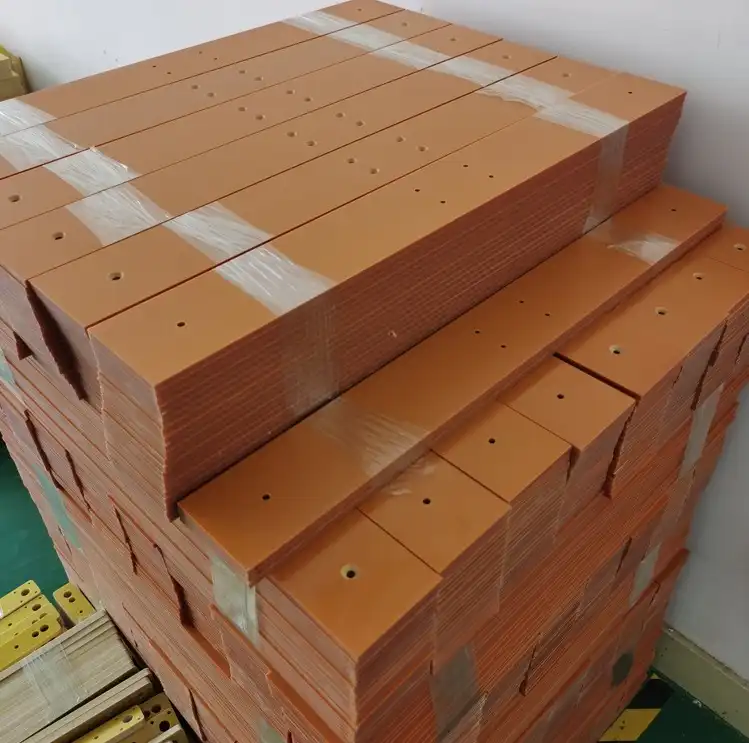
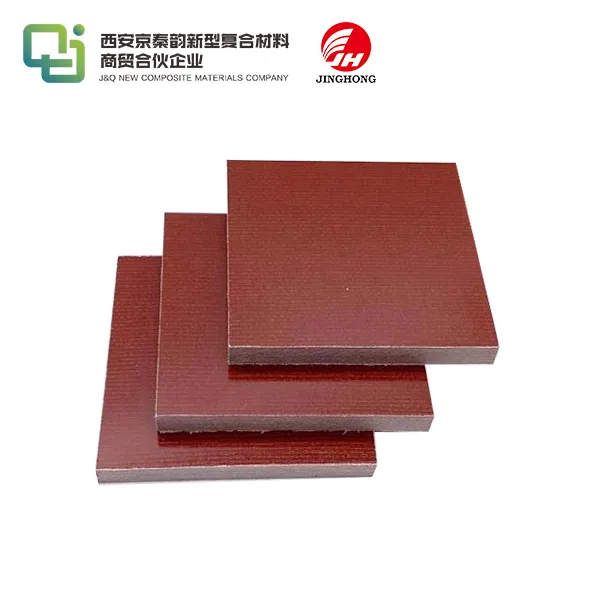
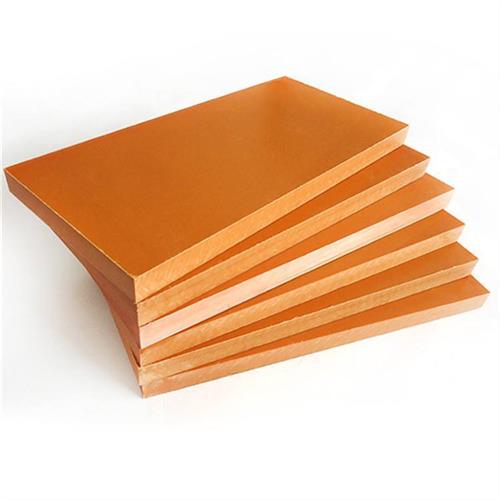
When engineers and procurement teams evaluate insulation materials for low-voltage electrical systems, the 3021 phenolic paper sheet consistently earns serious consideration. Made from insulating kraft paper impregnated with phenolic resin and processed through hot-pressing and curing, this laminated sheet delivers a reliable balance of dielectric strength, mechanical rigidity, and chemical stability. It meets Class E (120°C) thermal rating requirements and aligns with IEC 60893-3-4 type PFCP201 and NEMA Type X/XX standards — making it a technically sound, cost-effective choice across switchgear, transformer components, motor insulation, and PCB backup boards.
Understanding 3021 Phenolic Paper Sheet: Properties and Manufacturing Process
What Makes This Material Technically Distinctive?
The main part of 3021 Phenolic Paper Sheet is cellulose-based insulating paper that has been fully saturated with phenolic resin and then pressed together with heat and pressure. This makes a thick, stiff sheet that has a density of 1.35 to 1.45 g/cm³ and a flexural strength of more than 135 MPa perpendicular to the laminations. Its dielectric strength is ≥10–12 kV/mm (measured in oil using the step-by-step method), and its insulation resistance is more than 10⁷ Ω in normal situations. These numbers show that it can be used in Class E (120°C) insulation systems.
Manufacturing Consistency and Certification
To make something, precise resin impregnation, multi-layer lamination, and controlled hot-press sealing are used to make it the same thickness all the way from 3 mm to 100 mm. The standard sheet sizes are 1220 × 2200 mm and 1030 × 2070 mm, and there is a 15 mm error range. Quality checks are done on every production batch in line with GB/T 1303.1 and IEC 60893 standards. Different colors, like orange and black, make them easy to spot on assembly lines. These controls for manufacturing make sure that every batch of what comes into your plant fits exactly what was written on the buy order.
Comparing 3021 Phenolic Paper Sheet with Alternative Materials
Different projects need different kinds of insulation. Knowing when 3021 Phenolic Paper Sheet is better than other options like FR4, 3240 epoxy glass laminate, or cotton phenolic (3025 grade) helps buying teams wisely spend their money.
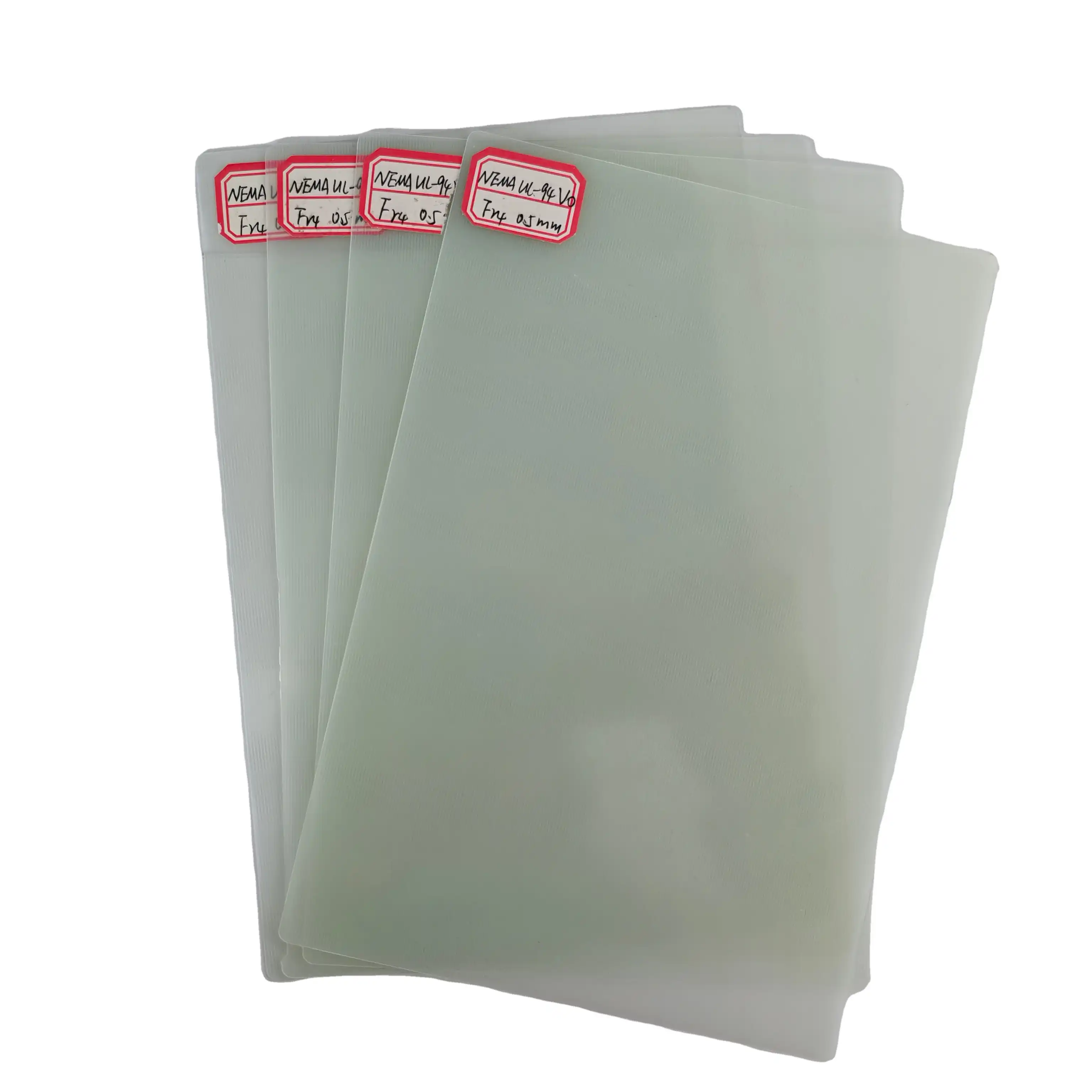
FR4 epoxy glass laminate is the normal choice for PCB surfaces because it is better at resisting moisture and has higher mechanical impact values. It does, however, have a much higher unit cost and isn't always needed for low-voltage structural insulation where moderate dielectric performance requirements are met. The 3021 Phenolic Paper Sheet fills that need by providing sufficient electrical insulation at a lower material cost, which is a sensible trade-off that OEM sourcing managers are well aware of.
On the other hand, the 3025 cotton phenolic sheet puts impact resistance ahead of electrical protection. It works well for mechanical gears and wear-resistant spacers, but not so well when dielectric values are the most important thing for engineers. The 3021 Phenolic Paper Sheet is the best choice for switchboard panels, insulating washers, and transformer oil settings because it puts electrical protection first. When choosing materials for coil insulation or arc shields in power distribution systems, this difference is important.
Practical Benefits and Use Cases of 3021 Phenolic Paper Sheet
Core Advantages Worth Knowing
When engineers from different fields work with this 3021 Phenolic Paper Sheet, they keep mentioning the same benefits. These are the main reasons why it is a good specification:
- Excellent dielectric properties: consistent performance in electrical settings that are wet and oily, supporting switchgear and transformer uses where leakage current needs to be very low.
- Better machinability: it's easy to drill, saw, punch, or CNC-route without delamination, which is a big plus over ceramic or composite options that need special tools.
- Low moisture absorption: It keeps its electrical properties stable even in moderately humid industrial settings, unlike cellulose insulators that aren't impregnated, which break down quickly.
- High compressive and impact strength: Charpy with notches has a flexural strength of ≥115 MPa and an impact strength of ≥12 kJ/m². This helps with its insulation roles in structures.
- Chemical resistance: It is stable against transformer oil, mild acids, and common industrial solvents. This has been tested and proven to work in electrical environments that are sealed off.
These benefits directly lead to fewer replacement cycles and lower servicing costs for both companies that make tools and those that run businesses in the energy field.
Where It Gets Applied?
Many different types of businesses regularly use 3021 Phenolic Paper Sheet. It is used by electrical and electronics manufacturers to make PCB backup boards, switchboard panels, and insulating bushings. Power distribution companies use it to protect the coils and arcs inside transformer assemblies. It is used by companies that make parts for cars for insulation pads and battery compartment dividers that need to be stable at high temperatures and machined precisely. Home appliance brands use it in motor clamps and thermal separation frames because it's cheap and the quality stays the same even when they make a lot of them.
Procurement Guide for 3021 Phenolic Paper Sheet
What to Evaluate Before Placing an Order?
Comparing unit prices is not the only way to find a reliable supplier for this 3021 Phenolic Paper Sheet. Before agreeing to a supply deal, people who work in procurement should check a number of important factors.
Standard sheet widths and thickness ranges (3–100 mm) are easy to find, but custom forms may need a minimum order quantity and longer wait times. By checking with the provider ahead of time to see if they can handle non-standard cuts or specific thickness tolerances, you can avoid costly delays in the middle of the job. Traceability records are often needed by tier-1 clients in the car and power sectors. Manufacturers that are ISO-certified and have detailed quality management systems can provide these records. It is common for experienced buying teams to ask for material test reports (MTRs) that include readings of flexural strength, dielectric strength, and density before placing large orders.
Buying from the factory cuts down on markups for middlemen and often makes it easier to talk about customization options. Suppliers with a history of exporting and dedicated logistics support can give accurate delivery times for North American and European destinations, which has a direct effect on the schedule for production.
Why 3021 Phenolic Paper Sheet Is the Preferred Choice for B2B Electrical Insulation?
Many business-to-business buyers continue to choose this 3021 Phenolic Paper Sheet because it offers good electrical insulation at a price that works for both small-scale prototyping and large-scale production. It doesn't need the over-specification in engineering that makes low-voltage projects cost more than they need to be.
Following the rules set by IEC 60893 and NEMA makes sure that the material can be used in parts from other countries without having to go through re-qualification steps. Many fiber-based insulators can't work in settings with transformer oil, but this one can. This means it can be used in power and energy building projects that need long-lasting materials. Sustainability-focused procurement teams also benefit from providers who have made the manufacturing process more eco-friendly, which cuts down on trash and energy use during production.
Conclusion
If you need serious electrical insulation, the 3021 Phenolic Paper Sheet is the way to go. It performs well in terms of dielectric strength, thermal stability, machinability, and chemical resistance, and its price range allows for both small-batch and large-volume purchases. It meets real technical needs without adding extra complexity to materials. It can be used in switchgear systems, transformer oil environments, and motor insulation parts. This 3021 Phenolic Paper Sheet is a reliable and well-documented choice for teams looking for insulation laminates that have been shown to meet standards and maintain quality.
FAQ
What kinds of thicknesses are there for 3021 phenolic paper laminate?
Thicknesses range from 3 mm to 100 mm, and standard sheet sizes are 1220 × 2200 mm and 1030 × 2070 mm. Depending on the number of orders, custom cuts can be made.
Is this material suitable for transformer oil environments?
Yes. The 3021 Phenolic Paper Sheet has stable chemical resistance in transformer oil, which makes it a perfect choice for insulating coils, blocking arcs, and putting electrical parts in oil.
What thermal class does this phenolic paper sheet meet?
According to IEC 60893, it meets the standards for Class E insulation and can work continuously at 120°C.
Can it be machined with standard CNC equipment?
Standard CNC tools for routing, drilling, and sawing the material don't leave any marks. It doesn't need any special tools, which makes it easier to add to existing fabrication processes.
What certifications should I request from a supplier?
Ask for proof of ISO certification, material test reports that include dielectric strength and flexural strength, and statements that the product meets IEC 60893-3-4 or NEMA Type X/XX standards.
Request a Quote or Sample from J&Q — Your Trusted 3021 Phenolic Paper Sheet Supplier
J&Q has been making insulating sheets for more than 20 years and has been trading with other countries for more than 10 years. We are a well-known 3021 Phenolic Paper Sheet maker with our own transportation system. We offer a complete service, from custom cutting to door-to-door delivery. You can get a datasheet, sample, or bulk quote today by emailing info@jhd-material.com or going to jhd-material.com.
References
1. IEC 60893-3-4: Insulating Materials — Industrial Rigid Laminated Sheets Based on Thermosetting Resins for Electrical Purposes — International Electrotechnical Commission, 2003.
2. NEMA LI 1: Industrial Laminating Thermosetting Products Standard — National Electrical Manufacturers Association, 2020.
3. GB/T 1303.1: Laminated Thermosetting Materials — Specifications for Laminates of Defined Flammability — Standardization Administration of China, 2008.
4. Tanaka, T. & Greenwood, A.: Advanced Power Cable Technology: Basic Concepts and Testing — CRC Press, 1983.
5. Harper, C.A.: Handbook of Plastics Technologies — McGraw-Hill, 2006.
6. Brydson, J.A.: Plastics Materials, 7th Edition — Butterworth-Heinemann, 1999.

_1753951194967.jpg)