3640 Epoxy Tube Delivers Mechanical Strength in Harsh Environments
2026-09-10 12:09:56
When electrical systems face moisture, heat, and mechanical stress simultaneously, most insulation materials compromise on at least one front. The 3640 epoxy tube stands apart by holding its ground across all three. Manufactured from alkali-free glass fabric cloth impregnated with epoxy-phenolic resin and hot-rolled under pressure, this rigid laminated cylinder is built for environments where standard plastics simply fail. Whether you are sourcing components for high-voltage switchgear, transformer coil insulation, or structural spacers in industrial machinery, understanding this material's technical depth is essential before committing to a procurement decision.
What Makes the 3640 Epoxy Tube Different: Specifications and Key Properties?
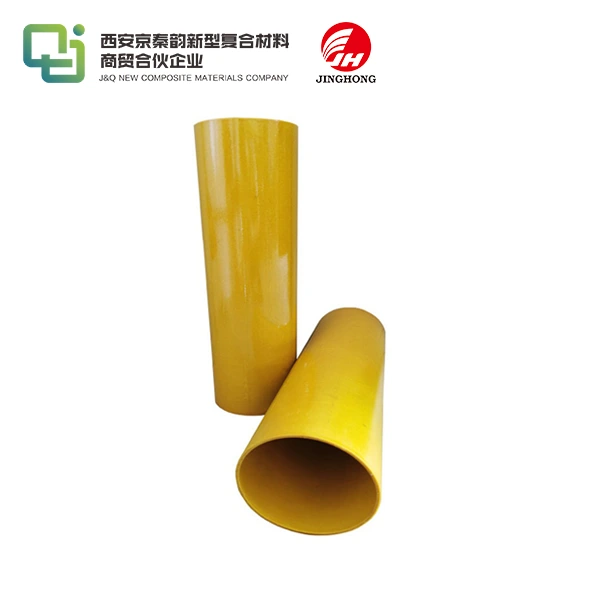
GB/T 5132 and its foreign IEC versions list the 3640 Epoxy Tube as part of the EP GC laminate family. Fiberglass cloth that was mixed with epoxy resin and then rolled, baked, and cured under controlled heat and pressure is what makes up its structure. The end result is a thick, even sphere that has a distinctive yellow color and a smooth outside.
Thermal and Electrical Performance
This material reliably works in Class B temperatures (130°C) and can also do its job in Class F temperatures (155°C). It doesn't absorb more than 0.05% of water, which keeps the dielectric from breaking down in damp substations and outdoor electrical shelters. When tested in oil, the dielectric strength along the laminates is more than 10 kV per 25 mm, and the insulation resistance stays at or above 100 MΩ after soaking. When electrical engineers choose coil insulation barrels for dry-type transformers, these numbers are very important.
Mechanical Integrity Under Load
With a density of 1.70–1.90 g/cm³, the material has a high axial compressive strength and an interlaminar shear resistance. It can be threaded, drilled, and CNC-machined without delamination, which isn't possible with thermoplastic tubing. This is a feature that OEM sourcing managers in machinery manufacturing depend on to make dimensional spacers and structural insulation parts. Dimensional tolerances stay tight between batches of production, which helps the assembly line work together consistently.

Comparing the 3640 Epoxy Tube to Other Tubing Solutions
Purchasing experts often compare the 3640 Epoxy Tube to acrylic cylinders, grade 3530 epoxy, silicone tubes, and different types of polyurethane. There is a place for each, but the differences are important when load-bearing insulation is needed.
Silicone tube is very flexible and works well in low temperatures, but it is not very hard in terms of structure. Different types of polyurethane don't wear down easily, but they do absorb water over time, which makes them less effective as insulation in wet places. Grade 3530 epoxy tubes have a similar resin base to 3640 Epoxy Tube grades, but they don't have as much glass-cloth reinforcement, so they have lower interlaminar shear strength. Acrylic cylinders are clear to look at, but they aren't very stable at high temperatures or against chemicals.
The 3640 Epoxy Tube is unique because it is made of a single material that has a rigid mechanical structure, hydrolytic stability, transformer-oil resistance, and the ability to be machined. For engineers looking for insulation parts for switchgear, coil formers, or motor frames, this mix cuts down on the number of parts needed and makes assembly easier, which is a clear case for technical procurement teams to support.
Applications and Use Cases in Demanding Industrial Environments
This 3640 Epoxy Tube is used in many important ways by industries that regularly push shielding materials to their limits. When procurement teams know where something works best, they can better match specifications to application needs.
Here are the main usage situations where this information proves to be useful:
- Transformer coil insulation cylinders: This is the core around which high-voltage windings are wound for both dry-type and oil-immersed transformer brands. Because it doesn't react with transformer oil and keeps its shape even when heated and cooled many times, it is stable in long-term equipment.
- Switchgear arc barriers and bus insulation: In medium-voltage switchgear panels, the tube shape helps with arc-containment designs that need to be strong mechanically and have good dielectric stability when there is a problem.
- Insulation end coils and spacers: Motor and generator makers depend on the material's ability to be machined to make precise end coils and spacers that keep their shape even when they are vibrating and getting hot.
- Industrial machinery structural components: Original Equipment Manufacturers (OEMs) use machined sections as gears, wear rings, and load-bearing spacers in places where metal parts would add extra weight or conductivity.
These use cases show that the value of the material is not in a single property, but in how well it works on many levels. Power distribution companies, industry OEMs, and car parts suppliers always come back to this grade because it solves problems that are linked together, not just single ones.
Procurement Guide: Sourcing 3640 Epoxy Tube for Your Operation
To find a reliable source for industrial-grade 3640 Epoxy Tube, you need to think about more than just the unit price. Total purchase cost is affected by batch consistency, approved quality systems, accessible dimensions, and assistance after the sale.
Customization and Dimensional Options
Providers of 3640 Epoxy Tube who you can trust offer a variety of wall thicknesses, cut lengths, and inner and outer sizes. With modern rolling equipment and automated production lines, it is possible to make transformer mandrels or switchgear housings to specific sizes that are not standard. When looking at a 3640 Epoxy Tube manufacturer, make sure they have ISO quality certification and that their production process includes controls for dust removal and ventilation. These two things have a direct effect on how clean the surface is and how well it works as a dielectric over time.
Certifications, Samples, and Delivery
Before you agree to large orders, make sure you get test results on the material that include information on its dielectric strength, water absorption, and interlaminar shear. Suppliers who have been around for a while send out samples so that engineers can check them against your unique assembly needs. Shipping lead times depend on the size and number of items ordered, but suppliers that offer integrated logistics can combine freight and cut down on total delivery time, which is a big plus for procurement specialists who are trying to meet tight project deadlines.
Conclusion
Because it consistently performs well in thermal, electrical, and mechanical dimensions, the 3640 Epoxy Tube is a popular choice for insulation in building structures. Its construction is reinforced with glass cloth, so it doesn't let water in, can handle transformer oil, and can be machined without delaminating. These are all features that competing materials have, but they don't usually work together. This material solves a lot of design problems for electrical makers, machinery OEMs, power sector engineers, and suppliers of car parts in a single purchasing choice. The practical steps that turn product interest into production reliability are checking that specs match application needs, asking for certified test data, and working with experienced providers.
FAQ
What temperature range can the 3640 epoxy tube handle?
In Class B temperatures up to 130°C, the 3640 Epoxy Tube works reliably, and in Class F temperatures up to 155°C, it can work. Because of this, it can be used for transformer coil formers, motor insulation parts, and circuit barriers that are regularly exposed to high temperatures for a long time.
Is the material resistant to transformer oil and chemicals?
Yes. Transformer oil and many industrial toxins can't damage the epoxy-phenolic resin structure. The amount of water absorbed stays below 0.05%, so the dielectric properties stay the same even in wet or liquid-adjacent environments.
Can it be machined into custom shapes?
CNC milling, cutting, and fitting can be done on the material without it coming apart. This lets normal tube stock be used to make accurate spacers, threaded insulation bushings, and end coils.
What certifications should I verify before purchasing?
Check that the product meets the requirements of GB/T 5132 or IEC EP GC series. It should also have ISO quality management approval and material test results that show the dielectric strength and interlaminar shear values.
Are bulk orders and custom dimensions available?
Established 3640 Epoxy Tube suppliers can handle both bulk purchases and requests for non-standard sizes. Before you finalize the specs, talk to the maker directly about wait times and sample availability.
Partner with J&Q for Your Epoxy Fiberglass Tube Supply
J&Q has been making insulation materials for more than 20 years and has worked with other countries to trade for more than 10 years. As a reliable 3640 Epoxy Tube supplier with streamlined logistics, we offer consistent quality, verified test results, and quick technical support from the time of your inquiry until the tube is delivered. You can email our team at info@jhd-material.com or go to jhd-material.com to get examples, look over the specs, or talk about making custom measures for your next project.
References
1. IEC 60893-3: Specification for Industrial Rigid Laminated Sheets Based on Thermosetting Resins for Electrical Purposes — International Electrotechnical Commission, 2003.
2. GB/T 5132: Test Methods for Laminated Thermosetting Materials — Standardization Administration of China, 2014.
3. Electrical Insulation: Principles and Applications — McGraw-Hill Education, 2017.
4. Handbook of Epoxy Resins — McGraw-Hill, 1982 (Lee, H. & Neville, K.).
5. Transformer Design Principles: With Applications to Core-Form Power Transformers — CRC Press, 2010 (Del Vecchio, R.M. et al.).
6. Industrial Laminates and Composites for Electrical Applications — IEEE Electrical Insulation Magazine, 2019.
_1754967691873.webp)