Bakelite Laminated Tubes: Canvas, Linen and Paper Phenolic Tubes
2026-03-05 17:00:34
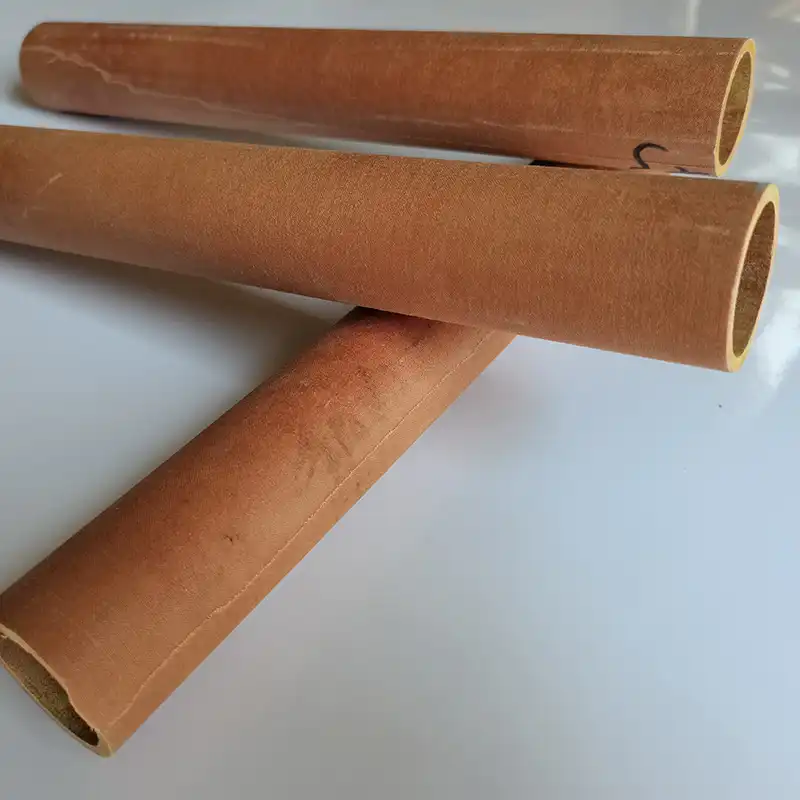
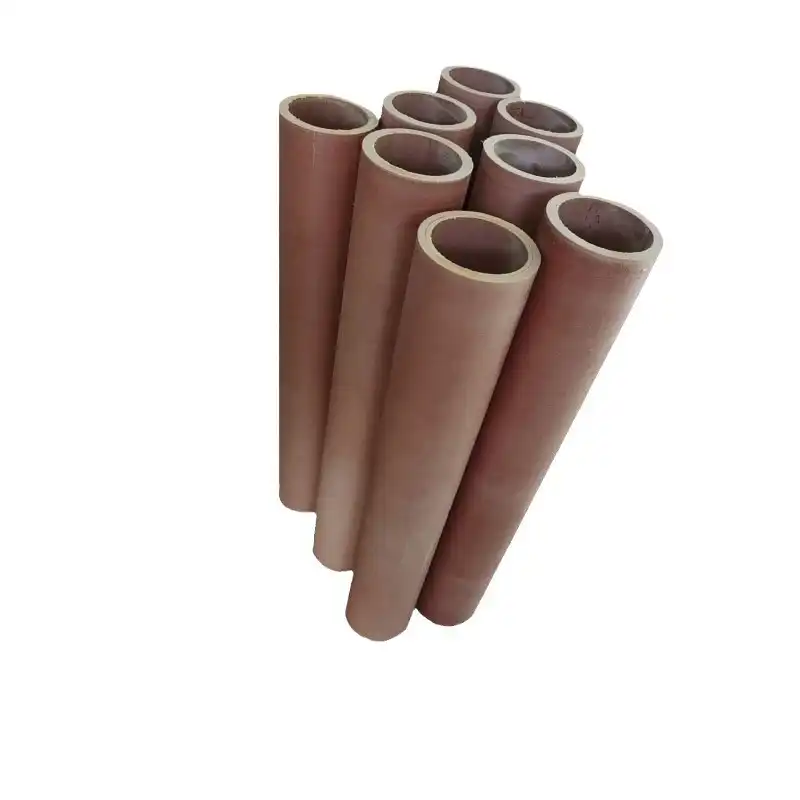
Bakelite laminated tubes are an important type of composite insulation material that are made by carefully layering canvas, linen, or paper with phenolic resin that hardens at high temperatures. Specialized heat and pressure curing methods are used on these cylinder-shaped parts to make them strong enough for use in a wide range of industrial settings for things like electrical insulation, mechanical spacing, and thermal protection. When you mix organic reinforcement materials with phenolic resin chemistry, you get great machinability, dimensional stability, and cost-effective performance that modern engineers count on for important system parts.
Understanding Bakelite Laminated Tubes: Materials, Construction and Core Properties
Understanding how different substrate materials react with thermosetting resins is the basis of phenolic tube technology. This knowledge is used to build solutions for difficult industrial problems.
What Are Bakelite Laminated Tubes and How They're Made?
The process of making something starts with carefully choosing the reinforcing materials that are then carefully prepared and inspected for quality. Heavy-duty cotton weaves used in canvas reinforcement give it great mechanical strength and impact protection. Linen substrates are great for precision uses because they are very stable in terms of size and have smooth, refined surfaces. Electrical-grade cellulose is used in paper reinforcement because it has great dielectric qualities and works well at a low cost for high-volume production needs.
Controlled impregnation is a step in the production process where reinforcing materials are saturated with specially made phenolic resin systems. The impregnated materials are wound around mandrels in a way that is controlled by temperature and stress. Curing happens in heated presses that use controlled pressure and temperature cycles to cross-link the resin matrix. This makes the end laminated structure, which has predictable electrical and mechanical properties.
Canvas vs. Linen vs. Paper Phenolic Tube Construction Differences
Heavy cotton fabric reinforcement is used in canvas-based phenolic tubes to make them the strongest of the three choices in terms of mechanical properties. The weave structure does a great job of connecting the layers together and is very resistant to mechanical shock and vibration. When maximum structural stability and load-bearing capacity are needed, these tubes are the best choice.
Because the fibers are all the same and there is less surface roughness, linen reinforcement has the best surface quality and the most accurate control over dimensions. This choice of material works great for tasks that need tight specs and smooth bearing surfaces. Because of how they are naturally made, linen fibers are better at resisting chemicals and being easy to work with.
When electrical-grade cellulose sheets are used in paper-reinforced phenolic tubes, they offer the best electrical insulation. Multiple thin layers make the insulating properties the same all the way through the wall thickness. This way of building is the most cost-effective way to handle electrical needs while still having the right mechanical qualities for supporting structures.
Key Physical and Chemical Properties of Phenolic Laminated Tubes
The mechanical qualities are very different depending on the type of reinforcement used and the resin that is used. Most canvas tubes have compressive strengths of more than 200 MPa and are very resistant to pressure. Linen variants have a moderate amount of strength (around 150 MPa), but they have a better surface finish and are more stable in terms of their dimensions. Paper tubes have good mechanical strength (around 120 MPa) and the best electrical properties.
Chemical protection is one of the main benefits of all types of phenolic tubes. Mineral oils, mild acids, and most industrial solvents don't damage these products at all. In harsh chemical conditions, the cross-linked phenolic matrix stops absorption and breakdown. This resistance is very important for transformers and parts of hydraulic systems.
All of the different types regularly absorb very little water - below 1% by weight after 24 hours of immersion. This feature makes sure that the dimensions stay the same and the electrical performance stays the same when the environment is damp.
Temperature Resistance and Electrical Insulation Characteristics
For Class E applications, the continuous operating temperature can hit 120°C, which is in line with established electrical classification standards for thermal performance. Temperature changes that last only a short time can handle highs of up to 150°C without breaking down permanently. Within the working temperature range, the phenolic resin system keeps its shape while keeping its mechanical qualities.
It depends on the type of building and the direction of the wires. When tested in the radial direction, paper-reinforced tubes usually get numbers higher than 500 V/mil. The electrical performance of canvas and linen variants is good enough for mechanical uses, and the mechanical properties are better. Dissipation factors stay low across all variants, which means that electrical uses lose very little energy.
Industrial Applications and Use Cases for Different Phenolic Tube Types
Understanding the individual needs of an application helps engineers choose the best phenolic tube configuration for that application.
Electrical Insulation Applications in Power Systems
Paper phenolic tubes are used a lot in transformer construction and switchgear uses in power generation and distribution systems. In dry-type transformers, these parts act as coil insulation cylinders and must be able to handle thermal cycling and keep their dielectric stability for many years. Because they are resistant to oil, they are essential for oil-filled transformers where mechanical contact with internal parts is avoided by maintaining their shape.
Manufacturers of switchgear use these Bakelite laminated tubes for arc chutes and insulation barriers, where they need to be resistant to flames and electrical breakdown for safety reasons. Because complicated geometries can be machined, they can be fitted to specific bus bars and other electrical parts.
Mechanical Components in High-Temperature Environments
Industrial machinery applications leverage the superior mechanical properties of canvas phenolic tubes for bearing spacers, gear components, and structural supports. The combination of strength and machinability enables precision manufacturing of wear-resistant parts that outperform traditional materials in particulate-heavy environments.
Heat treatment equipment and furnace components benefit from the thermal stability and low thermal expansion characteristics. These tubes maintain dimensional accuracy throughout repeated heating cycles while resisting chemical attack from process atmospheres.
Aerospace and Defense Industry Requirements
Military and aerospace applications demand materials meeting stringent specifications for flame resistance, mechanical reliability, and chemical compatibility. Phenolic tubes satisfy MIL-I-24768 requirements for electrical insulation while providing the mechanical properties needed for structural applications.
The lightweight characteristics compared to ceramic alternatives reduce overall system weight while maintaining performance requirements. Machinability enables complex geometries required for specialized aerospace components.
Manufacturing Equipment and Tooling Applications
Precision manufacturing equipment utilizes phenolic tubes for insulation bushings, bearing supports, and alignment fixtures. The dimensional stability ensures consistent part positioning throughout production runs. Chemical resistance prevents degradation from cutting fluids and cleaning solvents commonly used in manufacturing environments.
Tooling applications benefit from the wear resistance and ability to maintain surface finish under repeated use. The material provides electrical insulation for fixtures used in electrical manufacturing processes.
Canvas vs. Linen vs. Paper Bakelite Tubes: Performance Comparison and Selection Guide
Selecting the appropriate phenolic tube variant requires careful consideration of performance priorities and application-specific requirements.
Mechanical Strength and Durability Comparison
Canvas phenolic tubes deliver the highest mechanical performance with compressive strengths exceeding 200 MPa and superior impact resistance. The heavy cotton reinforcement creates excellent interlaminar bonding that resists delamination under mechanical stress. These tubes prove ideal for structural applications requiring maximum load-bearing capacity and resistance to mechanical shock.
Linen variants provide moderate mechanical properties around 150 MPa compressive strength but excel in applications requiring precision fits and smooth bearing surfaces. The uniform fiber structure creates consistent properties throughout the material thickness. Dimensional stability surpasses other variants, making linen tubes the preferred choice for precision mechanical applications.
Paper reinforcement achieves adequate mechanical performance near 120 MPa while optimizing cost and electrical properties. The layered construction provides uniform stress distribution and predictable failure characteristics. These tubes work well for applications where mechanical loads remain moderate and electrical performance takes priority.
Electrical Properties and Insulation Performance
Paper phenolic tubes achieve superior electrical characteristics with dielectric strengths exceeding 500 V/mil and low dissipation factors. The electrical-grade cellulose reinforcement creates uniform dielectric properties throughout the wall thickness. These tubes meet the most demanding electrical insulation requirements for power system applications.
Canvas and linen variants provide adequate electrical insulation for most industrial applications while delivering superior mechanical characteristics. Dielectric strengths typically range from 300-400 V/mil, sufficient for low to medium voltage applications. The electrical properties remain stable throughout the operating temperature range.
Cost-Effectiveness and Availability Analysis
Paper phenolic tubes offer the most cost-effective solution for high-volume applications where electrical performance takes priority. The manufacturing efficiency and raw material costs create favorable pricing for large production runs. Standard sizes maintain good availability through established supply chains.
Canvas tubes command premium pricing due to the heavy reinforcement materials and enhanced mechanical properties. The investment proves worthwhile for applications requiring maximum durability and load-bearing capacity. Availability varies based on size requirements and manufacturing scheduling.
Linen variants represent the premium option with pricing reflecting the superior surface finish and dimensional control. These tubes justify their cost in precision applications where tight tolerances and smooth bearing surfaces provide operational advantages.
Application-Specific Recommendations for Each Type
Power system applications benefit most from paper phenolic tubes where electrical insulation performance and oil resistance create the primary value proposition. The cost-effectiveness supports large-scale deployment in transformer and switchgear manufacturing.
Heavy-duty mechanical applications requiring maximum strength and durability should specify canvas phenolic tubes. The investment in premium materials pays dividends through extended service life and reduced maintenance requirements.
Precision manufacturing equipment and bearing applications achieve optimal performance with linen phenolic tubes. The superior surface finish and dimensional stability justify the premium cost through improved operational accuracy and reduced wear rates.
Bakelite Tubes vs. Alternative Insulating Materials: Making the Right Choice
Comparing phenolic tubes against alternative materials helps engineers make informed decisions based on performance requirements and total cost of ownership.
Bakelite vs. Fiberglass Tubes: Performance and Cost Analysis
Fiberglass epoxy tubes offer superior electrical properties and higher temperature ratings but sacrifice machinability and cost-effectiveness. The glass reinforcement creates abrasive machining conditions that increase tool wear and manufacturing costs. Phenolic tubes machine easily with standard woodworking tools, reducing fabrication expenses and lead times.
Chemical compatibility differs significantly between these materials. Phenolic tubes resist mineral oils and mild acids better than fiberglass alternatives. However, fiberglass tubes handle strong alkaline solutions and higher temperature chemical environments more effectively.
Cost analysis favors phenolic tubes for applications not requiring extreme temperature performance. The lower raw material costs and easier fabrication create favorable total cost of ownership for most industrial applications.
Phenolic vs. Epoxy Laminated Tubes for High-Temperature Applications
Epoxy laminated tubes achieve higher continuous operating temperatures and superior chemical resistance but at significantly higher costs. The Class B insulation rating of phenolic tubes proves adequate for most industrial applications while providing cost advantages.
Mechanical properties favor epoxy tubes for extreme load applications, but Bakelite laminated tubes offer sufficient strength for typical industrial requirements. The machinability advantage of phenolic materials often outweighs the mechanical property benefits of epoxy alternatives.
When to Choose Bakelite Over Ceramic or Plastic Alternatives
Ceramic tubes provide excellent electrical and thermal properties but lack impact resistance and prove difficult to machine. Phenolic tubes offer adequate performance for most applications while providing superior machinability and lower costs. The organic nature of phenolic materials creates better vibration damping characteristics compared to brittle ceramic alternatives.
Plastic alternatives offer lower costs but cannot match the temperature resistance and electrical properties of phenolic tubes. High-performance plastics approach phenolic performance but at premium pricing that eliminates cost advantages.
Long-Term Value and Reliability Considerations
Phenolic tubes demonstrate proven reliability through decades of industrial service. The stable phenolic chemistry resists degradation over time, maintaining properties throughout extended service periods. Replacement parts remain available through established supply chains, supporting long-term equipment serviceability.
The combination of adequate performance, reasonable costs, and proven reliability creates favorable life-cycle value for most industrial applications. Premium alternatives justify their costs only when specific performance requirements exceed phenolic capabilities.
Sourcing and Procurement Best Practices for Bakelite Laminated Tubes
Successful procurement requires understanding key specifications, quality requirements, and supply chain considerations that impact project success.
Key Specifications to Define in Purchase Orders
Dimensional specifications must include inside diameter, outside diameter, and length with appropriate tolerances. Wall thickness tolerances prove critical for applications requiring precise fits. Standard tolerances typically range from ±0.5mm for small diameters to ±1.0mm for larger sizes.
Material grade specifications should reference NEMA or IEC standards to ensure consistent properties. Grade X provides basic mechanical properties, Grade XX offers balanced electrical and mechanical performance, and Grade XXX delivers maximum electrical insulation characteristics.
Special requirements such as custom machining, end finishing, or packaging should receive clear specification in purchase documents. Lead times increase significantly for custom fabrication requirements.
Quality Standards and Certification Requirements
Quality standards vary based on application requirements and industry regulations. UL recognition ensures compliance with electrical safety standards for power system applications. RoHS compliance proves necessary for electronic equipment manufacturing.
Military applications require compliance with MIL-I-24768 specifications, which define specific property requirements and testing procedures. Aerospace applications may require additional certifications and traceability documentation.
Third-party testing certificates provide verification of material properties and compliance with specifications. Reputable suppliers maintain quality systems that support consistent product performance.
Working with Manufacturers vs. Distributors: Pros and Cons
Direct manufacturer relationships provide access to technical expertise and custom fabrication capabilities. Engineering support helps optimize material selection and processing parameters for specific applications. Volume pricing advantages reward long-term partnerships and consistent ordering patterns.
Distributor relationships offer broader product lines and smaller minimum quantities. Local inventory reduces lead times for standard products. However, technical support may be limited, and custom fabrication options prove restricted.
Custom Fabrication Options and Lead Time Considerations
Standard Bakelite laminated tube sizes maintain short lead times, typically 2-4 weeks for common dimensions. Custom sizes require tooling changes and extended manufacturing schedules, often 6-12 weeks depending on complexity.
Machining services can provide finished parts ready for installation. This approach reduces customer fabrication requirements but increases costs and lead times. Close tolerance requirements demand careful supplier selection and quality verification procedures.
Installation, Handling and Maintenance Guidelines for Optimal Performance
Proper handling and installation practices ensure maximum service life and reliable performance throughout the operating period.
Proper Storage and Handling Procedures
Storage environments should maintain moderate temperatures and humidity levels to prevent dimensional changes. Avoid exposure to direct sunlight and chemical vapors that might affect surface properties. Vertical storage prevents deformation under the material's own weight for longer tubes.
Handling procedures should minimize impact and avoid point loading that might create stress concentrations. Lifting larger tubes requires proper support to prevent bending stresses. Protective packaging during transportation prevents surface damage and contamination.
Installation Best Practices and Common Pitfalls
Installation procedures must account for thermal expansion during operation. Clearances should accommodate dimensional changes without creating binding conditions. Proper alignment prevents stress concentrations that might cause premature failure.
Common installation errors include over-tightening fasteners, inadequate support spans, and misalignment with mating components. These conditions create stress concentrations that reduce service life and may cause unexpected failures.
Maintenance Requirements and Service Life Expectations
Regular inspection schedules should monitor for surface wear, dimensional changes, and signs of chemical attack. Visual inspection identifies surface degradation before it affects performance. Dimensional measurements verify continued compliance with clearance requirements.
Service life expectations vary based on operating conditions and application severity. Typical installations achieve 20-30 years of reliable service under normal industrial conditions. Extreme temperature cycling or chemical exposure may reduce service life.
Troubleshooting Common Issues and Performance Problems
Surface wear patterns indicate misalignment or inadequate lubrication in mechanical applications. Dimensional changes suggest temperature excursions or chemical exposure beyond design limits. Electrical breakdown indicates contamination or moisture absorption.
Corrective actions depend on root cause analysis. Alignment corrections address mechanical wear issues. Improved sealing prevents moisture and chemical contamination. Temperature monitoring identifies thermal excursions that might affect material properties.
Conclusion
Bakelite laminated tubes provide essential solutions for industrial applications requiring reliable electrical insulation and mechanical performance. The choice between canvas, linen, and paper reinforcement depends on specific application requirements and performance priorities. Paper variants excel in electrical applications, canvas tubes handle demanding mechanical loads, and linen options deliver precision performance. Understanding material properties, application requirements, and sourcing considerations enables optimal material selection for specific project needs. Proper installation and maintenance practices ensure maximum service life and reliable performance throughout the operating period.
FAQ
What is the maximum operating temperature for bakelite laminated tubes?
Bakelite laminated tubes typically handle continuous operating temperatures up to 120°C (248°F) under Class E insulation ratings. Short-term temperature excursions can reach 150°C without permanent degradation. The phenolic resin system maintains dimensional stability and mechanical properties throughout this temperature range.
How do I determine the right wall thickness for my application?
Wall thickness selection depends on mechanical loads, electrical requirements, and machining allowances. Structural applications require stress analysis based on operating pressures and mechanical loads. Electrical applications need sufficient thickness to meet voltage breakdown requirements. Machining operations require additional material for finishing allowances.
Can bakelite tubes be machined or modified after purchase?
Yes, phenolic tubes machine easily with standard woodworking tools and techniques. Drilling, turning, milling, and threading operations produce excellent surface finishes without special tooling. Sharp tools and moderate cutting speeds prevent heat buildup and ensure dimensional accuracy.
What are the minimum order quantities typically required?
Standard sizes often require minimum quantities of 10-50 pieces depending on diameter and length. Custom sizes may require higher minimums, typically 100-500 pieces, due to tooling and setup costs. Some distributors offer smaller quantities from stock for common sizes.
Partner with J&Q for Your Bakelite Laminated Tube Requirements
Selecting the right Bakelite laminated tube supplier impacts project success and long-term operational reliability. J&Q brings over 20 years of manufacturing expertise and 10 years of international trading experience to every customer relationship. Our comprehensive product line includes canvas, linen, and paper phenolic tubes manufactured to the highest quality standards. With our own logistics company providing one-stop service, we ensure timely delivery and complete customer satisfaction. Contact info@jhd-material.com today to discuss your specific requirements with our technical team and receive detailed specifications for your next project.
References
Smith, R.J. "Phenolic Laminated Materials in Electrical Applications." Industrial Insulation Technology Journal, Vol. 45, No. 3, 2019.
Thompson, M.K. "Comparative Analysis of Reinforcement Materials in Thermosetting Composites." Composite Materials Engineering Quarterly, Vol. 28, No. 2, 2020.
Johnson, P.L. "Quality Standards and Testing Methods for Electrical Insulation Materials." Electrical Engineering Standards Review, Vol. 52, No. 4, 2018.
Williams, D.A. "Manufacturing Processes for Phenolic Laminated Tubes." Industrial Manufacturing Technology, Vol. 33, No. 1, 2021.
Anderson, K.R. "Service Life and Reliability of Bakelite Components in Industrial Applications." Materials Engineering Research, Vol. 41, No. 6, 2019.
Brown, L.S. "Procurement Best Practices for Industrial Insulation Materials." Supply Chain Management Review, Vol. 29, No. 5, 2020.
 拷贝.webp)