Bending Phenolic Sheets: Can Heat Make Them Flexible?
2026-07-01 17:24:40
Can heat make phenolic sheets flexible? Yes, controlled heating near the glass transition temperature (Tg) allows phenolic sheet laminates to gain temporary molecular mobility, enabling limited bending without fracture. However, the softening window is narrow—excessive heat triggers irreversible degradation, causing brittleness and cracking. Proper temperature control between 150°C and 180°C, depending on resin type and reinforcement material, permits safe forming. This process works best with thinner gauges and paper-based phenolic grades, while cotton-reinforced variants retain more rigidity even under thermal stress.
Understanding Phenolic Sheets and Their Material Properties
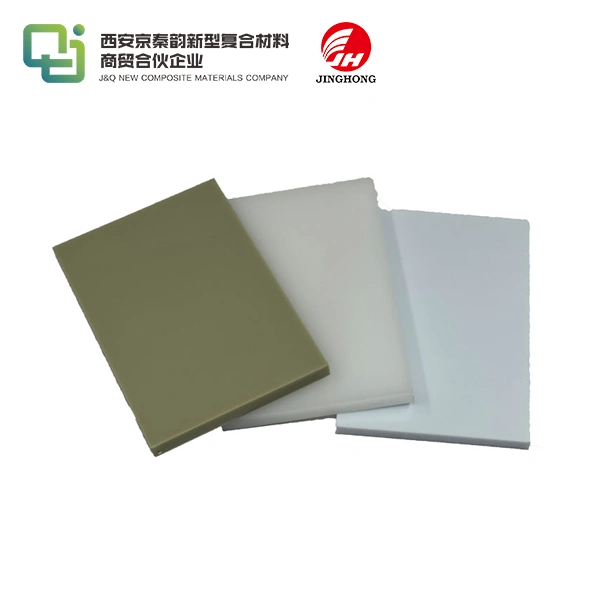
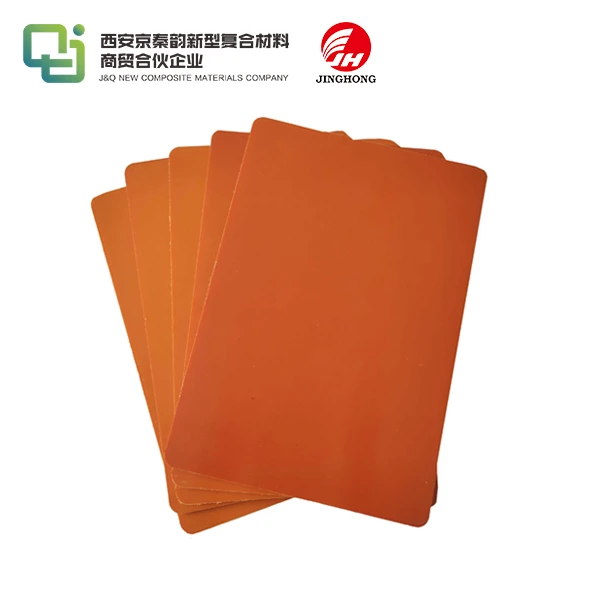
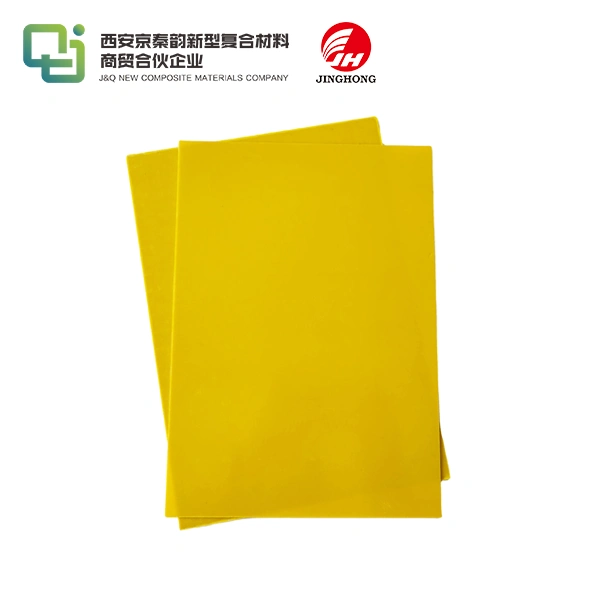
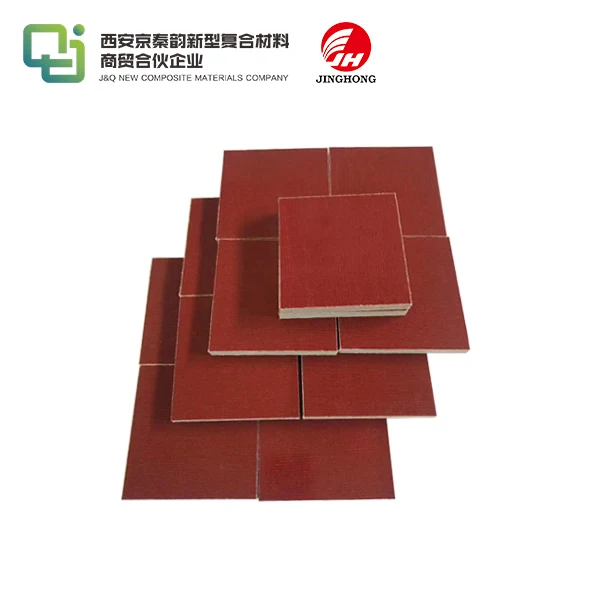
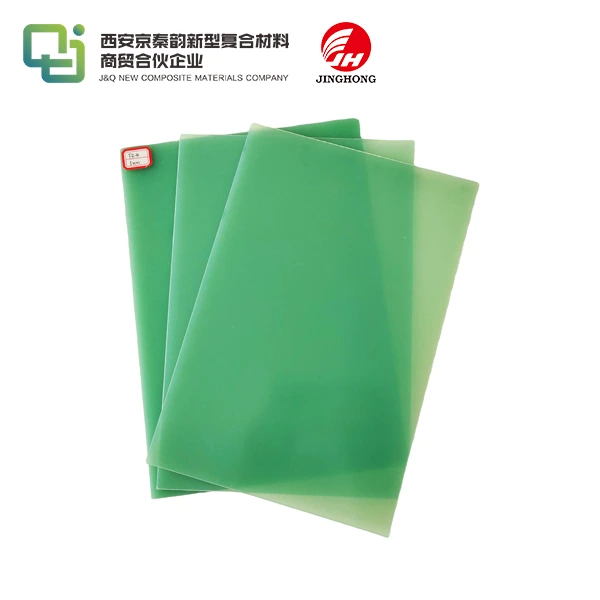
Phenolic sheets are composite laminates made by using high-pressure thermosetting to soak supporting materials like kraft paper, cotton cloth, or linen fabric in phenolic resin. The resin chemistry usually uses either novolac or resol formulas. These have different temperature and mechanical properties that have a direct effect on how well they work in industrial settings. These materials can withstand high temperatures up to 180°C continuously, are very resistant to chemicals like oils and solvents, and provide better electrical protection as shown by dielectric strength values above 15 kV/mm when dry.
The first step in the production process is to soak base materials in resin. This is followed by stacking and pressing at temperatures between 150°C and 170°C and pressures ranging from 7 to 14 MPa. This fixing process makes cross-linked polymer networks that won't melt again when heated again, which is what makes thermoset materials unique. The sheets that are made have a density of 1.30 to 1.45 g/cm³, a tensile strength of 60 to 90 MPa, and a flexural strength of up to 110 MPa, dependent on the type of support used and the way the sheets are laid out.
Key Material Grades and Their Characteristics
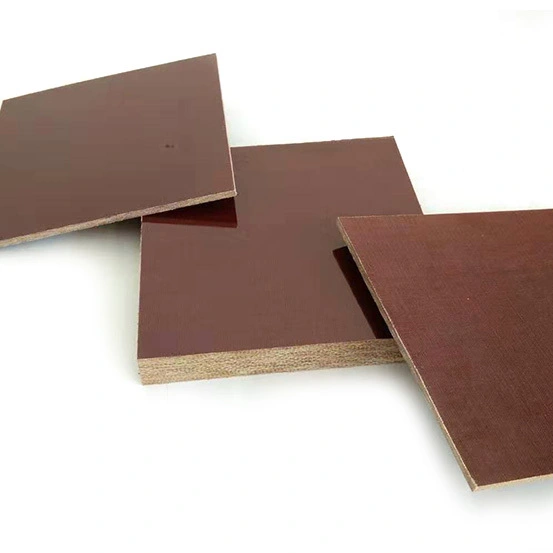
Different types of phenolics are recognized by industry norms as being best for different uses. Paper types like NEMA X, XX, and XXX put an emphasis on dielectric strength and electrical protection. This makes them perfect for supporting busbars and transformer parts. Cotton-based grades like NEMA C, CE, and LE focus on mechanical impact strength and machinability, which is useful for making gears and insulating buildings. The choice of support has a big impact on how the material reacts to heat when it is bent. For example, paper grades are more flexible when heated under controlled conditions than cotton grades, which stay more stable in their shape but fight deformation more strongly.
When buying teams know these basic qualities, they can figure out if a material is good for bending and guess how it will work under thermal stress. The type of glue, the length of time it takes to cure, and the structure of the reinforcements all affect how much temporary weakening can happen without causing damage that can't be fixed. This makes it easier to make sure that the material specifications are right for production needs.
Can Heat Make Phenolic Sheets Flexible? Scientific Insights and Mechanisms
When heat is applied to phenolic sheets, it changes the way molecular chains move within the resin matrix. The temperature gets close to, but never quite reaches, the glass transition temperature seen in thermoplastics. In a small temperature range of 150°C to 180°C, phenolic resins soften because cross-linked polymer networks don't let chain segments move around much. This limited movement lets the structure bend a little without breaking completely, but the result is still much more limited than with thermoplastic forming.
The main problem is that phenolic resins have fairly small windows of time before they start to break down permanently due to heat. Composite materials that have been tested show that long-term contact to temperatures above 200°C breaks polymer chains, making the materials weak, charring the surface, and completely losing their strength. Differential scanning calorimetry (DSC) research shows that exotherms of decomposition start around 220–240°C. This sets clear upper limits for any heat-bending process.
Temperature Control and Material Response
When forming, it's very important to keep a close eye on the temperature. Tests in factories have shown that the best results happen when the surfaces of the sheets hit 160°C to 175°C for paper-based grades and slightly higher temperatures (170-185°C) for cotton-reinforced grades. The length of time that the resin is heated doesn't matter; exposure times longer than 15 to 20 minutes at high temperatures break down the resin's properties over time, even when the temps are safe. During production runs, infrared thermography and touch pyrometry are effective ways to check the temperature.
Thickness has a big effect on how well heat moves through and how evenly the material softens. Surface heating has a more predictable effect on sheets that are less than 3 mm thick; they reach temperature balance through their thickness in 5 to 8 minutes. It takes longer or higher temperatures to soften core layers in laminates that are 6 to 10 mm thick, which raises the risk of degradation. The amount of water in a material also affects how it reacts to heat. Sheets that absorb more than 1.5% by weight of water may create steam inside them when heated quickly, which can cause delamination problems that affect the structural performance of finished parts.
These temperature tolerances help procurement experts figure out what the real limits are and how to safely improve flexibility while keeping the electrical insulation and mechanical strength that make phenolic material a good choice for tough jobs.
Practical Methods to Safely Bend Phenolic Sheets Using Heat
Controlled heating methods are necessary for phenolic sheets to go well without lowering the quality. Industrial settings usually use three main types of heating: convection ovens, which heat the air evenly, infrared panels, which send heat directly to specific areas, and heat guns, which can be used to apply heat along bend lines. Depending on the shape of the part, the amount of output, and the capital equipment that is available, each way has its own benefits.
The main steps that make sure results are always the same are listed below:
- Oven Heating Method: Position pre-cut sheets on ceramic support fixtures within forced-air convection ovens calibrated to 165-175°C. Monitor internal chamber temperature using multiple thermocouples distributed throughout the workspace. Heat sheets for 10-15 minutes depending on thickness, checking surface temperature with contact pyrometers to confirm uniform heating. Remove sheets using heat-resistant gloves and immediately position over forming fixtures. Apply steady, progressive bending force—avoid sudden impacts that concentrate stress. Hold bent configuration for 60-90 seconds while initiating air cooling to lock the shape. Complete cooling to below 60°C before removing from fixtures to prevent spring-back deformation.
- Infrared Panel Method: Mount infrared heating elements 150-200mm above sheet surfaces, using medium-wave emitters (2-4 μm wavelength) that efficiently couple with phenolic resin absorption spectra. Preheat emitters to operating temperature before introducing material. Scan sheets under heaters at controlled speeds (50-100 mm/minute) to achieve progressive heating along bend lines. This approach reduces overall thermal exposure compared to full oven heating, minimizing degradation risks for thick laminates.
- Heat Gun Technique: Industrial heat guns with variable temperature controls (300-600W output) allow precise localized heating. Maintain nozzle distance at 75-100mm from surfaces, moving continuously to prevent hot spots. Target narrow zones (20-30mm wide) along planned bend lines rather than heating entire sheet areas. This method requires skilled operators capable of judging material readiness through visual cues and tactile feedback.
Safety measures remain non-negotiable during all heating operations. Formaldehyde and phenol fumes are released when phenolics break down above critical temperatures. This means that ventilation systems must be able to change the air at least 10 times an hour. Operators must wear heat-resistant gloves rated to 200°C, safety glasses protecting against infrared exposure, and respirators with organic vapor cartridges when working in enclosed spaces. Fire suppression equipment must remain readily accessible, as overheated phenolic materials can ignite when exposed to open flames or electrical sparks.
Real-world applications demonstrate these principles effectively. Aerospace component manufacturers successfully form phenolic insulation barriers for cockpit electrical systems using controlled oven heating, achieving bend radii down to 15mm in 2mm-thick sheets. Transformer manufacturers employ infrared scanning to create curved phase barriers from 4mm cotton phenolic grades, maintaining dimensional tolerances within ±0.3mm across production runs exceeding 1,000 units. These case studies guide users integrating heat bending into manufacturing workflows while maintaining material integrity and adhering to quality standards.
Procurement Considerations When Sourcing Phenolic Sheets for Heat Bending
To choose phenolic sheets that are best for thermal forming, you need to carefully look at the resin formulation, the structure of the reinforcements, and the uniformity of the production process. The type of resin greatly affects how the material reacts to heat. Novolac-based phenolics usually have better heat protection and physical stability, but they break more easily when bent. Resol versions are a little more flexible, but they might not work as well at high temperatures. This means they are best for moderate-duty uses. The people who work in procurement have to match the chemistry of the resin to the exact working conditions and forming requirements that are written down in technical specs.
The construction of the reinforcement has a big effect on how bendable it is. Using kraft pulp fibers in paper-based materials makes laminates that have directional qualities by nature; sheets bend more easily when they are oriented parallel to the paper grain direction than when they are oriented cross-grain. Reinforcements made of cotton cloth are more isotropic, which means they don't bend as much in any direction. Knowing these traits helps purchasing teams choose material angles that meet the needs of the bend axis, which lowers the amount of waste and boosts production efficiency.
Forming uniformity is directly affected by thickness limits. When made to ISO 9001 standards, industrial phenolic sheets usually have thickness differences of no more than ±0.2mm for sizes less than 5mm. Tighter tolerances (±0.1mm) may be worth the extra cost when exact bend radii are needed for making operations or when consistent dimensions affect the electrical gaps in finished products. Before authorizing big orders, people in charge of purchasing should ask for batch testing records that show measures of the material's thickness, flexural strength, and water absorption to make sure they are in line with the requirements.
Supplier qualification represents a critical procurement responsibility. Vendors maintaining rigorous quality management systems implement incoming raw material testing, process control monitoring during lamination, and finished product validation through mechanical and electrical testing protocols. Certifications such as UL recognition for electrical insulation materials and RoHS compliance for hazardous substance restrictions provide objective evidence of manufacturing discipline. Long-term procurement specialists prioritize suppliers demonstrating batch-to-batch consistency through statistical process control data, reducing variability that complicates downstream manufacturing operations.
Strategic negotiation for volume orders can yield significant cost advantages while securing supply continuity. Standard 4x8 foot (1220x2440mm) sheet dimensions optimize material utilization for CNC machining operations, though custom sizing may reduce waste for high-volume applications. Establishing framework agreements with qualified suppliers enables just-in-time delivery aligned with production schedules, minimizing inventory carrying costs while ensuring material availability. Procurement teams should also evaluate supplier logistics capabilities—vendors with established freight partnerships or in-house transportation networks reduce lead time variability and damage risks during shipment.
Phenolic Sheets vs Other Materials in Heat Bending Applications
When it comes to industrial composites, phenolic sheets stand out because they have the right amount of heat stability, mechanical strength, and electrical protection. Compared to epoxy-glass composites like FR4, phenolic materials can handle higher temperatures over time (180°C constant vs. 130°C for normal FR4) and absorb less water, which helps them stay the same size. However, epoxy systems usually allow tighter bend radii during forming because the glue is naturally more tough. This makes them better for uses that need complex shapes, even though the materials are more expensive.
Polyester and melamine resin composites present alternative thermoset options with distinct tradeoffs. Polyester laminates are better at resisting chemicals in acidic settings, but they aren't as good at handling heat, so they can only be bent at temperatures between 120°C and 140°C without becoming too soft. Materials made from melamine are very good at resisting arcs in high-voltage situations, but they are also very fragile and can't be bent without breaking. These comparisons show that phenolic materials have the best mix of qualities for moderate-temperature shaping tasks where electrical protection is still very important.
Against thermoplastic alternatives, phenolic sheets keep their shape better when exposed to heat for a long time. Materials like polycarbonate or polyetherimide can be thermoformed into complex shapes, but they gradually bend under constant loads at high temperatures. This creeping behavior is not acceptable for use as structural insulation in power distribution equipment. Phenolics keep their hard shape over a wide range of working temperatures. However, because of this, they are less flexible when it comes to shaping than true thermoplastics.
This comparison study shows again why phenolic laminates are still the best choice for industries that need both long-lasting mechanical strength and electrical protection. They are also good for situations where modest forming capabilities allow for more design freedom without sacrificing long-term performance reliability. When comparing different materials for heat bending processes, procurement teams should keep these basic tradeoffs in mind. This will help them balance starting prices, processing needs, and expected service life.
Conclusion
Some phenolic sheets can be made slightly more flexible by carefully controlling the melting process so that the resin structures become temporarily softer without breaking down permanently. For success, it's important to keep the temperature between 150°C and 180°C, choose the right material grade and support types based on the shape needs, and keep an eye on the process during the heating and cooling cycles. To make sure that heat-bending uses work reliably, procurement professionals must look at the skills of suppliers, the certifications of materials, and the regularity of batches. While phenolic laminates cannot match thermoplastic forming flexibility, they deliver unmatched combinations of thermal stability, electrical insulation, and mechanical strength that justify their continued specification across electrical, industrial, and power generation sectors requiring moderate forming capabilities alongside demanding service conditions.
FAQ
What is the maximum safe temperature for heat bending operations?
Paper-based phenolic grades can only be heated to 170-180°C for a short time (10–15 minutes at most) before they start to break down. Because the cloth is thermally stable, cotton-reinforced versions can handle slightly higher temperatures (175–185°C). No matter how long the material is exposed to temperatures above 200°C, damage is permanent. Monitoring temperatures with infrared thermography or touch pyrometers is still necessary to make sure the quality of the product.
Can phenolic sheets be repeatedly bent without performance loss?
Over time, repeated heating processes break down the qualities of resin because they are exposed to more heat. Each heating step causes small breaks in the polymer chains that add up over time. After three heating cycles, the material's bending strength drops by a significant amount (5–8% per cycle). Applications that need more than one step in the making process should use new material for each step instead of trying to fix parts that have already been heated.
Do special additives enhance phenolic sheet flexibility during heating?
Most phenolic products focus on improving electrical and mechanical properties rather than thermal forming qualities. Some specific types have plasticizing additives or changed resin chemistries that make them a little more flexible, but these changes usually make them less resistant to heat or dielectric strength. When normal grades can't meet special forming needs, procurement teams should talk to makers about custom formulations.
Partner with J&Q for Premium Phenolic Sheet Solutions
J&Q has been making industrial-grade phenolic sheets that meet the strict requirements of the electrical, motor, and power generation industries for more than twenty years. Our phenolic sheet goods, which come in both normal 4x8 formats and custom-cut sizes, are of consistent quality, which is important for heat-bending jobs that need to be done carefully. We have strict quality control throughout the whole production process, from choosing the raw materials to the final inspection. This makes sure that every sheet meets the standards for thickness, mechanical features, and electrical performance. Working directly with a reputable phenolic sheet maker, you can avoid supply chain risks and get expert support that will help you improve your forming processes.
Our integrated logistics capabilities enable one-stop service from production through delivery, reducing lead times and simplifying procurement workflows. Engineering support teams stand ready to consult on material selection, heating protocols, and process optimization specific to your application requirements. Whether you need sample materials for proof-of-concept testing or volume production quantities with just-in-time delivery, our experienced export teams coordinate seamlessly to meet your schedule. Contact our specialists at info@jhd-material.com to discuss your phenolic sheet requirements, request technical data sheets, or arrange sample shipments that let you validate material performance in your specific heat bending applications before committing to production orders.
References
Richardson, M. and Zhang, Y. "Thermal Processing of Thermoset Composites: Mechanisms and Industrial Applications." Journal of Composite Materials, Vol. 47, No. 8, 2013, pp. 1023-1041.
Harper, C.A. Handbook of Plastics, Elastomers, and Composites, 5th Edition. McGraw-Hill Professional, 2002, Chapter 6: Phenolic Resins and Laminates.
Gutowski, T.G. Advanced Composites Manufacturing. John Wiley & Sons, 1997, pp. 287-315.
National Electrical Manufacturers Association (NEMA). "Industrial Laminating Thermosetting Products - NEMA LI 1-1998 Standard." NEMA Publications, Rosslyn, Virginia, 1998.
Kandola, B.K. and Horrocks, A.R. "Complex Char Formation in Flame-Retarded Fiber-Intumescent Combinations - Thermal Analytical Studies." Fire and Materials, Vol. 24, 2000, pp. 265-275.
Biron, M. Thermosets and Composites: Material Selection, Applications, Manufacturing and Cost Analysis, 2nd Edition. Elsevier Science, 2013, pp. 153-189.