CNC Machining Techniques for FR4 Board Materials
2026-05-21 17:09:23
Machining FR4 board materials requires accuracy, special tools, and a deep knowledge of the unique qualities of the composite. FR4 boards, which are flame-resistant fiberglass-epoxy laminates, are the backbone of electronic systems because they are very strong and good at keeping electricity from getting through them. When engineering managers and buying teams choose CNC cutting methods, they have to think about how rough the material is, how sensitive it is to heat, and how likely it is to come apart. When used in high-volume industrial settings, optimized machining methods not only keep the accuracy of the dimensions but also make the tools last longer and lower the cost of production.
Understanding FR4 Board Materials
Material Composition and Core Properties
FR4 board is an industrial laminate made of continuous filament glass cloth that has been soaked in epoxy glue under high pressure. The "FR" marking means that the material is Flame Retardant and meets the UL94 V-0 standard. This means that the material puts out fires on its own within ten seconds of being removed from a fuel source. This structure is strengthened with fiberglass and has great tensile strength and stiffness. It won't bend or break under mechanical stress. Unlike organic insulators, FR4 board strikes a key balance between structure integrity and electrical separation. It solves problems in the industry like dielectric breakdown at high voltage and changes in size during thermal cycle.
The high tensile strength of FR4 boards comes from the knitted fiberglass cloth inside them, and the epoxy glue is a great electrical insulator that stops current from leaking. Glass Transition Temperature (Tg) for standard FR4 board is between 130°C and 140°C. For uses that need higher thermal endurance, High-Tg versions raise this threshold above 170°C. Electrical experts like FR4 board because it has a dielectric strength that is usually higher than 30 kV/mm and stays stable even in places with a lot of moisture because it absorbs less than 0.2% of water.
Industry Variants and Specifications
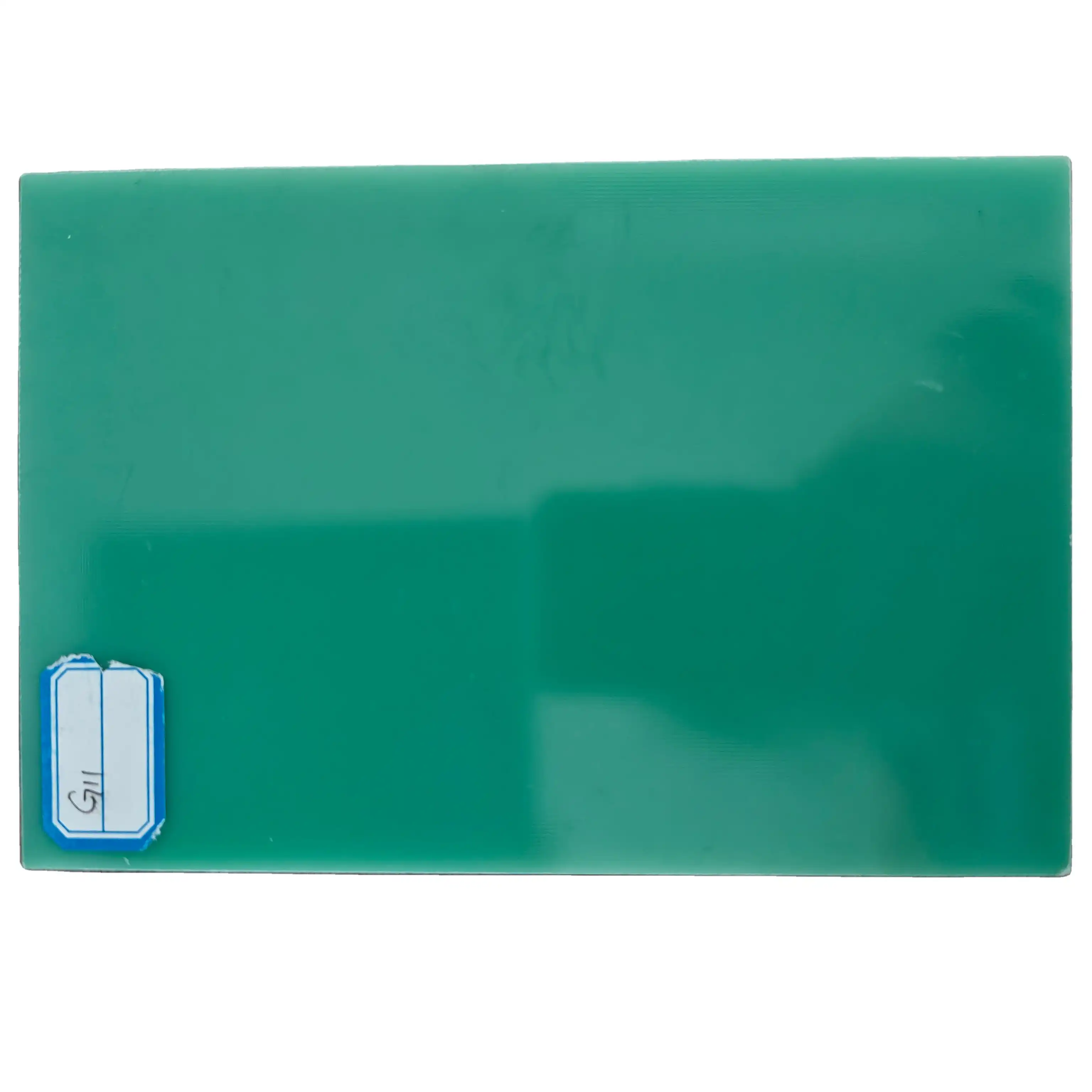
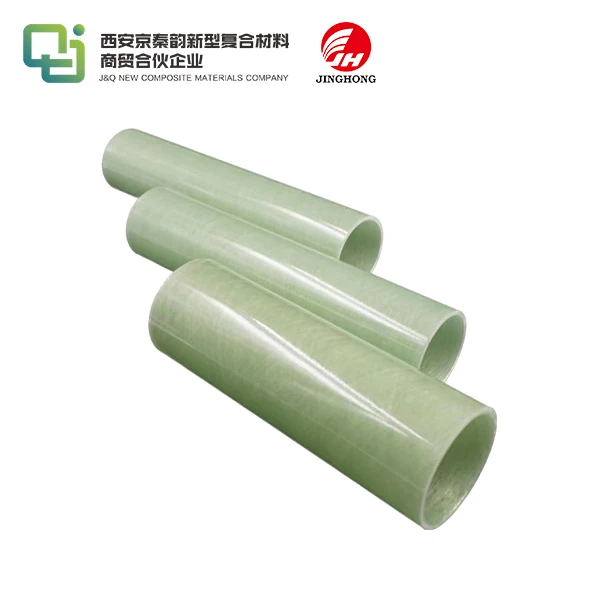
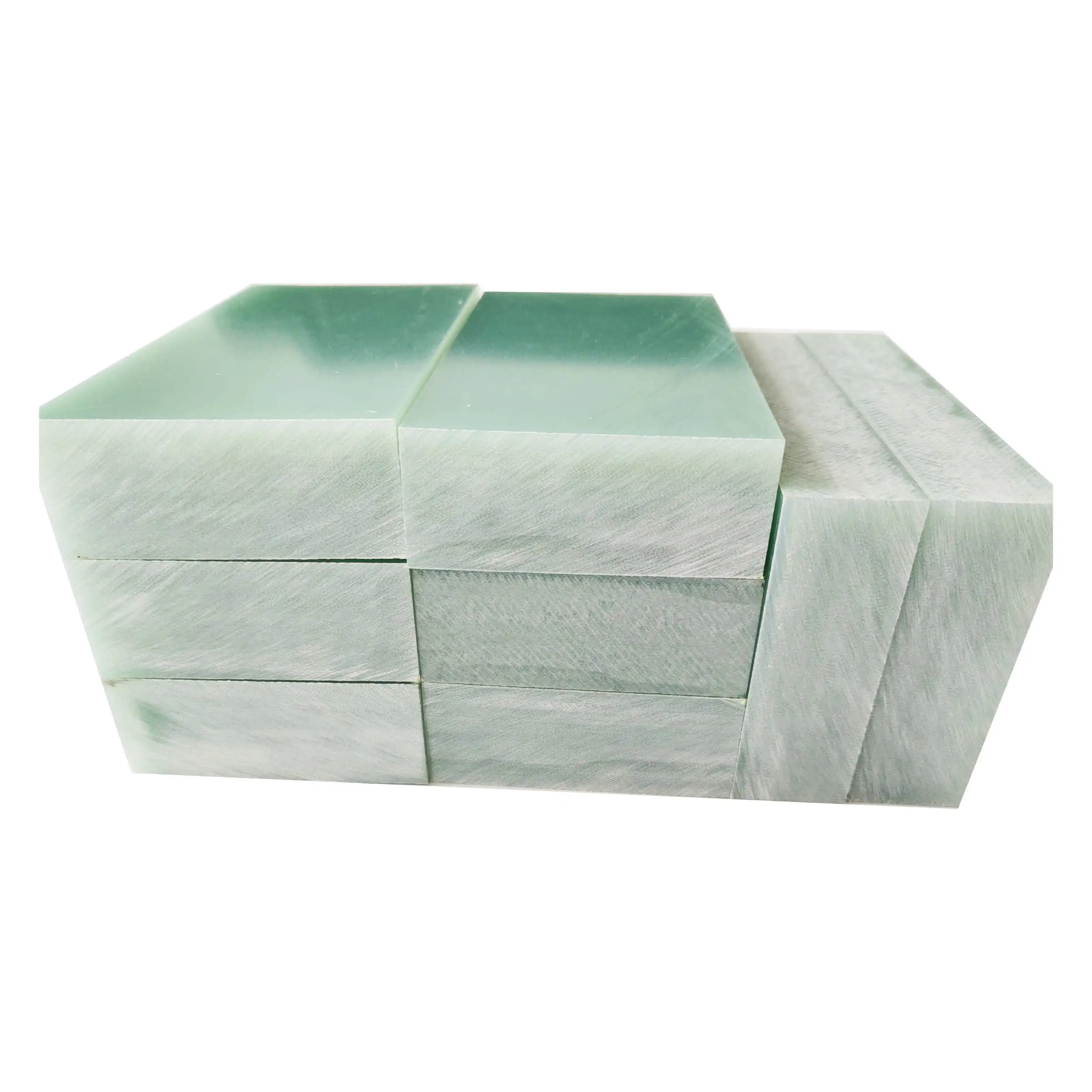
People who work in procurement come across different versions of FR4 board that are designed to meet different performance needs. Halogen-free FR4 board meets safety and environmental standards by getting rid of bromine-based flame retardants while keeping its UL approval. Dyes cause color changes from their natural pale green to black, blue, or white. Dyes don't usually change the dielectric properties unless conductive carbon is added for ESD uses. Standard thickness ranges from 0.5 mm to 50 mm, and copper weights from 0.5 oz to 3 oz per square foot. This lets OEM buying managers choose boards that meet the needs of their designs in terms of complexity and current handling.
Challenges in CNC Machining of FR4 Boards
Common Machining Issues
Machining FR4 boards is hard in its own way, which can lower the quality of the parts and make production more expensive. When cutting forces are higher than the resin bond strength, especially at board edges or through-holes, delamination happens. This is when the layers of glass fiber separate. The brittle nature of finished epoxy causes surface chipping along cut lines, especially when using old or wrong tools. The rough fiberglass content speeds up tool wear a lot compared to working with metals or plastics, making cutting edges less sharp and requiring more frequent tool replacement.
Another very important issue is the heat that is made during CNC operations. Because FR4 board isn't good at transferring heat, it can cause temperature spikes in certain areas that can soften the epoxy matrix and cause it to smear, warp, or even break down. Mechanical engineers need to be aware that the wrong spinning speeds can make these thermal effects worse. For example, too much RPM creates friction heat, and not enough speed raises cutting forces that cause delamination. Working with FR4 board is very different from working with uniform materials because it is sensitive to heat and has rough support.
Root Causes and Process Fundamentals
Finding the root causes helps expert buying teams correctly describe the needs for machining. Most of the time, dull cutting edges, high feed rates, or bad entry and exit tactics for tools cause delamination. Most of the time, shaking, bad workholding, or using tools made for metal instead of composite materials are to blame for surface quality loss. Rapid tool wear is directly related to how hard the glass threads are and how concentrated they are. This means that carbide or diamond-coated cutting edges are needed instead of regular high-speed steel.
For CNC handling to work well, the cutting settings need to be adjusted so that the rate of material removal is balanced with thermal management. When chip loads are right and spindle speeds are between 20,000 and 50,000 RPM, too much heat doesn't build up and clean cuts are made. Downcut spiral flutes push chips away from the surface of the board. This stops burrs from forming and keeps PCB copper lines safe. When people in high-volume industrial settings understand these basic ideas, they can make processes more reliable and cut down on defects by a large amount.
Advanced CNC Machining Techniques for FR4 Boards
Specialized Tooling Selection
To get precise results when making FR4 board, you must first choose the right cutting tools that are made for composite materials. Carbide end mills are harder and last longer than regular tools because they don't wear down as quickly. This means that the cutting edges stay sharp during long production runs. Diamond-coated tools are the best because they last a long time and have a high-quality finish on the outside. This is especially useful for micro-drilling tasks where hole sizes are 0.3 mm or smaller. The very high sharpness of the diamond layer keeps the edges from wearing down too quickly from the rough glass fibers. This cuts down on the number of times the tool needs to be changed and keeps the same dimensions across batches.
The shape of the router bit has a big effect on how well the cutting goes. Upcut swirls are great at getting rid of chips, but they may pull out fibers on the top surface. Downcut designs, on the other hand, make cleaner edges by squeezing fibers during cutting. Compression bits use both shapes together to stop delamination at both entry and exit places. This makes them perfect for routing slots or pockets that go through FR4 boards. The number of cutting edges is also important. Single-flute tools can aggressively remove chips, but they may shake. Two or three flutes, on the other hand, find a balance between cutting efficiency and steadiness for complex milling tasks.
Thermal Management Strategies
During CNC processes, thermal control is very important for keeping both the life of the tools and the purity of the boards. Mist coolant systems send tiny drops right to the cutting zone, where they soak up frictional heat without adding too much wetness, which could change the stability of the shape. Another option is air blast cooling, which uses directed compressed air to get rid of heat and glass dust from the work area. The epoxy matrix doesn't hit its Glass Transition Temperature with either method. At this point, the material shrinks and loses its ability to hold its shape.
Leading OEMs have shown that better thermal control leads to measured gains. Electronics companies that work with high-density PCB boards say that mist cooling cuts tool wear by 40% compared to dry cutting. By using air cooling and slower feed rates during finish passes, makers of automotive parts can keep the tolerances smaller and the dimensions accurate to within 0.05 mm. When these tried-and-true methods are used, production costs go down because tools last longer, there is less waste, and there is less need for finishing after the process.
Process Optimization Techniques
Case studies from real life show us how to improve the accuracy and speed of cutting. Power distribution companies that make arc barriers out of thick FR4 board use climb milling with short depth-of-cut increments, usually 0.5 mm per pass. This spreads the cutting forces more widely and stops the sheets from delaminating. Manufacturers of transformers that make coil insulation parts use peck drilling cycles, in which they move the drill bit forward and backward several times, to break up chips and clear glass dust from deep holes. This keeps the bit from sticking and keeps the quality of the hole walls.
Getting the best surface finish often takes more than one step. The roughing passes quickly remove large pieces of material by using harsh parameters. The finishing passes, on the other hand, use slower feed rates and new cutting edges. Manufacturers of appliances that make motor brackets have reported that using special finishing tools that run at faster spinning speeds has led to 60% better edge quality. With these stacked strategies, R&D engineers can find a good mix between production speed and component quality. This way, they can meet both delivery dates and technical requirements for tough applications.
Comparing FR4 Machining to Other PCB Materials
Material Property Impacts
FR4 board is very different from other PCB materials when it comes to how it can be machined, which affects both the tools used and the process factors. Aluminum-backed boards quickly transfer heat, which lowers temperature worries. However, cutting fluids are needed to stop chip welding and burr formation. Rogers high-frequency laminates, which are popular for RF uses, are easier to make than FR4 board because they contain less PTFE, but you need to use sharp tools to keep the material from tearing. Even though phenolic boards are cheaper, they make more dust and aren't as strong mechanically, so they can't be used in high-stress areas where FR4 board works better.
Differences in how hard different materials are have a direct effect on how stable cutting is. The controlled stiffness of FR4 board keeps it from deflecting during cutting, so measurements stay accurate without the need for special supports. On the other hand, vacuum hold-downs are needed for flexible polyimide substrates to keep the material from moving. Different thermal conductivities affect how cooling is done. For example, aluminum substrates quickly lose heat, but FR4 board's insulating properties focus thermal energy at the cutting contact, which means that more active coolant application is needed for the same feed rates.
Cost and Performance Trade-offs
Business-to-business buyers have to choose between the cost of materials, the difficulty of cutting, and the needs of the specific application. Rogers materials work better at high frequencies, but they cost three to five times as much as regular FR4 board. Because of this, they are only useful in certain telecommunications or military uses. Phenolic cotton boards are about 30% cheaper than FR4 board, but they don't have the same flame resistance or ability to handle wetness. This is fine for low-voltage parts of industrial machinery, but it's not good for power distribution equipment that needs to be flame-resistant for safety reasons.
Machining time has a big effect on the total cost of the job. Aluminum boards can be machined more quickly because they have better heating qualities, but the material itself costs more and is heavier when used in cars. FR4 boards are the best choice for electrical and electronics makers because they have reasonable material costs and reliable machining behavior that lets them make a lot of boards without using too many tools. When mechanical engineers choose substrates for OEM uses, they need to look at all of these factors at once, not just the unit price. They need to think about the total cost of production, following all the rules, and the substrate's long-term dependability in tough working conditions.
Procurement Considerations for CNC Machined FR4 Boards
Supplier Selection Criteria
A key part of successful buying is finding sellers whose skills have been shown and whose quality systems have been checked. Some of the certifications that are needed are ISO 9001 for quality management, UL recognition for flame retardancy, and RoHS compliance for environmental standards. These are all requirements that must be met in order to serve auto, power, or appliance makers. When figuring out how much a company can make, they should look at how advanced its CNC equipment is. This includes systems that check for consistent measurement standards and multiple-axis capabilities for complicated shapes. Tier-1 supply chain managers look for suppliers with flexible minimum order amounts that can handle both prototype development and high production rates for FR4 board products.
Reliability of lead times has a direct effect on production plans and how quickly the market responds. Standard FR4 board requirements can usually be met within two weeks if suppliers keep enough raw materials on hand and run multiple production shifts. Custom thickness or special dielectric types, on the other hand, may take four to six weeks. To make sure everyone knows how to communicate about order progress, shipping times, and quick choices for urgent needs, procurement experts should set up clear communication protocols. How close the supplier is to the production sites affects both shipping time and freight prices. However, having complete logistics skills can make up for location problems.
Pricing Drivers and Order Management
By understanding how costs are structured, engineering managers can find a balance between quality standards and budget restrictions. A big part of the price is the width of the FR4 board. Since the cost of materials increases directly with volume, thicker boards cost more. Copper weight requirements affect prices by affecting the type of raw materials used and the difficulty of processing them; heavy copper needs to be etched more aggressively or plated over for longer periods of time. Requests for custom machining, such as non-standard hole patterns, complex edge profiles, or tight tolerance zones, lead to higher setup costs and slower production speeds, which are usually reflected by sellers by higher unit prices or higher minimum order amounts.
Costs can be lowered without sacrificing quality when you negotiate a bulk order. Suppliers can get the best deals on raw materials and production schedules when they make volume commitments that last three to six months. Compared to spot purchases, these promises often result in 15–25% savings. Blanket purchase orders with planned releases help you plan your budget and keep your supplies flexible. Some ways to lower the risk in the supply chain are to check the qualifications of secondary suppliers for important parts, keep extra supplies on hand in case lead times change, and keep an eye on the market to see if there are changes that could affect the price or delivery of FR4 board made from epoxy resin or fiberglass.
Conclusion
To master CNC cutting methods for FR4 board materials, you need to combine your knowledge of materials science with your experience making things. Because it is electrically insulating, strong, and doesn't catch fire, the material is essential in the electronics, power, car, and appliance industries. Using specialized tools, better heat management, and tried-and-true process factors to solve machining problems has a direct effect on the quality of the parts, the speed of production, and the total cost of manufacturing. When procurement workers understand these technical details, they can choose suppliers and material specs that make products more reliable while keeping prices low. This guide gives engineering teams and buying managers useful information that they can use to successfully handle the difficulties of FR4 board cutting.
FAQ
What cutting speed works best for machining FR4 boards?
Depending on the size of the tool and the type of work, the best spinning speeds for FR4 board are usually between 24,000 and 40,000 RPM. For smaller diameter end mills, higher RPMs are needed to get the right amount of surface area, while lower speeds work well for bigger tools. Feed rates should be balanced between 1000 and 2500 mm/min to keep cycle times fair and stop heat from building up.
How does FR4 compare to G10 for CNC machining?
Both are laminates of glass and epoxy, and their mechanical and cutting features are similar. According to UL94 V-0 standards, FR4 board has bromine added to it to make it flame retardant, but G10 does not have this ability. The conditions for machining are pretty much the same, but because FR4 board has a slightly lower Glass Transition Temperature, it needs to be cooled a little more quickly during high-speed operations.
What precautions prevent delamination during drilling?
Cutting forces that separate layers of FR4 board are lessened by sharp drill bits with smooth edges. Peck drilling cycles break up chips and get rid of other waste, which keeps deep holes from getting too hot. Entry and exit safety boards keep the material in place while it is being pushed through, spreading out the forces evenly. Keeping the right feed rates—usually between 0.05-0.15 mm per revolution—avoids putting too much mechanical stress on the glue bond between the fiberglass layers.
Partner with J&Q for Superior FR4 Board Solutions
J&Q has been making and selling insulation sheets for more than twenty years and has also been involved in foreign trade for more than ten years. Our engineering teams know the important machining needs that businesses that make electronics and electrical goods, work in the power sector, and make industrial tools face every day. We have strict quality control methods that make sure every FR4 board meets UL and RoHS standards and has the right size tolerances for your uses.
As a well-known FR4 board seller, we can make any kind of changes you need, from normal thicknesses to High-Tg variants. Our in-house shipping operationFs make it easy for you to get everything you need in one place. Our reasonable prices can meet the needs of both small prototypes and large-scale production, and our open minimum order numbers (MOQs) and reliable delivery schedules make this possible. Contact our expert team at info@jhd-material.com to talk about your unique CNC machining needs, get samples of our materials, or get full quotes. We take difficult FR4 board buying problems and turn them into streamlined supply chain solutions that help you stick to your production plans.
References
Coombs, Clyde F. "Printed Circuits Handbook." McGraw-Hill Professional, 2008. Comprehensive coverage of PCB materials including FR4 properties and machining considerations.
Harper, Charles A. "Electronic Materials and Processes Handbook." McGraw-Hill Education, 2004. Detailed analysis of glass-epoxy laminates and thermal management in composite machining.
Jawaid, Mohammad and Thariq, Mohamed. "Sustainable Composites for Aerospace Applications." Woodhead Publishing, 2018. Advanced machining techniques for fiber-reinforced polymer composites.
Kobayashi, Tadahiko. "Strength and Toughness of Materials." Springer Science & Business Media, 2012. Material science fundamentals relevant to FR4 mechanical properties and failure modes.
Astakhov, Viktor P. "Machining of Hard Materials – Definitions and Industrial Applications." Springer London, 1999. Tool wear mechanisms and cutting parameter optimization for abrasive materials.
Davim, J. Paulo. "Machining Composites Materials." ISTE-Wiley, 2009. Specialized CNC techniques for fiberglass-reinforced polymer composites including thermal control strategies.