CNC Surface Finish Tips for Epoxy Resin Sheets
2026-06-18 17:13:23
Getting a perfect finish on the surface of epoxy resin sheets during CNC cutting has a direct effect on the quality of electrical insulation, motor parts, and precision fixings. If the glass fiber-reinforced epoxy composite structure isn't made correctly, it can have problems like chipping at the edges, rough surfaces, and delamination. When you know how to choose the right tool, how fast to feed it, and how to cool it, you can turn these problems into consistent, high-quality finishes that can be used on transformer insulation plates, PCB drilling pads, and battery barriers for cars. In these places, the surface integrity affects both the dielectric performance and the mechanical reliability.
Understanding Epoxy Resin Sheets and Their Surface Finishing Challenges
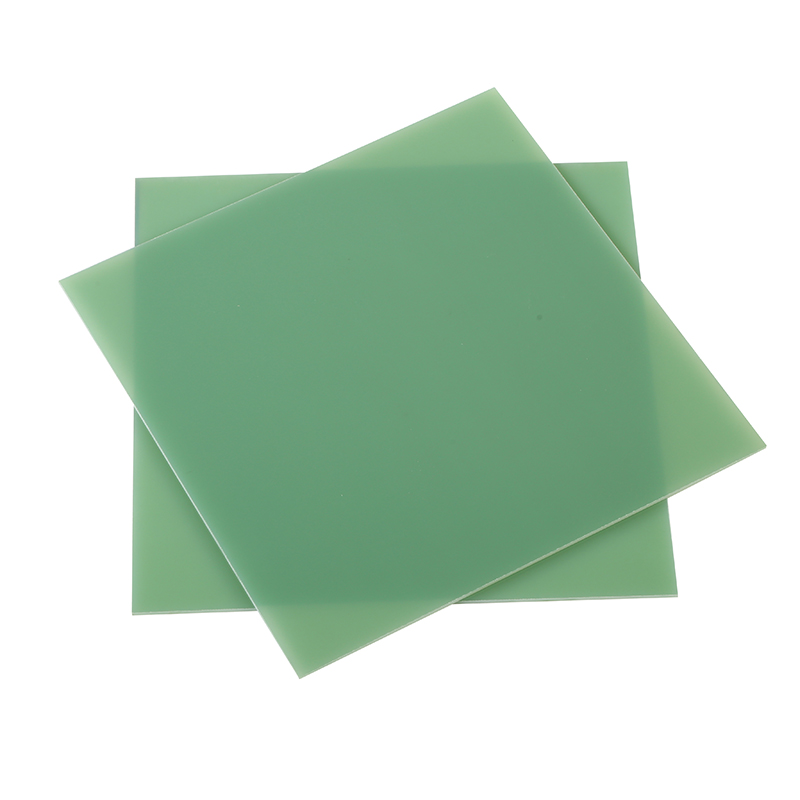
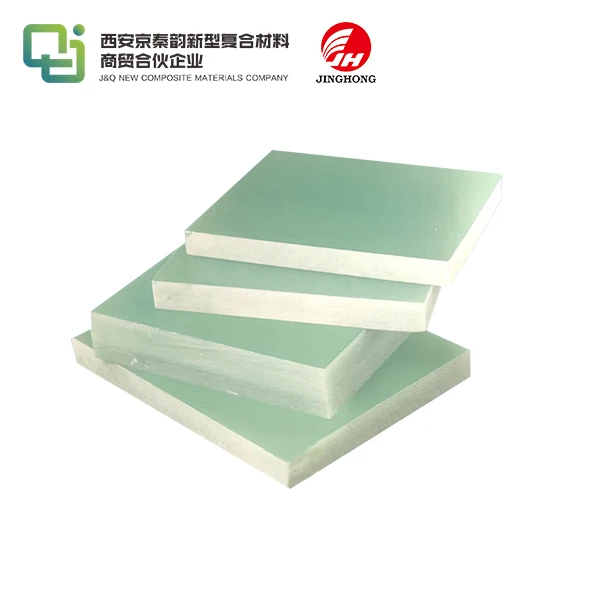
Glass fiber reinforcement and thermosetting glue are mixed in epoxy composite materials like 3240 epoxy boards and FR4 sheets to make them very strong and electrically insulating. In the 20 years that we've been making these materials, we've seen that they keep their shape at temperatures that hit 155°C. This makes them essential for power transfer equipment and heavy industrial machines.
Fundamental Properties of Glass Fiber Laminates
When tested in transformer oil, the 3240 epoxy resin sheet has a dielectric strength of 10 to 12 KV/mm and a tensile strength of more than 340 MPa. This two-part electromechanical shape works well for high-voltage power transfer tasks, where the material supports busbars and changes taps. The specific gravity is between 1.9 and 2.0 g/cm³, which makes the material thick but workable. It can hold limits of ±0.05mm during precise drilling and milling.
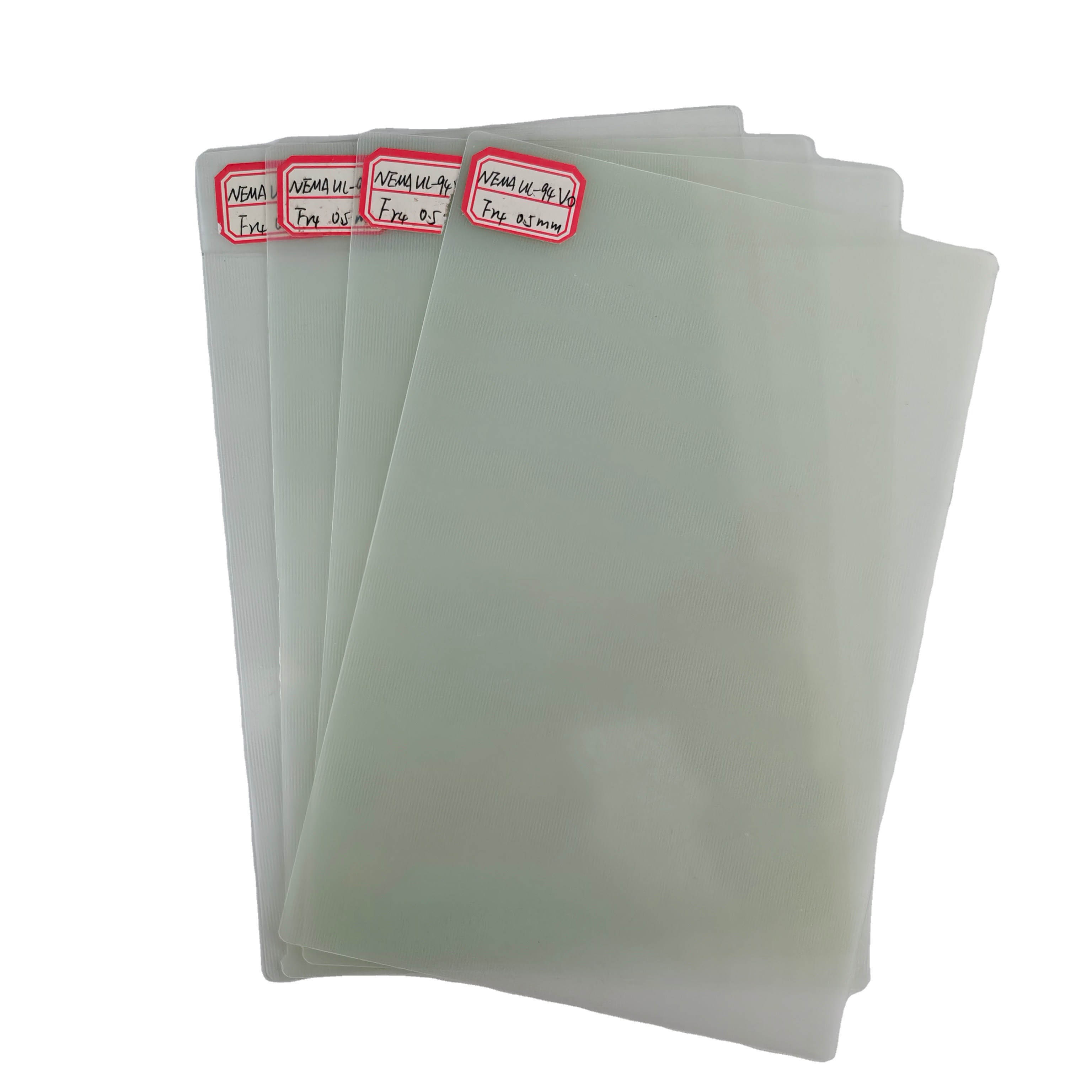
FR4 sheets are different because they have bromine-based flame retardant additives that make them meet the strict UL94 V-0 self-extinguishing requirements needed for making electronics. Both materials don't corrode when exposed to chemical liquids and don't absorb much water. However, the glass fiber presence makes the materials more abrasive, which speeds up tool wear during machining.
Common Surface Finishing Obstacles During CNC Processing
When working with glass-reinforced materials, there are three main problems that come up. Chips form where drill bits or endmills meet hard glass layers without enough support at the entry and exit points. When the feed rates aren't regular, the spinning tool can stay in one place for too long, leaving heat marks and resin burnishing. When cutting forces are higher than the bonding strength between resin and fiber layers, delamination shows up as layer separation along the edges.
These problems are made worse by the stacked structure, since the cutting forces affect each layer of glass cloth differently than the resin-rich areas between them. The problem is made worse by thermal sensitivity. Too much heat breaks the epoxy matrix but leaves the glass fibers alone, which results in a fuzzy surface pattern instead of clean shearing. When engineering managers look for materials for motor slot wedges or circuit components, they know that surface flaws can make it harder for electrical clearances and mechanical loads to be spread out.
Step-by-Step CNC Surface Finish Optimization for Epoxy Resin Sheets
A methodical way to find finish flaws is to look at how the geometry of the tool, the settings of the machine, and the properties of the material all interact with each other. From our experience making precision-machined parts for transformer makers, we know that methodical changes work better than trying things out and seeing what works and what doesn't.
Critical Factors Controlling Finish Quality
Surface improvement starts with choosing the right tools. Cutting edges made of carbide or diamond can handle the roughness of glass threads much longer than those made of high-speed steel. Sharp tools with smooth blades use less cutting force and heat, which keeps the glue from spreading. It is important to pay attention to the geometry of your router bits. Bits with opposite flute spirals apply downward and upward forces at the same time, which support both the top and bottom surfaces while you cut through them.
The spindle speed and feed rate need to be just right to balance output with heat control. When paired with feed rates of 1.5 to 3.0 meters per minute and speeds between 18,000 and 24,000 RPM, 3240 epoxy boards and FR4 sheets from 1mm to 10mm thick can usually be cut cleanly. Faster feeds with lower speeds make cutting forces stronger, which leads to chipping, while slower feeds with higher speeds make too much heat. As epoxy resin sheet thickness goes up, the ideal window gets smaller because bigger cross-sections hold more heat.
Cooling methods make things a lot better. When compressed air is directed at the cutting zone, it gets rid of chips and cools things down without adding moisture that could change the stability of the dimensions. Mist cooling with special cutting fluids lowers temperatures even more in places with a lot of production, but workers need to be protected from atomized particles, so good ventilation is needed.
Advanced Surface Enhancement Strategies
When tool paths are optimized, they don't change directions too quickly, which leaves behind marks. When you ramp into the material slowly instead of diving vertically, you lower the shock loads on both the tool and the workpiece. Climb milling, in which the movement of the cutter matches the direction of the feed, makes smoother finishes than regular milling because it cuts fibers smoothly instead of pushing them in front of the cutting edge.
Post-machining processes improve the surface quality to meet the standards of the specification. Using 220, 400, and 600-grit abrasives in a progressive cleaning process gets rid of small rough spots while keeping the dimensions accurate. We suggest this order especially for parts that will be used to insulate coils, since the smoothness of the surface affects the voltage breakdown resistance. After the fibers are cut, UV-resistant coats are put on them to protect the uncovered ends and make them more resistant to chemicals that are found in places with transformer oils or industrial solvents.
Surface profilometry is used for real-world confirmation to find Ra (average roughness) numbers. Most electrical shielding needs parts with Ra < 1.6 µm, but mechanical gaps and wear-resistant parts may be able to handle Ra < 3.2 µm. When looking at something under a sweeping light, you can see chatter lines, burn patterns, and delamination that you might miss with numbers.
Comparing Epoxy Resin Sheets with Other Materials for CNC Applications
The choice of material affects both the cutting technique and the performance of the finished part. When considering alternatives, procurement teams look at more than just the original cost.
Machinability and Surface Finish Characteristics
Acrylic is easier to work with than epoxy laminates, and normal metalworking tools can be used to make sides that are shiny. But acrylic gets soft above 80°C and breaks when hit, so it can't be used for motor parts or high-voltage uses where epoxy resin sheets work best. Polycarbonate is better at resisting impacts, but it can stress crack when exposed to chemicals that epoxy formulas can handle.
Fiberglass sheet materials, also called polyester-based laminates, are stronger than epoxy options but cost less. The trade-off shows up in the electrical properties: polyester laminates are weaker in dielectric strength and can absorb more water than 3240 epoxy boards. Power sector buyers who care about long-term insulation stability always choose epoxy-based materials, even though they cost a little more.
Phenolic laminates, such as Bakelite, are inexpensive ways to insulate against heat and handle low power. Their darker color makes them easier to see during some building steps. However, phenolic materials are more fragile and sensitive to moisture than glass epoxy composites. This makes them less useful in demanding car and industrial machinery uses.
Cost-Performance Balance in Material Selection
We help OEM buying managers look at the whole cost of a product, not just the price. Epoxy sheets cost more per kilogram, but they have lower scrap rates because they are easier to work with than cheaper options. Dimensional stability across temperature ranges cuts down on rework, and longer tool life balances out differences in material costs when more than 1,000 pieces are made each year.
High-Tg FR4 types are used as barriers for car battery packs and to power gadgets in places where the temperature is higher than 130°C. Standard FR4 is good enough for PCB supports and electrical parts that will be used at room temperature. When you match the grade of material to the temperature of the application, you avoid over-specification, which raises costs without improving performance.
Best Practices for Procurement and Use of Epoxy Resin Sheets in CNC Machining
For sourcing to work, the qualities of the materials and the production skills must match up. Choosing the right thickness affects both how well it works and how easily it can be machined. Epoxy resin sheets with thicknesses between 0.5mm and 3mm are good for PCB uses that need to be flexible during assembly, while sheets with thicknesses between 6mm and 50mm provide structural support in transformer building and motor frames.
Supplier Evaluation and Quality Verification
Certifications prove that the production process is consistent. Flame resistance testing is confirmed by UL approval for FR4 materials, and hazardous substance limits for the electronics market are ensured by ROHS compliance paperwork. We keep our ISO 9001 certification, which shows that we have quality management systems that were created over 20 years of working in the insulation products industry.
When planning output, lead time economy is important. Standard orders can be shipped within 5 to 7 business days from established providers who keep popular thicknesses and types in stock. Depending on when the production is scheduled, custom specs like non-standard sizes or colors can add 15 to 20 days to the lead time. Engineers can test samples before making large purchases, and asking for cutting samples is a more reliable way to find out about surface finish capabilities than just looking at material certificates.
There are more benefits to ordering in bulk than just lower unit prices. When you combine packages, the wrapping stays together better and the freight costs per piece go down. Through relationships with both domestic and foreign freight companies, we've been able to develop our integrated logistics skills. These allow us to provide one-stop service from production to delivery, reducing the number of handling changes that could damage sheets.
Handling and Storage Recommendations
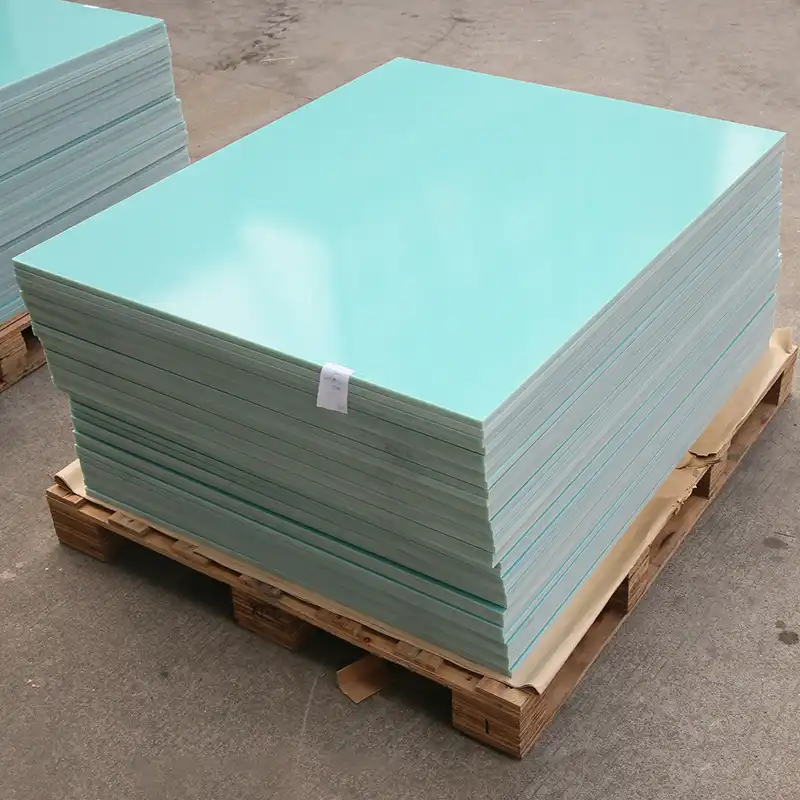
Surface quality is kept up throughout the supply chain by treating things the right way. Sheets should stay in their safe packaging until they are ready to be machined. Materials thinner than 2mm don't bend when they are stored horizontally. Controlled climates with 40–60% relative humidity keep size changes to a minimum. This is especially important for keeping tight standards for precision gears and tools.
The most common type of damage can't happen when edges are protected during transport. Corner guards and interleaving sheets spread the force across the whole surface instead of focusing it on weak spots. These safety measures are especially important for large-format sheets that will be used by CNC cutters to cut out multiple parts from a single panel.
Maintenance and Safety Tips for Epoxy Resin Sheets Post-Machining
Maintaining the consistency of the surface after machining increases the life of the component and keeps its electrical qualities. When cleaning, you shouldn't use rough pads that cause new scratches. Isopropyl alcohol gets rid of machine marks and hand oils without harming the epoxy matrix. Pressurized air clears dust out of drilled holes and other recesses.
Scratch Repair and Surface Restoration
Polishing products made for composite materials can be used to get rid of small scratches that only affect the way something looks and not how it works. In high-voltage situations where safety gaps can't be compromised, deeper gouges that affect dielectric openings mean that the part has to be replaced instead of repaired. The economic assessment shows that in most business situations, preventing problems through proper handling of epoxy resin sheets is better than trying to fix them.
Long-term longevity is affected by things in the environment, such as UV exposure and chemical touch. UV-stabilized coats keep plastic from breaking down and colors from changing on parts that are used outside. If you are exposed to strong alkalis or aromatic oils, you should check the material suitability data first, because some chemicals can get through epoxy formulations even though they are usually resistant to chemicals.
Workplace Safety and Dust Control
The glass fiber dust that is made during grinding can irritate the lungs and skin. Particulates are caught before they get into breathing zones by HEPA-filtered air systems that work right. When grinding is going on, operators should wear dust masks with a N95 rating or higher. Wearing long sleeves and gloves keeps your skin from coming into touch with fiber pieces that can irritate and itch sensitive skin.
Regular bit replacement as part of tool care stops cutting forces from being too high, which creates more dust. Point-of-generation recording is better with vacuum devices built into CNC routers than with ambient air filter alone. When we work with appliance makers to set up new cutting capabilities for insulation frames and motor brackets, we stress these safety rules.
Surface treatments, such as conformal coats and wax finishes, make things more resistant to mechanical wear and water damage. These features are useful for boat electronics and outdoor power equipment that is exposed to more extreme weather than most industrial equipment.
Conclusion
If you learn how to finish the outside of epoxy resin sheets properly, you can use them in all kinds of electrical, mechanical, and heat situations. The precise standards of power distribution systems, car parts, and precision electronics are directly affected by the tools used, how well the parameters are optimized, and the treatments done after the machining. Frameworks for comparing materials help buyers find the most cost-effective options that meet the needs of approval, machinability, and performance. Proper buying practices, such as verifying suppliers and following handling guidelines, protect quality from production to installation. Safety measures protect workers who handle these rough materials.
FAQ
What thickness should I specify for CNC machining epoxy boards?
The thickness is determined by the needs of the product. 0.5mm to 3mm sheets are usually used for PCB supports and electrical insulation walls because they have enough dielectric strength and are easy to machine. For structural parts like motor slot wedges and transformer spacers, 6mm to 12mm materials are needed to make them stiff. When cutting, thicker sheets produce more heat, so feed rates need to be slowed down and cooling needs to be sped up to keep the surface quality.
Which tool materials best preserve finish quality on FR4 sheets?
For glass fiber laminates, carbide tooling is the bare minimum. It has a good tool life and finish quality for modest production rates. Diamond-coated cutting edges last three times longer than carbide ones and produce better surface finishes because they require less cutting force. If you buy diamond tools and machine more than 50 parts a week, you'll quickly get your money back because you won't have to change the tools as often and you'll get higher return rates.
Can damaged surfaces be repaired without compromising electrical performance?
If scratches are only on the surface and don't go through the resin layers, they can be polished off without changing the insulation qualities. Damage that exposes glass strands lowers the dielectric strength and should cause high-voltage uses to reject the component. Mechanical parts that can handle minor flaws in appearance might still be able to do their job as long as they meet the requirements for size and power. Conservative engineering changes parts that might not work right instead of taking a chance on field failures.
Partner with J&Q for Superior Epoxy Resin Sheet Solutions
Our integrated skills give electrical and industrial makers who are looking for trusted suppliers of epoxy resin sheets a competitive edge. With more than 20 years of experience in production, we can make 3240 epoxy boards and FR4 materials that meet UL and ROHS standards and are used in the electronics, power, and car industries. Engineering managers like how our technical consulting services help them match the right material grade to the job, and buying teams like how our sample policies are open and let them test the machining before committing to a large order. We keep popular thicknesses in stock so that we can deliver quickly, and our partnerships with logistics companies make foreign shipping easy and keep the quality of the sheets while they're in transit. Get in touch with our team at info@jhd-material.com to talk about your unique CNC machining problems and get personalized advice along with cheap bulk pricing for high-quality insulation materials.
References
Harper, C.A. (2006). Electronic Materials and Processes Handbook. McGraw-Hill Professional.
Kobayashi, T. (1995). Strength and Toughness of Materials. Springer-Verlag Tokyo.
Lee, H. and Neville, K. (1982). Handbook of Epoxy Resins. McGraw-Hill Book Company.
Lubin, G. (1982). Handbook of Composites. Van Nostrand Reinhold Company.
Peters, S.T. (1998). Handbook of Composites (Second Edition). Chapman & Hall.
Schwartz, M.M. (1992). Composite Materials Handbook (Second Edition). McGraw-Hill Inc.
_1740986340093.webp)