What Certifications Should Epoxy Resin Sheets Have
2026-06-18 17:13:19
Understanding certification standards is crucial when sourcing materials for industries that operate in hazardous conditions. Epoxy resin sheet certifications demonstrate compliance with performance requirements for electrical insulation, industrial durability, and safety. These qualifications also confirm that the materials meet international standards for environmental responsibility, heat resistance, and dielectric strength. Without proper certifications, procurement teams risk regulatory penalties, equipment failure, and reduced worker safety. In today's competitive B2B market, this detailed guide outlines key certifications that help procurement teams distinguish reputable suppliers from unreliable ones.
Understanding the Importance of Certifications for Epoxy Resin Sheets
Working with electricity and machinery builders for twenty years has taught us one thing that can't be argued with: certifications are the most important part of risk management in industrial buying. These references are independent proof that the materials do what they say they will do in harsh situations.
Why Certifications Matter Beyond Marketing Claims
Certification groups use strict testing methods that mimic the stresses that happen in real life. If an epoxy resin sheet has UL approval, it means that samples were tested in approved labs for flame resistance, temperature cycling, and electrical breakdown. This process of checking saves your business from vendors making claims that can't be supported, which could cause catastrophic equipment breakdowns.
Supply chain problems cost companies a lot more than the difference in price between products that are approved and those that aren't. One batch of insulating sheets that doesn't meet standards can stop production lines, lead to product recalls, and put companies at risk of being sued. When compared to non-certified materials, engineering managers regularly say that certified materials cut guarantee claims by 40 to 60 percent.
The Hidden Costs of Non-Certified Materials
There is a lot of pressure on procurement specialists to cut down on material prices, but missing certification checks leaves expensive holes. At first glance, non-certified phenolic sheets might look exactly like FR4 epoxy boards, but they will fail horribly when exposed to high temperatures or chemicals for a long time. Insurance claims managers often refuse to pay for losses caused by non-certified parts, leaving businesses vulnerable financially.
Compliance with regulations adds another layer. More and more, export markets want written proof that the goods are safe. In the European Union, chemical substances must follow REACH rules, and in North America, electricity codes refer to specific UL standards. Not having the right certificates can leave goods stuck at customs or stop them from entering a market.
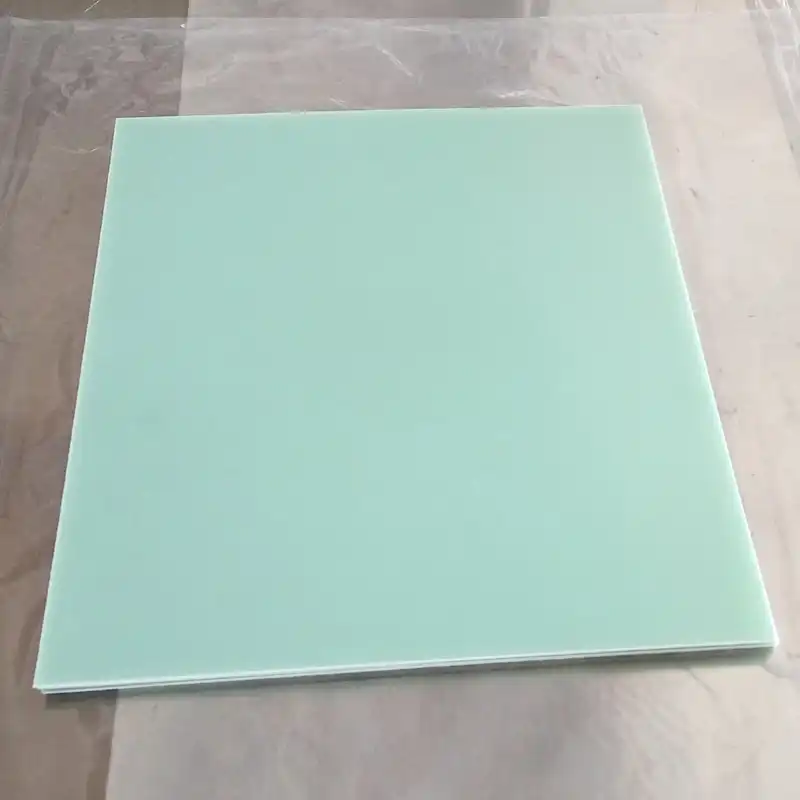
Key Certifications Epoxy Resin Sheets Should Have
The approval environment is very different depending on the needs of the application and the audience it is aimed at. Different fields put a high value on different credentials that are in line with their business risks and legal frameworks.
ISO Quality and Environmental Management Systems
Having ISO 9001 approval shows that a company keeps quality rules in place throughout the whole production process. This standard makes sure that thickness limits are always the same, that resin cures evenly, and that batch paperwork can be tracked. This title is very valuable to automotive providers because it fits in with their tier-1 quality standards.
ISO 14001 talks about environmental management and confirms that making epoxy resin sheets uses the least amount of energy and creates the least amount of toxic garbage. More and more, companies that have to be sustainable request this certification from the companies that serve them. The credential shows that the production process is responsible and doesn't hurt the performance traits of the material.
Chemical Safety and Hazardous Substance Compliance
Compliance with REACH (Registration, Evaluation, Authorization, and Restriction of Chemicals) rules makes sure that materials don't have any very high worry substances above certain levels. This European rule applies to all businesses that sell goods in the EU or add parts to goods that are meant for European customers. Glass fiber reinforced epoxy sheets need to show REACH paperwork that lists all of their chemical parts.
With RoHS (Restriction of Hazardous Substances) approval, electrical and computer tools can't have too many heavy metals or toxic compounds. Power distribution companies depend on RoHS compliance to follow environmental rules and keep workers safe from lead, mercury, and cadmium while they install and maintain equipment.
Fire Safety and Thermal Performance Standards
UL 94 approval is still the best way to test for flammability in electricity settings. The V-0 grade means that the materials will put out the fire themselves within seconds of the flame source being removed and will not drip with flames. UL 94 V-0 rated sheets are used by makers of switchgear and transformers to stop fires from spreading in high-voltage equipment.
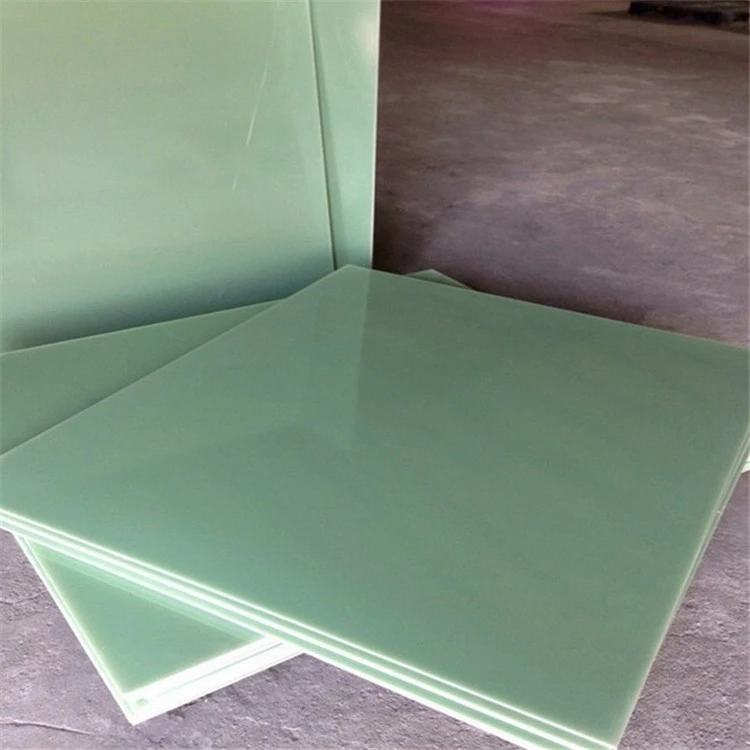
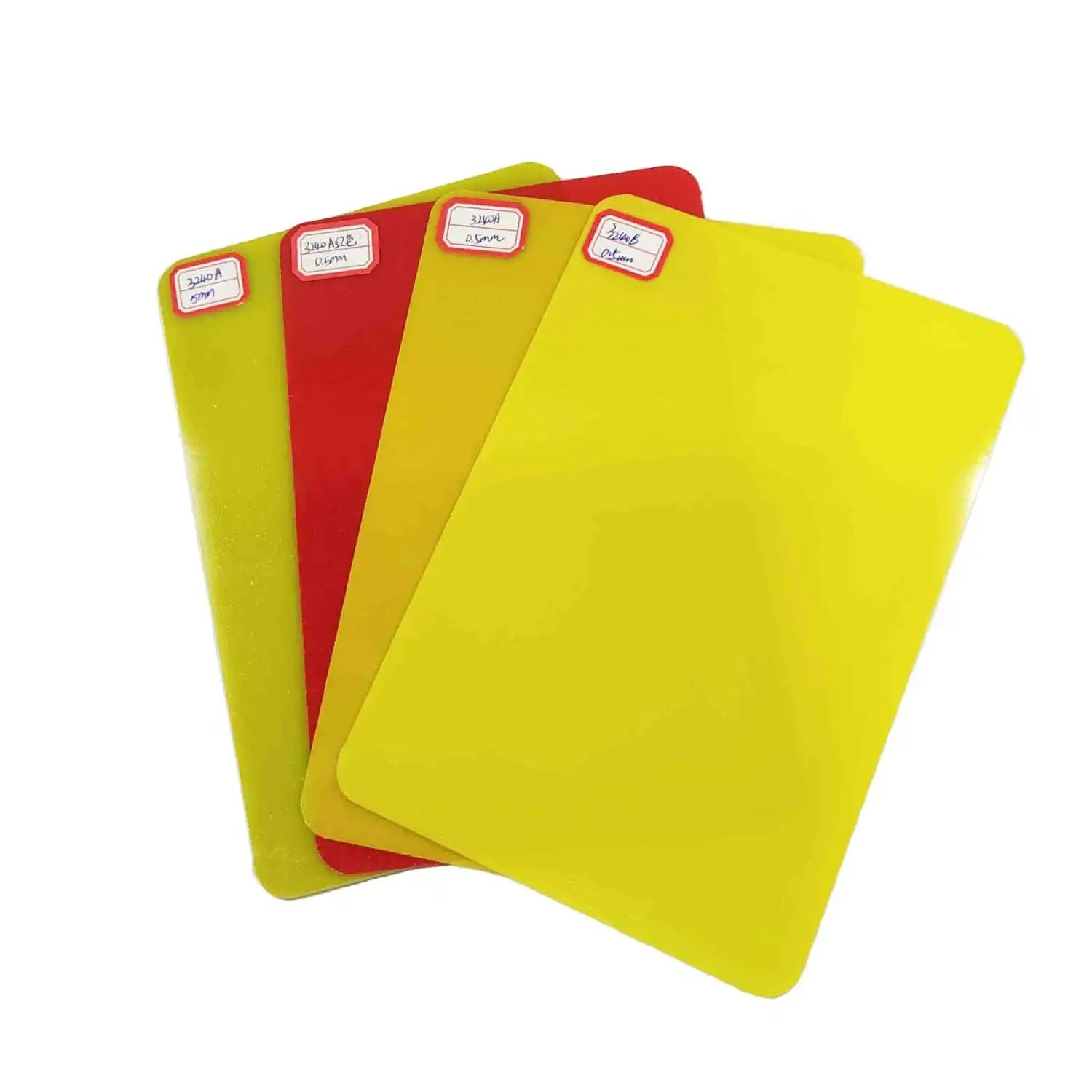
The system can tell the difference between FR4 standards and 3240 epoxy resin sheet grades. Standard 3240 material is very good at withstanding heat up to 155°C (Class F insulation), but it might not get V-0 flame ratings. FR4 epoxy boards have bromine-based additives that were designed to meet strict fire safety standards. This makes them better for PCB uses and consumer electronics.
Application-Specific Certifications
FDA approval is needed whenever insulation materials come in touch with food or tools used to make medicines. Some types of epoxy meet these needs, but most industrial-grade sheets have ingredients that aren't safe for direct food contact.
If something has a CE mark on it, it means it meets European standards for health, safety, and the environment. CE compliance is not a license in and of itself, but it does require proof that you follow the relevant EU laws. ASTM standards give detailed instructions on how to do mechanical testing. This lets purchasing teams use similar standards to compare materials from different sources.
How Certifications Impact the Procurement Decision-Making Process
Every step of the sourcing process is affected by certification standards, from the first step of qualifying vendors to the final acceptance tests. Technical procurement teams make assessment models that weigh certification skills against delivery and cost factors.
Aligning Certifications with Application Requirements
For example, electrical protection needs a different set of certifications than mechanical parts. Motor makers care most about checking the dielectric strength and the heat class ratings, while machinery builders care more about checking the bending strength and the stability of the dimensions. By knowing these differences, you can avoid over-specification, which raises costs without adding any usefulness.
Full testing records are needed for high-voltage transformer parts, which must include oil soaking resistance and arc tracking resistance. Most of the time, these special approvals show up on Class F or Class H insulation systems. Power generation suppliers keep detailed test reports that show how well their products work when they are constantly under electrical stress.
Verifying Supplier Authenticity
When buying things from other countries, especially through aggregator sites, fake certificates are common. Unique certificate numbers, seals from recognized laboratories, and specific test conditions are all signs that a certification document is real. By comparing certificate numbers to databases of granting bodies, you can be sure that the documents are real and avoid fake ones.
Manufacturers with a good reputation keep up-to-date licensing files that customers can look at. During checks of suppliers, purchasing teams should make sure that production batches match approved samples and that quality systems keep track of the links between test samples and materials that are shipped. Documentation gaps are often signs of problems with the quality system that show up as different features of materials.
Balancing Cost Considerations with Compliance Benefits
Certified materials usually cost 15–30% more than non-certified ones. This is because of the money that needs to be spent on tests and manufacturing processes to keep up with regulations. When you add up all of the costs of ownership, like failure rates, insurance claims, and governmental risk exposure, this cost difference gets a lot smaller.
When you buy in bulk from certified sellers, you can often get graduated price that lowers the cost per unit while still keeping your compliance qualifications. Long-term procurement experts arrange framework deals that set certification standards for many product lines. This makes managing specifications easier and lowers the cost of administration.
Epoxy Resin Sheet Industry Standards and How They Compare to Alternatives
More and more, choosing materials involves weighing the pros and cons of epoxy laminates and other shielding technologies. Different types of materials offer different performance ratings that have been proven through various testing processes.
Performance Advantages of Certified Epoxy Materials
Glass fiber reinforced epoxy resin sheets are stronger than phenolic paper laminates and can keep their shape even when they are under a lot of stress. Because of this, they work great for motor slot wedges and generator parts that need to handle both electrical and mechanical stress. Flexural strength is higher than 340 MPa, which is about twice as high as normal Bakelite sheets, according to certified tests.
Another thing that sets them apart is their resistance to moisture. Epoxy resin mixtures don't absorb much water, even in damp places, so they keep their insulation resistance over long periods of time. Even though phenolic materials are cheap, their electrical qualities get worse when they are exposed to air for a long time. Standardized humidity conditioning and dielectric strength measurement are used in certification tests to measure these differences.
Comparative Analysis with Alternative Materials
Acrylic sheets are clear to see through and don't get damaged by the weather, but they aren't thermally stable enough to be used as electrical shielding. Their glass transition temperatures are usually less than 100°C, which means they can't be used for motor parts or equipment that distributes power. For structural uses, fiberglass sheets are very resistant to weathering, but they need epoxy resin binders to have the right electrical insulation qualities.
Case studies from companies that make battery packs for cars show these differences. Early designs for electric vehicles used a variety of materials to keep heat out and keep electricity from flowing through them. Field failures caused by poor thermal performance led to the standardization of FR4 and high-Tg epoxy materials, which stay stable in size over a wider range of temperatures. Certification data helped engineering teams choose materials based on facts, which got rid of failure modes.
Practical Tips for Procuring Certified Epoxy Resin Sheets
To be successful at buying, you need to carefully evaluate suppliers and follow set procedures for checking their information. These steps reduce the amount of risk that you are exposed to while keeping your competitive buying options open.
Documentation Verification Checklist
You should ask for full certification packages that have test results, a proof of conformance, and material safety data sheets. Original paperwork spells out exact test methods, lab approval, and how to prepare a test material. Generic certificates that don't have these features often mean that quality control isn't being done well enough.
Check to see if the bought specs and approved properties match up. If you're going to use 3240 epoxy resin sheet continuously at 155°C, make sure the certification papers clearly say that it has a Class F thermal grade. When marketing claims don't match up with real certification coverage, it could mean there are quality problems.
Red Flags in Supplier Claims
Watch out for sellers that offer "equivalent" licenses or their own testing methods. International accreditation standards make sure that testing is always the same for legitimate licensing groups. Suppliers who can't provide standard UL, ISO, or ASTM paperwork may not have the quality support they need.
When prices are unusually cheap compared to the market, it's likely that the product is made with non-certified materials or recycled content that isn't mentioned in the description. Cost optimization is still important, but big price differences mean that the origin and tests of the item need to be looked at more closely.
Building Relationships with Certified Manufacturers
Supply chain safety can be achieved by working with well-known makers who have been certified for many years. These companies spend money on ongoing compliance because they need to work with controlled industries to make money. Usually, they offer professional support like help choosing materials, special machining, and help with application engineering.
Compliance with international shipping rules is more difficult because clearance paperwork and customs rules need to be coordinated. Suppliers with a lot of experience offer full export packages that include business invoices, packing lists, and copies of certifications that are formatted to meet the rules of the target country. This knowledge speeds up the customs process and cuts down on shipping delays.
Conclusion
The fact that epoxy resin sheet materials have to be certified shows how important they are for electrical safety, machine stability, and following the rules. There are many types of credentials, such as quality management systems, chemical safety rules, fire performance standards, and approvals that are specific to an application. The success of procurement depends on matching certification types to the needs of the industry and making sure that suppliers are real by looking at their paperwork and evaluating their quality in a planned way. To find the right balance between cost and compliance, you need to know about total ownership economics that take into account preventing failure and lowering regulatory risk. As global standards change, working with approved makers makes sure you can get materials that meet current standards and can be used with new rules.
FAQ
What distinguishes FR4 certification from standard 3240 epoxy sheet credentials?
The main difference is in how flame retardancy is tested. UL 94 tests FR4 materials and most of the time they get V-0 scores, which means they put out fires quickly and don't spread. Standard 3240 sheets are very good at keeping heat in up to 155°C, but they might not have any flame-retardant ingredients. Electronics companies use FR4 for PCB substrates in places where fire safety rules apply. On the other hand, 3240 material is often used in industrial uses where flame ratings are not required.
How can buyers verify that certification documents are authentic rather than counterfeit?
Check certificate numbers directly with the organizations that issued them through their online proof tools. Real certificates have marks from accrediting laboratories, clear test requirements, and dates that they are good for. Get in touch with certification groups if papers look sketchy or don't follow standard formatting rules. If you ask for original test results instead of summary certificates, you can get more proof through thorough method details and lab letterhead authentication.
Do epoxy sheet certifications expire or require periodic renewal?
For ISO system approvals, there must be a surveillance check once a year and a full recertification every three years. Material-specific certifications, like UL recognition, are still valid as long as the manufacturing methods and formulas don't change. However, compliance is confirmed by retesting on a regular basis. To make sure the certifications are still valid for the current production batches, suppliers should show certificates that were issued within the last two years.
Are there cost-effective alternatives to fully certified materials for non-critical applications?
Think of approved materials as risk insurance instead of extra costs. Basic quality standards that make sure the dimensions are the same and the material is pure are helpful for even non-critical parts. Suppliers who offer partly certified materials, like ISO 9001 without UL grades, offer alternatives that keep quality standards high while lowering costs compared to fully certified goods.
Partner with J&Q for Certified Epoxy Resin Sheet Solutions
Figuring out what you need to do to get certified takes years of experience working in tough manufacturing settings. J&Q has been making high-quality products for more than 20 years and has a wide range of certifications that cover UL, RoHS, REACH, and ISO standards. Our expert team helps companies that make electrical equipment, machinery, and power tools choose the best materials and backs them up with full compliance paperwork.
As a seller of epoxy resin sheets with a lot of experience, we keep FR4 boards, 3240 epoxy laminates, and specialized insulation grades that are approved for your needs in stock. Our combined logistics services send goods with all the necessary export paperwork, which speeds up the customs process and cuts down on the time it takes to get things. As part of engineering support, material testing management, custom machining services, and suggestions that are tailored to the application and maximize performance while staying within budget are all things that are done.
Get in touch with our purchasing experts at info@jhd-material.com to talk about your licensing needs and ask for samples. We offer detailed technical data sheets, up-to-date certifications, and cheap quotes that are set up for large orders. Trust that we have a history of meeting the needs of global producers who need materials that work reliably in the toughest circumstances.
References
International Electrotechnical Commission. (2019). Specifications for Industrial Rigid Laminated Sheets Based on Thermosetting Resins for Electrical Purposes. IEC 60893 Standard Series.
Underwriters Laboratories. (2021). Standard for Safety of Flammability of Plastic Materials for Parts in Devices and Appliances. UL 94 Certification Guidelines.
European Chemicals Agency. (2020). Guidance on Requirements for Substances in Articles under REACH Regulation. ECHA Technical Documentation.
ASTM International. (2022). Standard Test Methods for Flexural Properties of Unreinforced and Reinforced Plastics and Electrical Insulating Materials. ASTM D790-17.
Institute of Electrical and Electronics Engineers. (2018). IEEE Guide for Transformer Fire Safety Practices. IEEE Standard C57.156-2016.
National Electrical Manufacturers Association. (2020). Industrial Laminated Thermosetting Products: Specifications and Test Methods. NEMA LI 1-2020 Standard.