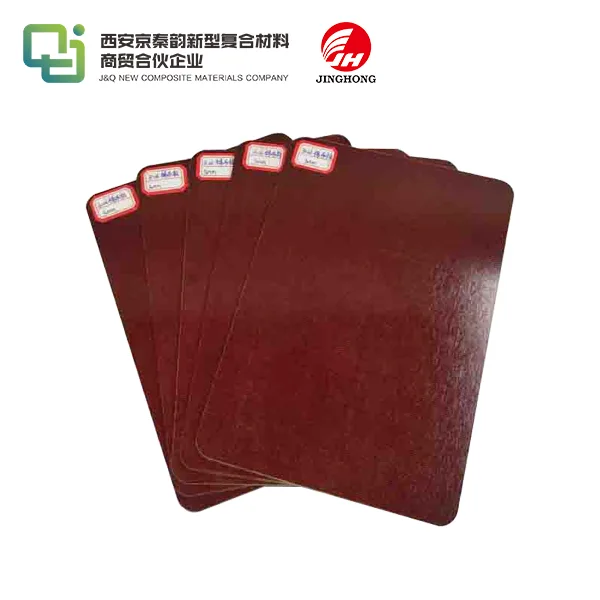
Common Bakelite Sheet Warping Problems Solved
2026-06-11 17:23:26
One of the biggest problems electrical makers and industrial engineers are currently dealing with is Bakelite sheet bending. When phenolic laminate materials lose their ability to stay the same size, it affects whole production lines, making shielding less effective, stopping CNC machining, and eventually leading to more waste. Figuring out why phenolic resin sheets warp and using tried-and-true fixes can save a lot of money on repair costs while keeping the thermal stability and dielectric strength that make them essential in electrical, automobile, and power distribution uses. This complete guide talks about bending from both a purchasing and an engineering point of view. It gives decision-makers useful information for making sure materials work well.
Understanding Bakelite Sheet Warping
The complex relationship between the curing of the phenol formaldehyde resin and the behavior of the support material causes phenolic laminate materials to warp. During the pressing process, heat turns on the thermosetting polymer network and pulls moisture out of the layers of paper or cloth support at the same time. When curing doesn't happen evenly, like when there are temperature differences in the hydraulic press or when the glue isn't spread out evenly, internal stresses form that show up as physical instability when the material cools down. Sheets ranging in thickness from 0.5 mm to 50 mm react to these stresses in different ways. Thinner materials are more likely to twist and bend.
The Chemistry Behind Deformation
The complex relationship between the curing of the phenol formaldehyde resin and the behavior of the support material causes phenolic laminate materials to warp. During the pressing process, heat turns on the thermosetting polymer network and pulls moisture out of the layers of paper or cloth support at the same time. When curing doesn't happen evenly, like when there are temperature differences in the hydraulic press or when the glue isn't spread out evenly, internal stresses form that show up as physical instability when the material cools down. Sheets ranging in thickness from 0.5 mm to 50 mm react to these stresses in different ways. Thinner materials are more likely to twist and bend.
Environmental and Mechanical Triggers
Absorption of moisture is a key part of post-production bending. Phenolic materials don't absorb as much water as some other plastics, but the paper-reinforced grades (Grade X and XX) can soak up enough water to cause swelling in certain areas. This problem is made worse by changes in temperature during storage. The resin matrix and reinforcement fibers have different thermal expansion rates, which creates internal strain. Convex, concave, or saddle-shaped deformations that make machining difficult are often caused by mechanical stresses from poor stacking, uneven support during shipping, or removing the material from the pressing equipment before it has fully cooled.
Impact on Performance Metrics
Sheets that are warped hurt both electrical and mechanical performance, which has a direct effect on how reliable the final product is when using Bakelite sheet. When insulation barriers bend or twist, air holes appear in switchgear systems. This lowers the dielectric strength and makes ways for potential arcs to form. When gears or spacers are cut from bent stock, the load is distributed unevenly, which speeds up wear and makes too much noise. As workers fight to fit parts that aren't straight, assembly tasks become more difficult, and the number of quality control rejections goes up. Electrical engineers who choose materials for motor parts or generator coil insulation know that the amount of flatness error is directly related to how safe the parts will be to use in the long term.
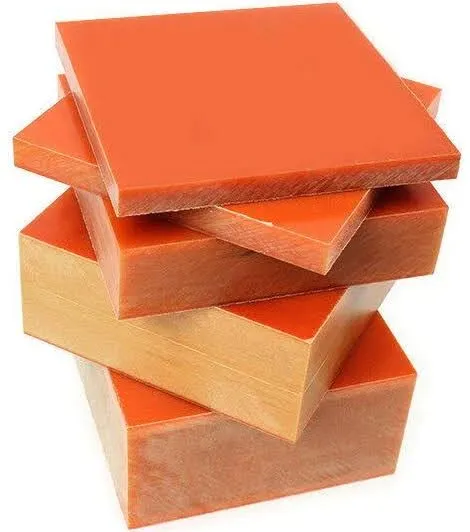
Diagnosing and Preventing Warping—Systematic Approach
Correctly measuring smoothness is the first step to making a correct evaluation. Coordinate measuring machines (CMM) give accurate geographic data for important uses, while precision straightedges and feeler gauges make field evaluations quick and easy. Setting standard measures as soon as material shipments arrive makes the supply chain more accountable. Engineering teams should write down deformation patterns, including whether the bending is the same across runs or more noticeable in certain sheet sizes. This is because these patterns often show problems with the manufacturing process rather than problems with the material itself.
Measurement and Inspection Protocols
Correctly measuring smoothness is the first step to making a correct evaluation. Coordinate measuring machines (CMM) give accurate geographic data for important uses, while precision straightedges and feeler gauges make field evaluations quick and easy. Setting standard measures as soon as material shipments arrive makes the supply chain more accountable. Engineering teams should write down deformation patterns, including whether the bending is the same across runs or more noticeable in certain sheet sizes. This is because these patterns often show problems with the manufacturing process rather than problems with the material itself.
Root-Cause Analysis Framework
Systematic study usually finds that causes of warping are grouped in three areas: the pressing parameters, the cooling routines, and the storage conditions. Different cure rates happen on different sheet surfaces because the hot plate temperatures are not the same during lamination. Not enough time spent under pressure stops the polymerization process before it's finished, leaving behind internal stresses. Thermal shock happens when there is fast cooling or uneven airflow. Keeping things in buildings that aren't heated or cooled exposes them to changes in air. When purchasing from suppliers, teams should ask for specific process paperwork that includes press temperature profiles, curing cycle lengths, and post-press conditioning methods. This will help teams see when parameters aren't being met optimally.
Preventative Manufacturing Controls
Leading makers use a number of important tools to lower the risk of bending. Computerized press tracking systems make sure that the hot plates are all at the same temperature, which is kept within ±3°C. Longer drying times let phenol formaldehyde glue networks fully crosslink before the pressure is released. Controlled cooling rooms lower the temperature slowly over 4 to 6 hours to avoid heat shock. Conditioning after curing in climate-controlled rooms at 23°C and 50% relative humidity for 48 to 72 hours lets any remaining stresses go away. These steps take longer to make, but they greatly improve quality later on and make ties between suppliers and buyers stronger by showing that the process is controlled.
Comparing Warping Behavior of Bakelite Sheets vs Alternative Materials
Despite being exposed to higher temperatures, phenolic laminates keep their shape better than silicone options. PVC and plastic sheets start to soften above 70°C, but normal phenolic materials can be used continuously at 120°C without losing their shape. This thermal stability means that the material will not bend as much in places where it will be exposed to heat, like motor housings, electrical panel backing, and power distribution equipment. The thermosetting property of phenol formaldehyde glue means that the material can't be re-melted or reshaped. This makes it more resistant to warping caused by heat than thermoplastics.
Dimensional Stability Under Thermal Stress
Despite being exposed to higher temperatures, phenolic laminates keep their shape better than silicone options. PVC and plastic sheets start to soften above 70°C, but normal phenolic materials can be used continuously at 120°C without losing their shape. This thermal stability means that the material will not bend as much in places where it will be exposed to heat, like motor housings, electrical panel backing, and power distribution equipment. The thermosetting property of phenol formaldehyde glue means that the material can't be re-melted or reshaped. This makes it more resistant to warping caused by heat than thermoplastics.
Moisture Resistance Comparisons
Different types of reinforcing have different ways of responding to water, which changes the possibility for warping. Fabric-reinforced Bakelite sheets (made of cotton or linen) soak between 0.5% and 1.5% of their weight in water when they are wet, but they don't change much in size. Paper-reinforced types may only absorb 2% to 3%, which is still better than nylon, which can absorb 8% or more. Glass-reinforced phenolic laminates are the least sensitive to moisture, which makes them perfect for humid places like industrial plants near the coast or tropical areas. To reduce the risk of warping, the requirements for the purchase should match the type of reinforcement to the humidity levels in the working area.
Thickness and Manufacturing Impact
Due to structural stiffness factors, the tendency for a Bakelite sheet to warp goes down as its thickness increases. When it comes to flatness, materials thinner than 3 mm need extra care, while Bakelite sheets thicker than 10 mm naturally don't bend because of their sheer mass and cross-sectional moment. The way the product is made is also very important. For example, constant lamination processes tend to make the internal stress distribution more stable than batch pressing methods. When compared to single-opening tools, suppliers who use multi-opening presses with separate temperature controls for each hole offer better flatness. Managers of OEM buying should find out what kinds of presses are available and ask for promises of flatness based on certain thickness ranges.
Solutions and Advanced Techniques for Warping Mitigation
Modern companies that make Bakelite sheets have made a number of processing improvements that make bending much less likely. A big source of internal stress can be removed by drying strengthening materials to less than 5% moisture content before they are impregnated with resin. Instead of applying full heat right away, graduated heating curves that raise press temperatures slowly over 15 to 20 minutes let the glue flow and crosslink more evenly. Multiple pressing stages with small bursts of pressure let volatiles leave without leaving holes or stress concentrations. After the printing process, "stress-relieving" the laminate structure by heating it in special ovens at 90°C to 110°C for long periods of time lets the molecules rest.
Refined Processing Methods
The following changes to processing methods make a noticeable difference in the stability of dimensions:
- Vacuum-assisted lamination: Taking out the air before pressing stops voids from forming and makes sure that the resin is spread out evenly, which reduces weak spots that can cause the material to bend.
- Symmetrical layup design: Putting support layers above and below the sheet centerline in designs that are mirror images of each other levels the forces inside the sheet, stopping it from bending in certain ways.
- Controlled cooling zones: Specialized cooling elements keep the temperature drop the same across the whole sheet surface, getting rid of thermal differences that cause the sheets to contract differently.
Manufacturers have to spend a lot of money on these new technologies, but they offer real quality improvements that make the higher prices worth it for important uses. When engineering managers look at providers, they should give more weight to facilities that can show they have these skills through plant tours and process certifications.
Custom Fabrication Advantages
Customized production methods solve problems with bending in specific situations. If you need a certain thickness or a different resin recipe, suppliers who offer custom curing cycle optimization can change the time-temperature curves. Custom pressing tools can handle Bakelite sheets with non-standard sizes while keeping the sheets flat from edge to edge. Some makers offer "stress-free machining" services, in which rough-cut blanks go through a second stress-relief process before they are put through their final CNC operations. This keeps the blanks from warping while they are being cut. Individual sheet separation with desiccant packets and rigid transport frames are some examples of custom packing solutions that keep dimensions stable throughout the shipping chain.
Quality Assurance and Inspection Technology
Materials that are bent can't get into production streams because of proactive monitoring. Optical inspection systems that use laser triangulation can scan whole sheet surfaces in minutes and make detailed maps of flatness with a precision of 0.1 mm. These systems work with inventory management tools to show which batches don't meet standards before they are sent out. Ultrasonic testing finds interior delamination or places that are low in resin, which can lead to delayed warping after machining. Progressive sellers share inspection data with customers. This makes the process clear and allows for statistical process control all along the supply chain. For each production lot, R&D engineers should ask for a proof of conformance document that includes measures of the flatness of the material.
Best Practices for Handling and Maintaining Bakelite Sheets to Avoid Warping
The first line of defense against post-delivery bending is having the right conditions in the warehouse. Bakelite sheets should be kept in climate-controlled areas that stay between 18 and 24°C and have a relative humidity of 45 to 55 percent. Temperature changes of more than 10°C in 24 hours cause cycling of expansion and contraction that leads to permanent damage over time. When things are put outside or in places that aren't heated or cooled, even for a short time while they are being received or staged, they risk getting wet and losing their surface layers due to UV damage. Gravitational sagging can be avoided by storing things vertically on racks with full-length support rails. On the other hand, weight must be evenly spread on rigid crates when stacking things horizontally to avoid pressure-point deformation.
Storage Environment Optimization
The first line of defense against post-delivery bending is having the right conditions in the warehouse. Bakelite sheets should be kept in climate-controlled areas that stay between 18 and 24°C and have a relative humidity of 45 to 55 percent. Temperature changes of more than 10°C in 24 hours cause cycling of expansion and contraction that leads to permanent damage over time. When things are put outside or in places that aren't heated or cooled, even for a short time while they are being received or staged, they risk getting wet and losing their surface layers due to UV damage. Gravitational sagging can be avoided by storing things vertically on racks with full-length support rails. On the other hand, weight must be evenly spread on rigid crates when stacking things horizontally to avoid pressure-point deformation.
Machining and Handling Techniques
When using a CNC on phenolic materials, you have to follow certain steps to keep from adding stresses that cause the materials to shift. As long as the spinning speed is high (8,000 to 12,000 RPM) and the feed rate is slow, cutting forces that can bend thin Bakelite sheets are kept to a minimum. When placing a piece of work on a vacuum table, the pressure is spread out evenly across the piece instead of being concentrated in a few places. By letting finished parts rest for 24 hours before the final review, any stress-relief movement can be seen, which allows the dimensions to be changed. When handling Bakelite sheets, operators should wear gloves to keep their hands from getting wet, and they should also avoid dragging materials across rough surfaces, which can wear away protective coats.
Maintenance and Long-Term Preservation
Setting up regular cleaning and upkeep routines for materials increases their useful life while maintaining their shape. Using dry compressed air to remove dust keeps wetness from getting into the resin matrix, and light solvent wipes (isopropyl alcohol) remove oils without harming it. Parts that are constantly heated can benefit from regular measurement checks with molds or gauges to find signs of warping before they start to affect performance. Instead of waiting for obvious deformation, replacement plans based on working hours keep critical insulation applications from failing without warning. In equipment rooms with phenolic parts, maintenance teams should keep humidity logs and make changes to the HVAC systems if moisture levels fall outside of the ideal ranges.
Conclusion
To stop phenolic laminate from cracking, you need to pay attention to the choice of material, the supplier's process controls, and how the end user handles the laminate. When engineering managers know how resin chemistry, curing parameters, environmental factors, and mechanical pressures all work together, they can choose materials and processes that produce consistent flatness. When procurement teams work with manufacturers that can show advanced processing skills, clear quality paperwork, and application-specific knowledge, they gain competitive benefits through less waste, faster assembly, and more reliable products. These options, which range from better pressing methods to better storage conditions, have been used successfully in the automobile, electrical, and industrial sectors. Dimensional stability in Bakelite sheets is not a coincidence; it is the result of careful production and close monitoring of the supply chain.
FAQ
How quickly can you identify warping in received materials?
Upon opening, a visual check under raking light shows clear deformation right away. Place the Bakelite sheets on a reference surface that you know to be flat and look at the gaps between the material and the table. Deviations of more than 2 mm per meter require more precise measurements. Before starting to machine, mechanical engineers should check that the workpiece is flat. Cutting curved stock makes mistakes in measurements worse and increases tool wear.
Does sheet thickness determine warping risk?
Because they are less stiff, materials thinner than 3 mm are more likely to bend, while Bakelite sheets thicker than 10 mm can't bend because of their mass alone. But width affects the type of strengthening and the quality of curing. For example, a 15-mm sheet that wasn't handled properly might warp more than a 2-mm sheet that was. Instead of thinking that everything will behave the same, procurement specs should link flatness tolerances to specific thickness ranges.
Can warping affect electrical insulation performance?
Of course. When Bakelite sheets are deformed, they leave gaps in assemblies that are filled with air. This lowers the effective dielectric strength and makes possible arc paths. At first glance, insulation resistance readings may seem fine, but mechanical stress builds up at warp points, which makes materials break down faster when exposed to high voltage for a long time. When electrical engineers choose materials for switches or transformers, they should make sure that they meet strict flatness standards that are linked to safety certifications.
Partner with J&Q for Warp-Resistant Phenolic Laminates
Over twenty years of specialized knowledge, J&Q has been making high-quality Bakelite sheets that are designed to resist changing sizes. Our advanced multi-stage pressing systems, computer-controlled curing processes, and specialized stress-relief conditioning give us the best flatness standards in the business. They meet the strictest requirements from the electrical, automobile, and power distribution industries. As a well-known company that supplies Bakelite sheets to businesses around the world, we offer a wide range of expert advice to help engineering teams match the right material types to the needs of each application while also maximizing performance and lowering costs.
Our combined logistics services make sure that your materials get to you in perfect condition. Custom packing keeps the dimensions stable while they're in transit, and our in-house shipping operations give us delivery options that outside carriers can't match. Email our expert team at info@jhd-material.com to talk about your unique warping problems and get full advice on the best materials, how to handle them, and how to make sure the quality is good. We can give you affordable quotes for both small amounts for prototypes and large amounts for full production. All of this comes with full paperwork, including certification that every production lot is flat. You can look at our full selection of phenolic laminates at jhd-material.com and learn why top makers trust J&Q for important insulation jobs.
References
Harper, C.A. (2018). Handbook of Plastics Technologies: The Complete Guide to Properties and Performance. McGraw-Hill Education, Chapter 12: Phenolic Resins and Laminates.
Richardson, T.L. & Lokensgard, E. (2020). Industrial Plastics: Theory and Applications. Cengage Learning, Section on Thermosetting Materials Quality Control.
NEMA Standards Publication LI 1-2018. Industrial Laminating Thermosetting Products. National Electrical Manufacturers Association.
Ebnesajjad, S. & Landrock, A.H. (2015). Adhesives Technology Handbook, 3rd Edition. William Andrew Publishing, Section 4.5: Phenolic Resin Systems.
Mazumdar, S.K. (2019). Composites Manufacturing: Materials, Product, and Process Engineering. CRC Press, Chapter 8: Quality Assurance in Laminate Production.
IEC 60893-3-1:2021. Insulating Materials - Industrial Rigid Laminated Sheets Based on Thermosetting Resins for Electrical Purposes - Part 3: Specifications for Individual Materials.