Cost Effective Phenolic Paper Board for OEM Projects
2026-05-26 17:01:31
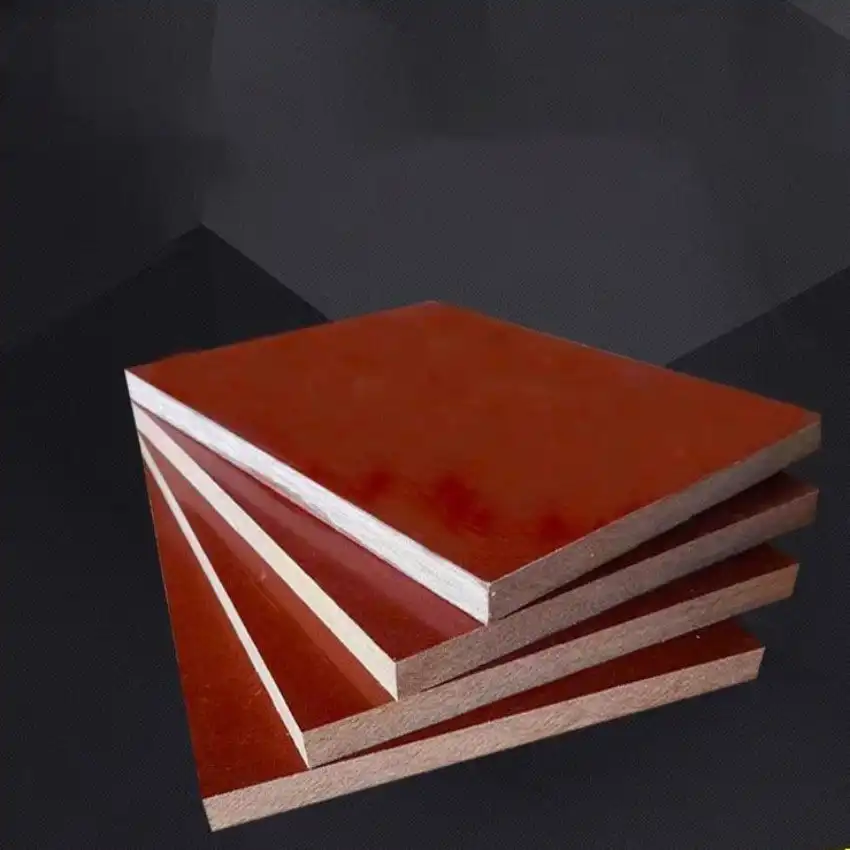
Phenolic paper board stands out as a strategically advantageous choice when engineering managers and procurement specialists assess insulation materials for electrical parts, switchboard systems, and industrial machinery. This thermosetting composite material is both cheap and has been shown to work well in the past. It is used in OEM applications where strength, stability, and the ability to be machined on a CNC machine are important. Unlike high-end epoxy-glass laminates, this material provides necessary electrical protection and mechanical sturdiness without the higher cost. This makes it especially appealing for projects that need to produce a lot of items quickly and stick to a budget.
Understanding Phenolic Paper Board: Composition, Properties, and Benefits
What Makes Phenolic Paper Board Unique
Multiple layers of quality kraft paper are mixed with phenolic glue to make phenolic paper board. The layers are then pressed together under high temperatures and pressures of about 1,000 psi. This way of making things makes a rigid composite laminate, which is officially called NEMA Grade X, XX, or XXX (according to IEC PF CP 201/202 standards) and has good electrical insulation qualities while also being easy to work with. The density of the material is usually between 1.30 and 1.45 g/cm³, which makes it light but strong enough to be used in a wide range of commercial settings.
Core Technical Properties
The phenolic resin structure is naturally resistant to mineral oils and common industrial solvents. This helps factories that are worried about chemical exposure. Electrically, higher-grade versions (NEMA XXX) show dielectric strengths greater than 500 V/mil in short-time tests, and the insulation stays strong even when it's slightly wet outside. Mechanically, the board has a flexural strength of more than 135 MPa along its length, and its compressive strength is good enough for use in structure support uses. The "punchability" of the material is one of its main features—it can be hot-punched into complex shapes without delaminating, which has been proven by ASTM D709 and IEC 60893 testing procedures.
Advantages Over Alternative Materials
This laminate is better at keeping its shape at temperatures up to 120°C (Insulation Class E) than plywood or regular cardboard. It is also more resistant to fire and thermal instability. Compared to fiberglass-reinforced boards, it's easier to make and causes less tool wear when the right carbide tools are used. Because the material naturally lubricates, moving parts like gears and wear plates run more quietly. Because it has these qualities, it can be used instead of epoxy-glass (FR-4) in low-frequency electrical uses that aren't solid and don't have to handle heavy mechanical loads.
Selection Criteria for Cost-Effective Phenolic Paper Board in OEM Projects
Material Grade Alignment with Application Requirements
Picking between NEMA Grade X, XX, and XXX has a direct effect on both the project's performance and its cost. Grade X is best for mechanical uses that don't need a lot of electricity because it has the least amount of plastic and is the easiest to machine. Grade XX is the electrical-grade standard. It has a mild protection to moisture and is good for controlled indoor settings. Grade XXX has the most resin, which makes it the best choice for high-voltage setups in power distribution equipment and transformer systems because it doesn't absorb water. By knowing these differences, buying teams can avoid over-specifying material types, which drives up costs without adding any value.
Thickness Options and Dimensional Tolerances
Standard thicknesses are between 0.5 mm and 50 mm, and tighter standards can be made for very specific uses. Electrical switchboard parts usually need boards that are 3–6 mm thick, and PCB backup plates work best when they are 1.5–3 mm thick. For structural strength, industrial jigs and clamps often call for 10–25 mm ranges. Thickness tolerances of within ±0.1 mm are achieved by suppliers who use controlled production methods. This is important for automatic assembly operations. Checking these standards during the quotation part keeps production from being held up and avoids having to do expensive rework.
Regulatory Compliance and Certification
Parts that are going to be used in electrical equipment with phenolic paper board have to meet UL standards, especially when it comes to flame protection and insulating performance. Materials with UL94 V-0 grades make sure that switches and motor housings follow fire safety rules. Conformity with ROHS and REACH rules protects the environment and people's health in global supply lines. This is especially important for companies that make cars and appliances for controlled markets. Requesting certification documents during the seller review process makes it easier to qualify products and lowers the risk of not following the rules.
Pricing Structures and Volume Considerations
When order numbers go above the manufacturer's minimum batch sizes, which usually start at 100 to 500 sheets based on thickness, material costs usually drop by 15 to 25 percent. Custom cutting services add 10–20% to the base price, but they get rid of the setup costs and waste of material that come with internal machining. Suppliers with contract inventory programs help keep production going while also taking care of cash flow issues. By understanding how prices change over time, buying teams can negotiate better terms and keep budgets stable for multi-year OEM contracts.
Manufacturing Process and Quality Control: Ensuring Cost Efficiency and Reliability
Critical Production Steps
The first step in the impregnation process is to remove rolls of kraft paper and run them through resin pools that contain carefully controlled phenolic mixtures. The final electrical and mechanical qualities depend on the resin pickup rates, which are usually between 35 and 45% by weight. The layered sheets are then put into hydraulic presses, where heat (140–160°C) and pressure cross-link the resins, creating a single laminate structure. Curing time, which is usually between 60 and 90 minutes based on thickness, has a direct effect on how stable the shape is and how much stress is still there. Any change in a parameter can lead to inconsistent performance, which is why materials from well-known makers with process tracking systems behave more consistently.
Quality Assurance Protocols
Reliable providers test at many steps of production, starting with checking the paper base weight and resin viscosity of new raw materials. To keep the density constant, in-process tracking keeps an eye on the press temperature profiles and consolidation pressure. ASTM guidelines say that finished boards must be tested for dielectric strength, tensile strength, and moisture absorption. Batch tracking systems connect production factors to specific sheet lots. This lets you quickly find the cause of a problem in the field. This methodical technique lowers the number of mistakes and helps maintain the standard that automated OEM production lines need.
Customization Capabilities
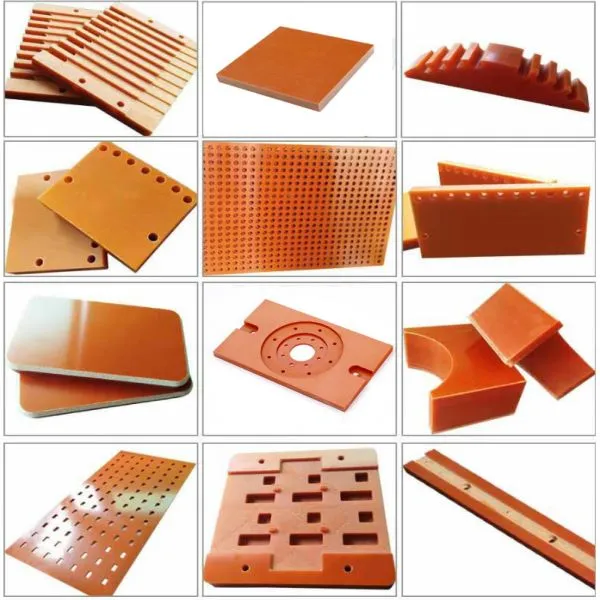
Advanced production facilities can handle custom sheet sizes, which cuts down on wasteful material use when making parts. According to customer plans, CNC machining centers make complicated shapes with features like precisely drilled mounting holes, routed channels, and profiled edges. Hot-punching makes it cheap to make forms that are used over and over, like insulation screws and terminal blocks. With these value-added services, raw board stock is turned into parts that are ready to be used. This cuts down on OEM labor costs and speeds up production plans.
Comparing Phenolic Paper Board to Alternative Materials for OEM Projects
Performance Against Fiberglass Laminates
Epoxy-glass composites (FR-4 and G-10 types) are stronger mechanically and can withstand higher temperatures (Class F/H, over 155°C constant operation). But they usually cost 40 to 60 percent more than options made of phenolic paper board. The glass fiber percentage also speeds up the wear on cutting tools, which raises the cost of grinding. Paper-based laminates are the most cost-effective choice for circuit breaker arc barriers, busbar supports, and low-voltage switchgear components because they can handle modest mechanical loads and temperatures below 120°C.
Advantages Over Wood-Based Materials
Both plywood and hardboard have uneven densities, don't hold up well against water, and don't have a lot of electrical strength. When kept properly, phenolic paper board keeps its shape even when the humidity changes, but wood goods grow and contract a lot. Because phenolic paper board has consistent electrical properties, it is possible to make accurate insulation estimates, which is not possible with natural wood grain differences. Even though wood-based options are cheaper, they can't be used in situations that need UL approval or uniform performance from batch to batch.
Differentiation from Cardboard and Paper Composites
Standard industrial cardboard doesn't have the resin impregnation and compression pressure that give phenolic paper board its strength. Cardboard gets squished when it's loaded, soaks up water easily, and doesn't give much in the way of electricity insulation. The phenolic resin matrix changes the cellulose fibers into a hard, chemically resistant structure that can be mechanically fastened and machined on the edges without coming apart. Because of this basic difference, switchgear makers choose phenolic paper board even though they look a lot like lower-quality paper goods.
Procurement Strategies: How to Buy Phenolic Paper Board for OEM Projects
Supplier Evaluation Criteria
Checking manufacturing certifications like ISO 9001 quality management systems and ISO 14001 environmental compliance is the first step in finding good sources for materials. Suppliers who work with electrical OEMs usually keep their product lines UL-approved, which can be seen by the public UL file numbers they post. References from well-known makers of tools or electrical equipment are a good way to show that the company can deliver what they say they can and provide good technical support. When possible, site checks show how controls in the manufacturing process and how material is managed affect how consistently orders are filled.
Leveraging Value-Added Services
Custom cutting services get rid of the need to buy CNC cutters and pay workers to do the work that comes with doing it in-house. Most suppliers of this service need CAD drawings in either DXF or DWG format, and the wait time is between 5 and 10 business days, based on how complicated the drawings are. Giving samples lets engineering teams check how well a material works in real assembly setups before committing to large-scale production. Asking for three to five example pieces in certain sizes and grades, which are usually given for free, lowers the risk of qualification and speeds up design validation.
Managing Supply Chain Continuity
Having ties with several qualified sources lowers the risk of disruption caused by problems with output or limited capacity. When 70% of the volume goes through a main seller and 30% goes through a secondary source, this is called dual-sourcing. This strategy strikes a balance between relationship depth and supply security. Long-term supply deals with quarterly or yearly volume promises can often get providers better prices and give them the information they need to plan their production more efficiently. These methods produce value for both parties, which is especially important for OEM projects that last for many years.
Conclusion
When it comes to electrical equipment, industrial gear, power distribution systems, and car parts, phenolic paper board is a technically sound and cost-effective way to insulate. It meets basic needs with a carefully planned mix of dielectric strength, mechanical properties, and machinability, and it doesn't cost more than options made of glass fiber. To be successful at procurement, you need to match the right material types to the needs of the application, work with providers who can show you their process control and quality systems, and use customization services to lower the total cost of manufacturing. When engineering managers and procurement specialists learn these selection factors, they can consistently meet project goals while keeping costs low.
FAQ
What thickness should I specify for electrical insulation applications?
Electrical switchboard parts usually need 3-6 mm of phenolic paper board to give them enough space between the conductors and support. For better arc protection, 6–10 mm thickness is better for uses with voltages above 1 kV. The best distance for PCB support and backup boards is between 1.5 and 3 mm, which is the sweet spot between stiffness and drill bit space. It is important to talk to providers about voltage levels and mechanical load standards to make sure you choose the right thickness.
How does phenolic paper board perform compared to melamine laminates in high-temperature environments?
Melamine laminates can handle temperatures between 130°C and 140°C, which is close to Class F, while phenolic paper board forms can work continuously at temperatures up to 120°C (Class E insulation). When both materials are heated above their recommended temperatures, their properties start to break down. For example, paper surfaces start to carbonize and lose their electrical strength. If the temperature stays above 120°C for a long time, epoxy-glass or silicone-based options should be used instead of going over the limits of phenolic paper board materials.
Can suppliers provide customized sizes and surface finishes?
Well-known companies can make unique sheets up to the size limits of their presses, which are usually up to 1200 x 2400 mm panels. With limits of ±0.1 mm, CNC machining services make parts based on plans from the customer. Surface treatments range from matte to smooth after being sanded. For certain uses, some suppliers offer thin copper or metal covering. When evaluating suppliers, asking for specific capability statements makes the choices more clear.
Partner with J&Q for Reliable Phenolic Paper Board Supply
J&Q has been making insulation materials for over 20 years and can bring that experience straight to your OEM projects. They have both proven production skills and a lot of experience exporting to markets around the world. We offer phenolic paper board in NEMA Grade X through XXX, with thicknesses ranging from 0.5 mm to 50 mm. All of our products are made in ISO-certified quality systems that are recognized by UL and fully comply with ROHS regulations. Engineering managers like how we help them choose materials with expert support, and procurement teams like how we offer flexible minimum order quantities, competitive volume prices, and custom cutting services that get rid of waste. Whether you need container-load shipments or smaller trial orders, our combined logistics skills make sure that you always get what you need on time. You can talk to our team at info@jhd-material.com about your specific application needs, ask for samples of the material, or get detailed quotes from a reliable phenolic paper board seller who wants your project to succeed.
References
National Electrical Manufacturers Association (NEMA). Industrial Laminating Thermosetting Products: Standards Publication LI 1-2018. Rosslyn: NEMA, 2018.
American Society for Testing and Materials (ASTM). ASTM D709-18: Standard Specification for Laminated Thermosetting Materials. West Conshohocken: ASTM International, 2018.
International Electrotechnical Commission (IEC). IEC 60893-3-1: Specifications for Industrial Rigid Laminated Sheets Based on Thermosetting Resins for Electrical Purposes. Geneva: IEC, 2020.
Harper, Charles A. Handbook of Plastics Technologies: The Complete Guide to Properties and Performance. New York: McGraw-Hill Education, 2017.
Kroschwitz, Jacqueline I. Electrical and Electronic Properties of Polymers. Hoboken: John Wiley & Sons, 2019.
Lubin, George and Peters, S.T. Handbook of Composites: Materials and Engineering Applications in Industrial Manufacturing. Boston: Springer Technical Publishing, 2020.