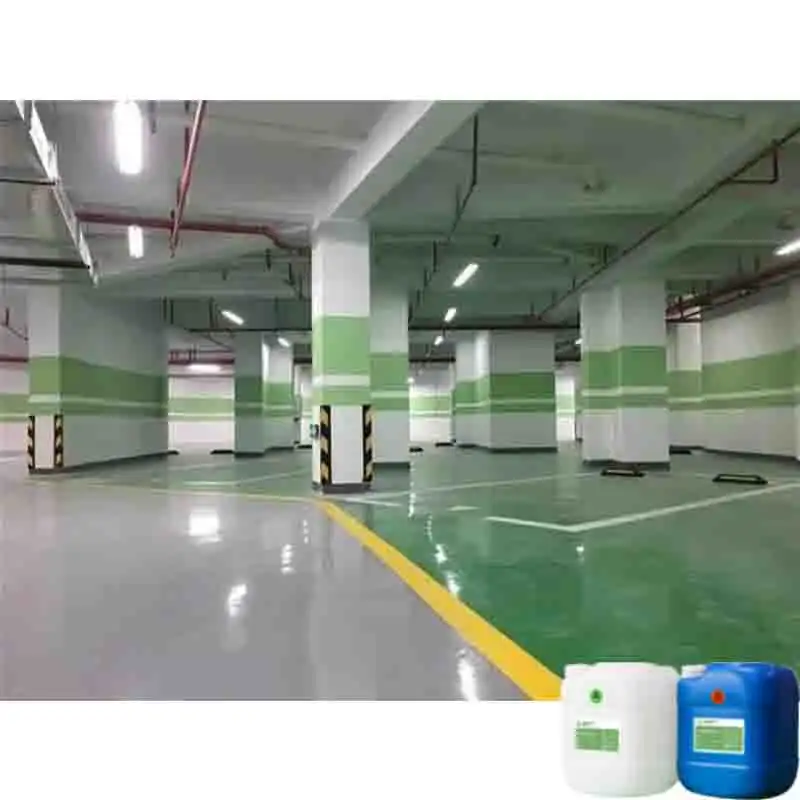
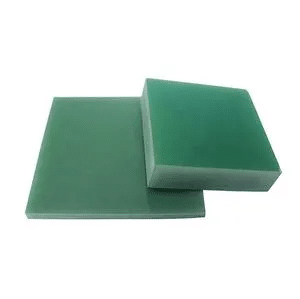
Deep Pour Epoxy Resin Selection Guide for Industrial Casting Needs
2026-07-27 17:08:55
When it comes to choosing the right casting material for industrial applications, understanding the nuances of deep pour formulations becomes paramount. Deep Pour Epoxy Resin stands apart from conventional thin-coat varieties by enabling cures in layers exceeding several inches—typically between 2 and 18 cm depending on the formulation—without triggering thermal runaway or structural cracking. This capability addresses critical challenges in encapsulation projects, large-volume tooling, and specialized manufacturing where dimensional stability and optical clarity cannot be compromised. Selecting an appropriate product involves evaluating curing profiles, mechanical properties, regulatory compliance, and supplier reliability to ensure seamless integration into your production workflow.
Understanding Deep Pour Epoxy Resin: Key Concepts and Benefits
What Makes Deep Pour Formulations Different?
Traditional epoxy systems dry quickly, which is good for thin coatings but not so great for thicker ones. When standard resin is put more than a quarter-inch thick, the heat that is made during setting builds up faster than it can escape. This causes it to boil, turn yellow, or crack very badly. Deep Pour Epoxy Resins get around this problem by changing the hardener's chemistry in a way that greatly slows down the reaction rate. This lets heat leave slowly over long periods of time, sometimes up to 48 to 72 hours for full cure.
At 25°C, these materials usually have a viscosity of 800 to 1000 cps, which gives them a honey-like consistency that helps them level out and let out bubbles naturally. Deep Pour Epoxy Resins have Shore D hardness values between 82 and 83, which means they can be used for uses that need to be machined, drilled, or routed after they have dried. This is different from polyurethane casting resins, which harden quickly but aren't as rigid.
Industrial Performance Advantages
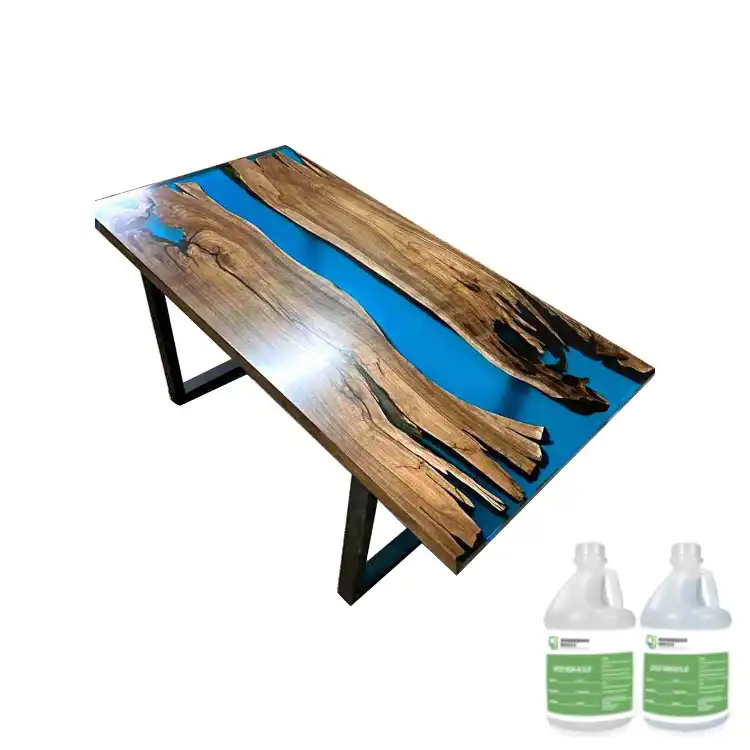
In addition to being beautiful, like river tables, commercial users gain from a number of performance factors. The material sticks well to a variety of surfaces, such as metals, plastics, and treated wood. This is useful in electrical encapsulation, where parts with different rates of heat expansion need to stick together reliably. UV-stabilized formulations don't turn amber even after being outside for a long time, so they keep their clarity and structural integrity in harsh conditions.
In power transfer uses, heat resistance is very important. When Deep Pour Epoxy Resin moulds are fully cured, they can handle temperatures of up to 120°C for long periods of time. After the right post-cure conditions, the glass transition temperature (Tg) is often higher than 60°C. Because it is stable at high temperatures and has a high dielectric strength, the material can be used for transformer potting and switchgear insulation, where it needs to keep electricity from flowing and heat from escaping at the same time.
Critical Selection Criteria for Industrial Deep Pour Epoxy Resins
Pour Thickness and Volume Considerations
To find the maximum single-pour depth, you need to know how mass, surface area, and temperature affect each other. For example, the JQ31-9T model from Jinghong can handle pours of 8 to 12 cm in a single application, while the 31-9V model can handle pours of 15 to 18 cm. These specs assume that the room temperature is kept at about 25°C and that there is enough airflow. Larger surface areas with the same depth accumulate more heat, which could mean that smaller layers are needed or that there needs to be more time between pours.
Figure out the mixing amounts and processes by figuring out the total project volume. About 50 litres of mixed resin are needed for a casting that is 100 cm long, 50 cm wide, and 10 cm deep. Specific gravities for hardener and resin parts range from 0.97 to 1.15, so it's important to figure out weights to get an idea of how much shipping will cost and what kind of tools will be needed when making purchases.
Mechanical and Thermal Properties
You can tell if a finished casting can handle mechanical loads in your application by its tensile strength, flexural stiffness, and elongation at break. Industrial encapsulation projects need to be rigid enough to protect embedded components while they are being shipped and used, but also flexible enough to handle small changes in temperature without delamination. Shore D hardness numbers between 75 and 85 usually mean that the material is easy to work with and not too brittle.
Thermal properties go beyond the highest temperature that the device can work at, and for Deep Pour Epoxy Resin, the coefficient of thermal expansion (CTE) affects dimensional stability as castings transition from production to field use, and mismatched CTE between the resin and embedded metal parts can create internal stresses that lead to microcracking over time, making it essential to choose resins with CTE values that match your substrate materials. When the temperature of castings changes between being made and being used in the field, the coefficient of thermal expansion (CTE) affects how stable their dimensions are. If the CTE values of the Deep Pour Epoxy Resin and the metal parts that are inserted don't match, it can cause internal stresses that can cause microcracks over time. Long-term dependability problems can be avoided by choosing resins with CTE values that match the materials you're using as substrates.
Compliance and Environmental Standards
The rules that apply depend on the situation and where it is. For electrical uses, UL recognition or RoHS compliance is often needed to make sure that the product is flame-resistant and doesn't contain any banned substances. The Jinghong JQ31-9T has been certified by ROHS, REACH, PAHS, ASTM, and EN-71. This means that it meets the safety standards for electrical exposure and chemical exposure in industrial manufacturing settings. Checking for FDA approval or ISO 10993 biocompatibility is needed for projects that involve food contact or medical device closeness.
Low VOC emissions are important in closed production facilities where worker exposure and the cost of ventilation affect the budget for running the business. Deep Pour Epoxy Resins naturally give off fewer volatiles than polyester resins, but formulations designed to produce low-odor and low-compound airborne compounds make the workplace better and may help manufacturing zones meet stricter environmental rules.
Comparing Top Deep Pour Epoxy Resin Brands and Solutions
Evaluating Jinghong's Product Range
Jinghong has three different casting formulas that are made for different depth needs and preferred working times. The 31-7T type has a 3:1 weight ratio and a relatively low-viscosity hardener (80 cps). It has a working time of two hours and a final cure time of 36 hours, making it good for pours with a middling depth of 1 to 3 cm where speed is important. When working with tight production schedules and layered casting projects that need multiple pours in a row, this mixture works well.
The 31-9T version is in the middle. It has a 12-hour working time and can handle depths of 8 to 12 cm. Its balanced 2:1 ratio and matched viscosity components (both at 1000 cps) make mixing more accurate, and the long open time lets you degas completely and place inserted items carefully. The 48-hour cure cycle takes longer, but it creates a more complete cross-link density. This means that the material will be more durable and resistant to chemicals over time.
For the deepest single pour, the 31-9V can handle 15–18 cm casts and extends the working time to 16 hours. The uneven viscosity profile (1000 cps resin and 200 cps hardener) makes mixing better, even though there is more of it, so there are fewer chances of spots of uncured resin in thick parts. For large specimen encapsulation or structural casting, this variant works especially well because it reduces the number of layer interfaces, which makes the structure more continuous and clear.
Supplier Reliability and Technical Support
In addition to product specs, procurement choices should also look at the infrastructure and service skills of the supplier. Vertical integration means that a company makes both base resins and laminate products later on. This usually means that the company has better quality control and a more consistent supply. Companies that run their own transportation networks can offer more reliable delivery times and avoid the problems that come with having a third party handle the freight of chemical goods.
When going from a pilot to mass production, technical help is very important. Suppliers who give on-site application training, custom recipe development, or quick responses to questions about how to fix problems add real value that may not be apparent from just comparing products. It is easier for multinational production operations to get qualified when they can provide certified test data for specific lot numbers and material safety paperwork in more than one language.
Step-by-Step Guide to Applying Deep Pour Epoxy Resin for Industrial Casting
Preparation and Environmental Control
Surface preparation changes the end look and the strength of adhesion. The substrates need to be clean, dry, and free of any pollutants such as oils, waxes, or mold-release leftovers from earlier work. For weak materials like wood, using a seal coat of diluted Deep Pour Epoxy Resin stops air bubbles from escaping continuously during the main pour. This can stop the casting from becoming cloudy or having holes in it after it cures.
Controlling the ambient temperature has a big effect on how cures work. Working in the suggested 20–28°C range makes sure that gel times and exotherm profiles are reliable. Higher temperatures speed up curing but also raise the risk of overheating. Cooler temperatures extend working time but may cause an incomplete cure or a sticky surface. When you check both the air temperature and the material temperature before filling, you can avoid problems with differential thermal expansion during the early stages of curing.
Mixing and Pouring Procedures
It's very important that component amounts are correct, and for Deep Pour Epoxy Resin, the Jinghong 31-9T requires a 2:1 weight ratio—100 parts A to 50 parts B—which must be measured using accurate scales rather than volumetric measures, as incorrect ratios lead to incomplete curing, while over-mixing or stirring too vigorously introduces air bubbles that compromise clarity. Because glue and hardener have different densities, the Jinghong 31-9T needs a 2:1 weight ratio, which means 100 parts A to 50 parts B. This can only be done with accurate scales, not volumetric measuring. If you don't mix the Deep Pour Epoxy Resin well enough, it doesn't get hard, and if you mix it too much or stir it too quickly, air bubbles form that make it less clear.
Once the ingredients are evenly mixed by stirring slowly and carefully, letting them sit for 5 to 10 minutes lets the bigger bubbles rise and escape before pouring. When making several batches for big casts, making sure the mixing method and temperature are the same for all of them stops any obvious lines or differences in strength at the pour interfaces.
Curing and Post-Processing
During the first part of curing, keeping the casting from being physically disturbed stops internal flow patterns that show up as swirls or changes in density in the finished casting. Covers or temporary barriers made of dust keep airborne dirt from sticking to the sticky surface during the long gel time. There are times when high dust particles get stuck in clear castings and can't be removed without a lot of sanding.
After the Deep Pour Epoxy Resin has reached a certain green strength, which usually takes 24 hours for the 31-9T recipe, demolding shouldn't happen until the full mechanical qualities have been developed, which can take up to 72 hours. If you try to demold something too soon, you might damage the surface or change the shape. Post-cure conditioning at high temperatures, usually 60–80°C for several hours, finishes the cross-linking reaction. This makes the material as hard, chemically resistant, and thermally stable as possible for tough service environments.
Procurement Guidance: Where and How to Buy Deep Pour Epoxy Resin for Industrial Use?
Bulk Purchasing and Inventory Management
Industrial patterns of consumption like large packaging because it lowers the cost per unit and reduces the amount of trash from packaging. Suppliers usually offer drum quantities between 20 and 200 kilograms, with different price levels based on commitments to volume. By figuring out how much you'll use in a year based on project estimates, you can see if buying drums with a long shelf life (usually 12 months for quality formulations) fits with how fast you use them or if it's better to place several smaller orders to better manage your cash flow and storage space.
Payment terms depend on the seller and the size of the order. Net payment options are usually offered by established manufacturers to qualified buyers. For younger ties, manufacturers may need letters of credit or advance payment. Knowing about these financial arrangements when evaluating suppliers for the first time keeps cash flow shocks from happening during the scaling-up stages. Accepting credit cards is helpful for smaller test orders, but it's not often used for large industrial purchases that need to be paid for with wire transfers or trade finance instruments.
Supplier Verification and Quality Assurance
Before making big purchases, make sure you get copies of technical data sheets, safety documentation, and certifications. This will protect you from getting low-quality materials. Genuine providers easily give test results for each batch that include information on viscosity, gel time, cured mechanical qualities, and signs of regulatory compliance. Not wanting to give this paperwork could mean that there are problems with quality control or concerns about the authenticity of the product.
With more than 20 years of experience making epoxy resin boards and laminates, J&Q now uses this knowledge to make Deep Pour Epoxy Resin at our plant in Hebei Linyuan. Our yearly capacity of 20,000 tonnes, which was based on Japanese process technology, makes sure that the standard of all big orders is the same. Because we have our own logistics network, we can directly coordinate shipments, which cuts down on the time it takes to get from one place to another and the risk of damage that comes with that. Taking this unified approach—from processing the raw materials to delivering the finished goods—assures buying teams of a steady supply and high-quality workmanship that separate sellers don't always manage.
Conclusion
When choosing the right casting materials for industrial uses, you have to balance technical ability with the cost of buying them. Deep Pour Epoxy Resins like those in the Jinghong JQ31 series show how specialised chemistry can help with the problems of managing heat and cure that come with thick-section work. When engineering and procurement teams know how pour depth, working time, mechanical properties, and supplier infrastructure are connected, they can choose materials that meet both short-term project needs and long-term reliability expectations. Thoroughly evaluating suppliers and checking their certifications, output ability, and support services makes the supply chain more open and reduces risks while increasing value.
FAQ
What is the maximum thickness I can pour in a single application?
The maximum pour depth relies on the Deep Pour Epoxy Resin formula and the temperature and humidity of the area. The Jinghong 31-7T can handle 1 to 3 cm, the 31-9T can handle 8 to 12 cm, and the 31-9V can handle 15 to 18 cm per layer. More heat builds up over larger surface areas with the same depth, which could mean that smaller layers are needed. Exothermic runaway, which leads to yellowing or cracking, can be avoided by following the manufacturer's instructions.
How long does industrial-grade deep pour resin take to fully cure?
Different products have different working times and fix times. The 31-9T can be used for 12 hours before it starts to gel. After 24 hours, it gets its demolding strength, and after 48 hours, it has its final cure qualities. Over 72 hours, the machine reaches full mechanical function. Post-cure heat treatment at 60–80°C for a few hours speeds up cross-linking and improves resistance to chemicals and heat in harsh working settings.
Can deep pour epoxy be machined or drilled after curing?
Yes, quality Deep Pour Epoxy Resin products can be worked with in the same way as oak once they are fully cured. Shore D hardness values of 82 to 83 make the material strong enough to be used for drilling, polishing, routing, and sanding without wearing down the tools too quickly. When softer polyurethane castings get stuck on cutting tools, machining doesn't build up much heat. Waiting until the cure is complete keeps the workpiece from warping and the tool from becoming dull too soon.
Partner with J&Q as Your Trusted Deep Pour Epoxy Resin Supplier
J&Q offers reliable industrial casting solutions by combining a long history of making with current production tools. Our factory in Hebei Linyuan makes the Jinghong JQ31 line using ISO-certified methods that make sure stability from batch to batch, which is important for making a lot of them. We've been making epoxy laminates and FR4 boards for more than 20 years, so we know what strict requirements electrical and industrial clients have, like ROHS compliance, reliable dielectric performance, and consistent mechanical properties.
Our combined logistics network gets rid of the planning problems that come up with supply chains with multiple parties, and for Deep Pour Epoxy Resin, this integrated approach ensures streamlined tracking and reduced transit damage, while our technical support teams offer troubleshooting, application optimisation, and custom formulation development—providing real-world problem-solving experience that pure distributors cannot match, from prototype to full-scale production and process integration. It also makes it easier to track shipments and lowers the risk of damage during transit. Technical support teams help with troubleshooting, application optimisation, and making custom formulations when standard goods don't exactly meet specific needs. Our engineering staff has real-world problem-solving experience that pure distributors can't match, whether they're turning a prototype into a full-scale production run or making sure that a new material can be used in existing processes.
Contact info@jhd-material.com right away to talk about your unique requirements. We'll give you detailed technical documentation, set up shipments of samples for qualification testing, and come up with pricing structures that are in line with your expected volume and delivery dates.
References
1. Smith, J.R., & Williams, K.T. (2021). Advanced Epoxy Resin Formulations for Industrial Applications. Industrial Materials Press.
2. Chen, L. (2020). "Thermal Management in Thick-Section Epoxy Castings." Journal of Polymer Engineering, 40(5), 342-358.
3. Martinez, A., & Schmidt, H. (2022). B2B Procurement Strategies for Industrial Chemicals. Manufacturing Supply Chain Institute.
4. Thompson, R.D. (2019). "Comparative Analysis of Casting Resins for Electrical Encapsulation." Electrical Insulation Technology Review, 15(2), 78-94.
5. International Epoxy Resin Council. (2023). Technical Guidelines for Deep Pour Applications. IERC Standards Publication.
6. Wong, S.Y., & Peterson, G.F. (2021). "Quality Assurance in Industrial Resin Manufacturing." Polymer Production Quarterly, 28(3), 112-129.