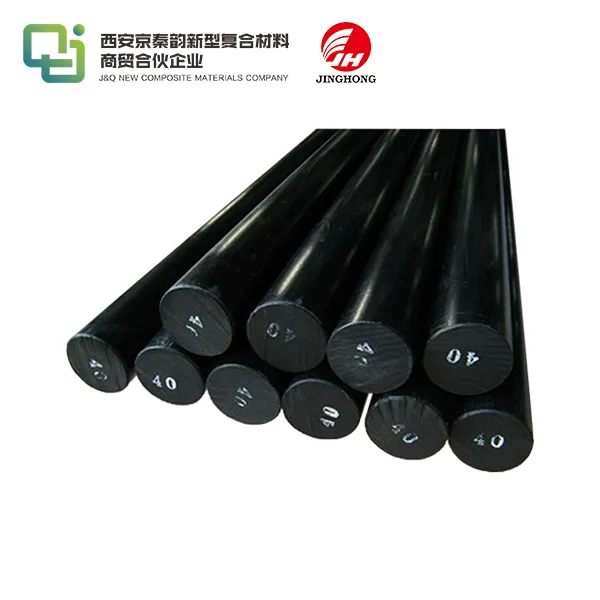
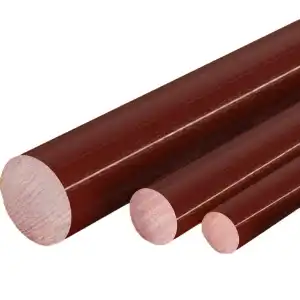
FR4 Board for Semiconductor Equipment Insulation Structures
2026-07-27 17:08:57
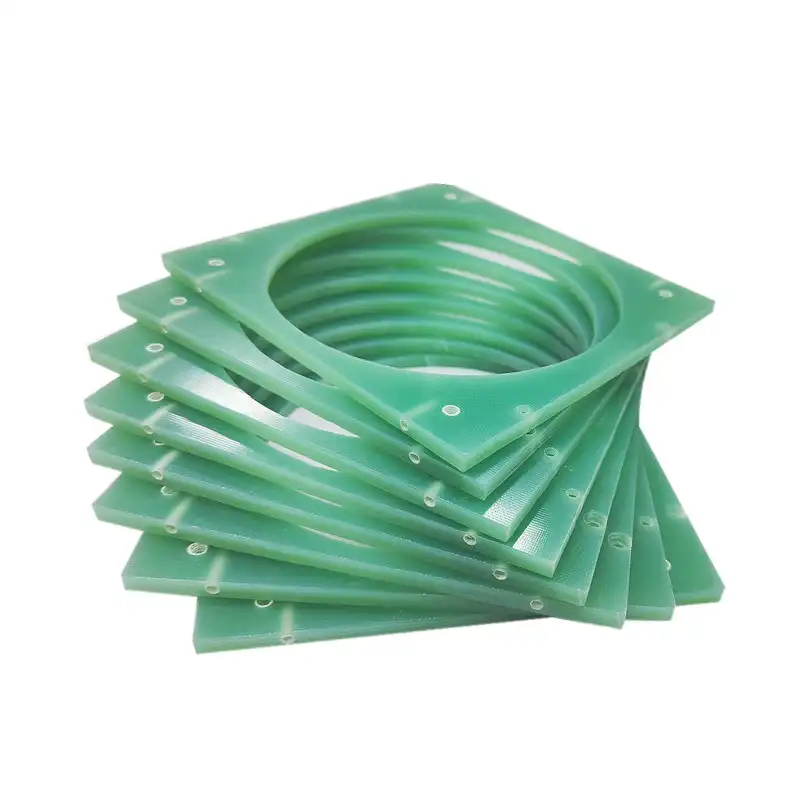
In semiconductor manufacturing, FR4 boards serve as critical insulation structures that protect sensitive equipment from electrical interference and thermal stress. These glass-epoxy composite laminates deliver exceptional dielectric strength, dimensional stability, and flame retardancy—qualities essential for maintaining operational integrity in cleanroom environments. Semiconductor fabrication tools demand materials that resist warping under thermal cycling while providing consistent electrical isolation across voltage gradients. FR4 board meets these exacting standards through its balanced composition of woven fiberglass cloth and brominated epoxy resin, making it the preferred choice for equipment chassis insulators, test fixture bases, and high-voltage barrier components in wafer processing systems.
Understanding FR4 Boards and Their Properties in Semiconductor Insulation
Core Composition and Manufacturing Process
Multiple layers of weaving E-glass cloth are mixed with flame-resistant epoxy resin and put through controlled heat and pressure to make FR4 boards. During the hardening process, a stiff laminate with a density that is usually between 1.85 and 2.10 g/cm³ is made. This way of building makes sure that the mechanical properties stay the same across the whole thickness of the material, which can be anywhere from 0.4 mm to 50 mm depending on the needs of the application. The fibreglass support makes the structure stiff, and the epoxy base makes it stick better and be more resistant to chemicals.
Key Electrical Characteristics for Semiconductor Applications
When choosing epoxy-glass laminates for precision manufacturing environments, electrical performance is still the most important thing to think about. The material has a dielectric constant of between 4.4 and 4.8 at 1MHz, which means that high-frequency testing equipment can reliably keep signals intact. When tested parallel to the laminate layers, the dielectric strength is usually higher than 40 kV. This gives strong protection against voltage spikes. The low dissipation factor helps keep energy loss to a minimum in situations where electromagnetic fields are present, like in plasma etching chambers and ion implanters.
Thermal and Mechanical Performance Parameters
The glass transition temperature (Tg) is an important specification marker. Standard grades have limits of 130°C to 140°C, while High-Tg versions go up to 170°C and beyond. This temperature stability keeps the sizes of the parts from changing during the baking process. Flexural strength greater than 340 MPa along the lengthwise direction keeps the structure strong under mechanical loads, and water absorption rates less than 0.1% keep the electrical properties in environments that control humidity. These features work together to make a material system that can handle the thermal cycling and mechanical stresses that come with using a semiconductor tool.
Comparison of FR4 Boards with Alternative Materials for Semiconductor Applications
Performance Analysis Against Specialty Laminates
Purchasing teams often look at Rogers high-frequency laminates, polyimide films, and ceramic-filled composites along with glass-epoxy composites when they are looking at shielding materials for semiconductor equipment. Rogers materials are great for RF sections in equipment control boards because they have better heat conductivity and lower dielectric loss. But they usually cost three to five times more than FR4 boards options, which affects budgets for all kinds of tools. Polyimide films are very flexible and can withstand temperatures up to 260°C, but they are not stiff enough to be used as structural supports. Ceramic-filled alloys are very stable in terms of their shape, but they are hard to machine because the tools wear down quickly.
Cost-Performance Trade-offs in Material Selection
For most semiconductor equipment shielding needs, the glass-epoxy laminate is the best combination of efficiency and cost-effectiveness. While speciality materials are great for certain uses, this choice is good for 70–80% of structural insulation needs in fabrication tools because it is strong, doesn't catch fire, and provides good electrical insulation. Because the material is widely available through global supply networks, lead times are shorter than for speciality substrates, which can take 8 to 12 weeks for custom specifications. This makes it possible for procurement managers to keep stocking costs low while still meeting production plans.
Compatibility with Semiconductor Manufacturing Protocols
Cleanroom compatibility is another important factor that sets them apart. When properly finished, epoxy-glass laminates have low outgassing properties that meet ISO Class 5 cleanliness standards. This keeps sensitive wafer surfaces from getting dirty. The fact that the material doesn't react with common cleaners like isopropyl alcohol and deionised water makes maintenance easier. When different materials, like phenolic laminates, are heated, they may release particles. Also, some thermoplastics create static charges that attract dirt. This benefit of flexibility lowers the total cost of ownership by cutting down on the time that equipment needs to be taken apart for cleaning and upkeep.
FR4 Board Procurement Essentials for Semiconductor Equipment Manufacturers
Navigating Global Supply Networks
Companies that make semiconductor equipment can get more from their sources if they keep up with uniform material certifications and traceability systems. Quality certifications like UL recognition, ISO 9001 process control, and RoHS compliance make sure that all batches of materials are the same. Suppliers who have their own testing labs can give you material test reports that show how dielectric strong the material is according to ASTM D149, how much water it absorbs according to ASTM D570, and how flammable it is according to UL 94 V-0 standards. When equipment goes through safety standards for foreign markets, these paperwork requirements become even more important.
Pricing Structures and Volume Considerations
The price of materials changes depending on the type of reinforcing, the mix of the resin, and the thickness limits. Standard-grade sheets with a width tolerance of ±0.15mm are cheaper than precision-ground sheets with a tolerance of ±0.05mm. When compared to spot purchases, volume purchasing deals usually save you 15 to 25 percent on costs, but the minimum order quantity can be anywhere from 500 to 2,000 sheets, based on the size. When comparing domestic and international suppliers, procurement teams should look at the total landed cost, which should include freight costs for heavy laminate sheets.
Lead Time Management and Inventory Strategy
We've seen that standard-thickness sheets in standard sizes usually arrive within two to four weeks from reputable sources. However, custom thicknesses or special recipes can take up to ten weeks. To protect themselves from problems in the supply chain, companies that make semiconductor equipment often keep a strategic inventory of high-usage specifications. Just-in-time purchasing works well for standard materials, but for special materials with important requirements, safety stock equal to 60 to 90 days of output consumption is needed. Our combined logistics skills allow for coordinated delivery schedules that line up material arrivals with production runs, which lowers the cost of keeping goods in storage.
Best Practices for Using FR4 Boards in Semiconductor Equipment Insulation Structures
Design Guidelines for Optimal Performance
The right heat management design is the first step to successfully integrating glass-epoxy laminates into semiconductor equipment, and for FR4 board, engineers should incorporate ventilation paths or heat sinks when installing insulation parts near circuits operating above 100°C, while accounting for anisotropic thermal expansion—approximately 14–17 ppm/°C in the XY plane and 60–70 ppm/°C in the Z-axis—and including stress-relieving features like elongated mounting holes to prevent crack propagation during thermal cycling. When engineers install insulation parts near heat-generating circuits that are working at over 100°C all the time, they should include ventilation paths or heat sinks. Anisotropic thermal expansion—about 14–17 ppm/°C in the XY plane and 60–70 ppm/°C in the Z-axis—must be taken into account when designing mounting interfaces that will be subjected to thermal cycling. Adding stress-relieving features like long mounting holes stops cracks from spreading when the temperature changes.
Machining and Fabrication Techniques
Because glass reinforcement is rough, it needs special tooling techniques to get clean edges and accurate limits. When making complex shapes, cutting tools that are covered with carbide or diamond last longer. For heat-sensitive parts, water-jet cutting gets rid of heat-affected zones, and CNC milling gives you better control over dimensions for important alignment features. To keep the chip from delaminating at breakthrough, drilling operations need pecking cycles with frequent chip removal. All cutting activities create fibreglass dust that needs to be properly ventilated and protected against breathing in order to meet safety standards in the workplace.
Installation and Handling Protocols
Handling things the right way keeps surfaces clean and stops mechanical damage that could affect how well electrical components work. When putting things together, cleanroom gloves should be worn so that fingerprints don't leave behind conductive paths that could form in high-voltage situations. Keeping the relative humidity between 40 and 60% during storage stops moisture from absorbing, which could change the insulating qualities. Engineers should make sure that all sharp edges break along their radius when putting up insulation walls between high-voltage parts. This will keep voltage stress from building up. When specifying torque for mounting hardware, the material's compression strength should be taken into account to keep it from crushing and to make sure there is enough clamping force.
Future Trends and Innovations in FR4 Board Technology for Semiconductor Equipment
Advanced Material Formulations
New developments in material science keep making glass-epoxy laminates perform better. High-Tg versions can now hit glass transition temperatures of 180–200°C, which means they can be used in high-tech thermal processing equipment. When you mix epoxy with polyimide or cyanate ester, you get a hybrid resin system that is more resistant to thermal cycling and still costs less than full speciality laminates. Low-coefficient-of-thermal-expansion (Low-CTE) versions have ceramic fillers that match the thermal expansion rates of semiconductor surfaces. This lowers stress in uses that need precise alignment.
Sustainable Manufacturing and Sourcing
Environmental factors more and more affect material choices in chip supply lines. Bio-based epoxy resins made from plant oils are becoming more popular as alternatives to formulations made from petroleum. These have smaller carbon footprints but still do the same job. Recycling programs for production waste and parts of old equipment help companies meet their sustainability goals. Suppliers who use closed-loop water systems and renewable energy in their factories are in line with the commitments made by the semiconductor industry to being good to the environment.
Supply Chain Digitalization and Traceability
Digital transformation projects make it easier to track materials from the time plastic is made until the end equipment is put together. Certification systems based on blockchain keep permanent records of how materials were tested and handled, meeting the needs of controlled businesses that need to be compliant. When applied to seller performance data, predictive analytics help procurement teams plan for possible problems and increase the variety of their buying strategies. Real-time view of inventory across multiple supply networks lowers the need for safety stock while keeping output going. As semiconductor equipment makers deal with international risks that affect global material flows, these digital skills become more valuable.
Conclusion
Because they are electrically inactive, thermally stable, and mechanically strong, glass-epoxy laminates have been used for many years as reliable insulation structures in equipment used to make semiconductors, and for FR4 board, this proven performance combines with international safety standards and cleanroom compatibility to enable applications ranging from test tools to high-voltage barriers, while effective procurement strategies balance material performance, cost control, and supply chain resilience to achieve optimal insulation performance with low total ownership costs. Because it meets international safety standards and works with cleanroom rules, the material can be used for many things, from test tools to high-voltage hurdles. Procurement strategies that work well balance the performance requirements of the materials with cost control and the resilience of the supply chain. Equipment makers can get the best insulation performance while keeping total ownership costs low by knowing key qualities, comparing options in an unbiased way, and using the right design and handling methods. New developments in formulas and digitalisation of the supply chain show that this basic material technology will continue to improve.
FAQ
What differentiates standard FR4 from G10 epoxy-glass laminates?
Both are made of glass-epoxy and have similar tensile features. The main difference is flame retardancy: glass-epoxy laminates have brominated additives that make them UL 94 V-0 self-extinguishing, but G10 doesn't have these additives and will allow fire to spread. Flame-retardant standards are usually required for semiconductor equipment that needs to be safety-certified.
How does being exposed to moisture affect the performance of electrical insulation?
Glass-epoxy laminates are very resistant to water; after 24 hours of soaking, they absorb less than 0.2% of their weight in water. Even in places with a lot of humidity, this small uptake keeps the dielectric strength above 30 kV/mm. The material works better than paper-phenolic alternatives, which can soak up 1-2% water and lose a lot of their electrical properties.
Can standard-grade materials handle the temperature ranges of electronic equipment?
Standard formulas with glass transition temperatures between 130°C and 140°C work well with most equipment that works at temperatures below 120°C. For thermal processing tools or uses that are constantly exposed to temperatures above 140°C, High-Tg versions that are rated to 170-180°C are needed to keep the material from shrinking and changing shape in ways that could make alignment margins less accurate.
Partner with J&Q for Certified FR4 Board Solutions
J&Q has been a trusted FR4 board seller to semiconductor equipment makers around the world for more than 20 years. Our strict quality control procedures make sure that every sheet meets the exact requirements for dielectric strength, thickness tolerance, and flame retardancy that are important for your insulation structures. We have UL, ISO, and RoHS certifications, and all of our material tracking paperwork backs them up. With our combined transportation network, we can arrange shipping schedules that work with your production timetables, so you don't have to pay for expensive storage of goods. Get in touch with our technical team at info@jhd-material.com to talk about your specific needs and ask for certified material samples that show how committed we are to making things precisely.
References
1. Institute of Printed Circuits. (2022). Material Properties Handbook for Electronic Substrates. Technical Publication Series, Volume 18.
2. Semiconductor Equipment and Materials International. (2023). Insulation Material Guidelines for Fab Tool Construction. SEMI Standards Document E127-0723.
3. National Electrical Manufacturers Association. (2021). Industrial Laminating Thermosetting Products - NEMA LI 1-2021. Standards Publication.
4. American Society for Testing and Materials. (2023). Standard Test Methods for Electrical Insulating Materials. ASTM D149-20 and D570-22.
5. International Electrotechnical Commission. (2022). Specification for Industrial Rigid Laminated Sheets Based on Thermosetting Resins. IEC 60893-3-2:2022 Series.
6. Electronics Manufacturing Technology Association. (2023). Thermal Management Design Principles for Semiconductor Processing Equipment. Industry White Paper, March 2023 Edition.