Does FR4 Board Crack During Machining?
2026-03-27 17:16:09
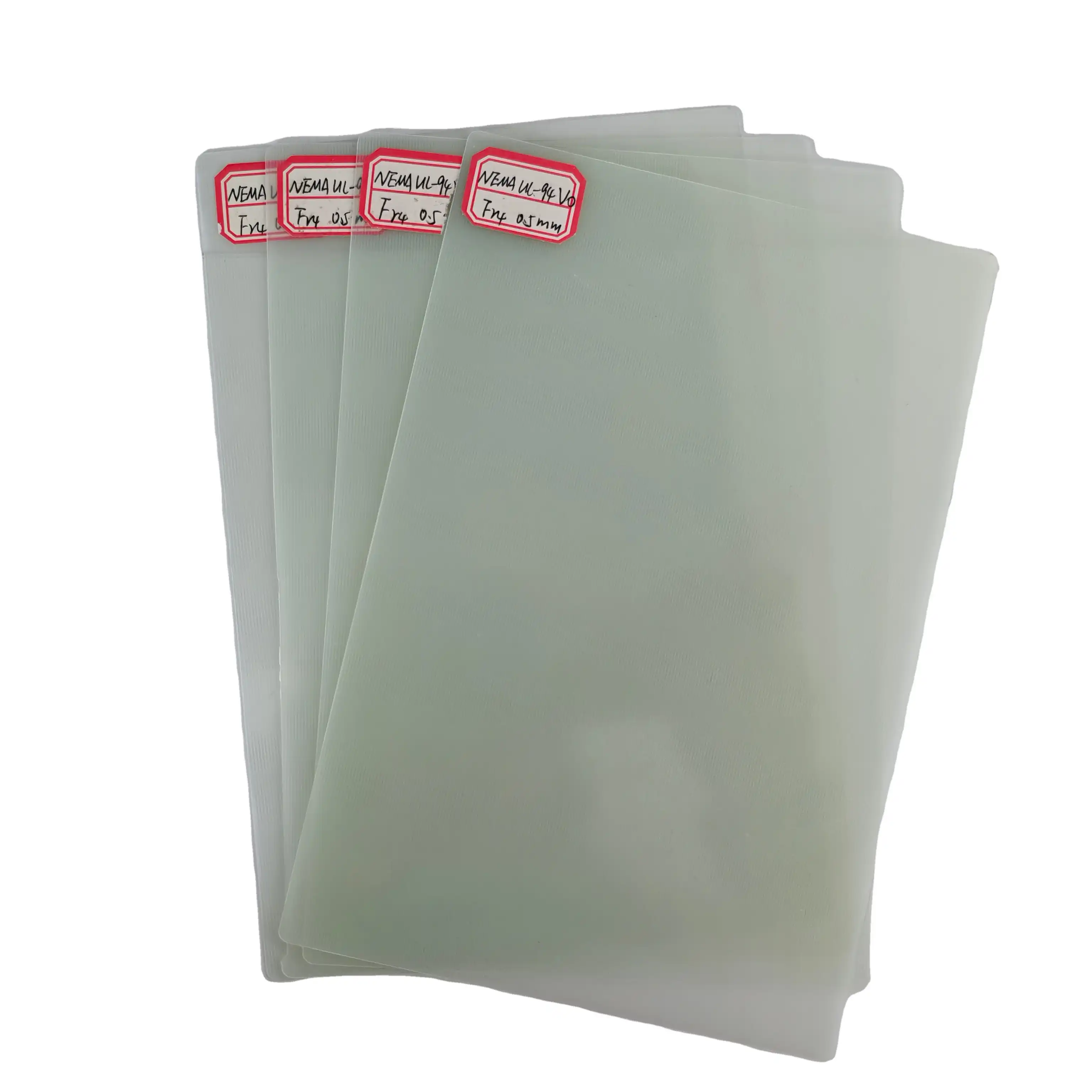
Making cuts in FR4 board can cause it to crack, but it shouldn't if the right tools and materials are used. If the material still has cracks after being processed the right way, it's probably not good. FR4 composite materials that are made of woven fiberglass cloth and epoxy resin should not break when normal milling, routing, and drilling is done on them. But if the tools aren't used right or the process of making the product isn't done right, edge chipping, delamination, and cracking can happen. Before you try to machine things like electrical insulation, PCB substrates, and industrial materials, you should know what goes wrong and how to fix it.
Understanding FR4 Board and Its Machining Characteristics
It is now accepted that FR4 is a high-quality composite material that can be used for electrical insulation. Continuous filament glass cloth and an epoxy resin binder have been mixed to make this thermosetting laminate. This makes a material that is strong and doesn't let electricity flow through it.
Layers of material are glued together several times at controlled temperatures and high pressure to make FR4. The epoxy resin system joins with itself in this step to make a strong shell around the fiberglass reinforcement. This curing process changes the material's ability to be machined in a direct way. If it doesn't cure long enough, some parts may be soft and tear easily. If it cures too long, some parts may be hard and crack easily.
Key Machining Operations and Their Impact
Modern factories use a range of machining techniques when working with FR4 materials. Drilling operations make round holes that are used to mount parts and connect wires. Care must be taken to keep spindle speeds and feed rates in check so that fibers don't come apart or resin doesn't spread. The outside dimensions and cutouts on the inside of the board are set by routing and profile cutting. Milling operations make features with controlled depth and surface textures.
The structure of the material is put under mechanical stress every time it is machined. Cutting through the epoxy matrix makes clear paths for the fiberglass strands to separate. Sometimes these stresses are too much for the material to handle, or the material is not strong enough to handle them.
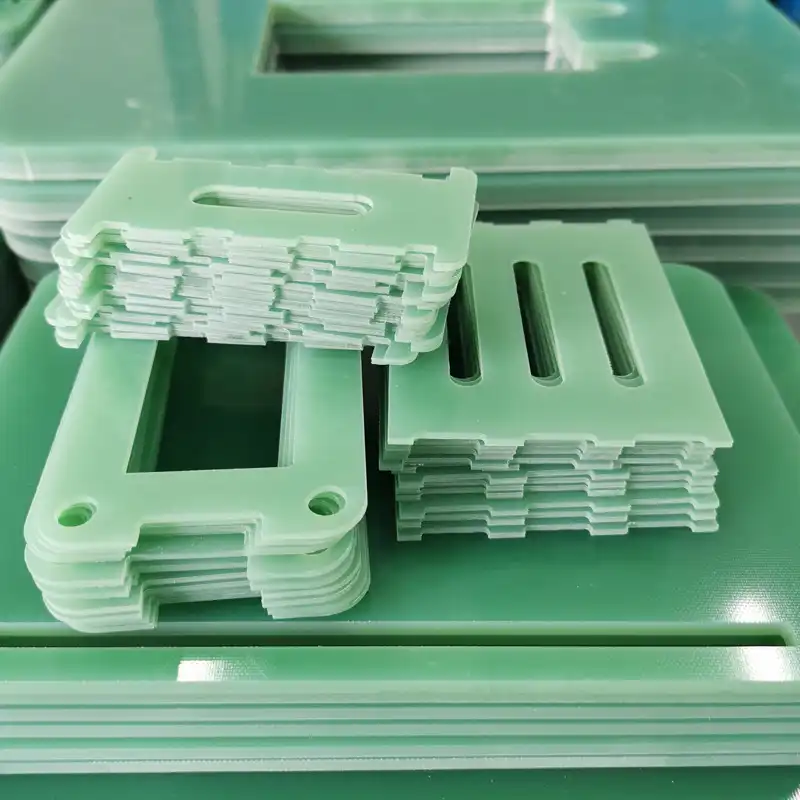
Does FR4 Board Crack During Machining? Causes and Risk Factors
It's impossible to stress enough how important good materials are for machine work. Strict quality control checks are done on high-quality FR4 board materials while they are being made. These checks make sure that the resin is spread out evenly, that the fiber-to-resin ratio is right, and that the laminate is fully hardened all the way through.
Material-Related Risk Factors
They do things that make cracking much more likely in order to save money. It loses some of its mechanical strength when non-alkali glass cloth or too much filler is added. These low-quality materials may look fine at first glance, but when they are machined, they will break very badly.
To figure out how to machine something, the glass transition temperature (Tg) is a very important number. Most FR4 materials have Tg values between 130°C and 140°C, but high-performance versions can go above 170°C. When cutting, heat from the tools can soften the epoxy matrix, which can damage materials that are almost glass-like.
Environmental and Process Variables
The way materials behave during machining is affected by the air's temperature and humidity. When there is a lot of humidity, boards with exposed edges can soak up water. This can change their size and put stress on the inside of the boards. Both the glass fiber reinforcement and the epoxy matrix can expand at different rates when the temperature changes. This makes it more likely for micro-cracks to form in the material.
If you store these things in bad conditions, they will get worse. FR4 materials should be kept in places that are monitored and have stable temperature and humidity. Extreme conditions or quick changes in the environment can put stress on the inside of a material, which can then show up as cracks when it is machined later.
Best Practices to Prevent FR4 Board Cracking During Machining
Choose the right tools, set the right process parameters, and keep an eye on the environment are some of the steps you need to take to successfully machine FR4 materials. When you want to machine fiberglass reinforcement, you need tools that are made for that purpose and are made of special materials and shapes.
Tooling and Parameter Optimization
Cutting tools that are coated in diamond or carbide last a long time and work consistently when working with fiberglass-reinforced materials. It is important that the tool's shape has sharp cutting edges and the right relief angles so that the material doesn't tear and the tool doesn't get too hot. Spindle speeds should be changed based on the tool's diameter and the thickness of the material being cut for the best cutting performance and heat management.
Continuous water lubrication keeps the edges from chipping and cuts down on the amount of dust that is made when saws or engraving machines are used. The cutting tool stays sharp and the temperature around the cutting area stays low with this method of cooling. The water also helps get rid of dirt and other things that could damage surfaces or tools.
Quality Control and Inspection Protocols
Tough rules for inspecting materials that come in help find low-quality materials before they are used in production. When looking at it, you should check for flaws on the surface, even color, and well-finished edges. You can use a machine to check the flexural strength and impact resistance, and an electric tester to make sure the dielectric properties meet the needs.
As part of the post-machining inspection protocol, both visual inspection and checking the dimensions should be done. Cutting edges can show peeling or tiny cracks early on that you might not be able to see with the naked eye. By checking these things first, you can find out about any issues with the materials or the process quickly, before they affect the next steps of putting it together.
Comparing FR4 with Other PCB Materials: Impact on Machining and Durability
The materials you choose have a big impact on how well machines work and how much they cost to make in general. Many situations call for FR4 board materials because they are the most cost-effective, have the best mechanical properties, and work well with electricity.
Alternative Material Considerations
Paper is at the center of the CEM-1 materials, and fiberglass is on top of that. Most of the time, they are easier to work with than solid fiberglass laminates. However, they are not as strong and cannot handle water as well. There are some good things about FR2 phenolic materials and they are cheaper, but they don't stay the same size when heated and cooled over and over again like epoxy-based systems do.
A metal core PCB is harder to work with than other types because it is made of aluminum or copper. While these materials are great at keeping heat in check, they are not the same as pure composite materials when it comes to the waste that is made when they are machined.
When it comes to thermal stability and cracking, high-performance alternatives like Rogers materials or polyimide-based laminates are often a better choice. Even though these high-tech materials are more expensive, they may be worth it in situations where regular FR4 isn't working as well as it should.
Performance Trade-offs in Material Selection
The material selection decision matrix has to find a middle ground between cost concerns and technical needs. Most standard FR4 has a dielectric strength of more than 30 kV/mm, and it only absorbs about 0.2% water. In most industrial settings, FR4 can be used because these properties don't change when the temperature is normal.
It works better in hot places with newer types of FR4 that have higher glass transition temperatures. These materials are useful in fields where temperatures change a lot, like aerospace and cars, because they don't soften or change size, which can cause cracks.
Procuring Quality FR4 Boards for Smooth Machining and Reliability
One important way to make sure that machining results are consistent and that production stops as little as possible is to use strategic procurement practices. You need to check not only the materials' specs but also the quality systems of the suppliers, how stable their supply chain is, and how well they help with technical issues.
Supplier Evaluation Criteria
Controlled manufacturing processes help suppliers who have been making FR4 for a long time keep the quality of their goods the same. They spend a lot of money on high-tech systems and tools that watch the whole process and make sure that all of the materials they sell have the same qualities. You can also make sure the quality of the things you make by getting certified to meet international standards like UL recognition and RoHS compliance.
Supply chain issues become very important when planning production and keeping track of stock. How you buy things is affected by things like lead times, minimum order quantities, and the kinds of packaging that can be used. If a supplier is flexible about how they make their goods, they can meet specific needs for thickness, surface treatments, or different resin systems that might work better in some situations.
Quality Assurance and Documentation
There should be full material certification documents with every shipment. These should say where the materials came from and confirm their most important properties. Most of the time, these papers have measurements that prove the item meets the requirements to be bought, the results of electrical tests, and checks on the mechanical properties.
You can make quality agreements that are specific to your needs when you work with the same supplier for a long time. As part of these partnerships, there may be rules for inspecting materials as they come in, faster ways to replace broken materials, and technical help to make the whole process go more smoothly. When working with tough machining issues or coming up with new uses that push the limits of what materials can do, these kinds of connections are very useful.
Conclusion
It shouldn't crack when machining FR4 board as long as good materials are used and the right methods are used. When something cracks, it's usually because the material isn't good quality or the way it was processed wasn't right. To be good at machining, you need to know how the material works, use the right tools, and keep a close eye on quality from the time you buy the materials until you finish making the things. To avoid machining failures during cutting operations, it is still very important to use water cooling, pick the right tools, and carefully evaluate suppliers. When companies stick to tried-and-true methods and work with reliable suppliers, they can get consistent results with less downtime and rubbish.
FAQ
What causes FR4 boards to crack during machining operations?
It's usually because the material isn't good enough, the parameters for the machining are off, or the part hasn't cooled down enough that it cracks. When the material is made incorrectly, like by using too much filler or not curing it properly, it loses some of its mechanical strength. It's also more likely for cracks to appear during processing if the temperature and humidity are high.
How can manufacturers prevent edge chipping when cutting FR4 materials?
Cutting with water on the blade all the time keeps the edges from chipping and the dust from building up. Your material won't be mechanically stressed if you use cutting tools that are sharp, have the right shapes, and are run at the right speeds and feed rates. You can also keep the workpiece from getting damaged by vibrations by properly clamping and supporting it.
What inspection methods help identify potential machining issues early?
With both your eyes and a microscope, you can look at the cut edges and find delamination or tiny cracks before they change the production. Checking the sizes of the pieces makes sure the work is correct, and mechanically testing sample pieces makes sure the properties of the material meet the needs. By regularly checking the condition of your tools, you can avoid problems that come from cutting edges that are worn down.
Partner with J&Q for Premium FR4 Board Solutions
Since more than 20 years ago, J&Q has been making insulation sheets. They also offer full technical support to make sure that the machining of your FR4 board goes smoothly. The materials we offer always meet the strict needs of electrical, automotive, and industrial applications thanks to our large network of suppliers and strict quality control procedures. Because we have specialized logistics skills and have been trading internationally for more than ten years, we can offer full supply chain solutions that make buying things safer and more efficient. FR4 board supplier? Email our technical team at info@jhd-material.com to talk about your needs and find out how our tried-and-true method can help your manufacturing go more smoothly.
References
Institute of Electrical and Electronics Engineers. "Standards for Printed Circuit Board Materials: Mechanical and Electrical Properties of FR4 Composites." IEEE Transactions on Components and Packaging Technologies, Vol. 45, 2023.
International Association of Printed Circuit Boards. "Machining Guidelines for Fiberglass-Reinforced Epoxy Laminates: Best Practices for Crack Prevention." IAPCB Technical Report 2024-03, 2024.
Society of Manufacturing Engineers. "Composite Material Machining: Tooling Strategies for FR4 and Related Substrates." Manufacturing Engineering Handbook, 8th Edition, 2023.
American Society for Testing and Materials. "Standard Test Methods for Mechanical Properties of Printed Circuit Board Materials." ASTM D7791-23, 2023.
Electronic Industries Alliance. "Quality Assurance Requirements for FR4 Laminate Materials in Electronic Applications." EIA Technical Bulletin TB-2024-07, 2024.
Materials Research Society. "Failure Analysis of Fiberglass-Epoxy Composites Under Mechanical Stress: Implications for PCB Manufacturing." MRS Communications, Vol. 12, No. 3, 2023.