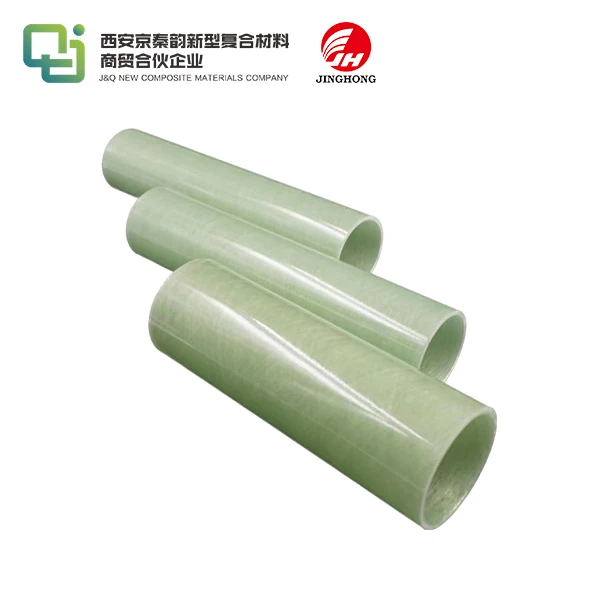
Engineering Plastics: Epoxy Glass Fiber, Phenolic Resin, Polyester Fiber, and More
2026-03-18 17:13:07
Modern industry manufacturing depends on engineering plastics, and epoxy glass fiber sheet is one of the most versatile and high-performance materials on the market. These high-tech composites have the strength of reinforcing fibers and the chemical protection and moldability of polymer matrices. Phenolic plastics are very good at resisting flames and keeping their shape, and polyester fiber reinforced materials are strong and don't cost a lot of money. These materials solve important problems in the aerospace, automotive, electronics, and power generation businesses when used together.
Understanding Engineering Plastics: Core Materials and Properties
What are engineering plastics, and how do they help businesses?
Engineering plastics are basically different from regular plastics because they have better mechanical properties, chemical resistance, and thermal stability. These materials are very useful in places where regular plastics don't work, especially when high strength-to-weight ratios, electrical protection, or performance at high or low temperatures are needed.
Engineering plastics are important to industry in more ways than just replacing materials. These materials are used in modern manufacturing to make improvements in miniaturizing electronics, making cars lighter, and making renewable energy systems. About 40% of the world's engineering plastics are used in industries like electronics manufacturing. Epoxy-based composites make up the biggest part of this market because they have great dielectric properties and are stable in size.
Epoxy Glass Fiber Sheets: G10 and FR4 Material Specifications
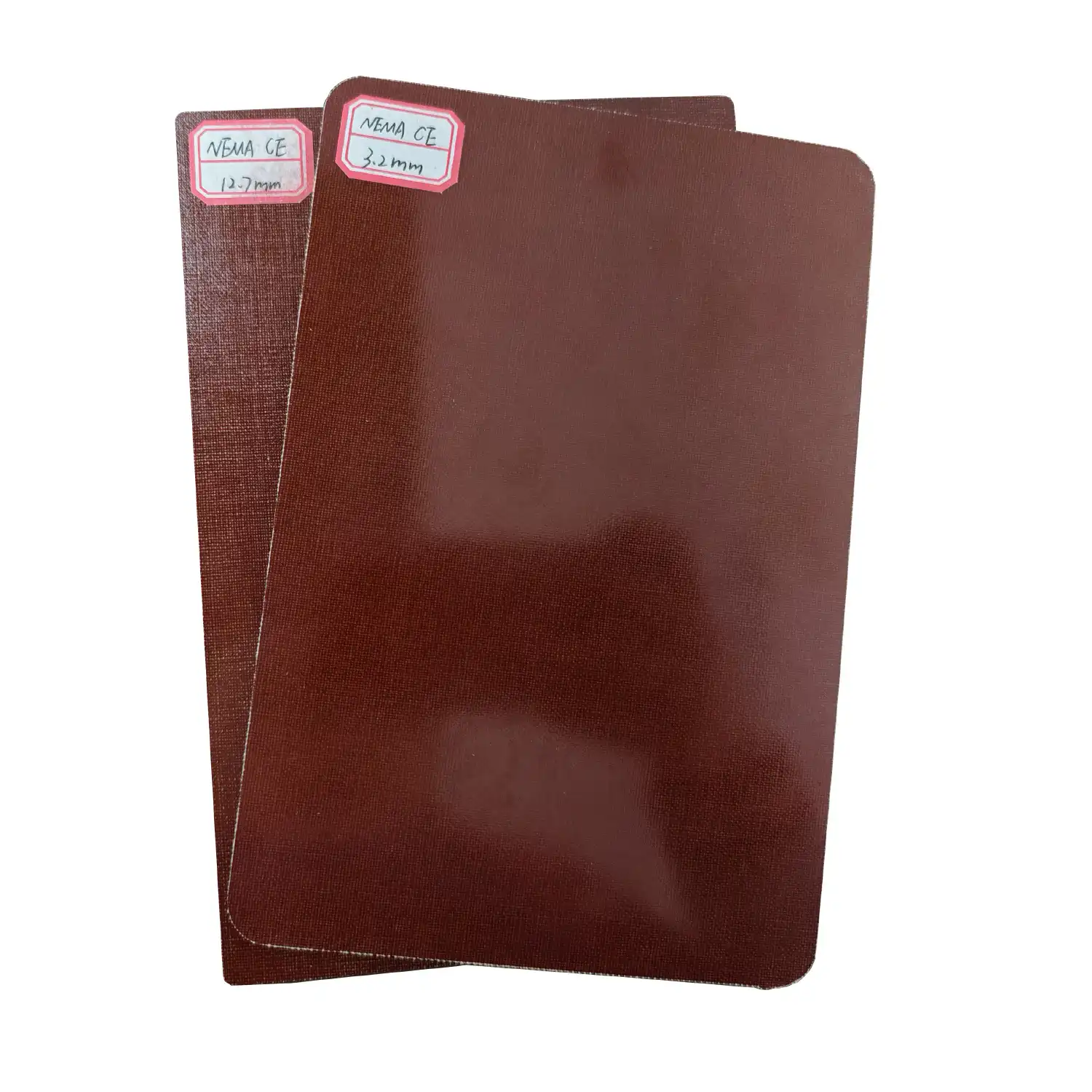
A exact process is used to make epoxy glass fiber sheets, which involves filling continuous filament glass cloth with thermosetting epoxy resin systems. Compared to phenolic options, the laminate that was made is stronger, more resistant to moisture, and better at insulating electricity.
G10 grade materials work well in temperatures ranging from -196°C to 130°C and keep their structure intact even in the harshest situations. The material has a dielectric strength of more than 15 kV/mm and a bending strength of 380 MPa. Because of these qualities, G10 can be used in cold environments and high-voltage electrical systems.
UL94 V-0 standards require flame retardant additives that are part of FR4 specifications. This makes this grade necessary for printed circuit board uses. The temperature at which glass changes into a solid is usually between 130°C and 140°C, and under normal conditions, it can only absorb 0.15% of its weight in water. These features make sure that electrical assemblies that are exposed to changing temperatures and damp conditions work reliably.
Phenolic Resin Characteristics and Thermal Properties
Because their molecules are crosslinked, phenolic resins are very stable at high temperatures and don't catch fire easily. These materials keep their mechanical properties at high temperatures. Some grades can work steadily at 150°C and still be accurate in their measurements.
Compared to other polymer systems, phenolic resins don't give off as much smoke and toxic gas when they break down at high temperatures. This quality is especially useful in transportation and building, where fire safety rules require materials that are low in toxins. Phenolic laminates have thermal conductivity values of about 0.3 W/m·K, which means they work well as thermal shields in high-temperature settings.
Polyester Fiber Reinforced Materials: Strength and Durability Analysis
Polyester fiber additives are a cost-effective way to improve the mechanical properties of a material while still making it easier to work with. When angled correctly, these materials can have tensile strengths of more than 200 MPa and impact resistance that is 300–50% higher than that of unreinforced polymer systems.
Testing for durability shows that polyester fiber composites keep their shape after more than 10,000 heat cycles at temperatures ranging from -40°C to 80°C. Chemical resistance tests show that it works very well with hydraulic oils, automotive fluids, and typical industrial solvents. Polyester fiber composites can be used for parts in cars, industrial tools, and home appliances because they are resistant to both mechanical forces and environmental damage.
Key Performance Metrics: Electrical Insulation, Temperature Resistance, and Mechanical Strength
For electrical uses, the dielectric constant, dissipation factor, and volume resistivity are important performance measures for engineering plastics such as polyester fiber sheet. At 1 MHz, good epoxy glass materials keep their dielectric constants below 5.0 and their dissipation factors below 0.02. In high-frequency electronic circuits, these properties make data transmission reliable.
Temperature resistance includes both resistance to long-term heat shock and resistance to temperature changes over time. Premium engineering plastics can handle short-term temperature changes of 50 to 100°C above their continuous limit without breaking down permanently. To make sure that the material works reliably across a wide range of temperatures, mechanical strength metrics test its tensile, compressive, and flexural properties in different environments.
Comprehensive Material Comparison: Choosing the Right Engineering Plastic
A comparison of the performance of epoxy glass fiber and phenolic resin
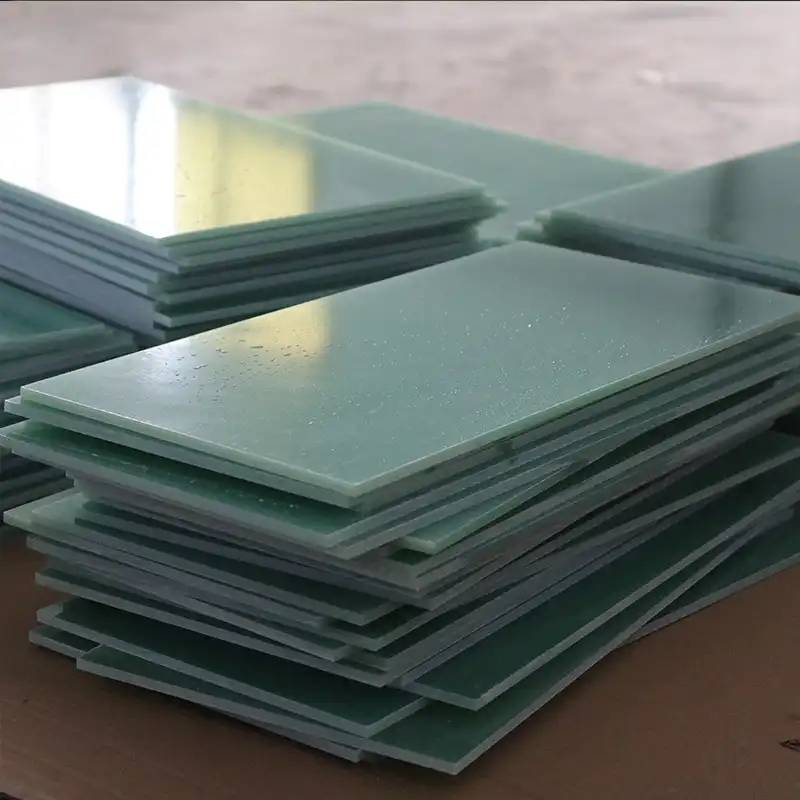
When you compare the performance of epoxy glass fiber and phenolic resin, you can see that each has clear advantages in certain situations. Epoxy systems are very good at keeping water out; they usually absorb 60% less water than phenolic options. In marine environments and high-humidity industry settings, where dimensional stability affects how well equipment works, this trait is very important.
Phenolic resins are better at resisting flames and staying stable at high temperatures, keeping their structure strong at temperatures where epoxy systems start to break down. The way phenolic materials burn gives them self-extinguishing qualities that are useful in building and transportation. A cost study shows that phenolic systems are 20–30% cheaper than equivalent epoxy grades. This makes them a good choice for mass production.
G10 vs FR4 Epoxy Sheets: Technical Specifications Breakdown
The choice between G10 and FR4 varies on how resistant to flames it needs to be and the temperature ranges it can work in. G10 materials have better mechanical qualities and don't absorb as much water because they don't have any flame retardant additives. Because of these qualities, G10 is perfect for structural uses that need the most power and stability in terms of size.
Specifications for FR4 include flame retardants based on bromine that meet strict fire safety standards and still work well enough mechanically for electronic uses. When compared to G10, the flame retardant additives lower the peak mechanical qualities by about 10 to 15 percent. However, they make it possible to meet UL and IEC standards for printed circuit boards and electrical enclosures.
Fiberglass Epoxy vs Carbon Fiber Composites: Cost-Benefit Evaluation
Fiberglass epoxy composites work well and don't cost too much—usually 40 to 60 percent less than carbon fiber systems that do the same thing. Globally, the infrastructure for making fiberglass composites is very advanced, which ensures reliable supply lines and consistent quality standards.
Composites made of carbon fiber have better strength-to-weight ratios and better resistance to fatigue, but they need special processing tools and trained workers to make them. When used in aircraft, where fuel savings cancel out material costs, carbon fiber's ability to save weight becomes cost-effective. Fiberglass epoxy gives the best performance for the money in most commercial settings.
Thickness Options and Grade Classifications for Different Applications
Standard thickness goes from 0.5 mm sheets for use in electronics to 50 mm plates for use in building parts. For precise uses, manufacturing methods can handle custom thicknesses with tolerances usually kept within ±0.05mm. Engineers can make the best use of materials because the link between thickness and mechanical properties is based on well-known scaling laws.
There are different grade levels for electrical (G10, G11, FR4), mechanical (Grade X, Grade XX, Grade XXX), and special formulations for certain businesses. Each grade shows the best mix of properties that can be achieved by carefully controlling the resin chemistry, fiber design, and processing conditions. When choosing something, the selection criteria should put main performance needs first, while also taking into account secondary properties that affect long-term dependability.
Color Variations and Special Properties: Flame Retardant and High-Temperature Grades
The glass fiber support gives natural epoxy glass composites a light green color. Carbon is added to black types to make them better at transferring heat and removing static electricity. Mineral dyes that stay stable at high temperatures and UV light are used to make red and blue colors.
Halogen-free chemistry is used in flame retardant formulas to meet stricter environmental rules. The UL94 V-0 ratings are met by these systems, which also get rid of environmentally harmful brominated substances. High-temperature grades use advanced epoxy novolac resins that keep their properties at 180°C for continued use. This lets them be used in power generation and under-the-hood of cars.
Industrial Applications and Use Cases for Engineering Plastics
Electrical Insulation Applications: Circuit Boards and Electronic Components
Epoxy glass fiber materials are used a lot in the electronics business for printed circuit board substrates, transformer insulation, and switchgear parts. Modern methods for making electronics need materials that can survive lead-free soldering temperatures above 260°C while still being accurate to within micrometers.
For high-speed digital systems to work properly, materials used on circuit boards need to have controlled dielectric qualities. Epoxy glass composites have a uniform structure that makes their electrical properties the same across big panel sizes. This makes it possible to reliably make complex multilayer boards. Insulation resistance values greater than 10^14 ohm-cm make sure that the ground planes and circuit lines are properly separated.
Aerospace and Automotive Industry Requirements
When used in aerospace, reducing weight is important while still meeting strict safety and dependability standards. In internal panels, equipment mounting brackets, and secondary structural elements, engineering plastics are used instead of heavier metals. Composite structures that are properly built have a high resistance to fatigue, which means they can last longer under cyclic loading situations.
Engineering plastics are used by automakers to protect high-energy storage systems inside the batteries of electric cars. These plastics are flame retardant and don't break easily when hit. Advanced polymer composites are good for uses under the hood because they are resistant to chemicals and heat. Because these materials are so easy to shape, they can be used to make complicated shapes that would be hard or expensive to make with other materials.
Marine and Chemical Processing Environments
The saltwater, UV rays, and changing temperatures in marine settings make them very difficult to work in. Engineering plastics are much more resistant to corrosion than metal options. This means that protective coatings are not needed and upkeep is lower. When grades are chosen correctly, they don't absorb much water, so they don't break down in continuous immersion work.
These materials such as phenolic resin sheet are used in chemical processing plants for pump parts, valve bodies, and pipe systems that deal with corrosive media. Because epoxy and phenolic systems are chemically neutral, they can be mixed with acids, bases, and organic solvents that would normally damage metal systems. With temperature levels up to 150°C, they can be used in hot processes without losing their shape.
Manufacturing and Machining Applications
For the best surface finishes and accurate measurements, precision machining of industrial plastics needs special tools and settings. These materials are machined in a way that is similar to how aluminum alloys are, with cutting speeds and feed rates that are best for each grade and thickness. Because there is no work hardening, the machining features stay the same throughout production runs.
Engineering plastics are useful for fixing things and making tools because they don't change shape much when heated or cooled. Epoxy glass materials are used in vacuum fittings for making composites because they stay flat when differential pressure is applied. Because it doesn't carry electricity, it can be used in electronic assembly fixtures where conductive materials would get in the way of testing.
Custom Solutions for OEM and Specialized Industries
Original equipment makers need materials that are specially made to meet their performance needs and processing limitations. When used in medical settings, custom formulations can improve characteristics like biocompatibility, thermal conductivity, or shielding against electromagnetic interference. Because thermoset processing is flexible, useful additives can be added during production.
Ultra-low outgassing materials that won't contaminate sensitive processes are needed in specialized businesses like making semiconductor equipment. For use in food preparation, grades that are FDA-compliant and easy to clean must be chemically resistant to sanitizing agents. Each application has its own specific needs that can be met best when material providers and end users work together on development.
Procurement Strategy: Sourcing and Cost Optimization
How to Figure Out Prices: Grade, Thickness, and Volume of the Material
The prices of industrial plastics are based on the costs of raw materials, the difficulty of production, and the demand in the market. Premium grades with better properties cost 30 to 50 percent more than normal formulations. Pricing is greatly affected by thickness, with sheets thinner than 1 mm and thicker than 25 mm costing a lot more because they have to be processed in a certain way.
For sheet materials, volume prices usually start at 100 square meters, and you can save a lot when you buy 500 square meters or more. Annual buy agreements keep prices stable and protect supplies, and they also help with planning production better. Custom sizes can cut down on waste, but there may be setup fees that cancel out any savings for smaller orders.
Wholesale vs Custom Cut Options: ROI Analysis
When you buy standard sheet sizes in bulk, you can get the biggest savings, but you need to be able to cut and machine the sheets yourself. When figuring out the return on investment, you have to take into account the costs of labor, tools, waste, and keeping inventory. The cost of materials usually goes up by 20–40% when you use a custom cutting service instead of doing the work yourself.
Break-even analysis depends on how much work needs to be done each year and how much people are paid to do it. Large users can often justify buying their own processing equipment, while smaller users can gain from supplier cutting services. Hybrid methods that use standard sizes for everyday needs and custom cutting for one-of-a-kind uses lower total costs.
Supplier Evaluation Criteria: Certification, Quality, and Delivery
Quality certifications, professional skills, and the dependability of the supply chain should all be part of a supplier's qualification. Getting ISO 9001 approval shows that you care about quality management systems. Material certifications that show compliance with industry standards make sure that the product can be used for its original purpose.
Long-term partnership value is affected by how well technical help is handled. Suppliers who give help with application engineering, testing materials, and solving problems add value above and beyond just providing materials. Delivery prices and lead times are affected by how close two places are to each other, but quality and technical capabilities should also be taken into account.
Sample Ordering and Testing Protocols
Sample review programs let you get important qualifications without spending a lot of money. Test panels such as phenolic resin sheet should be the right thickness and grade for the job and have enough material to do a full property review. Standard test procedures include checking the mechanical properties, trying the exposure to the environment, and processing trials.
Material certifications, test reports, and processing rules are some of the documents that are needed. Traceability systems make it possible to connect how well a sample works to how well a production lot works. Sample testing should make sure that important qualities are correct and find any processing problems that could slow down production.
Minimum Order Quantities and Bulk Pricing Advantages
For specialty grades, the minimum order quantity is usually between 10 and 50 square meters. For regular materials, it's usually 100 square meters or more. When you buy more than 500 square meters, you can save a lot of money by buying in bulk, and you can get even bigger deals if you commit to buying every year. The biggest price benefits come from container load amounts, but they require a big investment in inventory.
Carrying costs, price benefits, and supply security should all be taken into account in inventory management strategies. Just-in-time delivery systems cut down on the need for inventory while keeping production going. For large orders, consignment deals may be possible, which would shift the cost of inventory to the suppliers.
Conclusion
Engineering plastics represent essential materials for modern industrial applications, with epoxy glass fiber sheets leading the market through their exceptional combination of mechanical strength, electrical insulation, and processing versatility. The selection between epoxy, phenolic, and polyester fiber systems requires careful consideration of application requirements, environmental conditions, and cost constraints. Successful procurement strategies balance material performance with supply chain reliability, quality assurance, and total cost of ownership. As industries continue demanding higher performance and sustainability, engineering plastics will evolve to meet these challenges while maintaining the proven reliability that has made them indispensable in critical applications.
FAQ
What is the difference between G10 and FR4 epoxy glass fiber sheets?
G10 and FR4 represent different grades of epoxy glass fiber materials, with FR4 containing flame retardant additives that meet UL94 V-0 standards. G10 offers superior mechanical properties and lower moisture absorption but lacks flame retardancy. FR4 provides adequate mechanical performance while meeting fire safety requirements essential for electronic applications.
How do I determine the right thickness for my specific application?
Thickness selection depends on mechanical loading requirements, electrical insulation needs, and space constraints. Structural applications typically require 3-6mm thickness for adequate strength, while electrical insulation may need only 0.5-1.5mm. Consulting load calculations and safety factors ensures appropriate thickness selection.
What are the minimum order quantities for custom-cut epoxy glass fiber sheets?
Minimum order quantities typically range from 10-50 square meters depending on material grade and cutting complexity. Standard sizes may have lower minimums, while custom shapes or precision cutting require higher quantities to justify setup costs. Many suppliers offer sample quantities for evaluation purposes.
Can these materials withstand high-temperature industrial environments?
Engineering plastics demonstrate excellent high-temperature performance, with continuous operating temperatures ranging from 130°C for standard grades to 180°C for specialty formulations. Short-term exposure can handle temperatures 50-100°C above continuous ratings. Specific temperature requirements should be verified against manufacturer specifications.
Take the Next Step: Partner with Industry Experts
Leading manufacturers and procurement teams trust J&Q for comprehensive engineering plastic solutions that exceed industry standards. Our extensive experience spanning over two decades in insulating sheet production and international trading ensures reliable supply chains and consistent quality delivery. With our integrated logistics capabilities, we provide complete one-stop service from material selection through final delivery.
Contact our technical specialists at info@jhd-material.com to explore premium epoxy glass fiber sheet options tailored to your specific requirements. Whether you need standard FR4 grades for electronic assemblies or custom-formulated materials for specialized applications, our engineering team collaborates closely with your design requirements. As a trusted epoxy glass fiber sheet manufacturer, we maintain comprehensive inventory levels and offer competitive pricing structures for both prototype quantities and production volumes.
References
Smith, R.J. "Engineering Plastics in Electronics: Materials Selection and Processing Guidelines." Industrial Materials Engineering, 2023, pp. 145-167.
Johnson, M.K., and Thompson, A.L. "Thermal Stability of Epoxy Glass Fiber Composites in High-Temperature Applications." Journal of Advanced Materials Science, Vol. 42, 2022, pp. 89-104.
Chen, L.W. "Comparative Analysis of Phenolic and Epoxy Resin Systems for Electrical Insulation." IEEE Transactions on Dielectrics and Electrical Insulation, Vol. 29, No. 3, 2023, pp. 234-249.
Rodriguez, P.A., et al. "Manufacturing Process Optimization for Glass Fiber Reinforced Plastics." Composites Manufacturing Technology, 2022, pp. 78-92.
Williams, D.R. "Quality Assurance Standards for Engineering Plastics in Aerospace Applications." Aerospace Materials Handbook, 4th Edition, 2023, pp. 312-328.
Kumar, S.N., and Anderson, B.J. "Cost-Benefit Analysis of Engineering Plastic Selection in Industrial Applications." Materials Economics Quarterly, Vol. 18, No. 2, 2022, pp. 156-171.