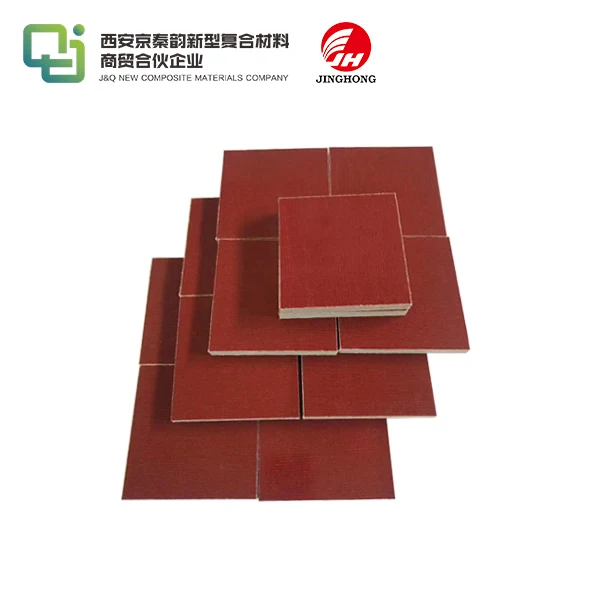
Epoxy FR4 Supports Reliable Performance in Electronic Manufacturing
2026-08-12 17:30:12
When electronic manufacturers evaluate substrate materials for mission-critical applications, Epoxy FR4 consistently emerges as the preferred choice. This glass-reinforced epoxy laminate delivers exceptional electrical insulation, thermal stability, and mechanical integrity across diverse manufacturing environments. From PCB assemblies in consumer devices to high-voltage switchgear in industrial installations, Epoxy FR4 provides the dependable foundation that engineering teams require. Its balanced performance characteristics and compliance with international safety standards make it indispensable for electrical and electronics manufacturers who cannot compromise on quality or reliability in their production processes.
Understanding Epoxy FR4 and Its Role in Electronics Manufacturing
Material Composition and Manufacturing Process
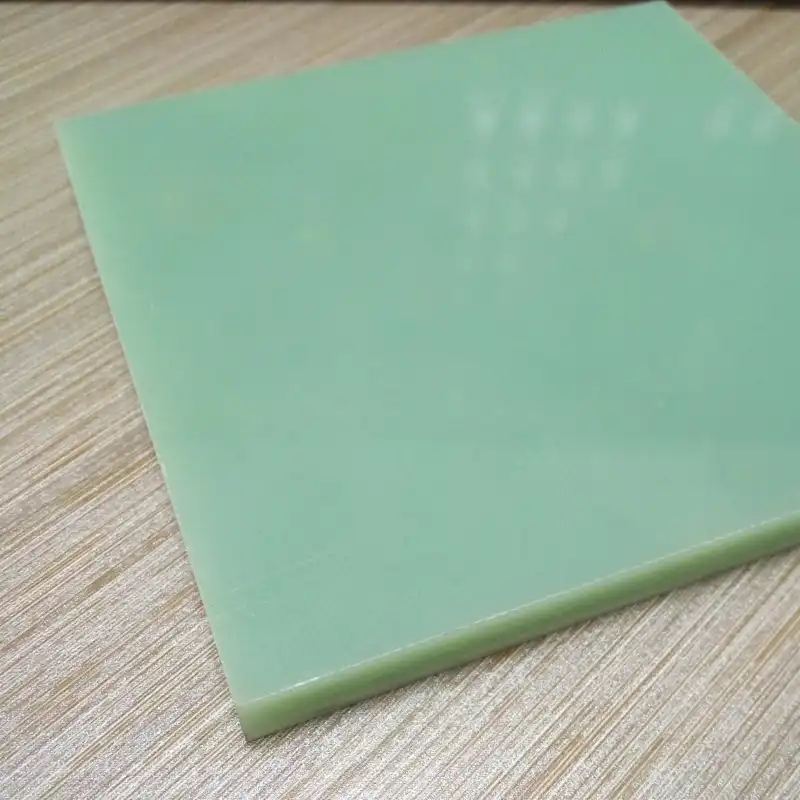
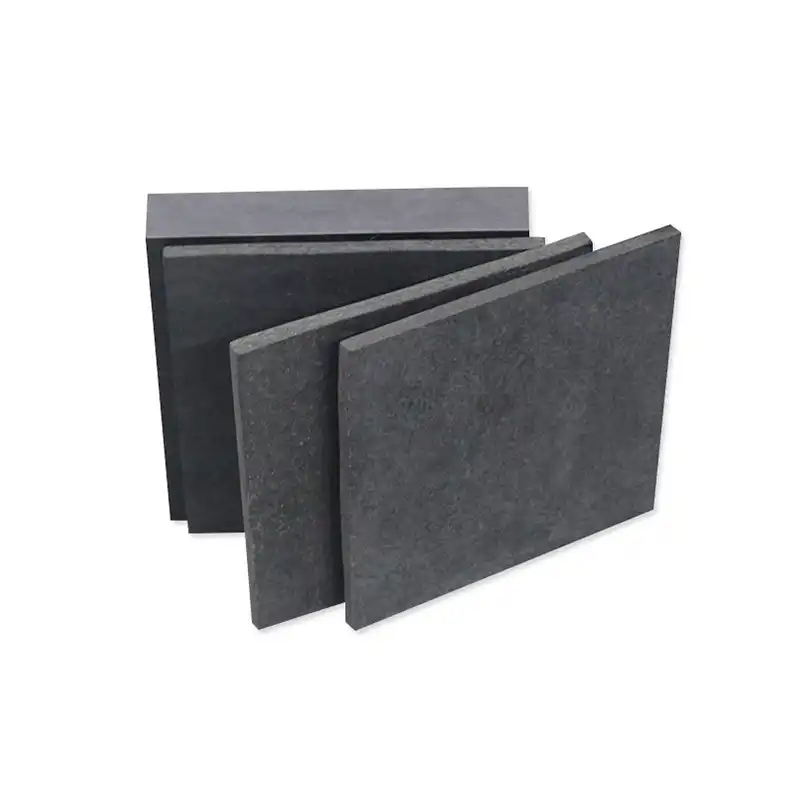
Epoxy FR4 is made of weaving fiberglass cloth that has been mixed with flame-resistant epoxy resin. Heat and pressure are used to cure the resin, which forms a composite material. The "FR" label means that it meets the UL94V-0 flammability standard. This means that it will put out fires quickly and not spread them, which is a very important safety requirement in electrical uses. The National Electrical Manufacturers Association (NEMA) sets the standards for Epoxy FR4 products. These standards ensure consistent quality and performance across the whole industry, and procurement teams rely on them.
Multiple layers of pre-impregnated fiberglass sheets are compressed at controlled temperatures, usually between 170°C and 180°C, during the production process. While this process is going on, the epoxy resin matrix is cross-linked, which bonds the glass reinforcement into a hard structure with even thickness limits. Thin copper foil can be laminated onto one or both sides, making bases for printed circuit boards that are ready to be etched. Because this way of making things is so precise, the dimensions will stay the same during subsequent CNC machining and assembly steps.
Core Properties Driving Industry Adoption
At 1 MHz, the dielectric constant of standard Epoxy FR4 is between 4.2 and 4.8. This means that it can keep signals intact in most electronic applications without losing too much of them. In normal working temperatures, this electrical property stays the same, which lets control systems and power delivery equipment work consistently. The material has a dielectric breakdown strength greater than 20 kV/mm, which means it protects well against electrical arcing in high-voltage areas where insulation failure can have very bad effects.
The glass transition temperature (Tg) is one of the most important parameters for judging thermal efficiency. Standard types of Epoxy FR4 have Tg values of about 130°C to 140°C, while High-Tg types have values of 170°C to 180°C or higher. When the temperature goes above the Tg threshold, the material changes from a rigid glassy state to a more flexible rubbery state. This could have an effect on its mechanical properties and ability to keep its shape. By choosing the right Tg ratings, you can be sure that the substrates will keep their shape during the soldering process and the temperature changes that happen in car and industrial machines.
The mechanical strength numbers show why Epoxy FR4 is so good for load-bearing jobs. Flexural strength usually goes up to 415 MPa or higher, which means it can support parts of a structure that are under mechanical stress. The material doesn't absorb more than 0.15% of its own weight in water, so it doesn't change size or lose its electrical properties in damp places. This is a useful property for power sector installations and marine electronics that can't be kept out of the environment.
Applications Across Manufacturing Sectors
Epoxy FR4 is used by electrical and electronics makers for PCB substrates that allow surface mount technology assembly. The material's dimensional stability stops copper traces from deforming during the thermal shock cycles that are part of reflow soldering. This keeps circuits in consumer electronics, automotive ECUs, and industrial controllers working properly. CNC machining makes it possible to precisely make mounting holes, edge contours, and custom geometries that complex electronic assemblies need.
Builders of industrial machinery use phenolic and epoxy laminates to make wear-resistant parts, structural insulation systems, and mechanical spacers. When you combine high compression strength with low friction coefficient, you get gears and bushings that work reliably even when they are loaded all the time. Class II thickness limits make sure that parts fit consistently in tight mechanical systems where differences in dimensions would hurt the performance of the equipment.
Epoxy FR4 is what power distribution companies use for arc chutes, phase barriers, and busbar supports in switchgear installs. The high Comparative Tracking Index (CTI > 175V) of the material stops electricity from following and carbon from forming on insulating surfaces that are contaminated. Flame resistance properties stop fires from spreading when there is a fault, protecting people and equipment nearby. These safe shields keep the electricity from flowing even when the temperature changes with the seasons or when they are being used, because they are temperature stable.
How Epoxy FR4 Compares to Other PCB Materials: A Rational Choice for B2B Clients
Performance Comparison with Alternative Substrates
Polyimide substrates have better thermal stability and can handle steady temperatures of up to 260°C. This makes them perfect for use in aircraft and harsh environments. However, the price of polyimide is much higher than that of Epoxy FR4, frequently three to five times the investment per square foot. When purchasing managers look at project budgets, they usually save polyimide for specific uses where heat demands are higher than what Epoxy FR4 can handle. This way, they can save money without giving up performance gaps that are needed.
Rogers' high-frequency laminates keep signals very stable at microwave frequencies, with dielectric constants as low as 2.2 and very little loss tangent. In places where signal accuracy has a direct effect on system performance, like telecommunications equipment and radar systems, these electrical properties are useful. Rogers substrates are only economically possible when working frequencies are higher than 1 GHz, because of the difference in material cost and the special processing needs. Below this frequency, standard Epoxy FR4 works just fine and costs a lot less.
Metal-core PCBs are great for managing heat from power semiconductors and LED arrays that need to get rid of heat quickly. The aluminum or copper base layer moves heat away from the parts better than glass-epoxy materials. This thermal advantage is used by automotive lighting systems and power electronics, but they make assembly more difficult and cost more in materials. These Epoxy FR4 substrates work well in situations where thermal loads can be handled with normal heat sinking. They also make the manufacturing process easier and cost less overall.
Standard versus High-Performance FR4 Variants
Standard Epoxy FR4 formulas strike a good mix between price and performance for most electrical uses that will be exposed to temperatures below 130°C for long periods of time. Standard grades are often used in consumer electronics, simple control systems, and business electronics because they are easy to find and don't cost too much. The material keeps its electrical properties and mechanical strength under normal indoor operating conditions. It also meets UL and RoHS compliance requirements without charging more.
Epoxy FR4 with a high Tg is used in applications that need to withstand constant high temperatures or thermal cycling. Under-the-hood electronics in cars, industrial motor drives, and LED power sources all produce long-lasting heat that needs surfaces that don't soften or change size. The improved resin systems in High-Tg formulations keep their rigidity and electrical properties at temperatures up to 180°C. This stops stress in the solder joint and deformation of the copper trace during operational heating. Although it costs a little more than regular Epoxy FR4, the extra money spent makes it much more reliable in places with high temperatures.
High CTI formulations are used in places that are likely to get dirty and where conductive deposits could build up on insulating surfaces. Outdoor power installations, marine electronics, and equipment used in chemical processing are all exposed to water, salt, and industrial pollutants. When the CTI grade is higher than 600 volts, it means that the resistance to tracking and arc formation is higher. This means that the service life is longer in tough circumstances. By specifying the right CTI values during purchase, you can avoid insulation failure before its time and unexpected maintenance in harsh working conditions.
Procuring Epoxy FR4: What B2B Buyers Need to Know
Sourcing Strategies and Supplier Selection
To find good Epoxy FR4 providers, you need to look at their production skills, quality certifications, and how reliable their supply chain is. Reputable makers keep up with ISO 9001 quality control systems and UL recognition for flame-retardant compliance, which makes it possible to track each production lot. When engineering managers look at a supplier's credentials, they should make sure that the credentials match the IPC-4101 specification and ask for certification papers that show that the seller has passed mechanical, electrical, and thermal property tests according to ASTM standards.
Minimum order quantities vary a lot from one supplier to the next, ranging from small amounts for prototypes to full production pallet loads. Small-batch makers and research facilities benefit from providers with flexible order minimums because they can use them to make prototypes and test designs without spending a lot of money on mass production. When negotiating annual supply agreements, companies that make a lot of products should look into volume pricing structures and consignment inventory arrangements that make the best use of working capital and make sure that materials are available for just-in-time production schedules.
Lead times show how complicated the production process is and where the supply chain is located. Standard thickness sheets in common sizes usually ship in two to four weeks. However, it may take six to eight weeks for custom sizes, resin formulations that aren't used very often, or copper-clad configurations. When planning projects, procurement professionals in charge of deadlines should take these wait times into account and only ask for faster handling when they have to in order to meet the deadline. Strategic sourcing practices help keep prices low by building relationships with multiple qualified suppliers. This lowers the risk of supply disruptions.
Evaluating Technical Specifications and Requesting Samples
To understand what a datasheet means, you need to know the test conditions and methods that went into making the published specifications. Differential scanning calorimetry (DSC) and dynamic mechanical analysis (DMA) give different numbers for the glass transition temperature. When comparing seller offers, buying teams should make it clear which test standard is being used. When describing the dielectric constant, the measurement frequency should be used as a guide, since values change across the frequency range. Performance problems that are found after a material commitment can be avoided by making sure that key specs match application requirements.
The evaluation protocols for samples should be based on real manufacturing processes and working conditions. By asking for sample sheets, you can try the CNC machining features, surface finish quality, and accuracy of dimensions in-house before placing large orders. Thermal stress testing using simulated reflow profiles shows how likely it is that the material will delaminate. Electrical testing makes sure that the dielectric strength and shielding resistance are correct at voltage levels that are important to the application. Writing down the results of sample tests creates clear comparison data that helps people make smart decisions about which suppliers to choose.
Managing Pricing and Logistics
There are more ways to customize than just standard sheet sizes and copper weights. Suppliers can change the ways resins are mixed to get the best properties, like better thermal conductivity, easier machining, or different colors that make the resin easier to spot. Custom copper foil weights from 0.5 to 3 ounces per square foot can be made to meet a wide range of current-carrying needs. When purchasing managers are thinking about customization, they should be clear about the performance goals and application limitations. This way, sellers can suggest the best material options that meet technical needs and stay within budget.
Epoxy FR4 prices are based on the cost of raw materials, how hard it is to make, and how many orders are placed. Because they go through more foil lamination steps, copper-clad laminates cost more than bare substrates. High-Tg and specialty formulations cost fifteen to forty percent more than standard grades. This is because they work better in tough situations, so the extra money is worth it. Prices are affected by the thickness of the sheet and the size of the panel. If the dimensions are not standard, there may be extra costs for cutting them. Talking openly about prices with suppliers helps to understand what causes costs and find ways to save money without sacrificing important performance factors.
Total landing costs are affected by logistics issues, especially when buying things from other countries. Epoxy FR4 sheets can be shipped as regular goods, which gets around the limits on dangerous materials that make shipping chemicals more difficult. The quality of the packaging affects the state of the goods when they are delivered. Reliable providers use moisture-barrier wrapping, rigid pallet construction, and corner protection to keep the edges from getting damaged during shipping. During purchase negotiations, procurement specialists should make sure that all parties understand Incoterms, who is responsible for freight, and what insurance covers. This way, total costs can be predicted, and problems with customs clearance are kept to a minimum.
Payment terms and supply deals set the financial rules for long-term ties with suppliers. A lot of the time, volume purchase deals get better prices in return for committed yearly quantities. This is good for both parties because it ensures a steady supply of goods and predicts demand. Net-30 or net-60 payment terms are normal for business-to-business deals. For first orders made internationally, letters of credit may be needed. Setting clear rules for material conformance, returns, and resolving disputes protects the interests of both the buyer and the supplier throughout the business relationship.
Ensuring Reliable Performance with Epoxy FR4 in Electronic Manufacturing
Quality Assurance and Standards Compliance
Before going into production, protocols for inspecting incoming materials make sure that the Epoxy FR4 meets the requirements for the purchase. Quality engineers look at the surface to see if there are any problems like resin starvation, pits, scratches, or contamination that could make the lamination or etching process less successful. Multiple thickness measurements show that the material meets the tolerance requirements, which are usually within ±10% for commercial grades. Checking the weight of the copper on the surface under a microscope makes sure that the conductor is the right thickness for carrying current and meeting etch resolution goals.
Using IPC-TM-650 Method 2.4.22 to measure warp and twist can help you figure out how flat the dimensions need to be for automated assembly equipment. When components are placed and solder paste is printed, registration mistakes happen because of too much bow. This causes problems with the assembly and lower manufacturing yields. Material that warps more than what is allowed by specification should be thrown away or put aside for uses that can handle less flatness. Setting clear acceptance standards based on the capabilities of the assembly tools stops problems from happening later in the manufacturing process.
As per IPC-TM-650 Method 2.4.13, sample coupons are heated to 288°C for ten seconds during thermal stress testing to mimic the conditions of reflow soldering. Delamination, blistering, or measling can be seen visually after thermal exposure. These signs show that the resin did not cure properly or did not absorb enough water. Peel strength testing checks how well copper foil sticks to itself, showing whether circuit traces might lift during assembly or use in the field. Periodic UL 94 testing to check for flammability confirms ongoing compliance with flame-retardant requirements. These confirmation steps make sure that the materials are reliable during the whole production process and for as long as the product is in use.
Real-World Performance Benefits
An automotive electronics manufacturer supplying ECU assemblies for hybrid vehicles faced thermal cycling failures with standard Epoxy FR4 substrates. When I switched to High-Tg Epoxy FR4, I stopped solder joint splitting that was caused by differences in the coefficients of thermal expansion when the temperature in the engine bay changed. The better physical stability cut guarantee returns by 73%. This shows that choosing the right material has a direct effect on product reliability and customer satisfaction in thermally demanding situations.
Industrial control system manufacturers benefit from Epoxy FR4's uniform electrical properties across production lots and working conditions. Over the course of three years, a company that makes switchgear for the power distribution sector said that strict supplier qualification and incoming inspection protocols cut the number of field failures caused by insulation breakdown by 85%. Partnering with certified suppliers who provided full material documentation and technical support allowed for proactive quality management, which kept customers trusting the company and kept expensive equipment from breaking down.
Supplier Support and Technical Collaboration
A study of costs shows that high-quality Epoxy FR4 surfaces usually offer better overall value than cheaper options. A company that makes machinery found that specification-grade material cut the wear on CNC cutting tools by 40% and improved the quality of the edge finish, which meant that fewer secondary finishing processes were needed. Longer tool life, lower scrap rates, and higher assembly yields more than made up for the 13% increase in material costs in the first production quarter. This proves that quality-focused procurement strategies are good for business.
Technical support from providers who know what they're doing speeds up the development of new products and helps manufacturers solve problems. When engineers are limited in their design options, they can use the supplier's knowledge to help them choose the right materials, find the best thickness, and make processing suggestions. Problems like cutting problems, copper sticking issues, or heat management needs can be solved by working together. When suppliers offer application engineering help, they stop being just transactional sellers and become valued partners. They bring specialized knowledge that improves the performance of products and the efficiency of manufacturing.
Advanced suppliers offer material characterization services that include custom testing that goes beyond what is listed on the datasheet. Measurements of the coefficient of thermal expansion, the rate at which moisture is absorbed, and the chemical resistance all play a role in design decisions for specific uses. Smaller manufacturers can confidently choose materials based on application-specific data instead of general specifications when they can access these testing options without having to spend money on lab equipment and staff.
Statistical process control and continuous improvement programs are used to keep an eye on quality all the time. This makes sure that materials stay the same over long supply relationships. Suppliers who keep an eye on key process signs and share trend data show that they care about quality above and beyond meeting basic requirements. Proactively sharing information about changes to formulations, processes, or the supply chain lets procurement teams figure out what might happen and keep production going. These ways of working together make long-term supply relationships more trustworthy and dependable.
Conclusion
Epoxy FR4 is still the most important base material for making electronics because it has been shown to be reliable in a wide range of settings, from household electronics to industrial power systems. It has the right amount of electrical insulation, thermal stability, mechanical strength, and flame resistance to meet high performance standards while still being cost-effective for mass production. Understanding different types of materials, buying factors, and quality control methods helps engineering managers and purchasing experts choose the best suppliers and material specifications. Partnering with experienced makers who show technical know-how, consistent quality, and quick support makes sure that Epoxy FR4 substrates add to excellent production and reliable products for the life of the product.
FAQ
What factors determine Epoxy FR4 sheet pricing?
Material costs depend on how complicated the glue mixture is, how much copper foil there is, how thick the sheets are, and how big the panels are. Standard formulations are less expensive than high-Tg and specialty grades. The number of orders has a big effect on unit prices; for bigger contracts, rates are better. It costs more to make things that are complicated to fit specific measurements or requirements. Transportation costs and import taxes affect buying things from other countries. When you ask for specific quotes, you can see what goes into the prices and find ways to save money.
How does thermal resistance affect PCB durability?
The glass transition temperature tells us when Epoxy FR4 starts to soften, which could lead to changes in its shape and less strength. When temperatures stay close to the Tg grades of materials for a long time, they can cause solder joint stress, copper trace bending, and component misalignment. By choosing High-Tg versions that are right for the thermal environment, you can be sure that the substrates will stay rigid across all operating temperature ranges. This will stop thermal cycle failures and increase the product's service life.
Can Epoxy FR4 substrates be customized for specialized applications?
Manufacturers offer a lot of customization options, such as different plastic formulas, copper weights, panel sizes, and surface treatments. Color differences help people see what's going on in complicated assemblies. Changing the dielectric constant improves the performance of electricity. When you talk to suppliers about your unique needs, they can show you the choices that are available that balance technical goals with cost concerns. Custom specs mean longer wait times and maybe a minimum order quantity that justifies changes to the tooling or process.
Partner with J&Q as Your Trusted Epoxy FR4 Supplier
J&Q has been making high-quality products for over twenty years and has been trading with other countries for ten years. Because we know a lot about how Epoxy FR4 is used in electrical manufacturing, industrial machinery, power systems, car parts, and appliance production, we can make sure that the materials we send you are exactly what you need. We have strict quality control procedures that follow IPC-4101 and ASTM standards, and we include approved paperwork with every package.
Our integrated logistics capabilities set us apart in the competitive supplier landscape. Managing transportation through our dedicated logistics division means you receive one-stop service from initial inquiry through final delivery, eliminating coordination complexity and ensuring predictable lead times. Whether you require standard Epoxy FR4 sheets, High-Tg formulations, or custom specifications, our technical team collaborates closely to optimize material selection for your specific application constraints.
Contact J&Q today at info@jhd-material.com to discuss your Epoxy FR4 requirements. We provide sample evaluation, detailed technical consultations, and competitive quotations tailored to your volume and specification needs. Visit jhd-material.com to explore our complete insulation material portfolio and discover how our experience and integrated service model support your manufacturing success.
References
1. National Electrical Manufacturers Association (NEMA), "Industrial Laminating Thermosetting Products Standards," NEMA LI 1-2019, Rosslyn, VA, 2019.
2. Institute for Printed Circuits (IPC), "Specification for Base Materials for Rigid and Multilayer Printed Boards," IPC-4101C, Bannockburn, IL, 2017.
3. American Society for Testing and Materials (ASTM), "Standard Test Methods for Properties of Continuous Filament Carbon and Graphite Fiber Tows," ASTM D4018-17, West Conshohocken, PA, 2017.
4. Underwriters Laboratories (UL), "Tests for Flammability of Plastic Materials for Parts in Devices and Appliances," UL 94 Standard for Safety, Northbrook, IL, 2018.
5. Coombs, Clyde F., "Printed Circuits Handbook," Seventh Edition, McGraw-Hill Education, New York, 2016.
6. Prasad, Sanka, "Advanced Wirebond Interconnection Technology," Springer Science & Business Media, New York, 2013.
_1747991245292.webp)