Epoxy Resin Sheet Applications in Electrical Equipment
2026-05-27 17:20:18
Electrical equipment has changed a lot because epoxy resin sheets offer better electrical insulation, industrial strength, and temperature stability than anything else on the market. The performance qualities of these composite materials meet the changing needs of electrical makers, power distribution companies, and industrial machinery builders. They are made of fiberglass cloth that has been soaked in epoxy resin and then heated and pressed. Epoxy resin sheets make sure that different types of uses are safe, follow the rules, and work well for a long time. They can be used on printed circuit board substrates or as insulation shields around transformers.
Understanding Epoxy Resin Sheets in Electrical Equipment
Epoxy resin sheets are a high-tech type of composite insulation material that was made to work well in harsh electrical settings. The binding qualities of thermosetting epoxy resins are combined with the reinforcing strength of woven glass fabrics to make these laminates. The result is a material structure that performs very well under both electrical stress and mechanical load.
Composition and Manufacturing Process
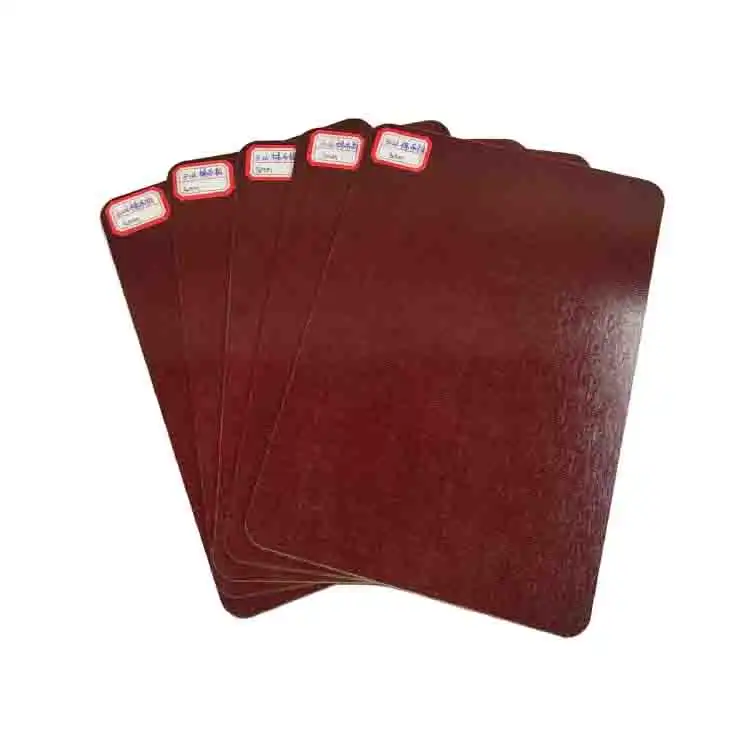
The process of making something starts with alkali-free glass fiber cloth that was carefully chosen for its clean and regular weave. This strengthening material is regularly mixed with liquid epoxy resins, which are often made stronger with phenolic substances that make them more resistant to heat and chemicals. Several layers are stacked according to the required thickness, and then they are put through hydraulic presses that can handle temperatures over 150°C and pressures of several hundred PSI. Cross-linking reactions start inside the epoxy matrix during the hardening process. These reactions turn the liquid resin into a rigid, three-dimensional polymer network. The strips that are made have densities of about 1.9 to 2.0 g/cm³, and their thicknesses are kept within ±0.05mm for precise uses.
Essential Material Properties
The best thing about it is that it can keep electricity from flowing through it; when tested in transformer oil, the dielectric strength reached 10 to 12 KV/mm. Under normal circumstances, insulation resistance is higher than 10^13 ohms. This stops stray currents that could make the system less safe. The thermal performance meets Class F insulation standards, which means it can be used continuously at 155°C without breaking down. As an example of mechanical strength, a material must have a tensile strength of at least 340 MPa and a bending strength that is higher than that. The material stays the same size at temperatures ranging from -40°C to 180°C, which is very important for equipment that goes through heat cycles.
Variants and Grade Classifications
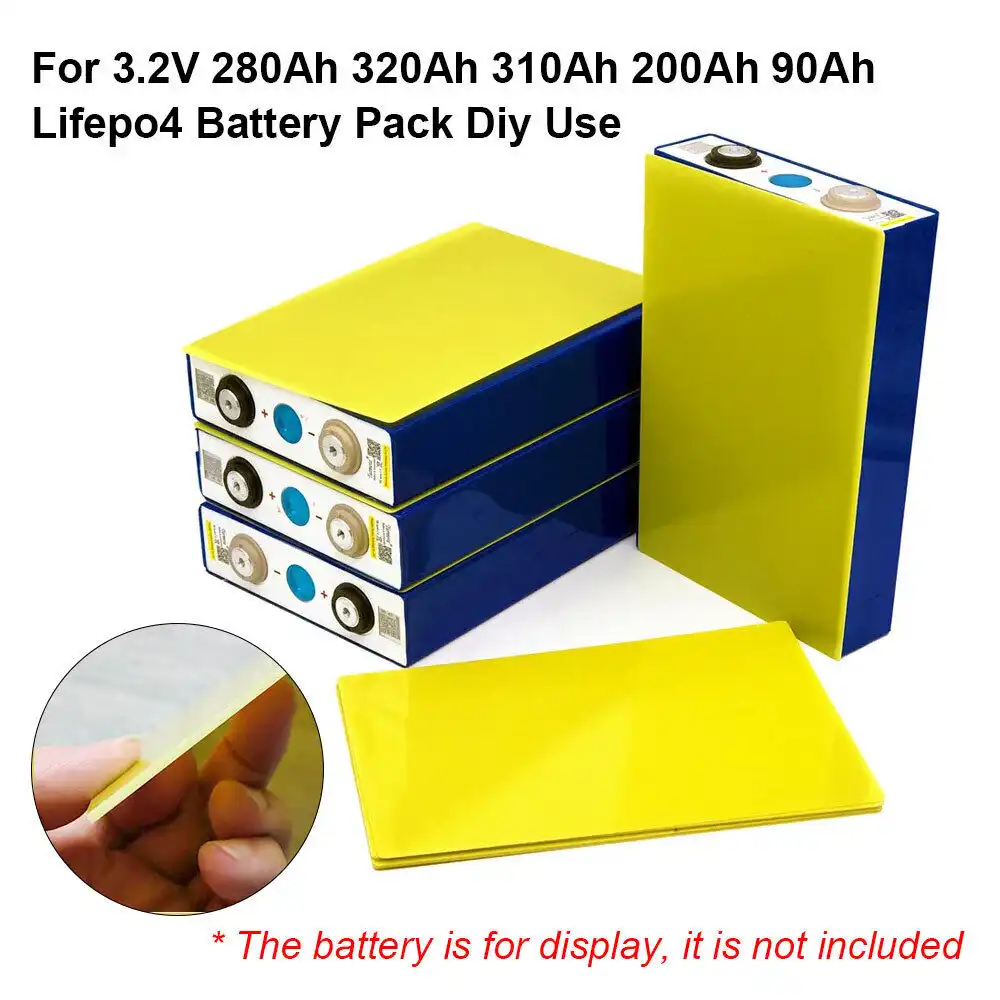
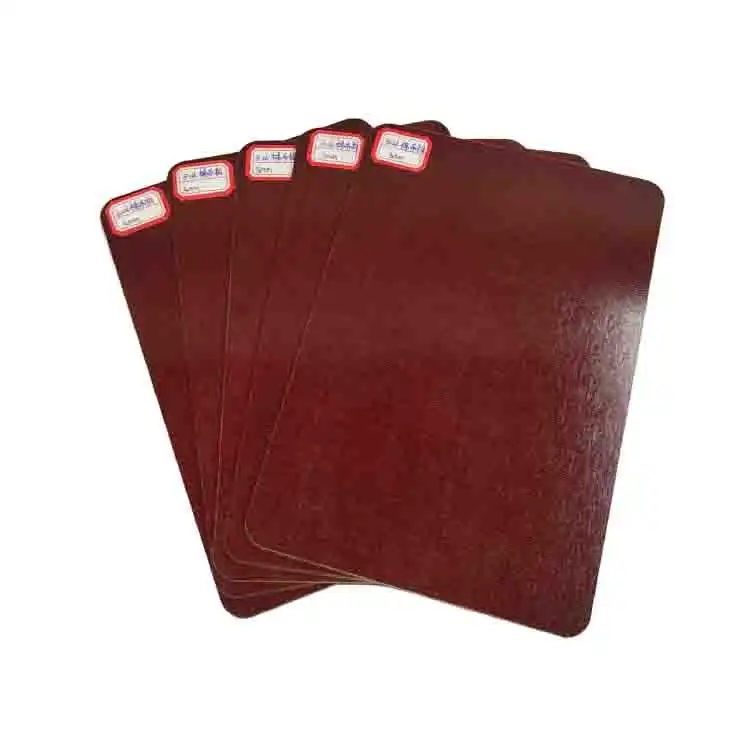
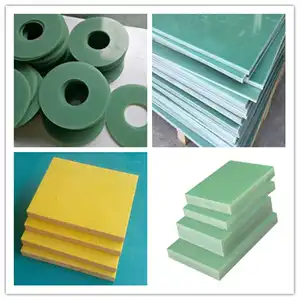
In the field of electrical tools, different types meet different application needs. Chemical protection is better on the 3240 epoxy phenolic sheet, which makes it perfect for parts of transformers that are submerged in oil. To get UL94 V-0 flammability ratings, which are needed for consumer electronics and PCB boards, FR4 types use flame retardants based on bromine. Different types of G10 offer great mechanical strength in dry conditions, while G11 formulas keep working well in hot conditions. Color coding makes it easier to find the right material. For example, natural yellow-green means normal grades, while darker shades usually mean formulas that are high in phenolics.
Core Applications of Epoxy Resin Sheets in Electrical Equipment
Epoxy resin sheets are used by electrical makers to solve important technical problems in areas like power distribution, signal processing, and component security. These materials fill in the gaps between the need for protection and the need for mechanical performance. They often play two roles in the same assembly.
Printed Circuit Board Manufacturing
A lot of FR4 epoxy resin sheets are used as PCB substrates in the electronics business. These boards support copper lines that conduct electricity and keep shorts from happening between circuit layers. CNC machines can precisely drill through-holes and vias in this material, which can handle component counts of more than 500 parts per square inch. The base must be able to handle temperatures up to 260°C during wave soldering and reflow processes without bending or delaminating. When putting together multi-layer boards, where mistakes in layer registration as small as 0.1 mm can cause circuit failures, our users in the car electronics industry really like how stable the dimensions are. Because FR4's dielectric constant stays the same over frequency ranges up to several gigahertz, it can be used in transmission devices to keep signals safe.
Switchgear and Busbar Insulation
Epoxy resin sheets are used as spark barriers, terminal plates, and phase separators in switchgear boxes for power distribution equipment. When circuit breakers stop fault currents, these shields have to be able to handle arc temperatures of more than 3000°C without helping the fire spread. Comparative tracking index (CTI) numbers above 600V show that the material's tracking resistance stops carbon paths from forming when electrical discharges happen over and over again. Busbar support insulators made from epoxy resin sheets keep the electricity from flowing and support heavy copper wires that carry hundreds of amps. Utilities that are in charge of substations like how resistant the material is to salt spray and industrial pollutants, which means it can last longer than 20 years in tough settings.
Transformer Coil Insulation Systems
Manufacturers of transformers use epoxy resin sheets to protect the coils, create walls between layers, and support the structure of the winding assemblies. Because the material is compatible with both mineral oil and synthetic ester fluids, it keeps oil-immersed transformers from growing and breaking down. The thermal conductivity of about 0.3 to 0.5 W/mK makes it easier for heat to move from the copper windings to the cooling oil. This keeps the temperature of the hot spot within the design limits. When there is a short circuit with forces greater than 100,000 pounds, epoxy gaps keep the insulation from collapsing and the wire from collapsing. Power engineers use these materials for a wide range of distribution transformers, from 10 kVA units placed on poles to 100 MVA substation transformers. They like how these materials age predictably, which supports 30-year design lives.
Motor and Generator Components
Materials that can handle centrifugal forces, changing temperatures, and mechanical shaking are needed for rotating machines. In high-voltage motors, epoxy resin sheets are used as slot wedges to hold the stator windings in place, as phase separators between coil groups, and as rotor slot insulation. Because it doesn't absorb much water—usually less than 0.5% by weight—insulation resistance doesn't break down in damp industrial settings. Electric motor rebuilders use pre-cut epoxy resin sheet components to fix up old machines, making sure that the new parts fit and work electrically like the old ones did. Wind turbine makers use glass-epoxy resin sheets that are rated for continued use at high altitudes, where changes in temperature and humidity can be hard on less durable materials.
Selecting the Right Epoxy Resin Sheet for Your Electrical Projects
When making choices about what insulation materials to buy, you have to weigh technical specs, legal compliance, supplier reliability, and the total cost of ownership. While buying professionals work to get good business terms, engineering teams have to make sure that the qualities of the materials match the stress factors of the application.
Technical Specification Evaluation
To start, you need to describe the electrical stress environment. This includes the working voltage, the instantaneous overvoltage magnitude, and the pollution degree classification according to IEC 60664 standards. Use the right safety factors—usually 2:1 for continuous AC voltage and 1.5:1 for DC applications—to match the dielectric strength needs with the test results for the material. Extreme temperatures in the environment, heat production from nearby parts, and how well airflow works should all be taken into account in a thermal study. Mechanical loads, such as steady weight, vibration amplitude, and impact strength, affect the choice of thickness and the direction of the support.
Material Comparison and Trade-offs
Epoxy resin sheets are clearly better than other materials in many ways. In wet places, plywood and pressboard insulation easily soak up water, which weakens the electricity and helps mold grow. Acrylic sheets are clear enough for viewing, but they don't stay stable above 80°C and aren't good at stopping arcs. During electrical problems, polyvinyl chloride (PVC) releases chlorine gas, which is toxic and hurts nearby parts. Phenolic cotton sheets are strong mechanically, but they are not as strong electrically as glass-epoxy resin sheets. Even though epoxy resin sheets usually cost 30–50% more than phenolic options, they are worth it because they last longer, break down less often, and need less upkeep.
Supplier Qualification Criteria
Suppliers with a good reputation use ISO 9001 quality management systems and give material certifications that can be linked to production batches. UL approval for component materials makes sure that they can be used with electrical tools on the list. ROHS compliance makes sure that banned substances like lead and hexavalent chromium are not present, which is important for environmental laws and foreign markets. Ask accredited labs for test results that show scores for dielectric strength, flexural strength, and flammability. Your supplier's manufacturing ability should match the amount you need. For example, small machine shops may have trouble with orders bigger than 1000 square feet, but well-known laminators can easily handle containerized shipments.
Processing and Maintenance of Epoxy Resin Sheets in Electrical Equipment
A successful implementation includes more than just choosing the right materials. It also includes methods for making the parts, checking their quality, and keeping an eye on them while they're in use that make the parts more reliable and increase their useful life.
Machining and Fabrication Best Practices
Carbide-tipped saw blades with 60 to 80 teeth are used for cutting. They are run at speeds around 3000 feet per minute to keep the edges from chipping and delaminating. For drilling, you need to use sharp twist drills or brad-point bits at modest speeds (1500 to 2000 RPM for 1/4" holes) and peck-drilling methods to get rid of glass fiber dust and keep the bit from getting stuck. Using a coolant or compressed air to cool the glue stops it from melting from contact heat. Down-shear spiral bits that press down on the top layers instead of lifting strands are helpful for routing and milling. Accuracy in measurements of less than 0.01" is possible with CNC machines that are set with the right feed rates and tool adjustments. Operators should wear respirators because glass fibers and cured resin dust in the air can be harmful if breathed in.
Surface Treatment and Finishing
Raw epoxy resin sheet surfaces might need to be prepared before they can be put together. Using 180-grit sandpaper for light abrasion improves adhesion for epoxy bonding or conformal coating applications. Cleaning with isopropyl alcohol gets rid of machining oils and other contaminants that could affect electrical performance. Some manufacturers apply edge sealing compounds to exposed fiberglass layers to keep moisture out along cut edges. Color coding through screen printing or labeling helps with installation and maintenance in the field. Avoid using petroleum-based solvents and strong alkalis as they can damage the resin matrix and cause surface cracking or a loss of strength.
Long-term Maintenance Strategies
When equipment is in use, it should be inspected at regular intervals that are based on how important it is and how it is being used. Visual inspection can find surface tracking, discoloration from overheating, and mechanical damage from vibration or impact. Insulation resistance testing using megohm meters at twice the rated voltage checks for degradation trends; readings below 1000 megohms per kilovolt are signs of possible problems. Thermal imaging can find hot spots that mean there isn't enough cooling or too many electrical losses. To get rid of dust, oil, or chemical deposits, you should use approved cleaning agents and lint-free cloths. Writing down inspection results helps with predictive maintenance programs and lifecycle cost analysis.
Procurement Guide for Epoxy Resin Sheets in Electrical Applications
To easily go through the procurement process, you need to know how the market works, how prices are set, how to handle logistics, and how skilled purchasing teams manage their relationships with suppliers.
Pricing Structures and Cost Analysis
Prices for epoxy resin sheet depend on the cost of the raw materials, how hard it is to make, and how many sheets you order. Standard thickness sheets (1/16" to 1/2") in full-size formats (48" x 96") have the best prices, and you can get volume discounts when you buy more than 100 sheets. Custom thicknesses, non-standard dimensions, and specialized grades cost 20–40% more because they have to be made specifically for you and require more setup time and money. Shipping costs are also a big factor because of the material's weight—a pallet of 1/4" sheets weighs 400 pounds, which affects the cost of express delivery. When you figure out the total landed cost, you should include the costs of packing, insurance, customs fees for foreign shipments, and keeping goods on hand.
Order Planning and Lead Times
For local sales, standard grade material ships from a distributor's stock in three to five business days. When you buy normal specs directly from the manufacturer, it usually takes two to three weeks from the time you place your order until you get them. Lead times can be up to 6 to 8 weeks longer for custom formulations or measurements that aren't standard. This includes engineering review, material purchase, production scheduling, and quality testing. When strategic sellers keep a backup stock of enough materials to last for four to six weeks, they balance the costs of keeping the stock with the risks of having to cut production because of a lack of materials. For people who buy a lot, blanket purchase orders with planned drops protect prices and make sure they always have supplies.
Sample Evaluation Programs
When you buy something responsibly, you start by evaluating a taste before committing to large amounts of an item you don't know much about. You can get trial packs with different sizes and grades for a small fee or for free if you have a qualifying account. Do tests on a bench that is similar to what would happen in real life: check the dielectric strength, see how easy it is to machine, and see how stable the dimensions are by passing them through heat and cold. Compare samples from different sources to find out how consistent the quality is and how the performance varies. Include photos and test results with evaluation results to create a reference database that will help with future sourcing choices and source checks.
Conclusion
Epoxy resin sheets are now an important part of making electrical equipment because they offer the perfect mix of electrical protection, mechanical strength, and heat stability that modern uses need. These engineered materials solve important design problems that regular insulators can't, like making PCB bases that allow for small electronics and transformer walls that keep the power grid safe. To do buying right, you need to know about technology, work with suppliers, and be aware of quality. By choosing the right materials, manufacturing methods, and upkeep methods, businesses can improve the reliability of their technology, make it last longer, and lower the costs of failure. As the electrical equipment industry continues to move toward higher voltages, smaller designs, and harsher working conditions, advanced insulation materials will stay an important part of engineering progress and operational greatness.
FAQ
What advantages do epoxy resin sheets provide compared to traditional insulation materials?
Epoxy resin sheets are better than other choices because they are better at resisting moisture. Even at 95% relative humidity, they keep their electrical qualities, while plywood and pressboard fail. Standard phenolics can only handle temperatures up to 105°C, but this material can handle temperatures of 155°C for a long time. Arc resistance stops tracking failures that happen a lot with organic materials, and dimensional stability stops the bending problems that happen with acrylic and PVC options. When electrical and mechanical qualities are combined, single-material solutions can be used instead of systems with many parts.
How do I determine the correct sheet thickness for my application?
Picking the right thickness means finding a mix between the need for electricity room, the need for mechanical strength, and the need for space. IEC 60664 voltage stress estimates set the minimum electrical spacing, which is usually 1 mm thick per kilovolt in settings with controlled pollution. Mechanical loading analysis figures out the maximum displacement and the support space. Sheets that are larger are more rigid. When space is limited, designs that need good dielectric strength should use thinner materials. On the other hand, structural uses need thicker materials to be able to hold more weight.
Can epoxy sheets be customized for specific project requirements?
Customization of dimensions is possible for manufacturers using water-jet cutting, routing, and die-punching to make parts with complicated forms and close tolerances. Changes to the makeup of a material can change its qualities, such as its ability to resist fire, conduct heat, and match colors. Custom specs usually have a minimum order quantity of 50 to 100 sheets. This means that unique solutions can be used for medium-volume production. For prototypes, normal materials are cut to the right size, which cuts down on cost and wait time during the development phase.
Partner with J&Q for Reliable Epoxy Resin Sheet Supply
J&Q can help you with your electrical insulation projects because they have more than 20 years of experience making things and 10 years of experience trading internationally. Our wide range of materials includes types FR4, 3240 epoxy phenolic, G10, and G11. They are all made using quality methods that are ISO 9001-certified, so they all perform the same way batch after batch. We know what electricity engineers have to deal with in terms of technical demands and what buying teams have to deal with in terms of business demands. Our in-house logistics department offers streamlined shipping options that cut down on planning delays and make foreign buying easier by combining paperwork and providing customs support.
Technical help doesn't end when a customer makes a buy. Our application engineering team helps you choose the right material, gives you dimensional models that work with CAD, and gives you advice on how to machine things based on your manufacturing skills. Sample programs let you test things out in real life before committing to large quantities. This lowers the risk of not meeting specifications and makes sure that they will work with your production processes. Our customer-focused approach ensures prompt contact and reliable delivery, whether you're looking for epoxy resin sheet for sale in small amounts for a prototype or negotiating supply deals for ongoing production.
Email our team at info@jhd-material.com to talk about your particular needs. We have a lot of experience making epoxy resin sheets, so we can help with projects ranging from making unique transformer parts to making a lot of PCB substrates. Our responsive sales engineering team can help you get detailed datasheets, material certifications, and cheap quotes. Visit jhd-material.com to see all of our products and learn how a smart supplier relationship can help your business run more smoothly and make better products.
References
International Electrotechnical Commission. (2020). "IEC 60664-1: Insulation Coordination for Equipment Within Low-Voltage Systems – Principles, Requirements and Tests." Geneva: IEC Publications.
Harper, C.A. (2018). "Handbook of Plastics Technologies: The Complete Guide to Properties and Performance." New York: McGraw-Hill Professional.
Tanaka, T., & Imai, T. (2017). "Advances in Epoxy Resin Insulation Materials for High-Voltage Electrical Equipment." IEEE Transactions on Dielectrics and Electrical Insulation, 24(1), 213-228.
NEMA Standards Publication. (2019). "NEMA LI 1: Industrial Laminated Thermosetting Products." Rosslyn: National Electrical Manufacturers Association.
Billmeyer, F.W. (2016). "Textbook of Polymer Science, Third Edition." Hoboken: John Wiley & Sons.
Stone, G.C., Boulter, E.A., Culbert, I., & Dhirani, H. (2014). "Electrical Insulation for Rotating Machines: Design, Evaluation, Aging, Testing, and Repair." Piscataway: IEEE Press.