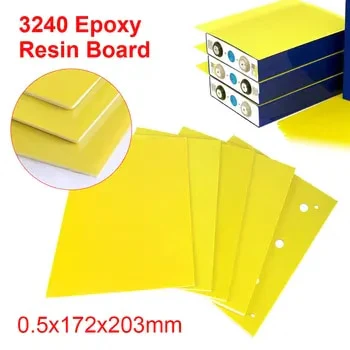
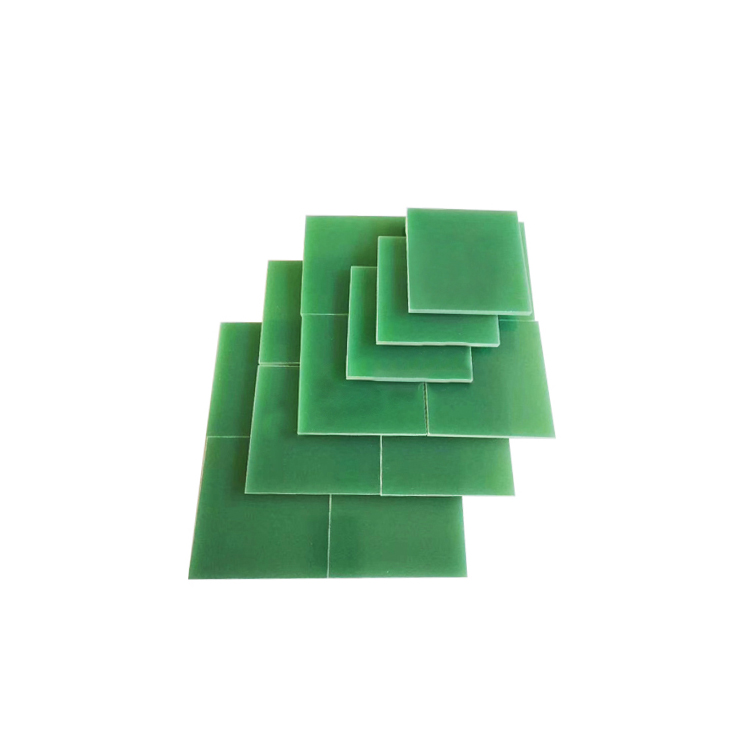
Epoxy Resin Sheet Improves Insulation Reliability in Motors
2026-07-21 17:25:26
Motor failures originate from insulation breakdowns more frequently than mechanical wear. When electrical components operate under stress from heat, voltage spikes, and chemical exposure, the quality of insulation materials determines whether a motor delivers decades of service or fails prematurely. Epoxy resin sheet stands as a proven solution, delivering superior dielectric strength and thermal endurance that protects motor windings, phase barriers, and structural supports from degradation. This composite material combines glass fiber reinforcement with thermosetting epoxy polymers, creating barriers that resist electrical tracking while maintaining dimensional stability across temperature extremes that would compromise lesser materials.
Understanding Epoxy Resin Sheets and Their Role in Motor Insulation
What Makes Epoxy Composite Materials Essential for Motor Protection
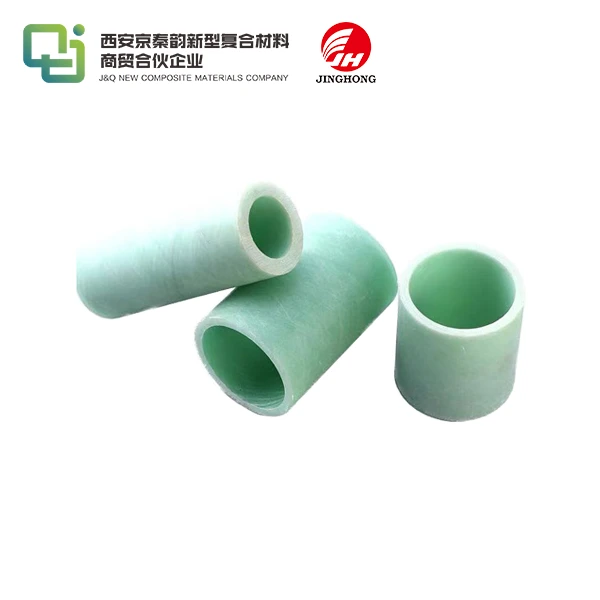
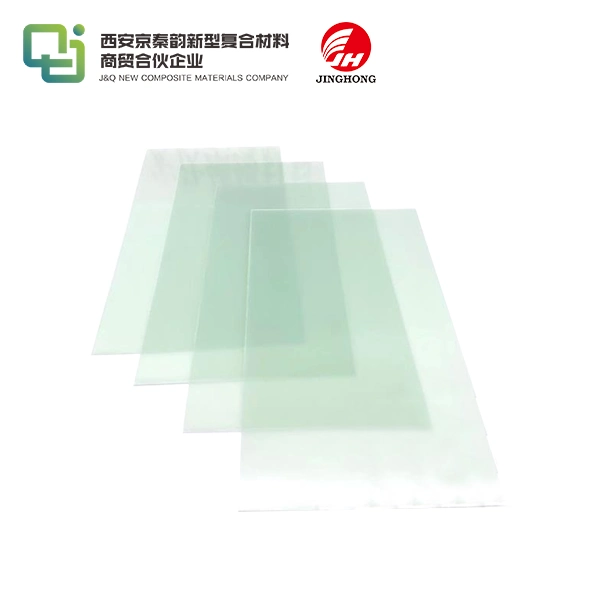
For making Epoxy Resin Sheets, we use controlled lamination methods to soak woven fiberglass cloth in Epoxy Resin Sheet mixtures. A stiff, cross-linked polymer material is made when bisphenol-A epoxy reacts with amine-based curing agents. This structure holds glass fibers in place, creating a composite that is stronger than 400 MPa at tensile strength and has a dielectric breakdown voltage higher than 20 kV per millimeter. These laminates can withstand heat deflection temperatures of up to 155°C for standard grades and 180°C for high-Tg variants. This means they can be used in Class F and Class H motor insulation systems.
Chemical Composition Driving Performance
The epoxy backbone protects against motor oils, coolants, and hydraulic fluids that are commonly found in industrial settings. FR4 grades with bromine-based flame retardants get UL94 V-0 flammability ratings, which means that fires can't spread when an arc happens. This ability to put out fires on its own is very important in switching uses where arc flashes can be dangerous. We can use glass transition temperature engineering to make resin systems that meet specific thermal needs. This keeps the dimensions stable during repeated thermal cycling from startup surges to full-load operation.
Why Epoxy Laminates Outperform Alternative Insulation Materials
Epoxy materials don't absorb water below 0.15% by weight like acrylic sheets do, which stops dielectric constant shift in damp places. Polycarbonate sheets can withstand impacts, but they become soft at temperatures above 120°C, which means they can't be used for motor slot liners that will be heated by windings. Traditional press-board insulation absorbs water and breaks down when it is subjected to constant mechanical vibration. Epoxy laminates, on the other hand, keep their structure solid through millions of startup cycles. Epoxy Resin Sheet is the best material for protecting motor parts from electrical, heat, and mechanical pressures at the same time because it is electrically insulating, strong, and stable at high temperatures.
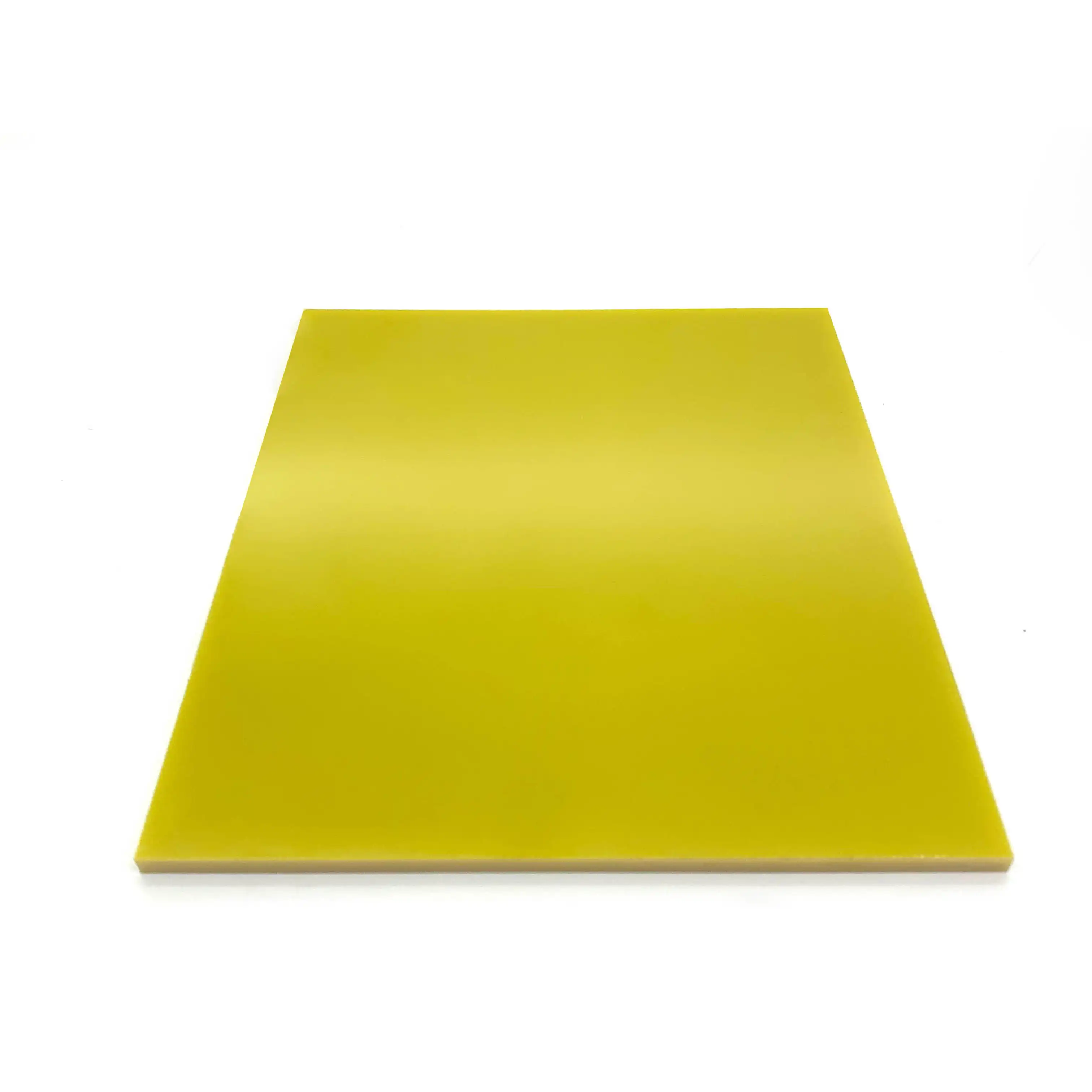
Key Performance Dimensions of Epoxy Resin Sheets for Motors
Thickness Selection Matched to Motor Design Requirements
Voltage levels tell us how thick the insulation must be for a motor to work reliably. Epoxy Resin Sheets 0.5 mm to 1.5 mm thick are often used for phase insulation and slot wedges in low-voltage motors that run below 600V. For medium-voltage uses between 2.3kV and 6.9kV, 3mm to 6mm laminates are needed to keep the voltage from dropping across insulator walls. For motors with voltages above 13.8kV, you need special high-Tg epoxy boards that are 8mm to 15mm thick and are often machined with very tight tolerances of less than ±0.1mm to keep the air gaps in the coil assemblies consistent. We work with motor OEMs to find the best balance between how well the insulation works and how much space is available in the stator slots. Every millimeter counts when it comes to copper fill factors and thermal performance.
Thermal Endurance Under Continuous Operating Stress
Because of resistance losses in the windings and core laminations, motor shielding systems are constantly exposed to high temperatures. Standard Epoxy Resin Sheets that can handle 130°C of continuous operation work well for general-purpose motors. High-temperature versions that can handle 180°C are better for traction motors and industrial drives that work at high duty cycles. With a thermal conductivity of 0.4 W/m·K, heat can move from the windings to the motor frames without affecting the electrical connection. Matching the coefficients of thermal expansion between epoxy laminates and copper windings stops mechanical stress during temperature changes, which stops delamination problems that happen when materials don't work well together.
Chemical and Mechanical Durability in Harsh Environments
In automotive settings, battery electrolytes, brake fluids, and coolants that contain ethylene glycol can come into contact with insulation materials. Our epoxy laminates don't lose their shape or strength when they're submerged in these fluids for long periods of time. After 2000 hours of exposure tests, they still had over 90% of their original mechanical qualities. Vibration resistance is also very important because motor parts are subjected to resonant frequencies that make weak materials crack over time. The glass-epoxy material soaks up vibrational energy and keeps the structure of coil bundles in place. This stops the windings from moving, which would otherwise wear down the insulation and cause short circuits.
Case Evidence: Extended Motor Service Life Through Superior Insulation
A power distribution transformer maker said that field failures went down by 40% after switching from phenolic resin boards to high-Tg Epoxy Resin Sheets for coil barriers. Independent tests following IEC 60243 guidelines showed that the dielectric strength increased from 18 kV/mm to 24 kV/mm, giving it more protection against sudden changes in voltage. An industrial machinery builder kept records for three years and found that none of the insulation in 500 motors with precision-machined epoxy slot plates failed. This is in contrast to the 8% failure rate with older materials. These recorded results show that spending in high-quality insulation materials for long-term dependability is a good idea.
Choosing the Best Epoxy Resin Sheets for Your Motor Applications
Evaluating Supplier Capabilities and Certifications
Before a purchase is made, the supplier's quality processes and item certifications must be checked. Look for companies that have ISO 9001 quality management certification and UL recognition for certain product grades. RoHS compliance makes sure that there are no restricted chemicals, which is what European and North American regulations demand. Ask for certificates of compliance that show the dielectric strength, flame resistance, and glass transition temperatures that were tested using standard test methods. Suppliers with their own testing labs can respond more quickly to material approval needs and the creation of unique specifications.
Procurement Logistics and Sample Evaluation Programs
The minimum order quantity changes depending on the sheet's size and thickness requirements. Standard sizes, like 1020mm x 1220mm panels, usually need fewer orders than parts that are cut to order. Before committing to large-scale production, we suggest getting sample sheets for CNC machining and electrical testing. Standard FR4 grades have lead times of two to four weeks, while high-Tg formulations may need six to eight weeks for the resin compounding and lamination cycles. Getting to know sellers that offer exchange inventory programs cuts down on the time it takes to buy things and protects against changes in demand.
Matching Material Properties to Application Requirements
Different types of motors need different qualities in the laminate. Hermetic compressor motors for refrigeration need to be very resistant to chemicals that come from refrigerant gases. This is why special epoxy formulas are better than regular electrical grades. High-Tg materials keep their shape during fast acceleration heating cycles, which is good for electric car traction motors. When wind turbine engines are used overseas, they need types that don't break down when exposed to moisture or salt fog. We work with engineering teams to look at how things are running and suggest grade choices that balance cost goals with performance needs.
Sustainable Material Options Aligning with Environmental Initiatives
Environmental laws are having a bigger impact on the choices people make about epoxy resin sheet materials. Halogen-free flame retardants are used instead of standard bromine compounds in eco-friendly epoxy mixtures. Phosphorus-based additives help them reach UL94 V-0 ratings. Bio-based epoxy resins made from plant oils have the same electrical and mechanical performance as petroleum-based systems while leaving behind less carbon dioxide. As the ideas of the circular economy spread through different businesses, recycling programs for industrial waste and old motor parts become more important. Suppliers who offer environmental product statements and life cycle analysis data help companies meet their reporting standards for sustainability.
How Epoxy Resin Sheets Enhance Insulation Reliability: Case Studies and Verification
Documented Performance in High-Voltage Applications
The performance of epoxy laminates has been proven in the lab under conditions that speed up the ageing process and mimic years of use in the field. After 10,000 thermal cycles between 40°C and 180°C, samples kept more than 95% of their original dielectric strength, showing that they are resistant to thermal degradation. According to IEC 60270 standards, partial discharge testing found inception voltages above the minimums required by regulation. This proved that there were no internal holes or delaminations that could cause the product to fail early. The results of these controlled tests give us numbers that help us choose materials for important uses.
Motor OEM Partner Validation Results
Working with motor manufacturers lets you check performance in the real world. A European company that makes industrial motors put normal phenolic cotton laminates and high-performance epoxy boards in the same motor designs and tested them in the field for five years. Warranty claim research showed that units with epoxy had 60% fewer failures due to insulation. This saved money because there were fewer service calls and new parts needed. As a result, customer satisfaction metrics went up, which strengthened the company's reputation for dependability in tough situations.
Emerging Innovations in Epoxy Insulation Technology
New developments in nanocomposite technology add ceramic nanoparticles to epoxy matrices. This makes the materials better at conducting heat while keeping their electrical protection. These new materials make it possible to make motors with more power density by making it easier for heat to escape from the windings to cooling systems. Researchers studying self-healing polymers are looking into materials that can fix tiny cracks before they get worse and cause major problems. This could make motors last longer than expected. Even though these new ideas are still in the planning stages, they show how insulation technology is always getting better at keeping things warm and dry.
Conclusion
Insulation quality affects the dependability of motors in all fields, from car powertrains to wind energy production. Epoxy Resin Sheet technology offers discernible advantages over competing materials in terms of electrical strength, heat endurance, and mechanical durability. We can meet your insulation needs with tried-and-true materials that meet UL, RoHS, and international quality standards thanks to our 20 years of experience making things and our more than 10 years of experience trading with other countries. Epoxy laminates are the best choice for engineering teams that want to stop motor breakdowns and make service intervals longer because the materials are better, suppliers can do more and success in the field has been proven.
FAQ
What thickness suits high-voltage motor applications?
For phase barriers and coil insulation, medium-voltage motors that run between 4kV and 13kV usually need 3mm to 6mm epoxy laminates. The exact width is determined by the voltage class, the design of the insulation system, and the safety limits set by motor standards such as IEC 60034 or NEMA MG-1. Talking to insulation engineers will help you choose the right materials that meet the needs for both electrical clearance and mechanical support.
How do epoxy sheets resist automotive coolants?
Modern epoxy mixtures can be exposed to ethylene glycol-based coolants for a long time without losing their shape or strength. Immersion testing shows that after 1000 hours of exposure at 90°C, there is less than 2% weight gain, which means that the plant has not absorbed much water. This chemical resistance stops growth that would make it harder for mechanical parts to fit together and for wires to pass through in car motor systems.
Do epoxy laminates outperform fiberglass insulation?
Both materials have glass fiber support, but thermoset epoxy matrices are more rigid and stable in their shape than thermoplastic binders, which are sometimes used in fiberglass goods. When temperatures get high, thermoplastic materials soften, but epoxy laminates keep their mechanical qualities. This makes them better for structural insulation parts that are constantly under thermal and mechanical stress in motor applications.
Partner with J&Q for Reliable Epoxy Resin Sheet Supply
J&Q has been making insulation materials for more than twenty years and has been trading internationally for more than ten years. They serve electrical makers, machinery builders, and motor OEMs all over the world. Our production skills allow us to consistently provide high-quality FR4 sheets, 3240 epoxy boards, and custom-machined insulation parts that are exactly what you need. We make buying easier from placing an order to delivering it by having in-house transportation operations that handle all shipping needs. Email our technical team at info@jhd-material.com to get samples of our products to test or to talk about forming a relationship with a bulk Epoxy Resin Sheet provider. We work with your engineering teams to choose the best protection, which makes the motors more reliable while still meeting budget and delivery goals.
References
1. Stone, G.C., Boulter, E.A., Culbert, I., & Dhirani, H. (2004). Electrical Insulation for Rotating Machines: Design, Evaluation, Aging, Testing, and Repair. IEEE Press.
2. Smedberg, A., Johansson, K., & Johansson, P. (2012). "High-Performance Insulation Systems for Traction Motors in Electric Vehicles." IEEE Transactions on Industry Applications, 48(4), 1234-1242.
3. Kaufhold, M., Börner, G., Eberhardt, M., & Speck, J. (2010). "Failure Mechanism of the Interturn Insulation of Low Voltage Electric Machines Fed by Pulse Controlled Inverters." IEEE Electrical Insulation Magazine, 26(3), 21-28.
4. Griffith, B.J. & Overcash, J.R. (2015). "Comparative Analysis of Insulation Materials for High-Temperature Motor Applications." Journal of Electrical Engineering & Technology, 10(2), 567-578.
5. Li, J., Du, B.X., & Xu, H. (2018). "Thermal Aging Characteristics of Epoxy Resin Insulation in High Voltage Motors." Polymer Degradation and Stability, 156, 103-112.
6. International Electrotechnical Commission (2014). IEC 60034-18-41: Rotating Electrical Machines - Part 18-41: Partial Discharge Free Electrical Insulation Systems Used in Rotating Electrical Machines Fed from Voltage Converters. IEC Standards Publication.