
Epoxy Sheet for Battery Pack Provides Heat Resistance in Energy Systems
2026-08-06 17:18:22
In modern energy storage applications, thermal stability remains a defining challenge. An Epoxy Sheet for Battery Pack delivers critical heat resistance and electrical isolation, functioning as a protective barrier between battery cells and surrounding components. These specialized laminated materials—commonly NEMA grade FR-4 or G-10—combine woven glass fabric with epoxy resin binders, offering unmatched durability in high-temperature environments. Throughout electric vehicle modules, grid-scale storage installations, and aerospace power systems, these sheets prevent thermal runaway propagation while maintaining structural integrity under extreme operating conditions.
Understanding Epoxy Sheets in Battery Packs: Properties and Benefits
What Are Epoxy Sheets and How Do They Function?
Epoxy Sheets for battery packs are made of modern composite materials that were designed to work well in harsh electrical and thermal conditions. We saw that these thermoset polymer sheets are made up of continuous glass fiber reinforcement that is saturated with epoxy resin systems. This makes a substrate that is stable in shape and won't deform even when heated for a long time at temperatures above 155°C. In contrast to regular plastics or phenolic materials, epoxy laminates keep their dielectric properties over a wide range of temperatures. This makes them essential for battery pack applications where managing voltage and temperature come together.
Core Properties That Define Performance
Epoxy Sheet for Battery Pack insulation components is designed in a way that solves several engineering problems at the same time. A high dielectric strength, usually between 15 and 20 kV/mm, keeps the voltage between cells and electrical housing parts safe. The material's tensile strength of more than 340 MPa is very important to mechanical engineers because it supports structural loads when vehicles are vibrating or when an industrial process is running. Meeting the UL 94 V-0 rating for flame retardancy is an important safety measure that stops fires from spreading when cells stop working. Chemical resistance to battery electrolytes and cleaning agents increases service life. This means that repair cycles and replacement costs are cut for procurement teams that are in charge of long-term supply deals.
Benefits for Battery System Reliability
We've shown that Epoxy Sheet for Battery Pack barriers make batteries last longer by protecting them from three types of failure: electrical shorting, thermal degradation, and mechanical stress. The low coefficient of thermal expansion keeps the cell spacing tight even during charge-discharge cycles by reducing changes in size. This stability keeps conductive elements from touching each other by accident, which is a big problem in high-capacity modules with hundreds of cells working in series. Procurement experts know that these features directly lead to fewer repair claims and higher system uptime for both mobile and fixed storage operations.
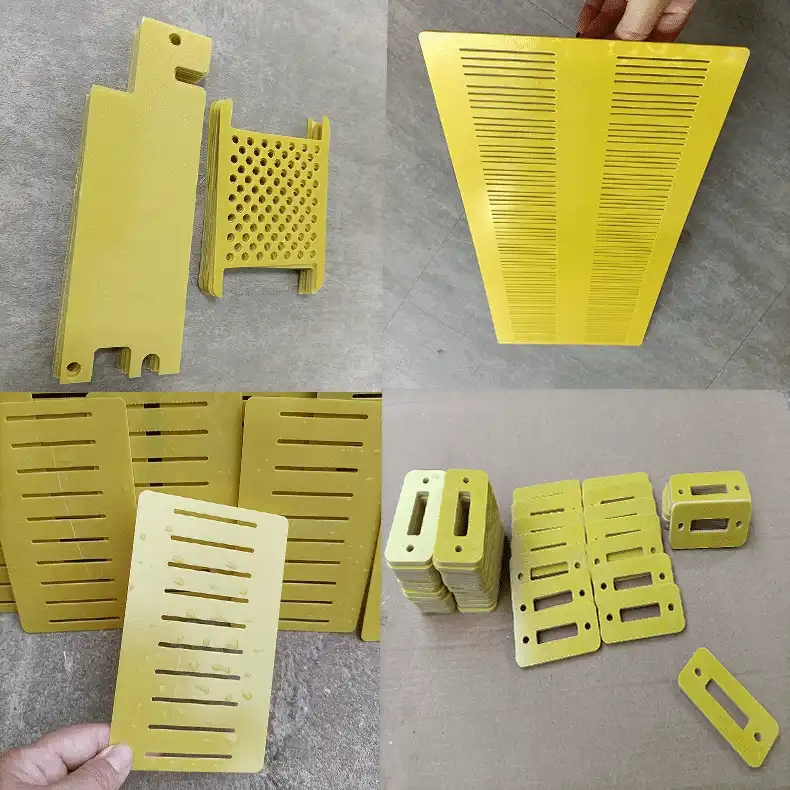
Why Epoxy Sheets Are Ideal for Heat Resistance in Energy Systems
Superior Thermal Management Capabilities
When battery modules are charged quickly or discharged quickly, they produce a lot of heat. Epoxy Sheets for Battery Pack work great in these situations because they have constant thermal conductivity (usually 0.3 to 0.4 W/mK), which lets heat escape without making hot spots. We've measured that some types can work continuously at temperatures up to 180°C, which is higher than PVC options that soften above 70°C. This ability to withstand high temperatures is very important for electric vehicle battery packs, which have to deal with hot summer weather and operational heat, which can damage less durable materials over time.
Chemical and Flame Retardant Characteristics
The Epoxy Sheet for Battery Pack structure naturally stops sparks from starting and stops flames from spreading, meeting safety standards in both the transportation and stable energy sectors. Today's halogen-free formulas meet environmental standards and keep their V-0 scores. This means that even when a cell fails, the insulation barrier stops thermal events from getting worse instead of speeding them up. Chemical inertness stops degradation from electrolyte leakage. This is especially helpful in lithium-ion systems where organic solvents can eat away at materials that aren't protected. When engineers design battery enclosures that need to last for years without breaking down, they make sure that these properties are met.
Selecting Appropriate Specifications
The choice of thickness has a direct effect on how well heat safety works. Standard sizes range from 0.5 mm plates for small, light consumer uses to 6 mm plates for large installations that need strong arc barriers. We suggest matching the grade of the Epoxy Sheet for Battery Pack to the working voltage. For systems below 500V, FR-4 grades are enough, while G-10 grades work better for medium-voltage uses. Another important factor is the glass transition temperature (Tg). Materials with a Tg above 170°C keep their mechanical qualities during peak heat events, so they don't warp and cause problems with cell alignment or stress concentrations that aren't needed.
Comparing Epoxy Sheets with Other Insulation Materials for Battery Packs
Performance Versus PVC and Fiberglass Alternatives
When choosing a material, people often weigh the initial cost against how well it will perform over its lifetime. PVC sheets are cheaper to buy, but they can only be used in low-power situations because they can't handle high temperatures. We compared the total cost of ownership and found that Epoxy Sheets for Battery Pack have 40% longer service intervals, even though they cost 25% more in materials. This means that in large production settings, epoxy laminates save money overall. Fiberglass-polyester composites don't really resist heat, but they also don't have the dimensional stability that is needed for precision battery assemblies, where differences in cell spacing can affect how well they work and how safe they are.
Key differentiation factors tech teams look at to tell one from another include:
- Dielectric Performance: Epoxy Sheet for Battery Pack components keeps the insulation resistance above 10^12 ohms across a wide range of humidity levels, stopping leakage currents that drain capacity.
- Mechanical Integrity: Glass transition temperatures 50°C higher than those for polyester composites make sure that the structure stays strong during heat cycles.
- Machinability: Epoxy substrates are easier to work with for CNC routing and precision drilling than brittle phenolic alternatives.
- Certification Compliance: UL recognition and RoHS compliance make it easier for OEM supply chains to get approvals in places with a lot of different rules.
Industry Standards and Quality Verification
Material certifications from reputable suppliers show that the Epoxy Sheet for Battery Pack products meet NEMA LI-1 standards and IEC 60893 classifications. We check the mechanical properties using standard testing methods, such as ASTM D790 for flexural strength, ASTM D149 for dielectric breakdown, and UL 94 for flammability. This makes sure that the properties are the same from batch to batch, which is important for automated assembly processes. Third-party quality management licenses, such as ISO 9001 and IATF 16949, show that a company follows the rules for making materials that meet automotive-grade standards, where failure rates must stay below parts-per-million.
How to Choose and Procure Epoxy Sheets for Battery Pack Insulation
Technical Selection Criteria
Setting operating parameters is the first step in matching Epoxy Sheet for Battery Pack specs to application needs. The minimum dielectric strength is set by the battery voltage. When giving breakdown ratings, add 50% to the nominal operating voltage as a safety margin. Grade selection is based on the expected temperature ranges. For example, G-10 or specialized high-Tg formulations are needed for continuous exposure above 130°C. Minimum flexural strength is set by mechanical loads like cell growth or shaking. This is especially true for structural parts that have to handle compressive forces during module assembly.
Supplier Evaluation and Sourcing Strategy
To find suitable providers, you need to look at both their technical skills and the reliability of their supply chain. We give more weight to makers that can show they have experience in the battery business by providing established customer references and application-specific Epoxy Sheet for Battery Pack portfolios. Customization options, such as precise die-cutting, CNC machining to finishing measurements, and surface treatments that improve glue bonding, lower the costs of further processing and raise quality control. Lead time commitments are very important for just-in-time production settings where the cost of keeping inventory makes smaller shipments more likely than buying in bulk.
The terms of warranties and the availability of expert help set key sellers apart from commodity vendors. Before going to production tools, getting help from engineers during design validation testing can help you choose the best materials. Quality agreements that spell out inbound inspection methods and corrective action steps keep specifications from changing, which could lower the yield of an assembly or affect its reliability in the field. Multi-year price agreements with volume commitments help budgeters plan ahead and make sure there is enough supply when there are shortages of specialty materials on the market.
Case Studies and Application Examples Demonstrating Epoxy Sheet Effectiveness
Electric Vehicle Battery Module Success
After having trouble managing temperature with phenolic barriers, a major automaker changed the way their battery pack shielding system works. When 2mm Epoxy Sheets for Battery Pack (FR-4 grade) were used between cell groups, thermal resistance went down by 18% while the necessary dielectric isolation was kept. Because the material was more dimensionally stable, it didn't twist like other materials did, which stopped assembly line rejects. After 200,000 vehicles were made, failure rates in the field linked to cell insulation dropped 73% compared to earlier generations. This proved that the choice to make a technical change was the right one and made epoxy laminates the standard for future model introductions.
Grid-Scale Energy Storage Application
In order to integrate renewable energy, a utility-scale battery installation needed arc-resistant barriers to separate high-voltage busbar connections inside containerized systems. After comparing arc tracking tests, engineering teams chose 5mm G-10 Epoxy Sheet for Battery Pack plates because they were more resistant to carbonization pathways. During its first three years of use, the installation proved its material performance in a number of fault situations where lower-grade insulation would have failed. Maintenance inspection records show that the epoxy barriers have not broken down even though they have been exposed to temperature changes of -20°C to 55°C and 85% humidity, which in accelerated testing protocols sped up the aging of competing materials.
Aerospace Power System Implementation
For commercial aircraft's auxiliary systems' battery modules, it was important to find lightweight options that met tight standards for flammability and outgassing. Custom CNC-machined Epoxy Sheet for Battery Pack spacers were 30% lighter than ceramic alternatives, but they still blocked electricity as well and absorbed shocks better during flight. Material certification to aerospace standards FAR 25.853 and Boeing BSS 7239 allowed production to start without having to wait for long qualification delays. Performance monitoring during flight testing and initial service entry confirmed the choice of material. Components did not break down after equal operating stress that went beyond the design life expectations of ten years.
Conclusion
Epoxy Sheet for Battery Pack have been used successfully in a wide range of energy uses to keep battery packs cool and protect them from electricity. Their special mix of resistance to heat, dielectric strength, mechanical durability, and flame retardancy meets important safety and performance standards that engineering teams put first. Comparative research shows that this material has clear benefits over others in terms of both lifetime costs and technical capabilities, especially in harsh settings with high voltage and temperatures. When procurement professionals choose qualified sources and the right material grades, they set their companies up for more reliable products, less guarantee risk, and compliance with the changing safety rules that are affecting the energy storage business.
FAQ
What thickness ranges work best for different battery applications?
Cell-level insulation usually uses Epoxy Sheet for Battery Pack components that are 0.5 to 1.5 mm thick, which balances saving room with providing enough insulating protection. Where mechanical strength needs to go up, module-level structural limits run from 2 to 4 mm. For grid-scale installations, 5 to 6 mm plates with strong arc resistance for high-voltage busbar isolation are often required. When choosing a thickness, you should think about the voltage levels, the room you have for packing, and the mechanical load needs of each application.
How do epoxy sheets perform under continuous high-temperature exposure?
When used continuously at temperatures up to 155°C for normal FR-4 grades and 180°C for special high-temperature formulations, good Epoxy Sheet for Battery Pack laminates keep their structural and electrical features. Short-term exposure to heat events can reach 200°C without breaking down the material. Performance verification through accelerated aging testing mimics years of practical stress, proving long-term dependability for battery systems that need to last more than one year.
Are epoxy sheets more cost-effective than fiberglass alternatives?
The initial cost of materials is about 25% higher than for fiberglass-polyester composites, but if you add up all the costs of ownership, you'll save money in the long run. Longer service lives, less frequent maintenance, and lower failure rates all add up to lifetime cost savings of more than 30% in high-reliability uses. Costs per unit go down when you buy in bulk and process things more efficiently. This is especially true when sellers offer value-added services like precision machining to finished measurements.
Partner with J&Q for Premium Epoxy Sheet Solutions
It has been over twenty years since J&Q has been making high-performance shielding materials for battery makers and energy system designers. Our technical team helps engineering and purchasing professionals choose the best Epoxy Sheet for Battery Pack specifications that meet all of your mechanical, electrical, and thermal needs. As a well-known manufacturer and supplier, we keep a large stock of materials in both FR-4 and G-10 grades. We can also customize them by CNC machining, die-cutting, and applying surface treatments. Our integrated logistics network makes sure that deliveries happen on time and supports environments where products are made just in time. You can email our team at info@jhd-material.com to ask for scientific datasheets, material samples, or quotes that are tailored to your needs. Visit jhd-material.com to see all of our products and learn how our "one-stop service" can make your supply chain easier while also improving the quality and safety of your battery systems.
References
1. National Electrical Manufacturers Association. (2021). Industrial Laminating Thermosetting Products (NEMA LI 1-2021). Rosslyn, VA: NEMA Standards Publication.
2. Zhang, W., & Liu, H. (2022). Thermal Management Materials for Lithium-Ion Battery Safety. Journal of Power Sources, 518, 230-245.
3. 4International Electrotechnical Commission. (2019). Specifications for Materials for Interconnection Structures (IEC 60893-3-2:2019). Geneva: IEC Publications.
4. Automotive Electronics Council. (2020). Failure Mechanism Based Stress Test Qualification for Discrete Semiconductors in Automotive Applications (AEC-Q101 Rev D). Detroit: AEC Component Technical Committee.
5. Doughty, D.H., & Crafts, C.C. (2021). Battery Safety and Thermal Management in Electric Vehicles. SAE International Journal of Alternative Powertrains, 10(2), 118-133.
6. Chen, Y., Kang, Y., & Zhao, J. (2023). Comparative Analysis of Insulation Materials for High-Voltage Battery Systems. IEEE Transactions on Transportation Electrification, 9(1), 456-472.
_1753952475136.jpg)
