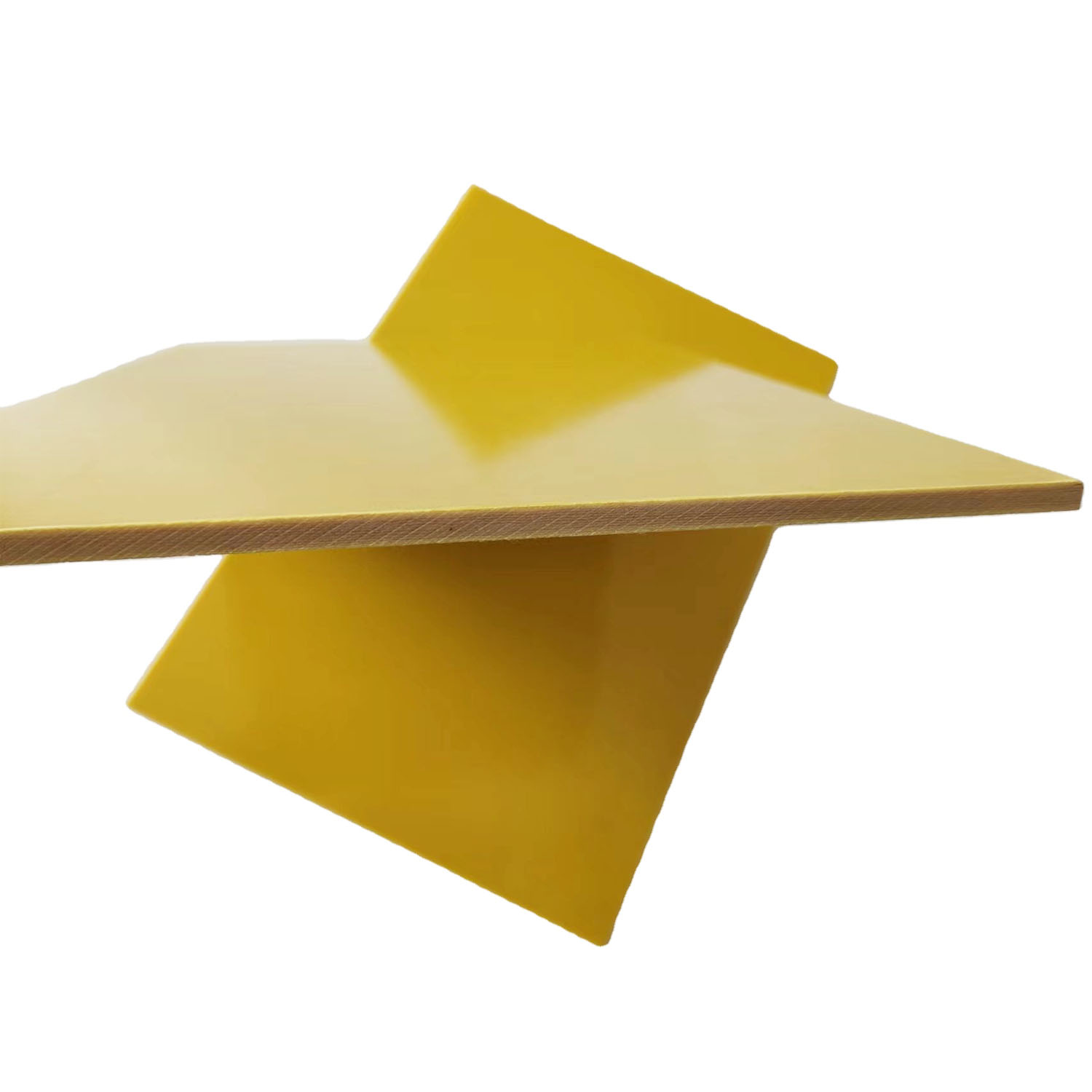
Epoxy Sheet Provides Durable Performance in Harsh Working Environments
2026-08-18 10:18:31
When electrical components fail in high-voltage distribution systems or PCB substrates crack under thermal stress, the consequences extend beyond immediate downtime—they threaten operational safety and profitability. Epoxy Sheet delivers dependable performance where traditional insulation materials falter, providing exceptional dimensional stability, dielectric strength, and mechanical integrity in extreme industrial conditions. This high-pressure thermosetting laminate, comprising continuous filament glass cloth bonded with epoxy resin, withstands chemical exposure, thermal cycling, and mechanical loads that compromise inferior alternatives. Industries ranging from power generation to automotive engineering rely on these composites to prevent catastrophic failures and maintain production continuity.
Understanding Epoxy Sheets: Properties and Key Advantages
Composition and Manufacturing Process
Engineered composites called Epoxy Sheets are made through controlled high-pressure thermosetting processes. In contrast to thermoplastics, which weaken when heated, these sheets go through an irreversible hardening process that sets the molecular structures in a permanent position. In the production process, continuous glass cloth is layered with an epoxy resin binder. The assembly is then heated to over 300°F and put under pressures of several hundred psi. This process gets rid of any empty spaces and makes sure that the resin is evenly spread out throughout the reinforcement matrix. This makes sure that the sheet's mechanical and electrical properties are the same all the way through.
Superior Dimensional Stability
Changes in temperature are terrible for precision parts because they cause them to bend and deviate from their specifications, which weakens the assembly. When heated to temperatures as low as almost nothing (cryogenic levels) or as high as 300°F, Epoxy Sheets keep their original shape. This stability is very important in transformer busbar supports, where differences in thermal expansion cause mechanical stress, and on printed circuit boards, where changes in size during soldering cause layers to be out of place. The low coefficient of thermal expansion of the material makes it more like metal conductors than phenolic options. This lowers the stresses at the contact during thermal cycles.
Exceptional Dielectric Strength
Tracking, arcing, and dielectric breakdown are all types of electrical insulation failure that can be very dangerous in high-voltage situations. FR4 Epoxy Sheets have a dielectric strength of more than 20,000 volts per millimeter of thickness. They also have low dissipation factors, which keep signal loss in high-frequency circuits to a minimum. The surface resistivity of the material stays the same even when it's wet, which stops leakage currents that hurt insulation performance. Power distribution engineers use these Epoxy Sheets for phase barriers and terminal boards because they successfully separate wires holding thousands of volts while also being able to handle the mechanical torque that heavy copper bus bars put on them.
Mechanical Toughness Under Load
Structural parts of industrial machines are constantly vibrating, hitting things, and wearing away. Epoxy Sheets have a flexural strength of over 60,000 psi and a compressive strength of over 50,000 psi. This means that thin sections can hold a lot of weight without deforming. Gear makers cut precise teeth right into these sheets, and they rely on the material's resistance to wear to keep the tooth shapes the same after millions of contact cycles. The composite structure evenly spreads stress, stopping cracks from spreading, which is what happens when materials aren't strengthened.
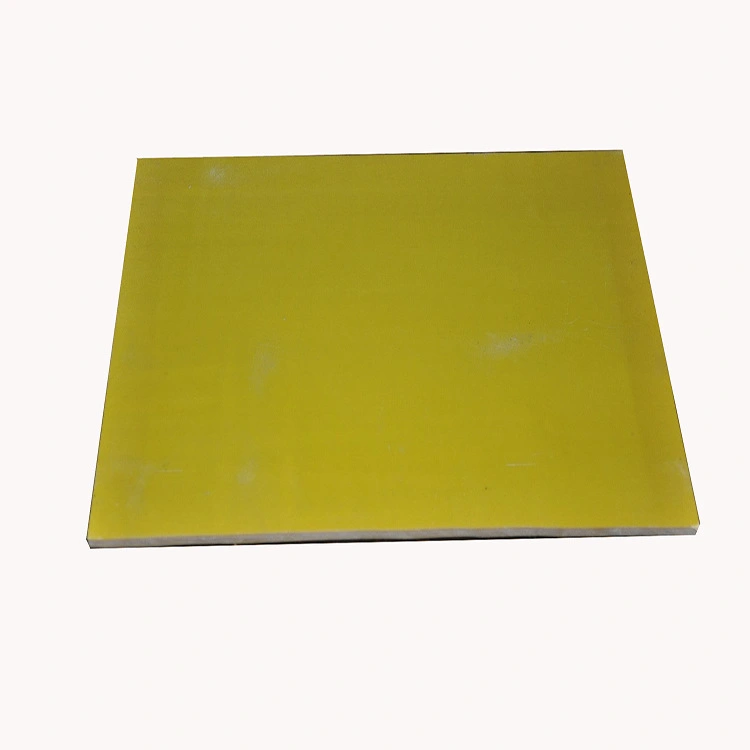
Performance Analysis: Epoxy Sheets in Harsh Working Environments
Chemical Resistance in Corrosive Atmospheres
Acidic and alkaline cleaners, hydraulic fluids, and industrial solvents can break down conventional plastics and phenolic resins in manufacturing environments. We have seen Epoxy Sheets keep their shape after being submerged for a long time in natural acids, strong alkalis, and fluids made from petroleum. Cross-linked molecular networks don't let solvents into the fully cured epoxy matrix, so it can't be attacked by chemicals. This resistance is very useful in places like electroplating, chemical processing, and hydraulic systems where breaking down materials can cause pollution and equipment failure.
Thermal Performance Across Extreme Ranges
The glass transition temperature (Tg) is the temperature at which plastics change from being stiff to being flexible, losing their ability to keep their shape and be strong. Standard FR4 Epoxy Sheets keep their properties up to 280°F, but special G11 formulas keep them at 340°F for ongoing use. These limits are pushed even further in aerospace uses, which use special Epoxy Sheets that stay flexible at the very low temperatures needed for superconducting magnet shielding. When exposed to sudden changes in temperature, phenolic laminates break. But Epoxy Sheets can handle these stresses because of the way they are reinforced.
Mechanical Durability Under Cyclic Loading
In real life, materials are put through repeated cycles of stress that cause fatigue cracks to form in weaker materials. Manufacturers of transformers that put heavy coil units on insulating standoffs need to be sure that the supports will hold up after decades of electromagnetic forces and heat expansion cycles. Lab tests show that Epoxy Sheets that are properly specified can withstand millions of load cycles at stress levels close to 50% of their ultimate strength without cracking. The constant glass fiber reinforcement stops tiny cracks from spreading, giving reliability levels that can't be found in particulate-filled composites or plastics that aren't reinforced.
Selecting the Right Epoxy Sheet: Thickness, Types, and Customization
Thickness Considerations for Your Application
Both electrical protection and mechanical strength are directly affected by the thickness of the Epoxy Sheet. For 15kV terminal boards, the thickness needs to be at least 0.125 inches to provide enough voltage standoff. Structural spacers may need parts that are 0.500 inches thick to keep them from deflecting under mechanical loads. Standard manufacturing makes sheets that are 0.031 inches thick up to several inches thick. For more precise uses, tighter thickness tolerances are available. Thinner sections are better for applications where weight is important, and they make CNC machining of complex features easier. Thick plates, on the other hand, are better at resisting impact and holding weight.
Comparing NEMA Grade Specifications
Knowing the differences between grades helps buying teams match the qualities of materials to the needs of the application:
FR4 (Flame-Retardant Grade 4): The standard for PCB substrates and general electrical insulation. It has good electrical qualities and a UL94 V-0 flame grade. This grade has the best cost-to-performance ratio for uses below 280°F. It is the standard for switchgear parts, motor insulation, and electrical systems that need to be flame retardant without halogens and comply with ROHS regulations.
G10 (General Purpose Grade): G10 has the same mechanical qualities as FR4 but doesn't have any flame retardant additives. It can be used in places where flame retardancy grades aren't required. When precise dimensions and a smooth surface finish are very important, mechanical engineers choose this grade for structural spacers, wear plates, and precision-machined parts because it is slightly easier to machine than flame-retardant versions.
G11 (High-Temperature Grade): Made with better resin systems, G11 can handle continuous temperatures up to 340°F while still having good dielectric properties. This grade is used in places where normal FR4 would break down over time, like power generation equipment, car under-hood uses, and industrial ovens. The material costs a lot, but its long service life in harsh weather conditions makes up for it.
Customization Options for OEM Requirements
For mass production to work well, the materials used must be specially designed for the way they are made. We work with OEM engineers to provide custom sizes that eliminate the need for extra cutting, pre-machined blanks that match the profiles of the parts, and special formulations that are best for the conditions in which they will be used. Manufacturers of automotive battery packs need precise tolerance sheets with certain dielectric values for thermal management barriers. Transformer builders, on the other hand, need arc chutes that are already cut to fit their own designs. Custom color coding makes assembly easier, and approved material test records give you the traceability that quality control systems need.
Procurement Insights: How to Buy Epoxy Sheets Efficiently
Evaluating Supplier Capabilities
Sourcing choices affect the quality of a product and the dependability of its supply chain over its whole existence. Managers of engineering projects should make sure that providers keep resin formulations and lamination methods that offer uniformity from batch to batch the same. Ask for proof that the product meets the requirements for NEMA LI-1 standards, UL recognition, and ROHS compliance. Suppliers with quality systems that are ISO 9001 approved put in place controls that stop material differences that cause assembly problems. We keep thorough test records that keep track of the electrical, mechanical, and thermal qualities of every production lot. This way, we can provide traceability when users need proof of material performance.
Sample Testing Before Volume Orders
Specifications for a material don't always mean that it will work in a certain situation, and for Epoxy Sheet, by asking for samples to be tested in-house, you can see how things work in real-world situations, and machine test pieces to make sure the CNC will work with the parts, checking for tool wear and possible surface finishes, and test samples in your operating environment, including changing temperatures, exposing them to chemicals, and loading them mechanically, to make sure they work before committing to large quantities for production, and this spending keeps expensive switchovers from having to happen when production materials don't work out as planned. By asking for samples to be tested in-house, you can see how things work in real-world situations. Machine test pieces to make sure the CNC will work with the parts, checking for tool wear and possible surface finishes. Test samples in your operating environment, including changing temperatures, exposing them to chemicals, and loading them mechanically, to make sure they work before committing to large quantities for production. This spending keeps expensive switchovers from having to happen when production materials don't work out as planned.
Optimizing Order Quantities and Lead Times
Understanding a supplier's capabilities and lead times is important for balancing the costs of keeping inventory with the prices that come with buying in bulk. Standard grades in common thicknesses can be shipped within days from stock at a distributor. Custom specifications, on the other hand, may take up to a week to manufacture and inspect for quality. Volume prices usually start at full sheets, and you can save even more at the box and truckload levels. We keep a strategic stockpile of common configurations for electrical and electronics makers, and our combined logistics skills make sure that deliveries happen on time, which supports just-in-time manufacturing.
Epoxy Sheet Application Case Studies in Electronics and Manufacturing
PCB Substrate Performance in High-Frequency Electronics
Most printed circuit boards in the world's electronics business are built on FR4 Epoxy Sheets. These Epoxy Sheets power everything from smartphones to industrial controls. The low dielectric constant (about 4.4 at 1MHz) and low dissipation factor of the material keep signals intact in high-speed digital circuits and RF applications. When lead-free soldering processes reach 500°F, the high Tg of the material stops blistering and delamination, which would otherwise make the board less reliable. A big company that makes telecommunications equipment cut down on field failures by 40% after moving to premium FR4 grades that are better at resisting moisture. This shows how the choice of material has a direct effect on how reliable a product is and how much the guarantee costs.
High-Voltage Insulation in Power Distribution
Regional power companies that are in charge of distribution networks with voltages ranging from 15kV to 69kV have a hard time keeping the insulation in good shape over many years of use. When placed in outdoor switchgear, Epoxy Sheet busbar supports and phase barriers can handle extreme temperatures, water getting in, and pollution from industrial atmospheres. After replacing old phenolic insulators with new G10 Epoxy Sheets, a utility company stopped the frequent flashovers that affected thousands of customers by cutting off service. The better tracking resistance and dimensional stability of the material under thermal cycling made it more reliable, which justified its higher initial cost by lowering maintenance costs and ensuring better service continuity.
Automotive Battery Pack Safety Barriers
Battery systems that store hundreds of volts at current capacities that can release catastrophic energy during fault conditions have to meet strict safety standards for companies that make electric vehicles. When individual cells overheat, called thermal runaway, they need insulation walls that keep them intact while cells next to them hit temperatures above 400°F. A major auto supplier made custom Epoxy Sheet barriers that are resistant to flames, keep heat in, and are strong enough to hold up against thermal events while keeping cell modules electrically separate. A lot of testing proved that properly designed barriers stopped heat from spreading, passing safety standards needed for car certification. This application shows how material engineering can be used to solve new problems in industry.
Conclusion
Choosing the right insulation materials has a big impact on how reliable, safe, and expensive equipment is over its entire life in electrical, industrial, and manufacturing settings. Epoxy Sheets have been shown to work well in harsh conditions where dielectric strength, mechanical integrity, and dimensional stability are key factors in whether something succeeds or fails. Procurement experts can choose solutions that are the best in terms of both technical performance and cost-effectiveness by understanding the qualities of materials, the differences between grades, and the needs of specific applications. The composite can be used for a wide range of things, from delicate PCB substrates that need to have precise electrical qualities to strong structural parts that have to handle heavy loads in harsh environments. Working with experienced suppliers will help you reach your production goals by giving you access to good materials, technical know-how, and on-time delivery.
FAQ
What distinguishes FR4 from G10 epoxy grades?
Flame-retardant additives in FR4 give it a UL94 V-0 grade for flammability, which means it has to be used in places that need fire safety approval. Because it doesn't have these additives, G10 is slightly easier to work with when it comes to structural uses where flame ratings aren't needed. Under normal conditions, both grades have the same mechanical and electrical properties, so the choice depends more on regulatory requirements and the specific application environment than on differences in performance.
Can epoxy sheets be machined using conventional equipment?
Using carbide or diamond tools, standard machine shop tools like saws, drills, mills, and lathes can easily work with Epoxy Sheets. When it comes to feeds and speeds, the material can be machined similarly to aluminum. However, dust-collecting systems are necessary because cutting creates small particles. Keeping your tools sharp and cutting at the right speed stops delamination and gives you great surface finishes that are good for precise tasks.
How should epoxy sheets be stored to maintain properties?
Things should be kept in climate-controlled spaces that stay between 40°F and 80°F and have a relative humidity of less than 60%. Long-term contact with water can change the surface resistivity, but Epoxy Sheets that are fully cured are better at keeping water out than phenolic options. Sheets won't twist if they are stored upright or with little weight on top of them. If you store something in the right way, it will always keep its qualities.
Partner with J&Q for Reliable Epoxy Sheet Supply
J&Q serves electrical, industrial, and factory clients all over North America. They have been in business for more than twenty years and have been involved in foreign trade for ten years. Our wide range of products includes FR4, G10, and G11 types in both standard and custom setups. All of them are made using ISO 9001 quality systems and come with full paperwork for UL and ROHS compliance. Our integrated logistics operations make sure that deliveries happen on time so that you can meet your production deadlines, and our engineering support helps you choose the best specifications for your technical needs. Our team has the technical knowledge and supply chain stability that procurement professionals look for in an Epoxy Sheet provider, whether they're looking for PCB substrate materials, high-voltage insulation components, or precision-machined parts. Visit jhd-material.com or email us at info@jhd-material.com to talk about your specific needs and ask for samples that show the high quality standards we keep for every production lot.
References
1. National Electrical Manufacturers Association (NEMA). "NEMA Standards Publication LI 1-2018: Industrial Laminated Thermosetting Products." National Electrical Manufacturers Association, 2018.
2. Harper, Charles A. "Handbook of Materials for Product Design." McGraw-Hill Professional Engineering, 3rd Edition, 2001.
3. Underwriters Laboratories. "UL 94: Standard for Safety of Flammability of Plastic Materials for Parts in Devices and Appliances." Underwriters Laboratories Inc., Current Edition.
4. Institute of Printed Circuits (IPC). "IPC-4101: Specification for Base Materials for Rigid and Multilayer Printed Boards." IPC International Standards, Current Revision.
5. Mazumdar, Sanjay K. "Composites Manufacturing: Materials, Product, and Process Engineering." CRC Press, 2001.
6. ASM International Handbook Committee. "Composites: Engineered Materials Handbook Volume 1." ASM International Materials Information Society, 1987.
_1754967691873.webp)