Four Common FR4 Epoxy Sheet Processing Methods
2026-04-14 17:19:44
Understanding your choices is very important when picking the best way to process FR4 epoxy sheet for specific uses. CNC grinding, laser cutting, waterjet cutting, and pressing with lamination are the four most popular ways to do it. Depending on the needs of your job, each method has its own benefits. CNC making is very accurate for complicated shapes, laser cutting is fast and great for small details, waterjet cutting keeps the material's structure without warping it, and pressing makes sure that the thickness is the same for mass production. Picking the right method has a direct effect on the material strength, dielectric performance, and general efficiency of production.
Overview of FR4 Epoxy Sheet Processing
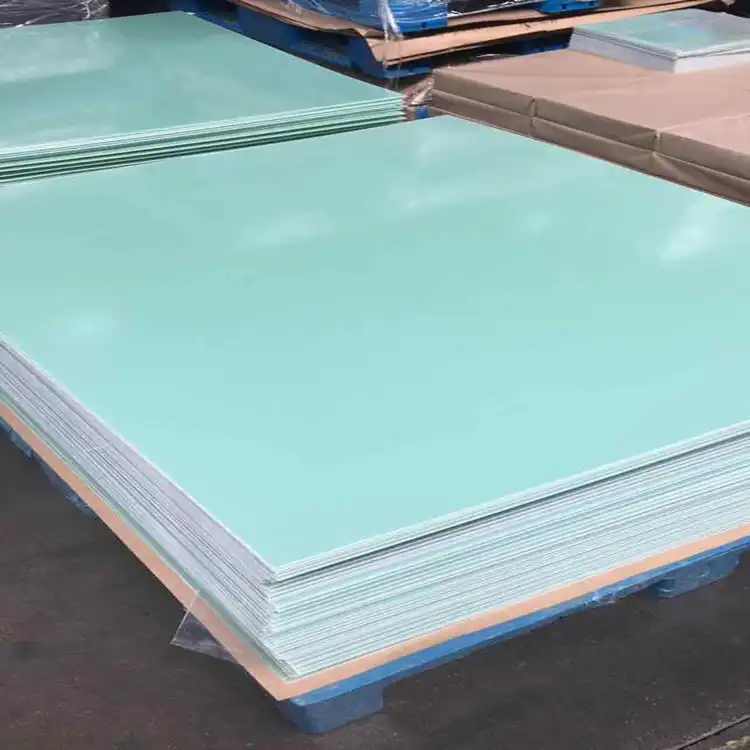
FR4 epoxy sheet are an important material in modern production. They are made by heating continuous filament glass cloth with an epoxy resin binding under high pressure. The "FR" label means that the material is flame resistant and meets UL 94 V-0 standards. This makes it different from regular G10 versions. We've seen a lot of ways that this composite material solves important problems with temperature stability and electrical insulation in electronics, power transfer systems, and industrial machines.
The unique mix of materials in these sheets makes for a perfect balance between strength and electrical performance. The material solves important problems for engineering managers and procurement specialists because its dielectric strength is higher than 500 MΩ even when it's wet, and its heat resistance stays strong at temperatures above 130°C. When choosing parts for PCB substrates, switchgear insulation, or structural supports in harsh settings, it's important to know how the processing methods affect these natural qualities.
Material Properties That Influence Processing Decisions
The glass-fiber support in epoxy matrices makes the production process both difficult and rewarding. Specialized cutting tools are needed for handling parts with mechanical strength ratings that can handle practical stress during assembly. Dimensional stability under thermal cycling means that parts keep their limits over the course of their service life. However, this same property means that you need to be very careful about how much heat you create when you cut.
When submerged for twenty-four hours, moisture absorption rates below 0.01% ensure long-term dependability in damp places. This low absorption shape changes how makers use waterjets for cutting and how they clean up afterward. The self-extinguishing flame retardant properties that keep fires from starting also affect the laser cutting parameters, since the makeup of the material directly affects the melting temperatures and the quality of the edges.
Matching Processing Methods to Application Requirements
Different businesses have different needs for how well their FR4 parts work. When it comes to PCB support systems, electronics makers that need to keep tight tolerances often choose CNC machining. People in the power sector who want to buy arc barriers and coil insulation need materials with uniform qualities. Pressing and laminating can do this for large production runs. Engineers in the automotive industry who are making barriers for battery packs need to be able to make changes easily, which waterjet cutting can do without affecting heat performance.
When buying teams know about these application-specific needs, they can make sure that the processing choices they make meet the performance goals of the end use. The choice process includes more than just comparing costs; it also looks at how each method keeps or improves important material properties. The chosen processing method affects the dielectric properties, the dynamic strength retention, and the quality of the surface finish.
Four Common FR4 Epoxy Sheet Processing Methods
Modern factories use a variety of handling technologies to meet the needs of a wide range of customers. Each way has its own benefits that make it better for certain tasks, batch amounts, and level of accuracy requirements. When buying workers understand these techniques, they can choose the best method for their projects.
CNC Machining for Precision and Flexibility
Most of the time, CNC cutting is the best way to make unique FR4 epoxy sheet parts. Computer-controlled milling machines remove material by cutting it mechanically, and they can get key measurement tolerances as close as 0.05 mm. This accuracy is very helpful when making complicated shapes for switchgear parts, motor frames, or special insulation fittings.
Different bit sizes and cutting speeds can be used in the process, which lets makers find the best settings for different sheet thicknesses. Parts that are as thin as 0.2 mm sheets or as thick as 50 mm plates can have clean sides thanks to routing processes. Three-axis and multi-axis systems can work with complicated shapes that would be hard for other processing methods to handle.
Because glass-reinforced materials are rough, tool wear is something to think about. Diamond-coated bits and carbide tools keep the quality of the edge while extending their useful life. Dust filtration systems collect the small particles that are made when you cut. This keeps the work area clean and protects both the equipment and the people who are using it.
CNC cutting works great for making medium-sized amounts that need to be customized. Because of the time it takes to set up, design changes can be made without having to buy a lot of new tools. This makes it perfect for testing and small-scale production runs. The ability to change cutting lines through software updates makes it easy to adapt to changes in engineering.
Laser Cutting for Speed and Detail
Laser cutting uses directed energy rays to vaporize materials along routes that have already been set up. This method doesn't put any mechanical stress on the parts, so there is less chance that they will delaminate or get tiny cracks that could affect how well the insulation works. For some tasks, processing speeds are much faster than standard machining, especially when making complex shapes or holes with small diameters.
The focused heat zone makes the kerf widths very narrow, which makes the best use of the material and allows for fine feature sharpness. Complex nested plans make the best use of sheets, cutting down on waste and the cost of materials for large orders. Automated loading systems that work with laser cutting tools allow for constant operation, which increases the efficiency of production.
Laser machining of FR4 epoxy sheet materials is limited by their thickness. The best results happen with sheets that are less than 6 mm thick, because that's where heat penetration is still doable and edge carbonization stays within acceptable limits. For thicker materials, you need to make more than one pass or use a different way to get clean cuts without too much charring.
Heat-affected areas along cut edges need to be looked at carefully in situations where the dielectric properties need to be perfect. The temperature effect is small compared to mechanical processes, but it does change the properties of the material in a small area next to cuts. For uses that need to meet strict electrical standards, post-processing solutions can help with this problem.
Waterjet Cutting for Heat-Free Processing
Waterjet technology cuts precisely through materials by sending ultra-high-pressure water streams with rough particles through them. This method of cold-cutting keeps the material's properties the same all the way to the edge of the piece, making sure that the electrical strength and dynamic properties stay the same. This method works especially well in situations where heat warping could ruin the accuracy of measurements or the performance of the material.
Waterjet cleaning is better for the environment than other options. The cutting medium is made up of water and sharp materials that can be recycled. It doesn't give off any harmful fumes or waste. Many makers are now putting an emphasis on sustainability, and containment systems are a good way to make sure that used abrasives and materials are thrown away or recycled in the right way.
The quality of the edges made by waterjet cutting for FR4 epoxy sheet means that they usually don't need much cleaning, which cuts down on the costs of extra operations. The process works well with thick materials and can consistently cut through 50 mm plates. This feature is useful for companies that make structure insulation parts or heavy-duty spacers for industrial tools.
Operating costs include the use of abrasives, water, and repairs to the equipment. These things affect how economically viable different project sizes are. When material protection and environmental concerns play a big role in purchasing choices, high-volume production often makes the investment worth it.
Pressing and Lamination for Volume Production
Pressing and laminating are basic methods for making FR4 sheets and can also be used to put together complicated structures with many layers. Autoclave curing at a controlled temperature and pressure makes sure that the qualities of all pieces of material are the same. This method gets rid of holes, waves, and changes in thickness that could hurt performance in tough situations.
During pressing, different layers of prepreg are combined to get the sizes and properties that are wanted. The copper covering that is put on during lamination is what makes PCBs possible, and pure composite laminates are used for insulation in buildings. The end properties of a material are determined by process factors such as temperature curves, pressure profiles, and cure times.
One of the best things about pressed and bonded products is that they are always the same. When there are good process controls, there isn't much difference between batches. This makes sure that performance is predictable for mass-production uses. This level of dependability is especially important for parts that are used in high-volume assembly lines by companies that make home appliances and cars.
When you buy tools for pressing processes, you get economies of scale that help big production runs. The setup costs are spread out over thousands of parts, which lowers the cost per unit by a large amount compared to handling each piece individually. Lead times include both preparing tools and making production schedules, so it's important to plan ahead for buying timelines.
Comparing Processing Methods: Which One Fits Your Needs?
To choose the best processing method, you have to balance a lot of different factors, such as speed needs, production numbers, customization needs, and budget limits. Each method has a different effect on the properties of the material and a different cost structure that changes the total cost of purchase.
Performance Outcomes Across Methods
The amount of mechanical strength that is retained depends on how the material is processed. When the right tools are used and the cutting speed is kept at the right level, CNC machining doesn't cause a lot of stress focus. Routed edges have the same level of strength as the base material, so they can be used reliably in high-load situations like mechanical gaps and gears.
Laser cutting makes heat-affected zones that may slightly lower the mechanical qualities of the material right next to the cut edges. The effect stays limited and doesn't usually hurt the general performance of the part in most situations. Alternative ways that don't involve heat could be helpful for structural parts that are under a lot of stress.
Waterjet cutting for FR4 epoxy sheet keeps the qualities of materials the same all the way through a piece of work. Since no heat is added, the mechanical strength, electrical performance, and temperature properties stay the same as the parent material. For transformer insulation and arc barriers, where uniform properties across all areas are needed for safe operation, this maintenance is very important.
When the right settings are used, the dielectric and thermal qualities stay very stable across all processing methods. The self-extinguishing flame resistant properties of FR4 epoxy sheet materials stay the same no matter how they are cut. Protocols for testing can make sure that finished parts meet the UL and ROHS compliance standards that buyers in the power sector and electronics industry need.
Cost Structures and Lead Time Considerations
The costs of each working method are different because they depend on the equipment that is bought, how much it costs to run, and how fast it works. CNC machining has modest setup costs, and as batch numbers go up, per-piece costs go down. This method is cost-effective for orders of dozens to thousands of pieces because it can handle different shapes without needing special tools.
Laser cutting systems require a lot of money to buy, but they can produce a lot of work quickly in some situations. As long as the operating costs are low per part, this method is good for making a lot of parts that are within the width limits. The fast working speeds cut down on wait times, which helps meet tight delivery deadlines.
When compared to other options, waterjet tools and refills have higher costs per piece. The extra cost is worth it because the premium protects things better and is better for the world. Projects that put these factors first often find that waterjet cutting gives them the best value, even though it costs more to handle.
When costs are spread out over a lot of units, pressing and laminating have the lowest unit costs. This method is best for making large quantities of components and common sheets because it saves money by working in larger quantities. Due to the time it takes to prepare and cure the tools, lead times are longer than with other methods. This means that purchase plans need to be planned ahead of time.
Application Recommendations for Optimal Results
CNC machining is useful for companies that make electronics and are making PCB bases and circuit supports. Tight limits are needed for electrical links to work, and the precision that can be reached allows for them. Because customizable toolpaths are so flexible, making custom shapes for different board layouts is easy.
Power distribution companies and transformer makers should think about using waterjet cutting to cut important insulation parts. The heat-free method keeps the dielectric properties of all the parts the same, so they always work the same way in high-voltage settings. When heat contact during manufacturing is taken away, coil insulation and arc barriers keep their rated properties.
When automotive part makers make battery pack barriers and heat-resistant fittings, they can use a number of different ways to get the best results for their customers. CNC machining is best for prototypes and small quantities of unique parts. Laser cutting speed or waterjet quality retention may be better for production parts. Working with providers who offer a range of processing choices gives you the freedom to change your designs as needed.
CNC machining is often a good choice for industrial machinery makers who need parts that won't wear out and mechanical gaps. The strong edges and accurate measurements make it possible to work reliably even when the load is heavy. Rates of material removal can handle the thicker pieces that are usually needed for construction purposes.
Conclusion
Knowing the four main ways that FR4 epoxy sheet materials are processed helps you make smart buying choices that balance performance, cost, and delivery needs. For certain jobs, laser cutting is fast, CNC machining is accurate and flexible, waterjet cutting keeps the material's structure without damaging it with heat, and pressing makes sure stability for large-scale production. Each method is useful for different tasks in the fields of making electronics, industrial tools, power systems, car parts, and home appliances. Reliable relationships are formed by judging suppliers based on their credentials, skills, and image. As automation, AI optimization, and innovations in sustainability move processing technologies forward, strategic procurement teams that stay up to date gain competitive benefits by getting access to better skills and higher levels of efficiency.
FAQ
What thickness ranges work best with each processing method?
CNC cutting can work with materials as thin as 0.2 mm and as thick as 50 mm without losing quality. Laser cutting works best on materials that are less than 6 mm thick, where the heat doesn't get too deep and the quality of the edges stays good. Waterjet cutting works well on all thicknesses, keeping the quality of both thin sheets and thick plates. Pressing and laminating are two industrial methods that can be used to make sheets of any thickness. However, they are not often used to cut finished parts to specific shapes.
How do processing methods affect compliance with UL and ROHS standards?
When the right conditions are used, all four processing ways keep the flame-retardant and material-safe qualities of FR4 sheets. No matter how the material is cut, the base material compliance stays the same. CNC and waterjet methods don't change any chemicals, so all certificates are still valid. Laser cutting makes small areas that are changed by heat that don't change the general compliance of the component for normal uses. Certified prepreg materials are used for pressing, which makes sure that the finished laminates meet all standards.
Can suppliers combine multiple processing methods for complex projects?
A lot of skilled makers use more than one processing technology to get the best results for different parts of the same job. For example, pressing could be used to make the base material, CNC machining for the main shapes, and laser cutting for the small details. This mixed way makes the most of the best parts of both while keeping costs low. When you talk to providers about all of your needs, you can find smart process combinations that give you better results.
Partner with J&Q for Superior FR4 Epoxy Sheet Solutions
J&Q has been making high-quality products for over 20 years and is an expert in making FR4 epoxy sheet, which can help you with your most difficult projects. We have combined powers that cover all four processing methods we've talked about, so we can suggest and use the best method for your needs. Our expert team is here to help you through the whole process, whether you need precision CNC-machined parts for electronics circuits, large quantities of pressed laminates for use in cars, or custom waterjet-cut insulation for power systems. We keep a lot of quality certifications, like UL and ROHS approval, to make sure that your parts meet industry standards. Our in-house logistics operations make sure that the supply chain works well and that you have shipping choices that work with your plan. As a company with a lot of experience making FR4 epoxy sheet, we'd love the chance to talk to you about your project needs and show you how our processing skills lead to high-quality parts. Get in touch with our team at info@jhd-material.com to find out how we can help you meet your buying goals through fast service and top-notch technical expertise.
References
Harper, C.A. (2006). Electronic Materials and Processes Handbook, 3rd Edition. McGraw-Hill Professional.
Coombs, C.F. (2007). Printed Circuits Handbook, 6th Edition. McGraw-Hill Education.
Tummala, R.R. (2001). Fundamentals of Microsystems Packaging. McGraw-Hill Professional.
NEMA Standards Publication LI 1-1998. Industrial Laminating Thermosetting Products.
Klein Wassink, R.J. (1989). Soldering in Electronics, 2nd Edition. Electrochemical Publications Ltd.
Gilleo, K. (2005). AREA ARRAY PACKAGING HANDBOOK: Manufacturing and Assembly. McGraw-Hill Professional.